The Wireless Broadband Alliance (WBA) recently published a report titled “Preparing for Wi-Fi 7: Applying New Features to Key Use Cases,” which argues that this new technology will transform the daily lives of people around the world.The WBA was established in 2003 with the mission to promote a seamless and interoperable Wi-Fi service experience within the global wireless ecosystem. To achieve this vision, the WBA has been committed to enhancing collaboration among service providers, technology companies, cities, regulators, and organizations.Based on the IEEE 802.11be (extremely high throughput) standard, Wi-Fi 7 boasts a wealth of advanced features, which either further enhance previously realized capabilities or achieve new functionalities that existing wired and wireless technologies cannot.Main Features of Wi-Fi 7The aforementioned report, led by WBA members Broadcom, CableLabs, Cisco, and Intel, explores some of the most significant new features and applications offered by Wi-Fi 7, including:High Bandwidth/High PerformanceWi-Fi 7 has double the bandwidth of Wi-Fi 6 (802.11ax) and three times its performance.Low LatencyEnhanced support for latency-sensitive applications.Gigabit-Class ServiceWi-Fi 7 supports channel bandwidths of up to 320MHz, while Wi-Fi 5 and Wi-Fi 6 are limited to 160MHz. It also supports 4K QAM, which is an improvement over previous standards. With Wi-Fi 7 supporting wider channels and 4K QAM, its transmission speed is over three times faster than Wi-Fi 6. This is crucial for achieving gigabit-level Wi-Fi service throughout the home.Multi-LinkWi-Fi 7 devices can use Multi-Link Operation (MLO) across the 2.4GHz, 5GHz, and 6GHz bands, increasing throughput by aggregating multiple links, and can also quickly switch critical applications to the optimal band without interruption.Fast Link SwitchingWi-Fi 7 devices can utilize fast link switching to avoid interference and access Wi-Fi channels without delaying critical data transmissions. Wi-Fi 7 is also highly suitable for immersive XR/AR/VR, online gaming, and other consumer applications, as these require high throughput, low latency, minimal distortion, and high reliability.It is worth noting that the last evolutionary phase of Wi-Fi 6, known as Wi-Fi 6E, has introduced the 6GHz spectrum. Although not all countries allow the use of this band, it represents a significant achievement in Wi-Fi technology. With this new spectrum, data transmission rates, capacity, interference, and latency have all seen substantial improvements.Similar to the evolution from fourth-generation (4G) mobile technology to fifth-generation (5G), the launch of the Wi-Fi 7 standard is a significant improvement over previous technologies. Figure 1 graphically summarizes this. As shown in Figure 1, Wi-Fi 7 exhibits significant enhancements in regional business capacity, peak data rates, mobility, and spectral efficiency.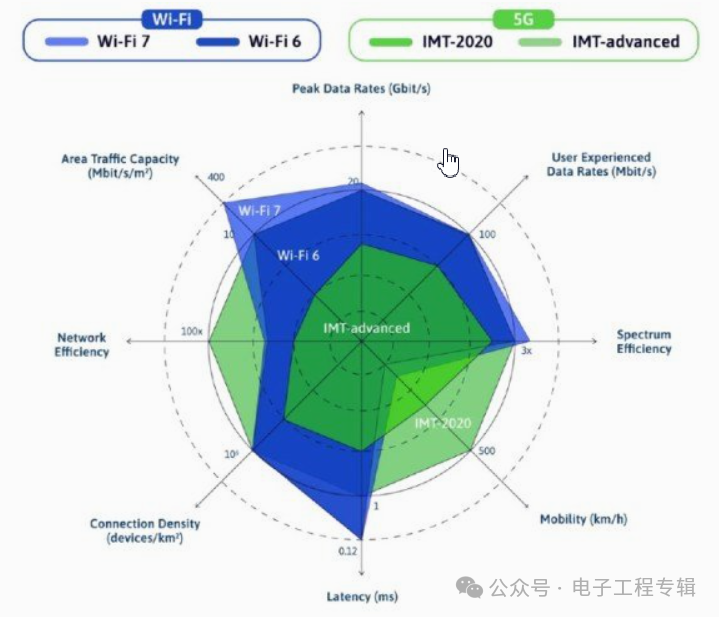 Figure 1: Recent Advances in Wi-Fi and Mobile Technology. (Source: WBA)Wi-Fi 7 Use Cases1. Augmented Reality/Virtual Reality/Mixed Reality/Extended Reality (AR/VR/MR/XR)XR includes a range of applications with varying functionalities and complexities (see Figure 2). A heads-up display (HUD) shows the status of one or more applications on the lenses of the user’s head-mounted device (HMD) through small images. These images can be static or reflect the orientation of the headset, covering the user’s entire field of view. To reduce computational complexity, image rendering can be done on companion devices and sent to the lenses via P2P Wi-Fi.The immersion of VR is stronger because users are virtually presented in the application, including the posture of the headset display and other features like hands and feet, all tracked by built-in cameras or other sensors. There are almost endless applications in training or industrial operations and collaboration. Immersive experiences require substantial rendering computation, which is typically offloaded to nearby edge or computer resources. VR video rendering demands high throughput and low latency.AR can extend the complexity and functionality of VR to MR, where the helmet camera can collect real-time video for remote display/monitoring and environmental (object recognition) applications. MR is the most complex XR application, often utilizing edge computing for computational offloading.
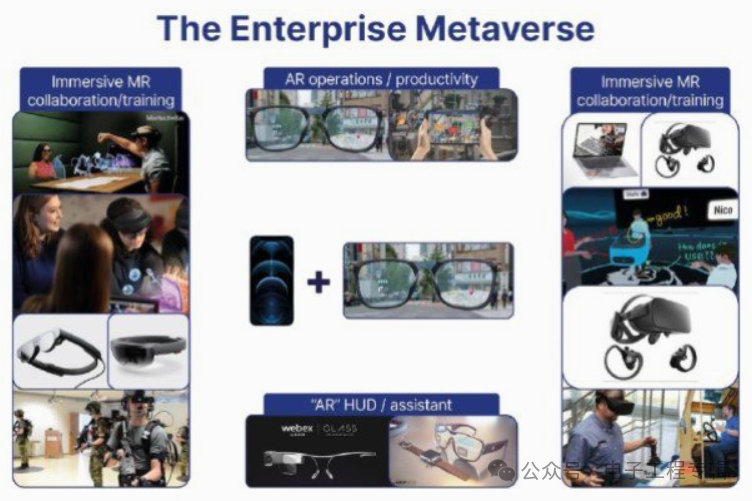 Figure 2: Applications include AR/VR/MR or “XR.” (Source: WBA-Cisco)2. GamingMany unique features of Wi-Fi 7 enhance speed and responsiveness, providing users with a more stable and reliable online gaming experience. These features include:
- Faster Download/Upload Speeds
Wi-Fi 7 reduces latency and improves the online gaming experience. Additionally, players will experience less waiting time in games, as faster transmission speeds allow them to complete game updates and patches more quickly.
- Higher Stability
Wi-Fi 7’s multi-link operation reduces connection interruptions, making gaming more continuous and stable. Client devices can connect to multiple bands simultaneously, achieving better throughput, and devices can utilize all bands or multiple links for redundancy. Competitive gamers who cannot afford to lose connection during matches will benefit from this.
- Larger Network Capacity and Shorter Latency
Wi-Fi 7 is referred to as “extremely high throughput” because it increases the 6GHz channel, providing gamers with a smoother signal.3. Industrial Internet of Things (IIoT)In a previous study focusing on Wi-Fi 6/6E applications, the WBA has explored potential use cases in the Industrial Internet of Things market, covering use cases that require determinism or stringent latency (see Figure 3). These include:
- Autonomous Mobile Robots (AMR)
- AMR Video Fusion
- Safety control devices, such as Programmable Logic Controllers (PLC)
- AR/VR/XR-based operations
With the development of Wi-Fi 7, these functionalities are expected to be expanded through improved Service Classification Services (SCS), QoS features, and Multi-Link Device (MLD) capabilities.The SCS feature can classify specific IP streams and apply Wi-Fi QoS processing, prioritizing sensitive traffic such as voice, video, and gaming over bulk data services. Thus, the Wi-Fi 7 SCS feature can facilitate deterministic Wi-Fi services required for industrial applications. With uplink-triggered access technology, Wi-Fi access services for SCS-enabled scheduled devices can be provided deterministically.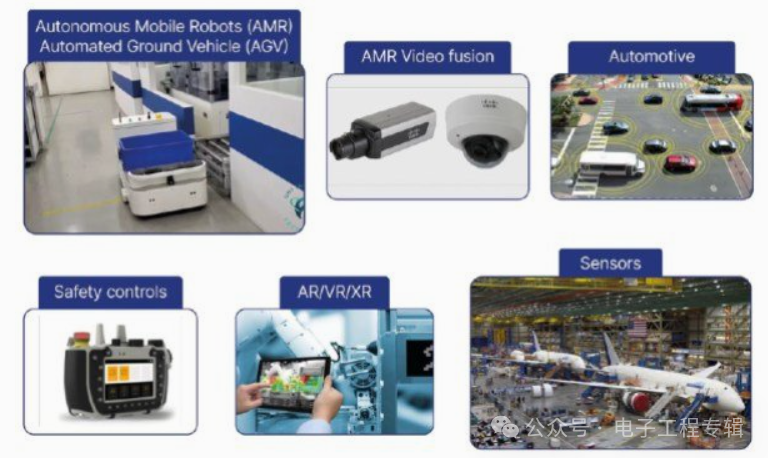 Figure 3: Industrial IoT Use Cases for Wi-Fi 6/6E/7. (Source: WBA1)Other potential use cases include video conferencing, wireless backhaul in enterprise deployments, service provider-managed home applications, and Wi-Fi mesh architectures for future interconnected homes.ConclusionWith its higher speeds, shorter latencies, greater reliability, and efficiency, Wi-Fi 7 will improve wireless connectivity performance. High throughput, low latency, and stable performance will further enhance user experiences in demanding applications such as XR/AR/VR, online gaming, industrial IoT, and video conferencing. It will also support more devices in high-density installations and increase the application of Wi-Fi in corporate, industrial, and residential environments. It is anticipated that after obtaining Wi-Fi Alliance certification, the adoption rate and network deployment of Wi-Fi 7 devices will grow rapidly.EET Electronic Engineering Magazine Original