Minimalist Smart Home Design: A New Approach to Solving Life’s Pain Points
I have been following innovations in home design, and recently I discovered that minimalist renovations are quietly transforming our living experiences.
When it comes to minimalism, many people’s first reaction is “crude” or “cold,” but true minimalist design is quite the opposite—it is a precise response to life’s pain points, a perfect combination of functionality and aesthetics.
Think about how many times we’ve been frustrated by bulky drying racks blocking sunlight on the balcony?
How many times have we scrambled in the kitchen looking for an outlet?
These seemingly minor inconveniences accumulate over time and become burdens in our lives.
Smart young people have begun to solve these problems with new ideas, often more cost-effective and practical than traditional solutions.
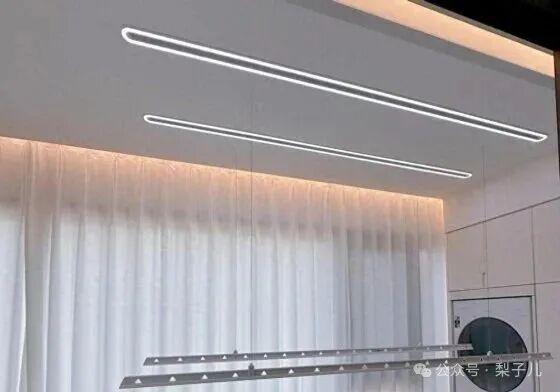
The revolution of balcony space starts with invisible drying equipment.
Traditional drying racks not only take up space but also block light, making the balcony cluttered and crowded.
The popular invisible drying rope features a retractable design that can be pulled out when in use and completely hidden when not, instantly transforming the balcony into a leisure area.
A friend of mine installed this design at home, and it not only costs one-third less than traditional drying racks but also offers a much better user experience!
Are you frustrated by not having enough kitchen outlets?
Track sockets are simply a lifesaver!
A single track can have socket modules added or moved at will, solving the problems of insufficient and poorly positioned traditional fixed outlets.
Last week, I visited a newly renovated home where the owner spent less than 600 yuan to install a set of kitchen track sockets, saving a lot compared to embedding a bunch of traditional sockets, while also maximizing aesthetics and practicality.
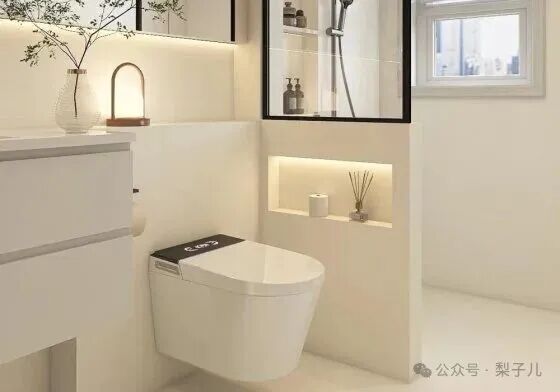
In bathroom renovations, wall-mounted bathroom cabinets are becoming a new favorite. They not only make small bathrooms appear spacious but also completely solve the hygiene dead corner problem under the cabinet with their suspended design. Coupled with an overhead mirror cabinet, the storage space doubles, and the countertop can remain dry and tidy. It’s truly a win-win!
Are you still troubled by uneven thresholds at home?
Now seamless transitions have become a trend.
Through meticulous construction and clever design, smooth transitions between different floor areas can be achieved, both aesthetically pleasing and easy to maintain.
Especially in wet areas of the bathroom, using a slight drop combined with invisible floor drains solves waterproofing issues while avoiding the visual disconnection of traditional water barriers.
In lighting design, the “no main light” concept is revolutionizing tradition.
By combining various light sources such as downlights, spotlights, and track lights, a rich, shadow-free lighting effect can be created.
Installing sensor light strips under the kitchen countertop means you will no longer be blocked by your own shadow while chopping vegetables; having dual-control reading lights at the bedside means you no longer have to get out of bed to turn off the main light.
This design, although more complex in initial planning, is more energy-efficient and ultimately saves money in the long run.
Even the toilet tank can have new tricks! The half-wall tank design leaves a small countertop during construction, instantly transforming it into a display area for aromatherapy or plants. Compared to traditional full-cover designs, it is not only visually lighter but also adds practical functionality.
The popularity of these designs lies in their user-centered approach, implementing the idea that “less is more.” Minimalism is not merely about reduction; it is about retaining core functions while making usage more intuitive, maintenance simpler, and experiences more comfortable.
With the development of smart home technology, this human-centered minimalist design will continue to evolve.
Imagine when invisible drying racks can be controlled via a mobile app, when track sockets can intelligently monitor power consumption and automatically cut off power, and when lighting systems can adjust brightness and color temperature based on family members’ schedules, our lives will become more convenient and intelligent.
What clever designs have solved pain points in your home renovation? Or what renovation challenges are still troubling you? A new round of renovation revolution has begun, and the key is to embrace it with innovative thinking. After all, a home is not just a container for living but also a source of happiness.