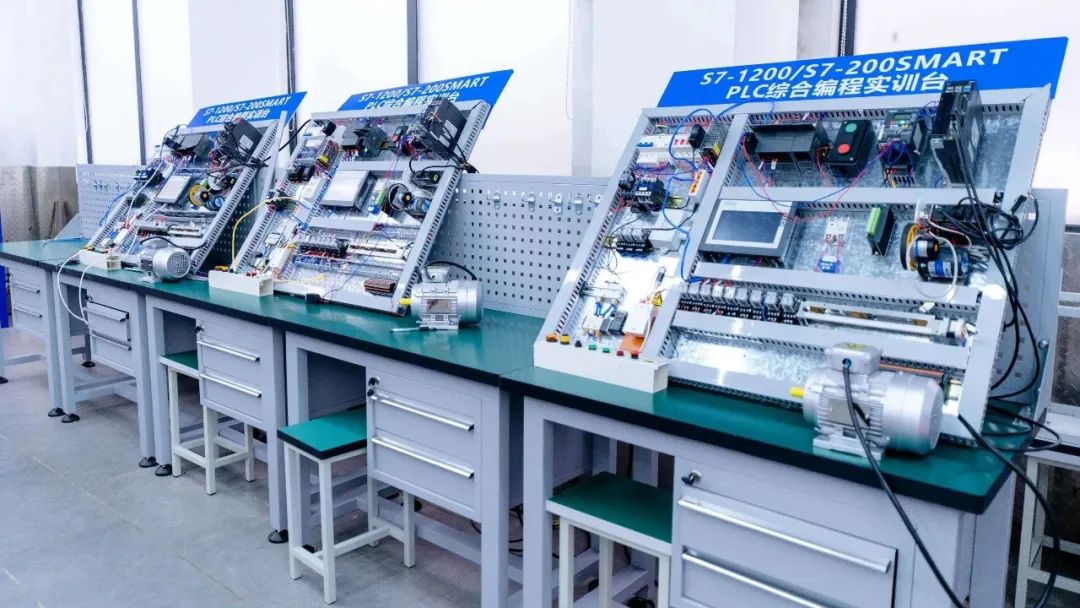
Dear friends, hello everyone! I am “Dai Yi Zong”. Today, the topic we are going to learn about is microcontroller low power design techniques. I believe everyone knows that energy saving and environmental protection are issues that we all take seriously. As a microcontroller engineer, we have a responsibility to contribute our part to the environmental protection cause. So how can we achieve energy saving in microcontroller design? Let’s explore together.
The Importance of Low Power Design
In embedded systems, low power is a very important metric. On one hand, for battery-powered portable devices, low power means longer battery life, providing users with a better experience; on the other hand, for large industrial equipment or household appliances, low power means lower energy consumption, thus reducing operating costs and achieving energy saving and environmental protection. Therefore, whether it is a small microcontroller or a large control system, we should pay attention to low power design.
Microcontroller Low Power Design Techniques
There are various means to achieve low power design for microcontrollers, and we can approach it from system-level, hardware-level, and software-level perspectives. Below, I will introduce a few commonly used techniques.
Sleep Mode
This is probably the most familiar energy-saving method. Just like we choose to take a nap when we are too tired from work, microcontrollers can also enter a “sleep” state when in standby, which is commonly referred to as sleep mode. In sleep mode, most functions of the microcontroller are turned off, with only a small number of circuits remaining active, thereby significantly reducing power consumption.
Sleep mode is usually divided into several levels; the lower the power consumption, the longer the wake-up time. We can choose the appropriate sleep level based on the actual application scenario. For example, for a system that requires real-time response, we cannot choose too deep a sleep mode to avoid affecting response speed.
Clock Energy Saving
Have you ever wondered why our phones automatically dim the screen when in standby? This is to save battery power. Similarly, we can lower the operating clock frequency of the microcontroller when high performance is not needed, thus reducing power consumption. Clock frequency is proportional to power consumption; lowering the clock frequency can effectively reduce dynamic power consumption.
However, lowering the clock frequency will affect system performance, so we need to balance the system’s performance requirements. A good practice is to maintain low-frequency operation most of the time and temporarily increase the clock frequency only when high performance is needed, switching back to low power mode after completing calculations.
Peripheral Clock Shutdown
In addition to the CPU core, microcontrollers also integrate many peripherals, such as timers, serial ports, ADCs, etc. These peripherals also generate a certain amount of static power consumption when not in use. Therefore, we should develop good habits and turn off the clocks of peripherals when they are not needed to reduce unnecessary power consumption.
Most microcontroller chip manuals provide registers to control the clocks of various peripherals. We can easily implement clock switches with simple programming. However, before turning off the clock of a peripheral, be sure to ensure that the peripheral is not currently in operation, otherwise it may lead to abnormal situations.
Reducing Operating Voltage
Like clock frequency, supply voltage is also proportional to power consumption. Most microcontrollers can operate normally at different voltages, although performance may vary. Therefore, we can appropriately lower the operating voltage based on actual needs to save energy.
However, lowering the voltage can also affect system stability; if it falls below the rated voltage, the microcontroller may not operate normally. Therefore, when adjusting the voltage, be sure to refer to the chip manual and choose a reasonable voltage range. For some industrial-grade microcontrollers with strong anti-interference capabilities, they can still operate stably and reliably after appropriate voltage reduction.
Peripheral Power Consumption Optimization
In addition to the CPU and clock circuits, many peripherals also consume a lot of energy, such as LED lights and buzzers. Therefore, when using these peripherals, we should also pay attention to power consumption optimization.
For example, we can use PWM dimming to reduce the average power consumption of LEDs. For instance, just like in a movie theater where the screen does not continuously emit light, but instead creates animation through high-frequency alternating black and white. This method is called “Pulse Width Modulation”; by controlling the on-off time of the LED, we can achieve dimming effects, and compared to directly adjusting the current, it can significantly reduce power consumption.
Code Optimization
In addition to hardware-level optimizations, we can also pay attention to some details in software coding to achieve low power goals. For example, avoiding dead loops, reducing unnecessary calculations, and streamlining code can all help lower power consumption to some extent. In addition, some low-power programming techniques, such as on-demand code loading and using lookup tables instead of complex calculations, are also worth learning and mastering.
As you can see, through comprehensive optimizations at the system, hardware, and software levels, we can effectively control the power consumption of microcontrollers to a very low level, contributing our part to energy saving and environmental protection.
Practical Case Analysis
Having discussed the theory, let’s analyze a practical case to help everyone better understand and master low power design techniques.
This case is a remote wireless temperature and humidity monitoring system. The entire system consists of three parts: the collection terminal on-site, the repeater, and the cloud server. Its working principle is that the collection terminal periodically measures temperature and humidity data and transmits it wirelessly to the repeater, which then uploads the data to the cloud. The cloud server is responsible for data storage, analysis, and visual display.
The power supply for this system comes from batteries, so low power design for the collection terminal and repeater is particularly important. Here are some specific optimization strategies:
- The collection terminal enters deep sleep mode when not in operation, with a wake-up time set to 10 seconds.
- The clock of the temperature and humidity sensor is turned off when not in operation to avoid unnecessary power consumption.
- The wireless module cuts off power when not transmitting data, and immediately powers off after transmission.
- PWM is used to control the brightness of the indicator light to reduce LED power consumption.
- Low power algorithms such as lookup tables and incremental integration are adopted in the software.
Through these optimizations, the overall power consumption of the collection terminal is controlled to below 1mA. Assuming the use of two AA batteries, the theoretical battery life can reach 5 years. For the repeater, further optimization is needed as it requires long-term operation to wait for wireless data from the collection terminal.
Finally, have you noticed that low power design for microcontrollers not only saves energy and extends battery life but also makes systems more stable and reliable? This is because the power consumption of components is reduced in the sleep state, heat generation is minimized, internal temperatures decrease, and the working environment of the circuits becomes relatively harsh, thereby reducing the risk of circuit aging and damage. From this perspective, low power design is also an important means to improve product quality and lifespan.
Common Questions and Answers
- Is there a contradiction between low power and low cost?
Generally, low power design may increase some hardware and software development costs. However, on the other hand, low power products have longer battery life, making the usage cost lower. Therefore, low power and low cost are not contradictory; as long as we balance the development and usage costs, we can choose a more economical solution. - How to evaluate the effectiveness of low power?
The most direct method to evaluate low power design is to measure the overall power consumption. We can use power testing instruments or measure the system operating current with a multimeter. In addition, some programmable power supplies can also display load power consumption values. Besides power consumption data, we should also pay attention to actual indicators such as battery life. - Will low power affect system real-time performance?
Yes, some energy-saving measures in low power design, such as entering deep sleep and reducing operating frequency, may affect the system’s real-time response capability to some extent. Therefore, when optimizing for low power, we need to balance the system’s real-time requirements and choose appropriate low power levels to avoid excessive response delays.
Common Terminology Explained
- GPIO: General Purpose Input Output ports of the microcontroller.
- Clock Frequency: The frequency of the clock signal that controls the operating speed of the microcontroller.
- PWM: Pulse Width Modulation, used to control LED brightness, motor speed, etc.
- Watchdog: A hardware circuit within the microcontroller that prevents program dead loops.
- ADC: Analog-to-Digital Converter, which converts analog signals into digital signals for processing by the microcontroller.
Practical Exercise Suggestions
- Write a piece of code to implement multi-level sleep mode switching for the microcontroller.
- Program a PWM dimming routine to control an LED breathing light effect.
- Modify the example program to reduce power consumption as much as possible without affecting system real-time performance.
Alright, that’s all for today’s sharing. Energy issues are related to the sustainable development of the Earth, and each of us should do our part for energy saving and environmental protection. As microcontroller developers, I hope everyone can pay attention to low power design in their future work and contribute to creating a greener and more environmentally friendly world. Thank you all for listening, and see you next time!