Globally, the pharmaceutical industry has formed a relatively stable pattern, dominated by well-known pharmaceutical giants such as Pfizer, Johnson & Johnson, Novartis, and Bayer, while emerging biotechnology companies are gaining market share through innovation.
The market size of the pharmaceutical industry in China is also continuously growing, with total drug sales reaching 1.7 trillion yuan in 2019. The sales of chemical drug formulations, traditional Chinese medicine formulations, and biological drug formulations were 650 billion yuan, 280 billion yuan, and 180 billion yuan, respectively. China has become one of the largest drug production and consumption markets in the world. The difficulty of compound separation and purification in the pharmaceutical industry is high, requiring precise industrial preparation of liquid chromatography and the combination of DAC (Dynamic Axial Compression Column) for large-scale separation and purification of various compounds such as antibiotics, amino acids, sugars, peptides, flavonoids, ginsenosides, nucleotides, vitamins, CBD, contrast agents, natural products, proteins, and orlistat.
We provide a one-stop service for various compound separation and purification resins, purification fillers, purification process solutions, industrial preparation liquid chromatography, SSMB (Simulated Moving Bed), DAC axial compression columns, and other chromatography fillers and system devices. Contact: Zheng Pengtao 15771973009 (WeChat).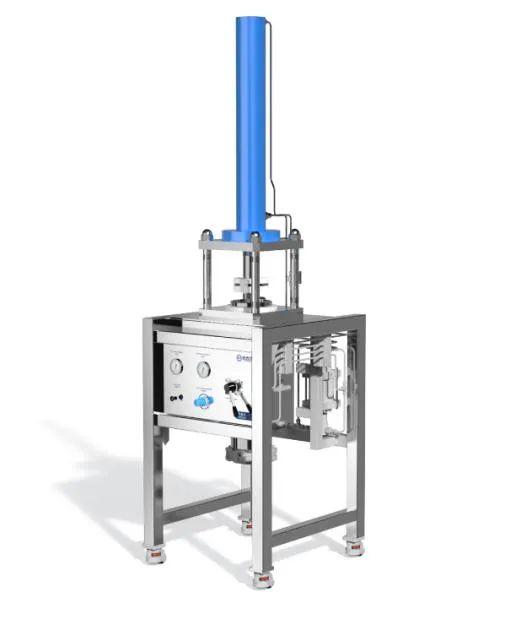
Figure 1: DAC Dynamic Axial Compression Column
1. Industrial Preparation Liquid Chromatography Device
Industrial preparation liquid chromatography is a process that uses chromatography technology to separate and collect pure substances. Its main purpose is to obtain a sufficient quantity of a single compound to meet research and other uses. Preparative liquid chromatography can be divided into three types based on the sample amount: semi-preparative (≤100mg), preparative (0.1-100g), and large-scale preparation (≥100g). The diameter of the chromatography column is generally greater than 2 centimeters, mainly used for industrial-scale production. The main difference between industrial preparation liquid chromatography and analytical HPLC is that its design aims for efficient processing of high-load samples (from milligrams to kilograms) and achieving high purity separation of target compounds. Its core components include:
High-Pressure Infusion System
Using high-flow pumps (such as plunger pumps), flow rates can reach hundreds of mL/min to L/min, meeting industrial separation needs. A gradient elution system can be configured to optimize separation efficiency.
Sample Injection System
Automatic samplers or continuous injection devices support continuous production of large-volume samples (from several liters to tens of liters).
Chromatography Column
The column size is much larger than analytical columns (diameter can reach tens of centimeters, length over 1 meter), with fillers mostly being large particles (10-50μm) to balance load and separation efficiency.
The DAC dynamic axial compression column is the core innovative technology, providing DAC chromatography columns in various sizes from 50mm to 2000mm.
Detector
Commonly used detectors include UV-Vis, differential refractive index (RI), or evaporative light scattering detectors (ELSD), with mass spectrometry (MS) monitoring purity in some scenarios.
Fraction Collection System
Automated stepwise collection of target peaks, combined with online purity analysis for intelligent fractionation.
2. Principles and Advantages of DAC Dynamic Axial Compression Columns
The DAC technology dynamically adjusts the bed pressure of the column, solving the problems of bed collapse and channeling caused by long-term use of traditional packed columns, significantly improving the stability and reproducibility of industrial separation.
Working Principle
Axial Pressure Control
The interior of the column is equipped with a movable piston, which continuously applies axial pressure (e.g., 10-100 bar) through hydraulic or mechanical devices.
The pressure is dynamically adjusted based on the properties of the filler and operating conditions, keeping the filler particles tightly packed.
Dynamic Compensation
During operation, gaps generated by friction or swelling of the filler are compressed and filled in real-time, avoiding the formation of uneven flow paths.
Technical Advantages
1. High column efficiency and long lifespan: Uniform filler distribution increases theoretical plate number (N) and reduces peak tailing.
2. Resistant to pressure fluctuations and temperature changes, suitable for long-term continuous production.
3. Flexibility and maintainability: Fillers can be replaced online, reducing downtime.
4. Compatible with various types of fillers (ion exchange fillers, ion exchange resins, macroporous adsorbent resins, polymer chromatographic media, chiral fillers, etc.).
5. Seamless scaling up of production: Laboratory-scale separation conditions can be directly scaled up to industrial levels, reducing process development cycles.
3. Typical Applications of Industrial Preparation Chromatography and DAC Columns in the Pharmaceutical Industry
Active Pharmaceutical Ingredient Purification: Such as the final product refinement of antibiotics (cephalosporins) and anticancer drugs (paclitaxel). Chiral Separation: Separation of enantiomers using chiral stationary phases (CSP) to meet regulatory requirements for optical purity. Natural Product Extraction: Large-scale separation of high-value components (such as ginsenosides, flavonoids) from plant extracts. Purification of peptides and proteins in bioproducts (such as insulin, monoclonal antibody fragments). Preparation of high-purity standards for fine chemicals (such as electronic grade chemicals), fragrances, and intermediates.
4. Challenges of Industrial-Grade Separation and DAC Solutions
Column bed stability under high load: DAC columns avoid the vicious cycle of “collapse-channeling” of traditional columns through dynamic compression, ensuring stable separation efficiency. Cost Control: Extended filler lifespan reduces replacement frequency, combined with automation systems to lower labor costs. Continuous production demands: DAC columns support multi-column tandem (simulated moving bed chromatography, SMB) or cyclic separation, improving yield.
5. Future Development Trends
Intelligent and Integrated: Combining AI to optimize separation conditions for real-time feedback control. Green Process Development: Environmentally friendly fillers with low solvent consumption (such as surface porous particles). Expansion of biopharmaceutical applications with new DAC column designs suitable for large molecule (mRNA, viral vector) separations.
Conclusion
The combination of industrial preparation liquid chromatography and DAC dynamic axial compression columns addresses core issues such as column efficiency decay and difficulties in process scaling during large-scale separation, making it an indispensable technology in modern pharmaceuticals and fine chemicals. Its characteristics of high stability, easy scalability, and low operational costs place it in an important position in industrial scenarios pursuing high purity and high yield.
A WeChat group has been established for “Biopharmaceutical Process Development Technology Exchange Group.” Add the editor’s WeChat 514099167 to join.
 Biopharmaceutical PartnersScan to follow usID:zpt_PartnerW:514099167
 Share, Like, and Follow! A triple hit for biopharmaceutical professionals!