Recently, friends who are renovating have been asking me, what should I do about the many dead zones in my home WiFi?
The answer is simple—Mesh networking.
But did you know? Mesh networking actually comes in two forms, and the difference is shocking! I dare say that 90% of people on the market make the wrong choice.
Let’s get to the conclusion: Wired Mesh is the true king, while Wireless Mesh? That’s just a little brother.
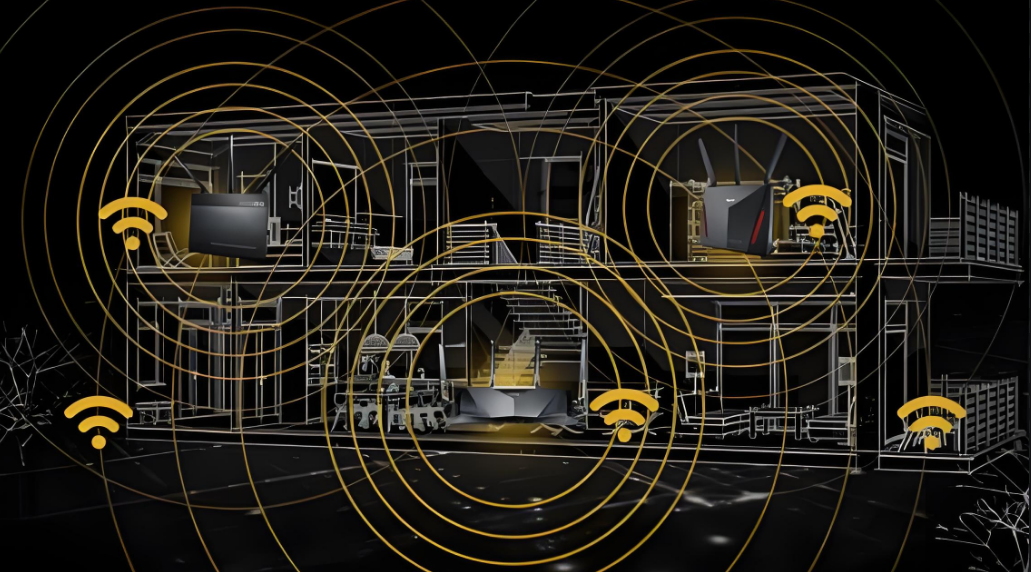
What is Mesh networking? In simple terms, it means—having full WiFi coverage in every corner of your home.
In short, Mesh uses multiple routers to form a large network that covers the entire house. Unlike traditional repeaters, where the signal weakens with each hop, Mesh networking allows each node to maintain a strong signal.
But here comes the problem: there are two forms of Mesh networking, and if you choose the wrong one, you’ll regret it!
Wired Mesh: The True Performance Beast
Wired Mesh means that each node router is connected via Ethernet cables. For example, you place the main router in the living room, and the routers in the bedroom and study are connected back to the main router with cables.
The advantages are incredibly obvious:
Speed is almost lossless
Ultra-low latency, gaming feels fantastic
Stability comparable to a direct wired connection
The only “disadvantage”? You need to lay Ethernet cables in advance. But honestly, if you’re renovating and don’t reserve Ethernet cables, I can only say you deserve a laggy WiFi.
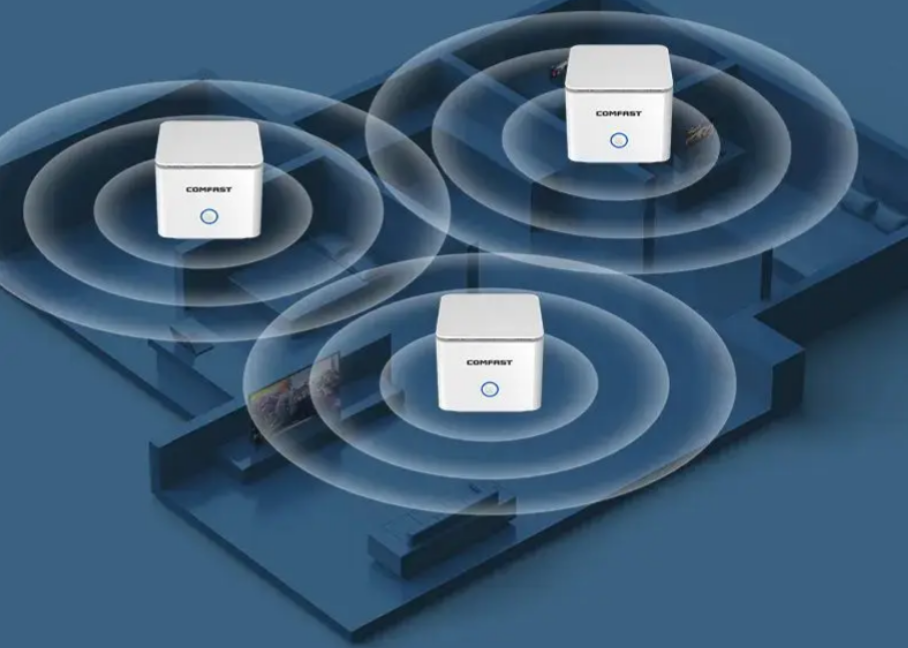
Wireless Mesh: Looks good, but the experience is terrible
Wireless Mesh means that nodes are connected via WiFi signals. Sounds convenient, right? No wiring, plug and play.
But the actual experience? Haha.
I have tested the same devices, and Wireless Mesh is:
-
Speed is cut in half
-
Latency is 3-5ms higher (don’t underestimate these few milliseconds, gamers know)
-
Stability? Depends on the weather
Even funnier, many vendors differentiate between dual-band and tri-band wireless Mesh. In plain terms—it’s the difference between junk and high-end junk.
Real test data speaks volumes: Wired Mesh wins hands down
I conducted a comparative test using the same router:
Wired Mesh node:
-
Download speed: 945Mbps (almost maxing out gigabit broadband)
-
Upload speed: 940Mbps (internal network)
-
Latency: 1ms
Wireless Mesh node:
-
Download speed: 420Mbps (cut in half)
-
Upload speed: 380Mbps (internal network)
-
Latency: 4-6ms
Is there anything more to say about this gap?
The most interesting part: Wired and Wireless can be mixed!
Many people don’t know that Mesh networking can actually be mixed. For example, use wired from the living room to the bedroom, and wireless from the bedroom to the balcony.
This way, you ensure performance in the main areas while solving the wiring difficulties in some areas.
But remember one principle:If you can use wired, don’t use wireless..

Advice for Renovators: Always Reserve Ethernet Cables!
If you are renovating, heed my advice:
-
Reserve at least 2 Ethernet ports in each room
-
The living room TV wall must have Ethernet ports
-
Consider the study and bedside in the bedroom
Don’t wait until the renovation is complete to regret it; otherwise, you’ll have to use ugly surface wiring or suffer with laggy wireless Mesh.
In the end, if you’re still debating whether to lay Ethernet cables in 2025, I can only say—You really don’t understand what a good network is..
Wired Mesh is the ultimate choice, no arguments accepted! What type of Mesh do you use at home? Let’s discuss in the comments!