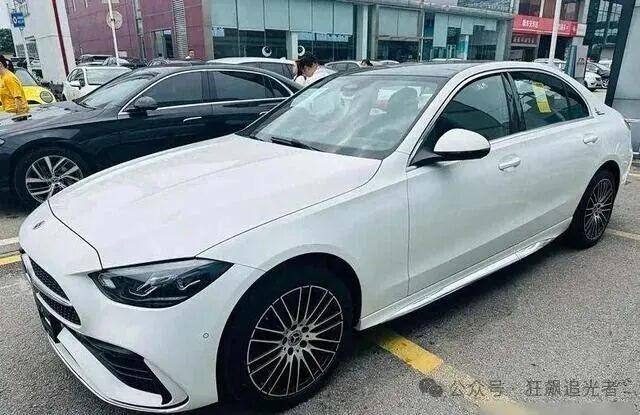
A freshly washed Mercedes-Benz C-Class is parked by the roadside, droplets sparkling in the sunlight. The owner rolls down the window, smiling. This scene has been seen too many times in recent years, even though there are always people online saying, “What luxury car is a 1.5T C-Class?” Yet, the keys handed out at dealerships every month still pile up like a small mountain.
https://example.com/c-class-exterior.jpg
As the new year rolled in, Mercedes-Benz finally removed the 1.5T engine. The 2026 model of the C-Class now comes exclusively with a 2.0T engine, available in two power versions. Prices start at 338,300 yuan, similar to the previous model. Looking closely at the specifications, the 170 horsepower and 204 horsepower figures are not significantly stronger than the previous 1.5T with mild hybrid. In short, this is not a power upgrade, but rather a removal of the often criticized “small displacement” label.
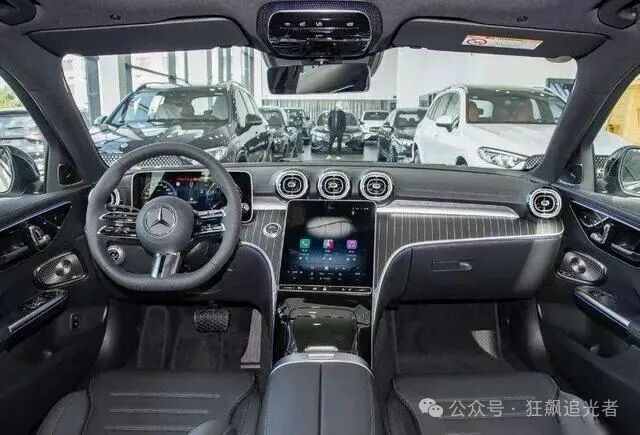
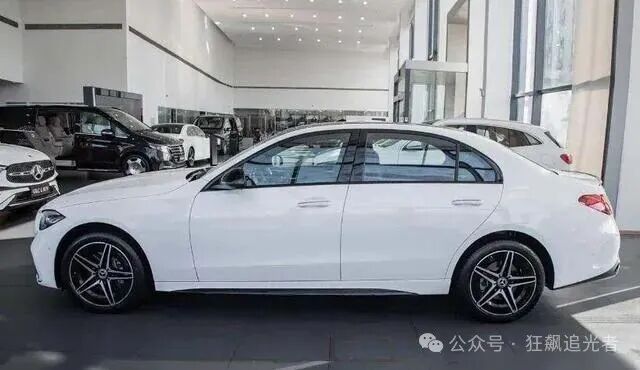
The all-wheel-drive sports version has quietly disappeared, replaced by a special edition with a rather mysterious name. It now includes blind spot monitoring, seat ventilation and heating, and the renowned Burmester sound system. All models are equipped with a 360-degree panoramic camera and automatic parking, keeping up with the mainstream. However, stepping inside the car, it still has that familiar feel—an upright large screen, almost no physical buttons, a leather-wrapped steering wheel, and neatly stitched seams. From the outside, the blacked-out grille, black mirrors, and dual exhausts remain unchanged in size. Everything seems the same, but the most crucial component has indeed changed.
https://example.com/c-class-interior.jpg
Five years ago, when Mercedes decided to equip the C-Class with a 1.5T engine and mild hybrid system, the forums exploded. Some compared the parameters with the old 2.0T, others showcased the acceleration performance of the BMW 330i, and some directly claimed, “This is just a grocery car sold under the luxury banner.” Strangely, the more they criticized, the more stable the sales became. Monthly sales never dropped below ten thousand units, and during peak seasons, it could even reach twenty thousand. Those who typed “I will never buy it” in the comments might have gone to the dealership for a test drive that weekend.
The BMW 3 Series and Audi A4L have never followed the trend. The 3 Series insists on using a 2.0T engine, and the A4L also comes exclusively with a 2.0T displacement. Their sales have not been affected, and the three brands still firmly hold the top three positions in the luxury mid-size car market. The Cadillac CT5, Volvo S60, and Lexus ES, with their high configurations and more competitive prices, still cannot steal customers from those three German brands.
Ultimately, many people walk into a Mercedes dealership already knowing the answer. They may have read countless reviews online and compared various parameters, but when they actually sit in the driver’s seat and touch the three-pointed star emblem on the steering wheel, that feeling wins. Is the power down by a few horsepower? Are there a couple of features missing? In front of that glowing emblem, it all seems negotiable.
https://example.com/competitors.jpg
People in the industry understand that this engine change is not a technical issue at all. The latest draft of the fuel consumption limit from the Ministry of Industry and Information Technology places no restrictions on the 2.0T engine. Mercedes-Benz was purely forced by public opinion—although it sold well, it was constantly criticized for being “unethical,” which was embarrassing. So, they simply removed the lowest configuration 1.5T, raised everything to 2.0T, and adjusted the data conservatively, which neither affected costs nor silenced the critics.
This kind of operation is very Mercedes. They understand the Chinese market too well: what users want is not a real performance upgrade, but psychological comfort. When the neighbor Wang asks, “Is your C-Class 1.5 or 2.0?” the owner can confidently say, “It’s 2.0T,” and that’s enough. As for whether it’s 204 horsepower or 214 horsepower, no one really cares.
I remember a friend who bought a 1.5T C260L three years ago. He always complained about the sluggish power during gatherings, saying that when he floored the accelerator to overtake, it felt slow by half a beat. But when asked if he regretted it, he shook his head: “I might still buy a Mercedes next time.” When asked why, he thought for a long time: “I just like that feeling.”
What feeling? He couldn’t quite explain. It might be the dull sound when closing the door, the moment the 64-color ambient light turns on at night, or the envious looks from others when they see the emblem. These indescribable things are far more important than engine displacement.
https://example.com/brand-value.jpg
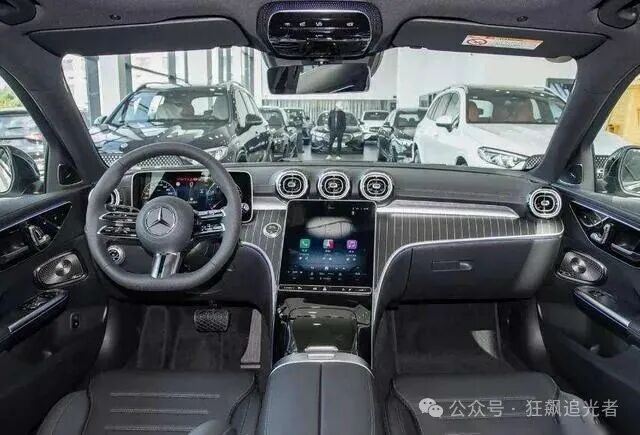
Market research companies have analyzed that over 70% of consumers buying cars in this segment are first-time luxury brand buyers. Their understanding of power is very practical—just enough is fine. What truly moves them is the sense of identity brought by the brand and the refinement created by the design. Mercedes is particularly good at this. Even in the most entry-level C-Class, the moment you sit inside, you can feel that deliberately created sense of class. The large screen, lighting, materials—every detail tells you: this is a Mercedes.
Therefore, this so-called “upgrade” is more like precise emotional management. After five years of criticism, Mercedes finally provided an explanation. Although everyone knows this is just a change of soup without changing the medicine, at least on the surface, the debate can settle. Those who once criticized the 1.5T can now consider the C-Class with peace of mind. After all, it is now a “genuine” 2.0T.
The salespeople in the dealership are more direct: “In the past, when customers asked about the displacement, we had to explain the benefits of the mild hybrid system for a long time. Now it’s simple, just say 2.0T, and the customers nod without further questions.” You see, sometimes change doesn’t require a real change; it just needs a change in wording.
At dusk, another brand new C-Class was driven away. The owner is a young man who deliberately opened the hood for a photo, revealing the 2.0T badge. He wrote on his social media: “Finally got the real Mercedes.” Below, a flurry of likes, including from that friend who once swore never to buy a 1.5T.
This world is so interesting. The loudest critics are often the most loyal customers. Mercedes has long seen through this, so it remains calm, gently nudging at the right moment, and everything returns to the way it wants it to be.