Source: Yufei Network
Chips, as the core of all electronic products, have become an indispensable part of our daily lives. From small devices like smartwatches to large ones like rockets and satellites, chips are everywhere. However, the working environments of different types of chips vary significantly. For instance, ordinary consumer-grade chips operate only under normal temperature conditions, and even if they lag, it does not have a significant impact. In contrast, chips used in factories may need to endure harsher environments, such as high humidity, vibration, and dust. Chips used in automobiles must ensure long-term stability, as high-speed vehicles require absolutely reliable chips for safe operation. Meanwhile, chips used in aerospace applications must withstand some of the most extreme environments on the planet and constantly face threats from cosmic radiation.
Chip grading essentially categorizes chips based on the severity of their application environments. The chips we commonly encounter are typically divided into four categories: consumer-grade, industrial-grade, automotive-grade, and military-grade (aerospace-grade). Currently, the highest specification chips we can access are automotive-grade chips. Compared to consumer-grade chips, automotive-grade chips can withstand more extreme temperatures and usage environments.
Since military-grade and automotive-grade chips are so advanced, why not make all chips meet the standards of high-grade chips?
Chip grading is not that simple; it involves the entire process from circuit design and manufacturing to the final packaging and testing of the chip. High-specification chips may not necessarily be suitable for other grade environments. Firstly, higher specification chips often mean higher prices, and paying for scenarios that may never exist reduces the cost-effectiveness of the chips. Moreover, a higher chip grade does not always equate to faster processing speeds; sometimes, chips may sacrifice some performance to avoid crashing in specific application scenarios.
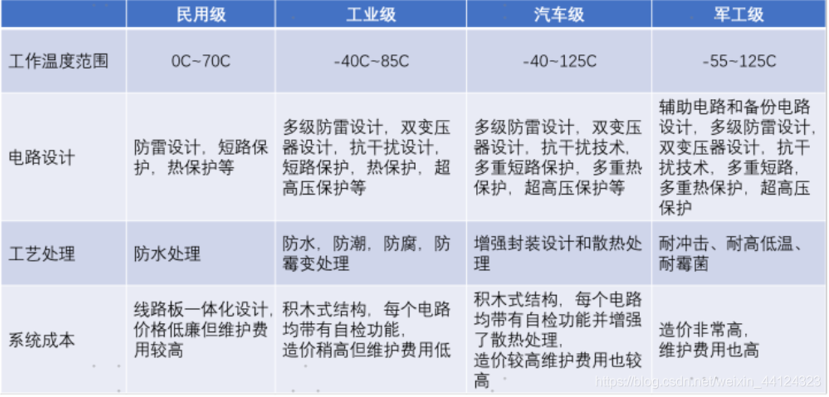
Requirements for Different Grade Chips
According to the chart above, we can see the differences between these types of chips. In simple terms, the higher the grade specification of a chip, the wider the temperature range it can withstand, and correspondingly, the higher the difficulty of chip manufacturing. Why can only a portion of chips achieve military-grade standards?
Redundant Design in Chips
The risk level of a situation is often explained by its fault tolerance rate. In the chip manufacturing process, fault tolerance is typically achieved through redundancy design.
Redundancy design, in simple terms, is about increasing resource investment to enhance the reliability of the chip.
Having redundant circuits in a chip is not wasteful, as chips need to be well-prepared for unknown tasks to minimize the chances of crashing under special circumstances. Chip design experts explain redundancy circuits: “We can customize the system to have enough buffering between the processor and memory, so that even if the memory is maximally loaded and the transaction flow between the processor and memory has the maximum delay, the processor can cover many transaction issues.” A certain amount of redundant cache can prevent crashes during large-scale parallel tasks when memory overflows. Additionally, applying redundancy design to memory can achieve similar effects.
Of course, designing redundant circuits is not as simple as copying and pasting. For example, chip manufacturers can add processing capacity margins in certain processing flows, such as the aforementioned redundant memory and cache, which can help the chip handle buffering timing issues and potential changes in a timely manner. Redundancy can also involve selecting more mature IP cores, which, although not necessarily the fastest in computation speed, can maximize reliability. Furthermore, redundancy allows processors to adopt stable strategies rather than efficiency strategies when computing certain algorithms, minimizing the risks of errors in calculations.
In summary, redundancy is not superfluous. Engineers in the autonomous driving field have pointed out: “Many aspects of design are based on rules of thumb. They may require reserving 30% of the margin to provide a timing buffer. This can address exceptional situations encountered in physical design. This margin is by no means wasteful; it is more like insurance against critical issues in physical design or processes.”
Special Packaging Enhances Chip Reliability
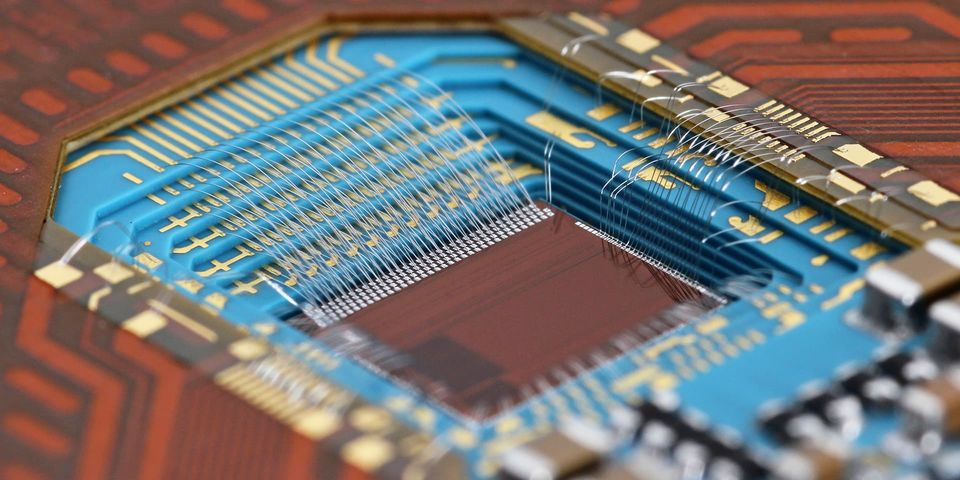
Image Source | microhybrid.com
SpaceX has stated that at least 40 Starlink satellites have already fallen or will fall into the atmosphere due to geomagnetic storms. SpaceX explained that after the satellite launch, the satellites were affected by magnetic explosions, leading to increased atmospheric density at the launch site, which increased the resistance of the satellites in the atmosphere, causing some to go off course.
In fact, the threats faced by chips onboard satellites, rockets, and other aerospace vehicles go far beyond this. Without the protection of the atmosphere, geomagnetic explosions, solar storms, cosmic rays, and more can affect the normal operation of chips. Moreover, no matter how much effort is made in the initial design, these threats cannot be completely mitigated. Therefore, special protection is required for chips to isolate them from the external environment.
A piece of monocrystalline silicon undergoes design, manufacturing, packaging, and testing processes before it becomes the chip we use. One of the functions of packaging is to protect the fragile internal chip from external environmental influences.
For aerospace-grade chips, ordinary consumer-grade chips can achieve sufficient protection with plastic packaging, while aerospace-grade chips often use ceramic or metal packaging. The outer surface of the packaging is also electroplated with a layer of brass to isolate cosmic rays and high-temperature environments. To reduce secondary effects caused by radiation, special gases are also filled during packaging.
Currently, automotive-grade chips are the highest specification chips visible to consumers. According to automotive-grade requirements, their operating temperature must reach -40°C to 125°C, and they must also have lightning protection, moisture resistance, and shock resistance. Therefore, automotive-grade chips often need to consider heat dissipation and sealing issues during packaging. Currently, many automotive chips use SIP packaging, integrating most modules that require stable computation into a unified protective package, which also reduces the communication distance between different modules, minimizing the potential impact on data transmission.
Strict Review Mechanisms
In fact, whether it is industrial-grade, automotive-grade, or military/aerospace-grade chips, after multiple rounds of preparation, they must undergo strict selection and testing. Chips of various grades are not self-certified by manufacturers; they must be approved by relevant domestic authorities to determine their grade.
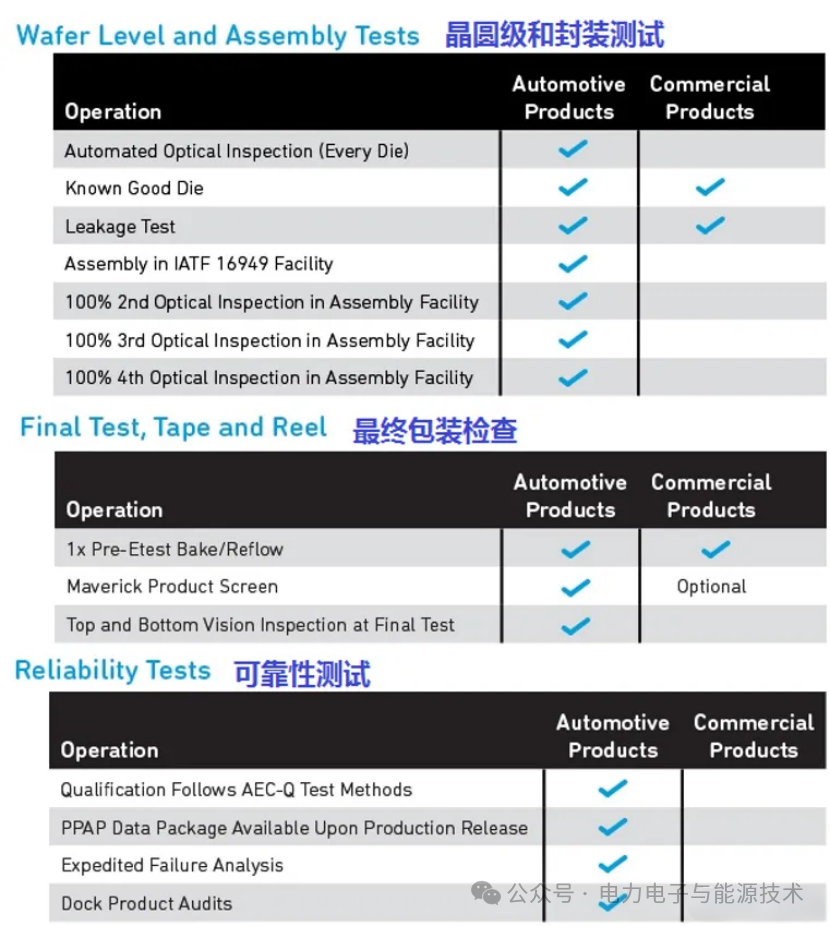
Multiple Testing of Automotive-Grade Chips
In recent years, the electric vehicle sector has grown rapidly, and autonomous driving technology is gradually becoming widespread, leading to an increasing demand for automotive chips. Taking the frequently discussed automotive-grade chips as an example, they require multiple rounds of demand management, safety-critical design, functional failure simulation, review and reporting, and third-party evaluation for safety certification, compared to ordinary consumer-grade chips. According to the new IOS 26262-2018 standard, functional safety refers to the absence of unreasonable risks caused by hazardous behaviors of electrical and electronic systems. All automotive products, including IP, must meet the functional safety requirements defined by this new standard. The main verification for functional safety reliability is AEC validation.
AEC stands for Automotive Electronics Council, a standardization organization established in 1993 by three major companies in the United States: Chrysler, Ford, and General Motors, aimed at establishing universal standards for reliable and high-quality electronic components. AEC members are divided into two types: permanent members, usually vehicle companies, and technical members, generally chip companies. AEC provides testing platforms, and chips must undergo AEC-Q series testing after wafer fabrication to pass automotive-grade verification. Therefore, AEC-Q testing is also referred to as the “basic threshold” for chips to be installed in vehicles.
Once testing is completed, results are needed. After testing, chips will yield an overall pass rate for that batch, known as yield rate, which determines the final grading range of the chips. According to the DPPM (Defect Parts Per Million) standard, consumer chips have a defect rate of less than 500, while automotive-grade chips have 0-10 defects. Industrial-grade chips fall between the two, with specific requirements adjusted according to customer needs.
Conclusion
Currently, chips are roughly divided into four grades: consumer-grade, industrial-grade, automotive-grade, and military (aerospace) grade. Different grades and specifications of chips have varying requirements from design to packaging and testing stages, and their usage scenarios also differ significantly. Overall, the higher the specification of the chip, the more redundancy design it incorporates, the tighter the packaging, and the more complex and stringent the testing process.