University College London
Master’s Program in Robotics and Artificial Intelligence
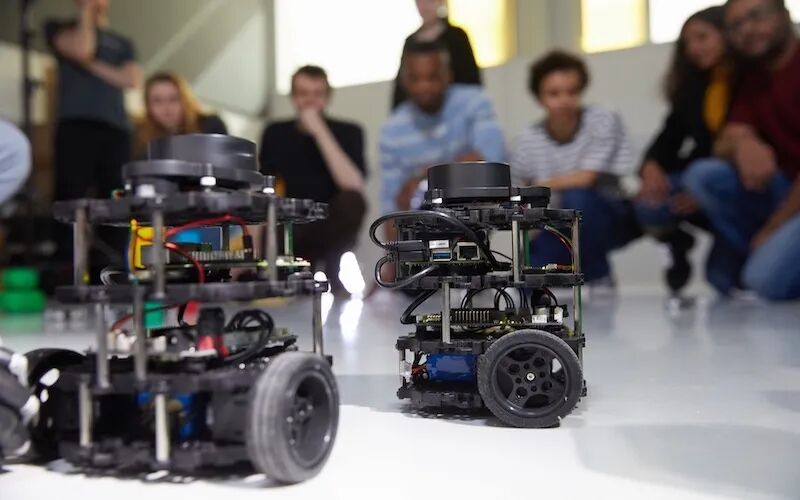
In the current era where artificial intelligence and robotics are deeply integrated and reshaping the global industrial landscape, University College London (UCL) has launched a Master’s program in Robotics and Artificial Intelligence, leveraging its strong foundation in computer science and artificial intelligence. This cutting-edge interdisciplinary course focuses on “theoretical foundations, practical empowerment, and location advantages” and aims to cultivate future leaders with both technical depth and industry vision, opening doors to the forefront of intelligent technology for students.
Core Positioning of the Program: Cutting-edge Interdisciplinary Training
The UCL Master’s program in Robotics and Artificial Intelligence precisely targets core industry needs and constructs a training system that integrates the essence of multiple disciplines. The curriculum breaks down the barriers between computer science, artificial intelligence, robotics, and mechatronics, closely combining core technologies such as machine learning algorithms, robotic modeling and control, and computer vision with engineering practice, solidifying theoretical foundations while enhancing application capabilities.
The core objective of the program is clear: to cultivate future leaders, engineers, and researchers in the fields of intelligent robotics and artificial intelligence. In the context where robotics and autonomous systems are increasingly becoming core infrastructure for future society, the course not only focuses on the development of technical capabilities but also pays attention to industry ethics and social impact, specifically discussing the ethical and legal issues brought about by robotic technology, helping students form a comprehensive understanding of technology.
As a new program welcoming its first cohort of students in the 2024/25 academic year, it relies on UCL’s top resources in artificial intelligence and computer science to create a unique interdisciplinary learning field, achieving a perfect balance between technical depth and breadth.
Teaching and Learning Model
The course adopts a diversified teaching approach, integrating lectures, discussion classes, and laboratory sessions, while also supporting self-directed learning through online resources, forming an efficient learning model of “guided teaching + self-exploration”.
Core Modules
Modeling and Motion Planning
Estimation and Control
Computer Vision and Sensing
Robotic Machine Learning
Master’s Program in Robotics and Artificial Intelligence
Robotic Vision and Navigation
Optional Modules
Aerial Robotics: From Basics to Applications in Real Environments
Introduction to Soft Robotics
Legged Robot Systems
Object Detection and Classification
Robotic Perception, Manipulation, and Interaction
In terms of learning intensity, full-time students typically engage for about 16-19 hours per week, covering various teaching activities such as lectures, seminars, workshops, and tutorials. Outside of class, students are expected to invest about 20 hours in self-directed learning and assessment tasks, with the overall workload equivalent to full-time work intensity (35-40 hours per week), ensuring students can deeply digest knowledge and hone skills.
Assessment methods are also diverse, combining coursework, project practice, exams, and final research projects/theses to comprehensively evaluate students’ theoretical mastery and practical application abilities.
Core Advantages: Building Competitive Barriers with Top Resources
The UCL Master’s program in Robotics and Artificial Intelligence offers students a rare opportunity for advanced study, leveraging multiple advantages such as institutional brand, faculty strength, and practical resources, thus establishing a strong competitive barrier.
1. Endorsement by a Top University and Global Recognition
UCL enjoys a high reputation in the field of higher education globally, ranking 9th in the QS World University Rankings 2026, and its degrees are widely recognized by employers worldwide, becoming a “golden signboard” for graduates in the job market. Leveraging this brand advantage, students not only gain access to quality educational resources but also occupy a starting advantage in their career development.
Moreover, its computer science discipline is particularly strong, ranking first in England and second in the UK in the latest Research Excellence Framework (REF 2021), providing solid disciplinary support for the Master’s program in Robotics and Artificial Intelligence.
2. Top Expert Team and Cutting-edge Teaching
The course is taught by world-renowned scholars, all active researchers at the forefront of computer science innovation. They integrate the latest research findings into the teaching content, allowing students to be exposed to industry trends and technological breakthroughs in real-time.
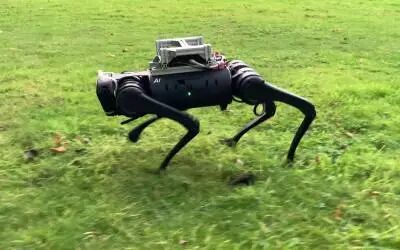
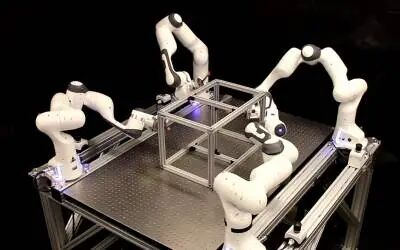
During the teaching process, students will apply programming skills to implement robotic algorithms under expert guidance, engaging with various systems such as mobile robots, robotic arms, and robotic sensors, mastering computational techniques for processing robotic sensory data for applications such as object recognition, autonomous navigation, and robot interaction, achieving a seamless transition from theory to practice.
3. Practical Projects and Industry Resource Integration
Practice orientation is one of the core features of the course, and the major projects that students must complete provide valuable real-world experience. Many projects are conducted in collaboration with industry partners through the IXN Industry Exchange Network, allowing students to delve into real corporate scenarios, solve real technical problems, accumulate industry experience, and form industry insights.
This dual project selection of “academia + industry” provides academic exploration opportunities for students aspiring to research, while also building bridges to industry for those inclined towards employment, achieving precise matching of talent cultivation and industry needs.
4. Advanced Facilities and Quality Learning Environment
Students primarily study at the UCL East campus, home to the Intelligent Robotics Laboratory and Innovation Lab, equipped with world-class hardware facilities. The Innovation Lab integrates computer clusters, advanced manufacturing equipment (such as 3D printers, laser cutters, and power tools), and electronic manufacturing and testing areas, providing comprehensive support for robotic prototype development and experimentation.
The motion capture system in the lab can be used for precise experiments involving robot and human movements, while the recently renovated computer lab is equipped with 55 high-performance computers and ample study space, ensuring support for programming practice and algorithm development. Additionally, UCL boasts award-winning student centers and 18 specialized libraries, ensuring students can easily access top resources and learning spaces.
Notably, although the program is located at UCL East, students still have the opportunity to take courses at the Bloomsbury Campus, enjoying the resource advantages of multiple campuses.
5. Location Advantages and Rich Networking Opportunities
The program’s location in London is recognized as one of the best cities in the world for studying artificial intelligence, with its vibrant tech scene providing students with a unique external environment. Students can participate in various tech networking events and stay updated on industry trends.
Within the campus, the course offers students rich opportunities for collaboration and networking: through collaborative projects, research seminars, and other activities, students can regularly interact with peers, academics, and industry professionals, building a professional network. UCL’s career development activities closely connect students with employers and alumni, providing valuable insights into different roles, industries, and application processes.
Moreover, UCL’s numerous clubs and associations provide platforms for students to exchange interests and connect deeply with peers who share similar career goals. As a fertile ground for entrepreneurial spirit, UCL’s academic and industrial networks offer a safe and supportive environment for students with entrepreneurial aspirations.
6. Strong Employment Capability and Development Potential
Although the program does not yet have graduate destination data, relying on UCL’s strong reputation and the practical, industry-oriented skills cultivated by the course, graduates are highly competitive in the job market. UCL computer science graduates have always been favored by employers, and this advantage will directly extend to graduates of this new program.
The skills cultivated by the course are applicable to multiple high-demand fields, with graduates able to work in medical device development, industrial processing, data analysis, machine learning, autonomous navigation, and more, qualifying for core positions in robotic solution development and automation challenges across various industries including manufacturing, security, and healthcare. Additionally, the strong analytical and problem-solving skills developed through the research-oriented aspects of the course lay a solid foundation for students pursuing doctoral studies or engaging in research-intensive work in the industry.
Furthermore, the AI technology knowledge and real-world application skills acquired by students in the course, combined with a profound understanding of AI ethics and social responsibility, will give them a unique advantage in the emerging AI field, helping them participate in shaping and implementing future AI technologies.
The course is specifically designed for students with strong mathematical and programming skills who wish to work or research in the field of robotics. Applicants must have a strong quantitative background, familiar with mathematical topics such as calculus, linear algebra, and probability, and understand core concepts such as derivatives, integrals, series, matrix operations, and Bayesian inference.
In terms of programming skills, practical experience with programming languages such as C/C++, Java, Python, or Matlab is required, along with a grasp of basic programming concepts such as functions, classes, inheritance, branching, and loops. Experience with robotics, Robot Operating System (ROS), Raspberry Pi, or Arduino will provide an additional advantage in the application process.
Specific Admission Standards
-
Academic Requirements: A minimum of a UK upper second-class honors degree or an equivalent international qualification, with a professional background in highly quantitative disciplines such as computer science, mathematics, electrical or electronic engineering, or physical sciences.
-
English Requirements: Must meet UCL’s English level test standard of Level 2, which is an overall IELTS score of 7.0, with no less than 6.5 in each component.
As a core program in UCL’s layout in the field of intelligent technology, the Master’s program in Robotics and Artificial Intelligence provides comprehensive growth support for students with top academic resources, practice-oriented course design, and unique location advantages. Whether aspiring to become leaders in technology research and development, industry application experts, or pioneers in academic research, students can acquire the knowledge and skills suited to their goals, seizing development opportunities in the wave of artificial intelligence and robotics technology.