Uncle Zhang Discusses Leading Robot Actuators: Can These Stocks ‘Move’ Opportunities Amid the Wave of Smart Manufacturing?
Stock friends, Uncle Zhang is back to chat with everyone! Recently, the robot actuator concept sector has been quite lively in the market, with many related stocks showing impressive performance. Today, let’s have a good discussion about the robot actuator track—first, we’ll talk about how it was speculated in the past, then look at the new situation in 2025, and finally highlight the top 10 core leaders to see who has real capabilities and who should be avoided!
1. Past Speculation of Robot Actuator Concepts: From ‘Concept Emergence’ to ‘Gradual Focus’
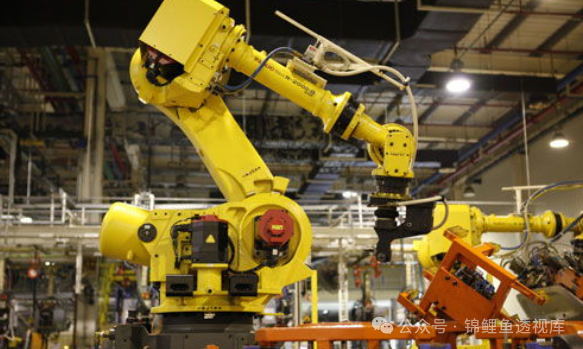
Robot actuators are key components for robots to perform various actions, including harmonic reducers and servo motors, which are essential in industrial and service robots. The speculation in the A-share market has gone through several stages:
First Wave (2015 – 2018): ‘Initial Concept, Broad Speculation’
At that time, the robot concept had just started to gain popularity, and robot actuators as a niche area were not widely recognized. Any company related to robots, regardless of whether they had actual actuator business, could see their stock prices driven up by funds, belonging to the ‘big robot concept’ speculation. Actuator stocks benefited from this, but they rose quickly and fell just as fast, lacking fundamental support.
Second Wave (2019 – 2023): ‘Focusing on Core Components, Assessing Technical Strength’
With the popularization of industrial robots, the market began to pay attention to core components like actuators, and the speculation logic changed. It started to focus on ‘which companies have core actuator technologies (such as the precision of harmonic reducers and the performance of servo motors)’, ‘can they produce in bulk’, and ‘are their downstream customers leading robot companies’. Companies with core technologies that can supply major robot manufacturers would see their stock prices steadily rise; those without technology, merely riding the concept, would quickly be eliminated by the market.
2. Robot Actuators in 2025: Demand Explosion + Data Support
In 2025, the robot actuator market will experience a significant explosion:
- Industrial Robot SectorDomestic industrial robot production is expected to grow by 40% year-on-year, with each industrial robot requiring multiple actuators, such as harmonic reducers and servo motors, directly driving actuator demand;
- Service Robot SectorService robot sales are projected to increase by 55% year-on-year, with a significant rise in demand for small, high-precision actuators for delivery robots and cleaning robots;
- Technological AspectsDomestic actuator technology has made significant progress, with the precision of harmonic reducers reaching about 90% of foreign brands, and servo motors nearing international levels in response speed and stability, accelerating domestic substitution.
From the data, the domestic robot actuator market is expected to grow by 50% year-on-year in 2025, reaching [X] billion yuan, indicating a strong industry development momentum.
3. Analysis of 10 Core Leading Stocks and Risk Warnings
Below, Uncle Zhang selects 10 core leaders (based on the stocks in the images) to discuss their ‘quality’ and risks:
1. Luyuan Harmonic
Core Logic: A leading domestic harmonic reducer company with advanced technology and high product precision, capable of supplying several well-known domestic industrial robot companies. With the growth in industrial robot production, the order volume for the company’s harmonic reducers has surged, ensuring performance.Risk Warning: Foreign giants in the harmonic reducer industry (such as Japan’s Harmonic Drive) still hold strong positions. If Luyuan Harmonic cannot maintain continuous technological innovation, it may be suppressed in high-end market competition; the downstream robot industry is subject to cyclical fluctuations, and if industry growth slows, it will affect product demand.
2. Sanhua Intelligent Control
Core Logic: Engaged in the actuator field, particularly servo motors, while also a leader in refrigeration control components, allowing for diversified development. Under the trend of smart manufacturing, the demand for servo motors is increasing, and the company can leverage its resources in manufacturing to expand its actuator business.Risk Warning: The actuator business accounts for a small proportion, limiting its impact on overall performance; the servo motor industry is highly competitive, and if the company cannot quickly increase its market share, it will face significant competitive pressure.
3. Top Group
Core Logic: An automotive parts company that is also expanding into robot actuator-related businesses, especially in the context of the collaborative development of new energy vehicles and industrial robots, providing some business expansion space.Risk Warning: The robot actuator business is still in the expansion stage, requiring validation in both technology and market; the automotive parts business is heavily influenced by the new energy vehicle industry’s cycle, and if industry growth slows, it will affect overall performance.
4. Shuanghuan Transmission
Core Logic: A gear transmission company, with gears being a crucial component of actuators. The company’s products can be used in robot actuators, covering downstream sectors such as industrial robots and automation equipment. The development of industrial automation drives the growth in gear demand.Risk Warning: The gear industry is highly competitive, with severe product homogeneity. If the company cannot differentiate its products, profit margins will be compressed; fluctuations in raw material prices can affect cost control.
5. Jiangsu Leili
Core Logic: A micro-motor company, with micro-motors being core components of small actuators. The company’s products are applied in service robots and smart home fields. The growth in service robot sales brings a large number of orders for the company’s micro-motors.Risk Warning: The micro-motor industry has a relatively low technical threshold, with many competitors, and price wars may compress profits; the downstream service robot industry is still immature, leading to uncertain demand.
6. Xiamen Precision
Core Logic: Focused on precision mechanical components, with some products applicable to robot actuators. The company has a technological advantage in precision processing, providing high-quality components for actuator companies.Risk Warning: The company’s business primarily involves component supply, leading to high dependence on downstream actuator companies; the precision processing industry is significantly affected by technological updates, and failure to continuously improve processing precision may result in losing customers.
7. Keli Sensor
Core Logic: A sensor company, where sensors work in conjunction with actuators to achieve precise control of robots. The company’s sensors can be used in the robotics field, creating a synergistic effect with actuator companies.Risk Warning: The sensor industry is highly competitive, and if the company cannot quickly launch new products that meet robot demands, it may be surpassed by competitors; the customer certification cycle in the robotics field is long, leading to uncertainties in new customer development.
8. Zhongding Co., Ltd.
Core Logic: A sealing component company that is also expanding into robot actuator-related businesses, leveraging its channels and technological accumulation in manufacturing to enter the actuator market.Risk Warning: The actuator business accounts for a very small proportion, having limited short-term impact on performance; the sealing component business is heavily influenced by industries such as automotive, and if the industry is sluggish, it will drag down overall operations.
9. Wuzhou Xinchun
Core Logic: A bearing company, with bearings being key components of actuators. The company’s products can be used in industrial robot actuators, and the growth in industrial robot production drives bearing demand.Risk Warning: The bearing industry is highly competitive, and price wars may lead to profit declines; fluctuations in demand in the downstream industrial robot industry will affect the company’s order volume.
10. Buko Co., Ltd.
Core Logic: Focused on industrial automation, with layouts in servo systems, PLCs, etc. Servo systems fall under the actuator category, with products applied in industrial robots and automated production lines.Risk Warning: The industrial automation industry is significantly affected by macroeconomic conditions. If the economy declines, the demand for enterprise automation transformation will decrease, affecting product demand; there are many competitors in the industry, leading to fierce market share competition.
4. Uncle Zhang’s Summary: How to Invest in Robot Actuator Stocks Now?
Stock friends, from the analysis above, it can be seen that the robot actuator sector currently has favorable conditions such as explosive downstream demand and accelerated domestic substitution, but there are also risks. Uncle Zhang offers a few suggestions:
First, look for ‘real technology, real products, real demand’: Avoid companies that merely ride the concept without actual actuator business; choose those like Luyuan Harmonic that have core technology, actual products, and clear downstream demand;
Second, focus on ‘field coverage + technical barriers’: Prioritize companies that can cover high-growth areas like industrial robots and service robots, or those with barriers in core actuator technologies (such as harmonic reducer precision and servo motor performance);
Third, be wary of ‘technical risks + industry competition risks’: The technical threshold for actuators is high, and domestic companies still lag behind international giants. As industry competition intensifies, it is crucial to understand a company’s technological reserves and market competitiveness before investing, avoiding blind chasing of high prices.
Finally, as the old saying goes, the stock market has risks, and investment requires caution! The robot actuator stocks currently seem to have opportunities, but one must keep a keen eye to choose wisely, hoping everyone can select the right stocks and earn steadily!
The content of this article is based on publicly available data, and the individual stock cases do not constitute any investment advice. Investors are responsible for their own gains and losses, and the market carries risks; investment requires caution. If there is any infringement, please contact for deletion.