Click the blue text to follow us
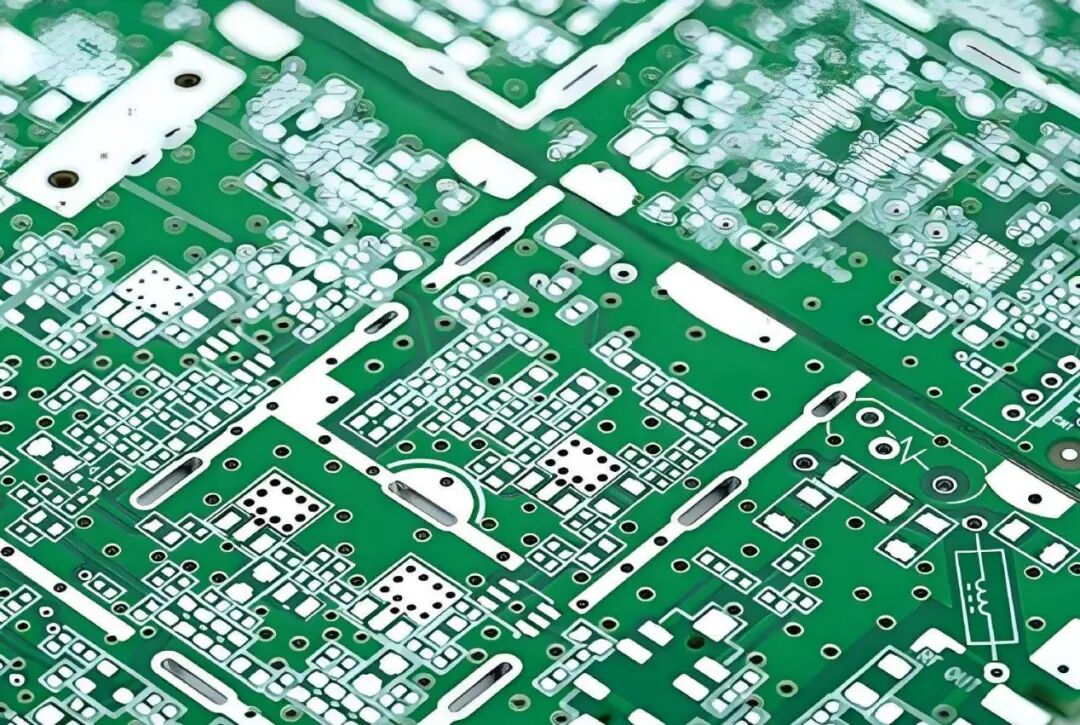
The Printed Circuit Board (PCB) is the “physical skeleton” and “signal highway” of electronic devices—centered around an insulating substrate, it forms metallic conductive pathways (usually copper foil) on the surface or inside the substrate through processes such as printing and etching, and reserves soldering points for components, enabling mechanical fixation and electrical connection of electronic components (such as chips, resistors, capacitors, diodes, etc.), allowing scattered components to form a complete and orderly electronic system.This is an indispensable basic component of modern electronic devices, known as the “mother of electronic products”.
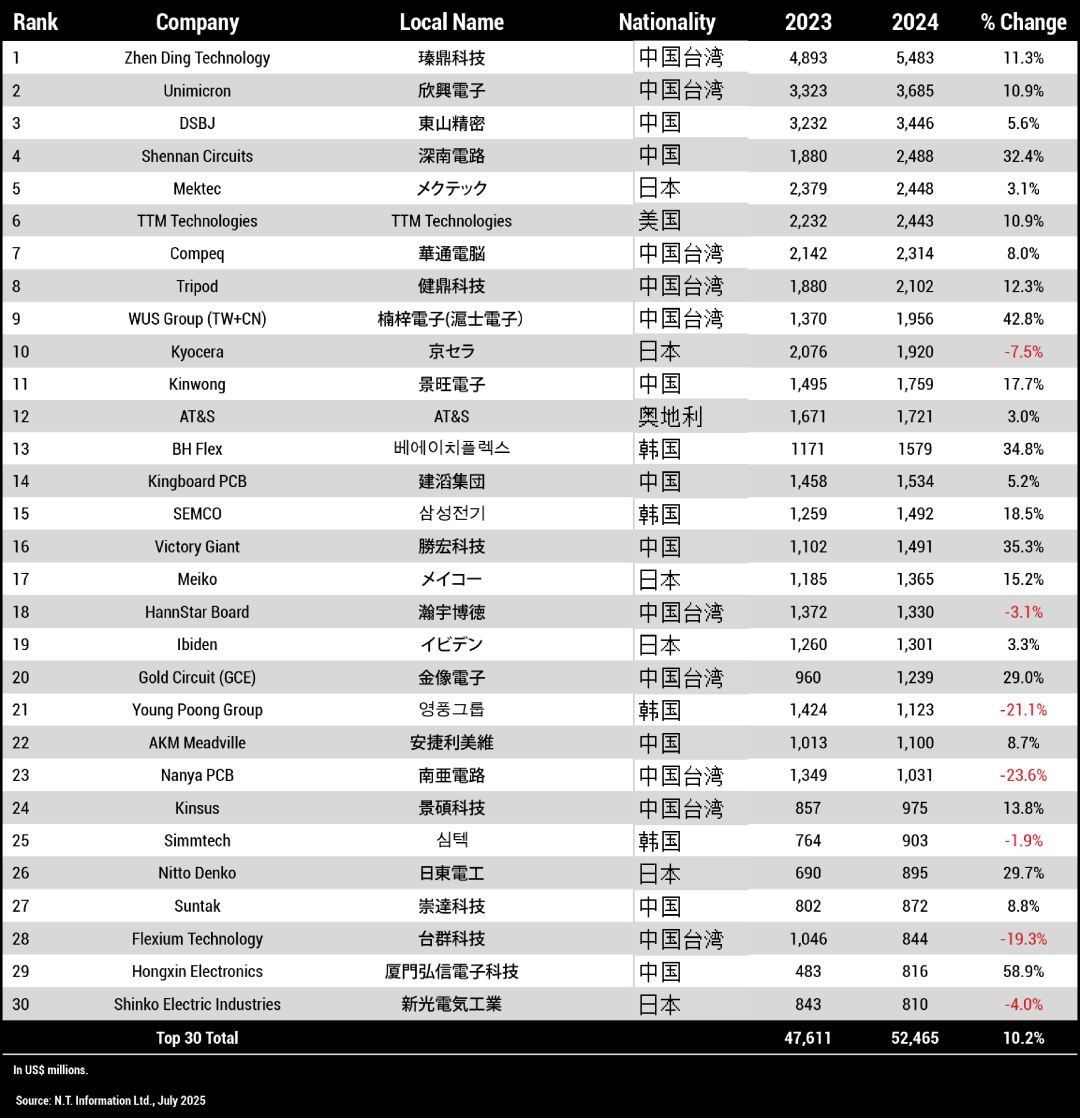
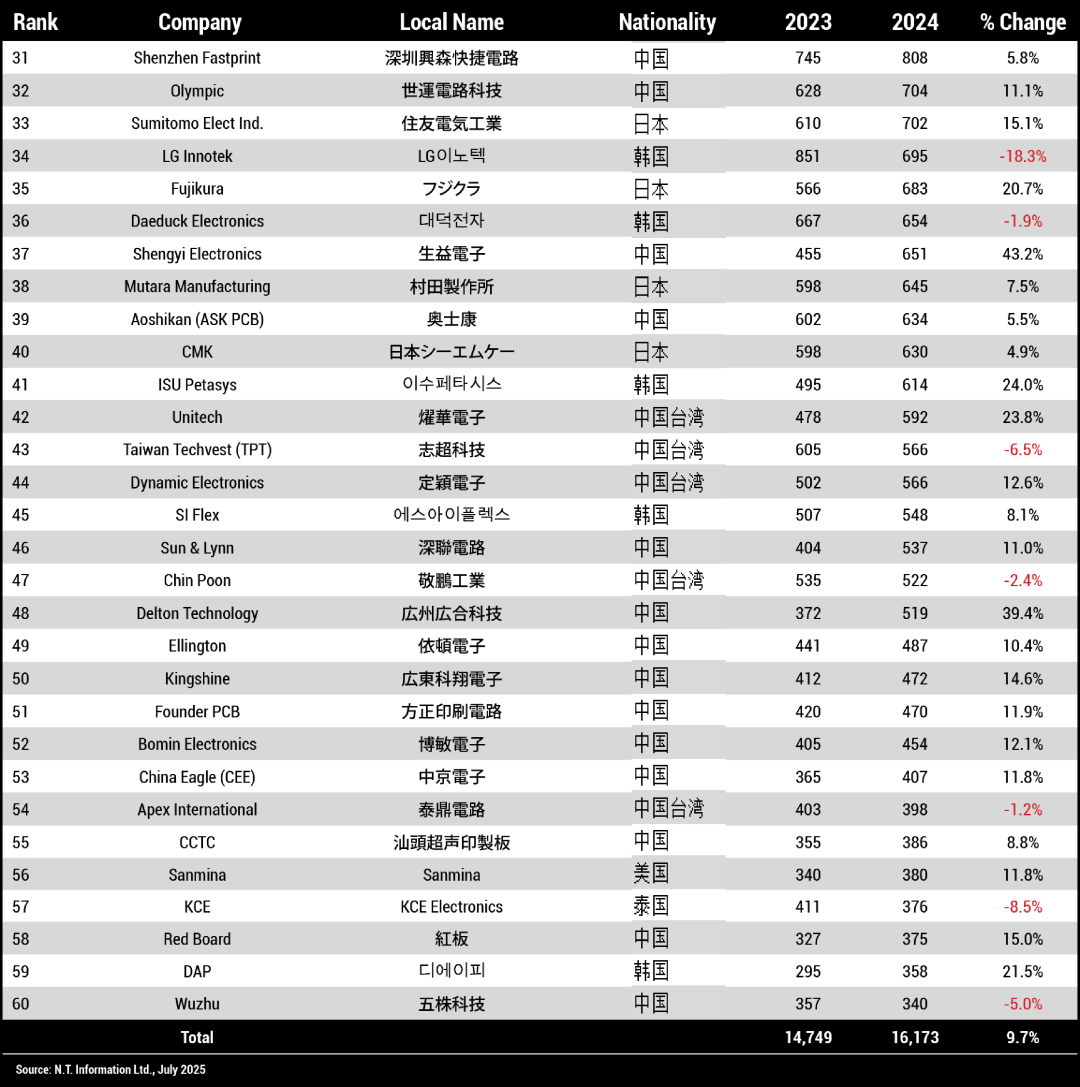
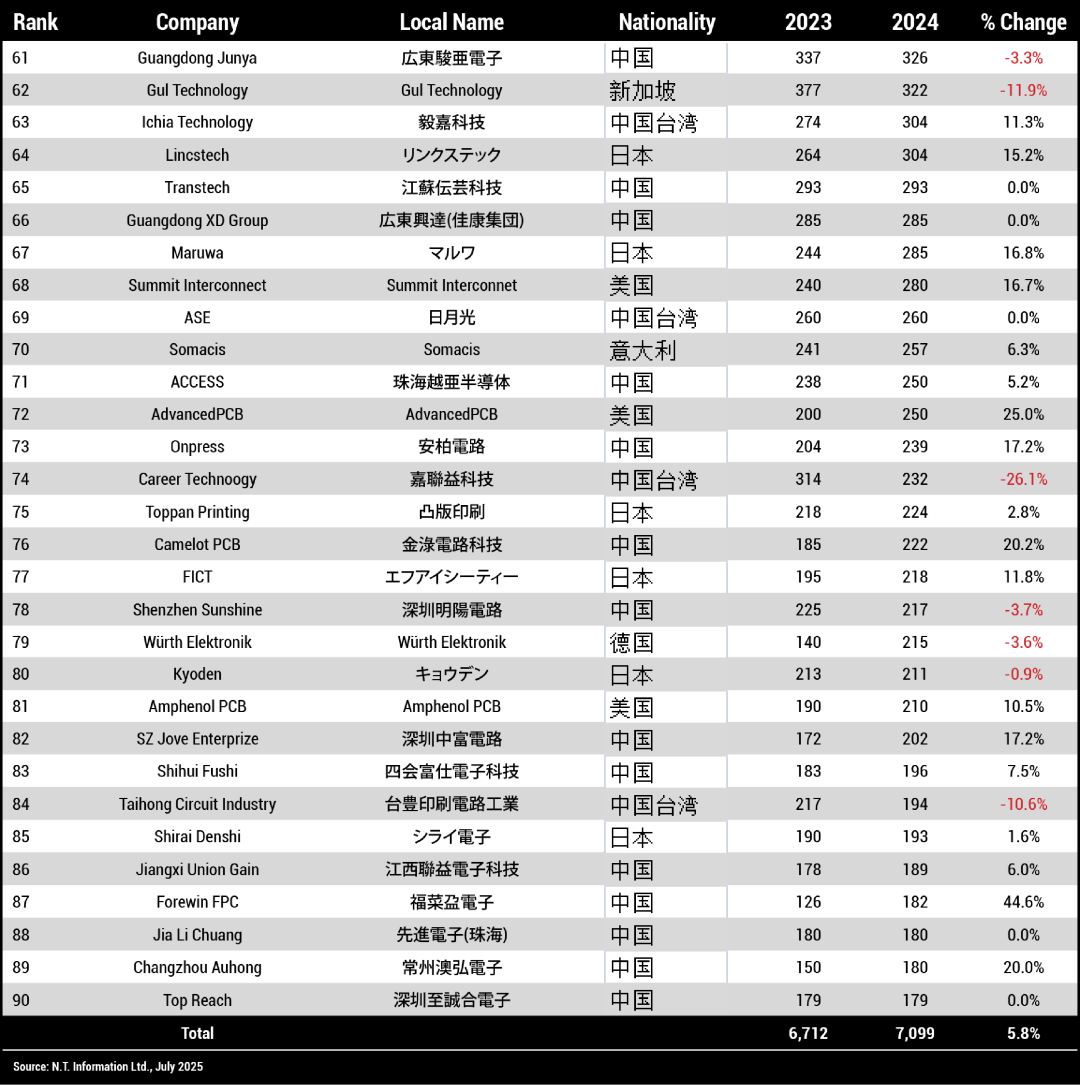
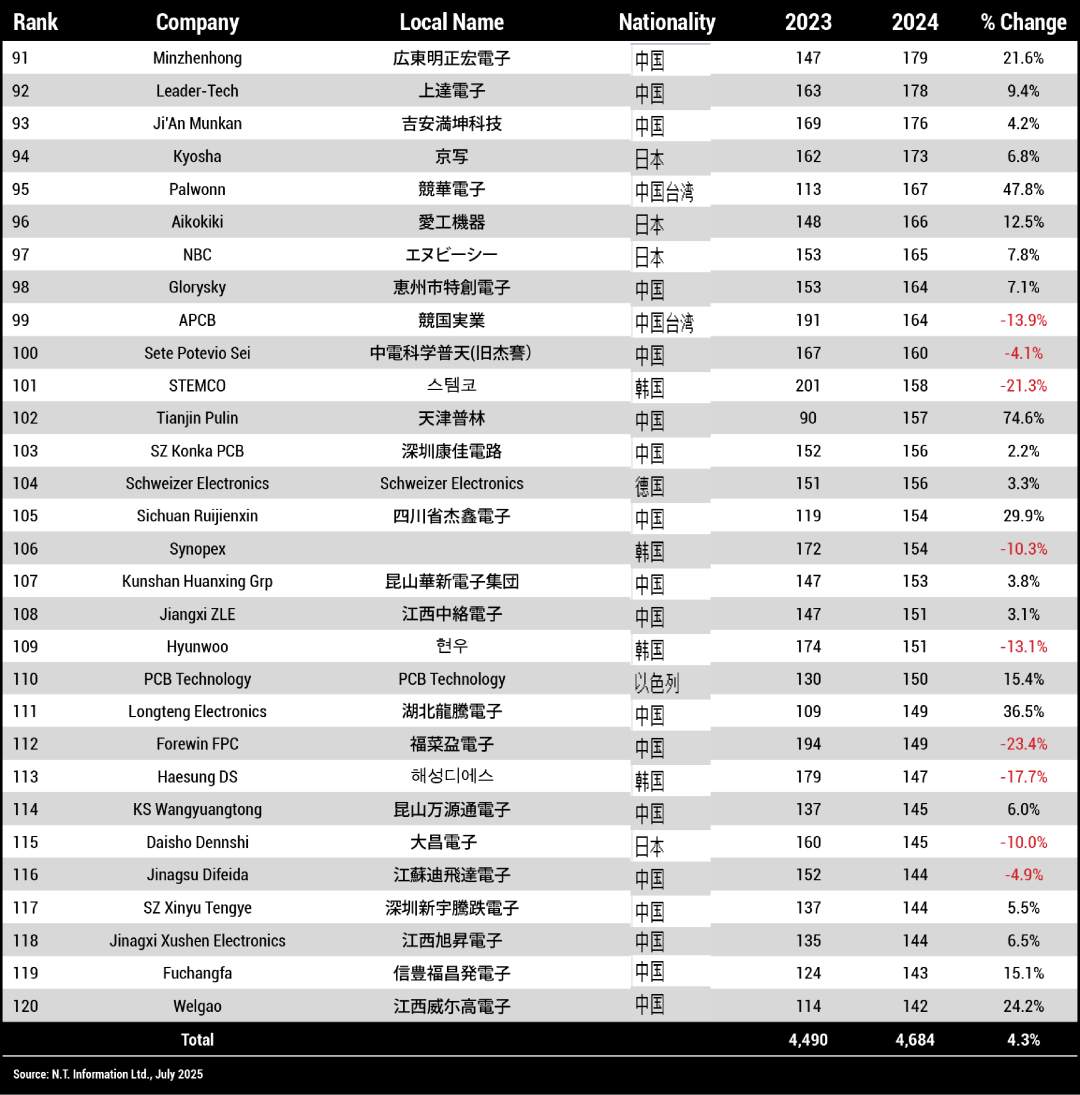
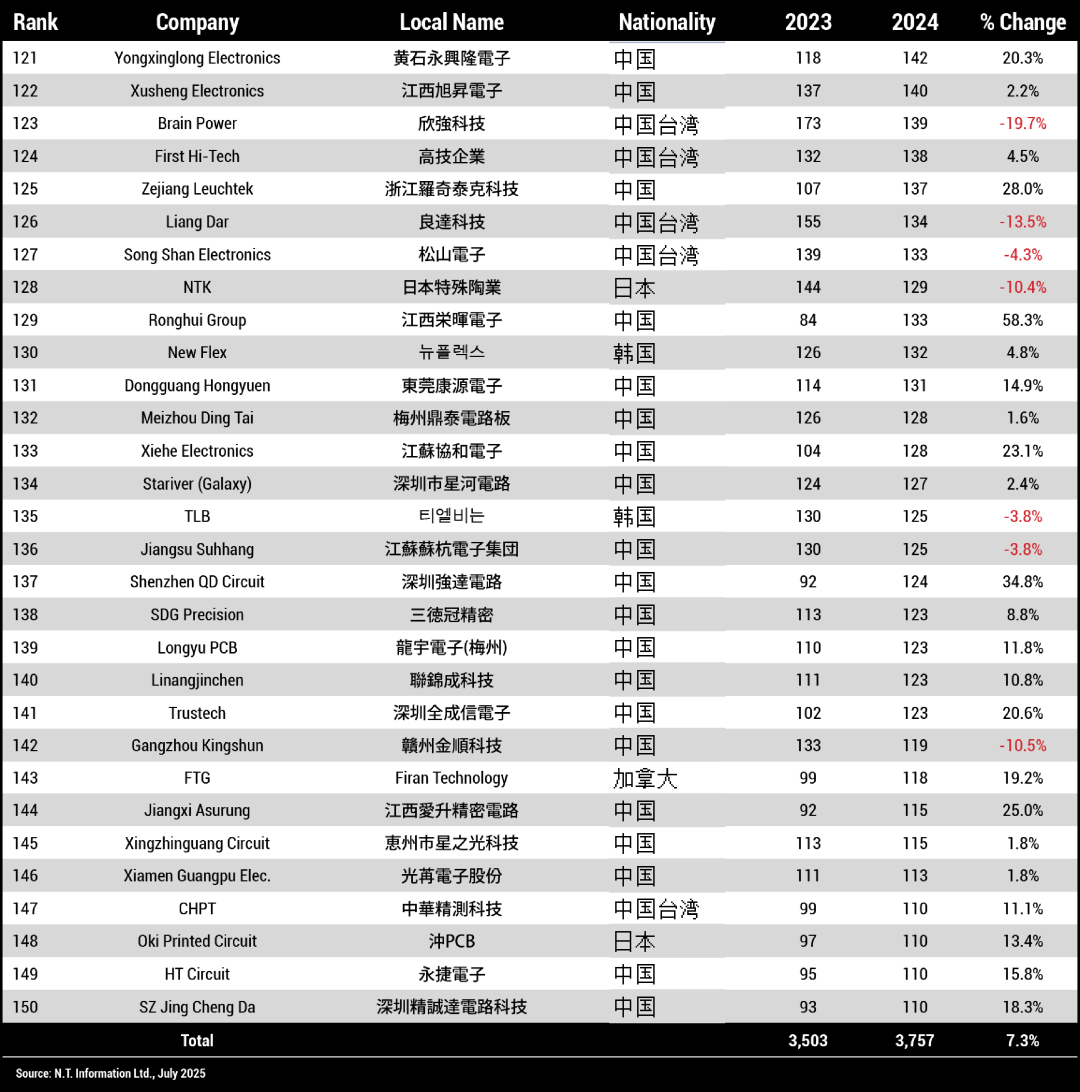
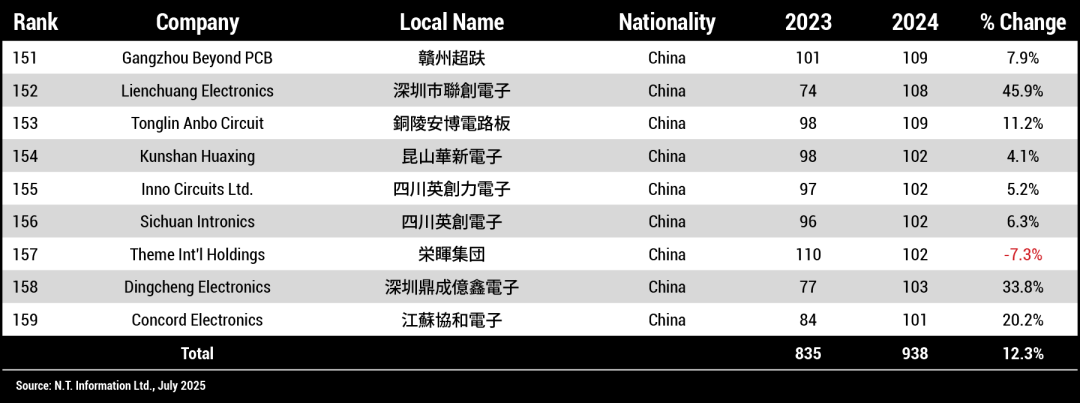
According to the 2024 Global PCB Top 100 list published by the well-known research institution N.T. Information, let’s take a brief look at the industry landscape. A total of 159 PCB companies achieved revenues exceeding 100 million USD in 2024, with total revenue reaching 85.143 billion USD (approximately 602.9 billion yuan), a year-on-year increase of 9.3%.
From a regional distribution perspective, as the world’s largest PCB producer, China has 109 companies on the list, accounting for nearly 70%. Among them, the mainland has 83 companies, with total revenue of 30.077 billion USD, a year-on-year increase of 24.3%, accounting for 35.3%; Taiwan has 26 companies, with total revenue of 25.588 billion USD, a year-on-year increase of 7.8%, accounting for 30.0%.
Japan has 22 companies, with total revenue of 13.763 billion USD, a year-on-year increase of 5.7%; South Korea has 15 companies, with total revenue of 8.837 billion USD, a year-on-year increase of 4.9%. North America has 6 companies (5 from the USA and 1 from Canada), Europe has 4 companies (2 from Germany, 1 each from Austria and Italy), Southeast Asia has 2 companies (1 each from Singapore and Thailand), and the Middle East has 1 company (Israel).
In 2024, the PCB output value in mainland China is approximately 56.4 billion USD, of which local companies account for about 34.7 billion USD, accounting for 62%; manufacturers from Taiwan contribute 16.7 billion USD; foreign manufacturers have an output value of about 5 billion USD (mainly including TTM Technologies from the USA, AT&S from Austria, Meiko and CMK from Japan, and Gul Technology from Singapore, etc.).
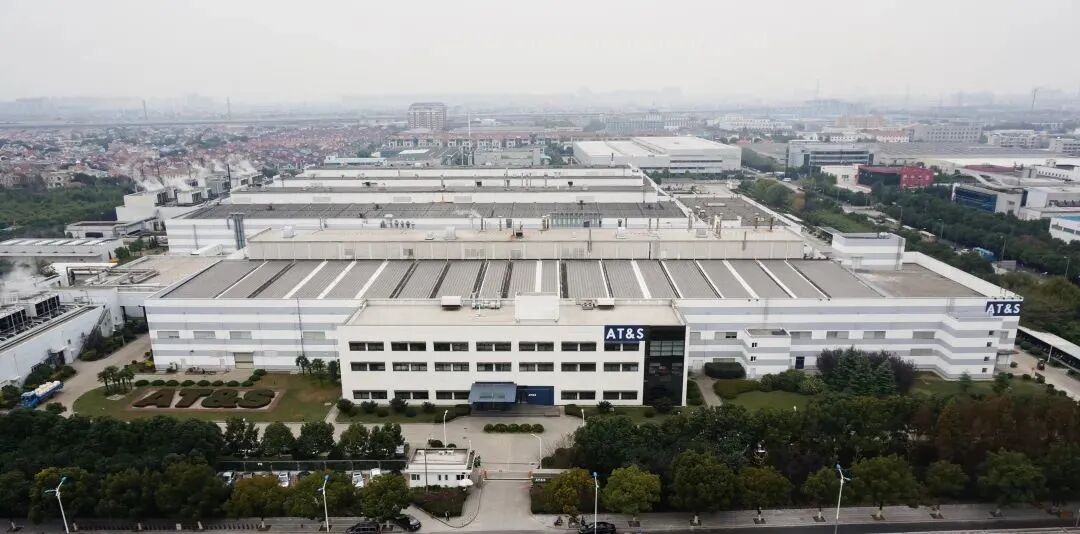
TTM Technologies (迅达科技) from the USA and AT&S (奥特斯) from Austria are the only two non-Asian companies in the top thirty. The former is headquartered in California, USA, with 22 factories worldwide, 17,000 employees, and over 1,800 engineers.
The latter is the largest printed circuit board manufacturer in Europe, headquartered in Leoben, Austria, with production bases in Austria (Leoben, Feldkirch), India (South Jaqood), China (Shanghai, Chongqing), and Malaysia (Kulim). The factory located in the Xinzhuang Industrial Zone in Shanghai was established in 2001, mainly producing high-density interconnect printed circuit boards and substrate-like boards. The Chongqing factory in the Liangjiang New Area was established in 2011, mainly producing high-end semiconductor packaging substrates and modules.
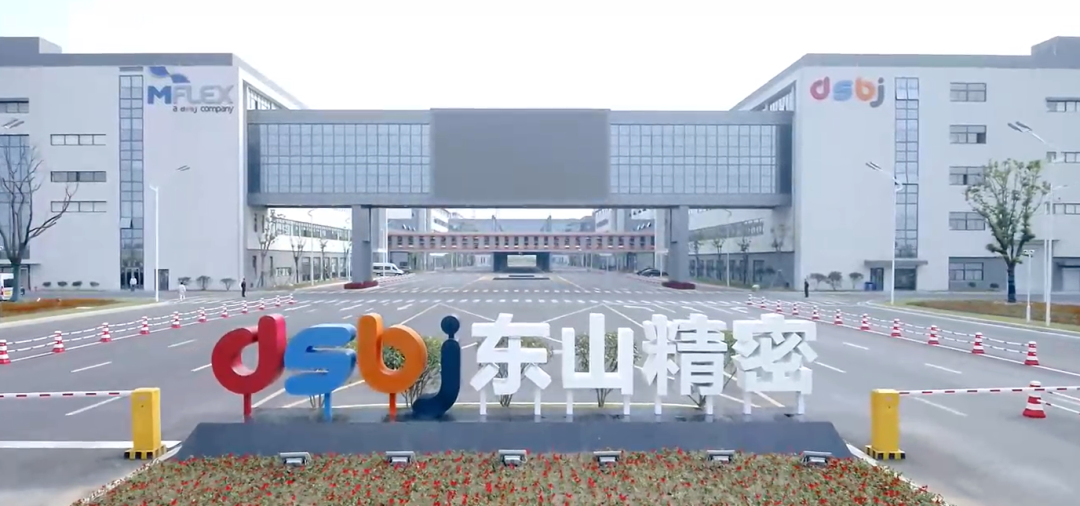
The largest PCB manufacturer in mainland China is Dongshan Precision, which achieved revenue of 3.446 billion USD last year, ranking third on the list. Its predecessor was a small sheet metal and stamping factory established in 1980 in Suzhou Dongshan Town, which began to extend from traditional sheet metal to precision electronic manufacturing in 2007, and in 2016 invested nearly 4 billion yuan to acquire the American MFLX, successfully entering the flexible circuit board (FPC) market and becoming a supplier for Apple. Two years later, it acquired the PCB manufacturer Multek under Flex for 292.5 million USD. The company has filled its gap in PCB rigid board production, achieving a full industry chain closed-loop situation of “soft and hard integration”.
Today, Dongshan Precision has become the world’s largest PCB supplier for edge AI devices, the second-largest supplier of flexible boards, and the third-largest PCB supplier. In the first half of this year, revenue from electronic circuits (PCBs) was 11.059 billion yuan, accounting for 65.2% of the company’s total revenue.
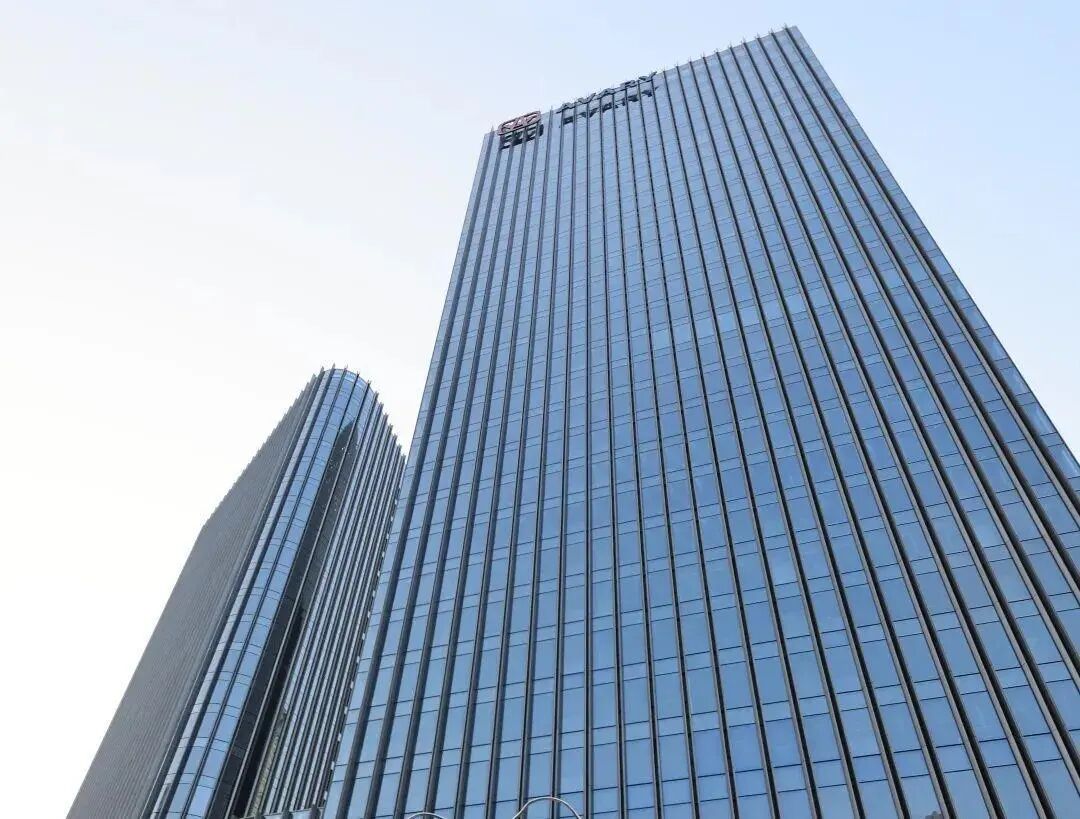
Zhen Ding Technology ranks first, achieving revenue of 5.483 billion USD (approximately 38.8 billion yuan) last year, a year-on-year increase of 11.3%. Public information shows that this company was established in June 2006, mainly engaged in the research and development, production, and sales of diversified flexible circuit boards and modules, substrate-like boards, high-density interconnect boards, high multilayer and high-density printed circuit boards (HLC-HDI), multilayer rigid boards, IC substrates, and other products, widely used in computer information, consumer electronics, communication networks, automotive electronics, AI server high-speed computing, optical modules, and other fields.
Its subsidiary, Pengding Technology, was established in April 1999, headquartered in Bao’an District, Shenzhen, and has established multiple production parks in Shenzhen, Huai’an, and Qinhuangdao. This year, the third park in Huai’an for high-end HDI (high-density interconnect boards) and SLP (substrate-like boards) projects has been put into production, and the Kaohsiung park has also started production. The second phase of the Huai’an Pengding Jiayuan project has begun construction, with a total investment of 8 billion yuan. The first phase of the factory in Thailand has begun trial production, and the second phase of the factory is under construction.