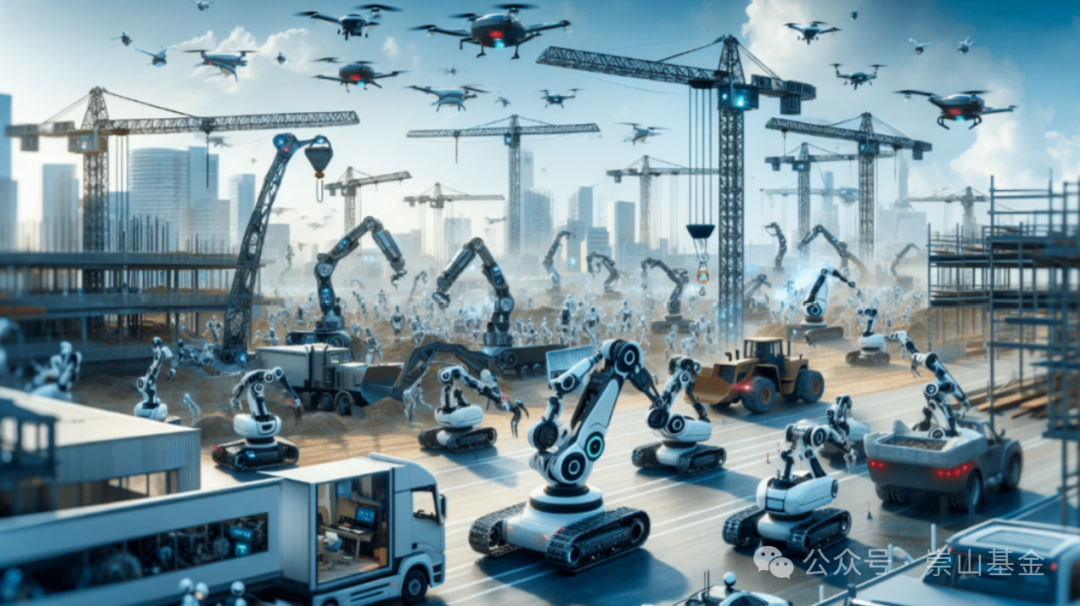
1. Chongqing Smart Expo: AI Large Models “Onboard”, Low-altitude Economy “Takeoff”
From September 5 to 8, the 2025 World Intelligent Industry Expo was held at the Chongqing National Expo Center, where over 600 domestic and foreign companies showcased more than 3,000 innovative achievements. For the first time, visitors experienced a complete closed loop of “large models + complete vehicles”: an AI visual quality inspection system scanned tens of thousands of components on a new energy vehicle in 30 seconds, reducing the defect rate to the ppm level; a medium-free holographic cockpit allowed passengers to adjust the air conditioning by simply “tapping” icons in mid-air, completely eliminating physical buttons; the low-altitude economy area became a “traffic champion”, with manned eVTOLs, logistics drones, and agricultural spraying airships lined up in a matrix, indicating that “third-dimensional transportation” is entering the countdown to commercialization. Fu Bingfeng from the China Association of Automobile Manufacturers asserted on-site: “Global automotive competition has shifted from single technology upgrades to an ecological cluster battle, and Chongqing has twisted together the three forces of AI, manufacturing, and airspace into a single rope.”
2. Tesla “Flexes Muscles”: Humanoid Robot from “Concept” to “Internet Celebrity”
On September 7, Tesla launched its Chinese official WeChat account “TeslaAI”, and the first post featured a “gym selfie” of the Optimus humanoid robot—featuring a light gold and black streamlined body, with clearly visible joint motors, captioned “I have been working hard to improve my physique”, which garnered over ten million views within two hours. Musk previously revealed that Optimus will start mass production on a large scale in 2026, with a target price of under $20,000. This “Chinese debut” was interpreted by the outside world as a “heads-up” for the Chinese supply chain and potential users. Almost simultaneously, Morgan Stanley released a report predicting that the global humanoid robot market could exceed $5 trillion by 2050, with a compound annual growth rate of over 50%. A single Weibo post and a picture caused the capital market to react instantly, with the A-share robotics sector collectively opening high on the morning of September 8, demonstrating that the “Tesla effect” is still amplifying.
3. Chinese Manufacturers “Submit Answers”: 400 Million Yuan Orders Mark the Year of Commercialization
Unlike Tesla’s “show-off”, Chinese companies chose to speak with “orders”. In the past 48 hours, three leading manufacturers announced large orders: UBTECH secured a 250 million yuan humanoid robot delivery contract, setting a global record for a single scenario; Yushu Technology and Zhiyuan Robotics jointly won the bid for China Mobile’s “humanoid biped robot OEM service”, amounting to 124 million yuan; Yushu also plans to sprint for the Sci-Tech Innovation Board in the fourth quarter, officially starting the “countdown to listing”. The National Local Joint Innovation Center for Humanoid Robots predicts that by 2025, sales in China are expected to exceed 10,000 units, a year-on-year increase of 125%, with a market size of 8.239 billion yuan, accounting for half of the global market. The resonance of capital, orders, and production capacity means that humanoid robots have crossed the “valley of death” from “0 to 1” and entered the explosive slope from “1 to 100”.
Conclusion: When Technology, Capital, and Scenarios Arrive Simultaneously, the “Future” is No Longer Distant
From the “AI + complete vehicle” at the Chongqing National Expo Center to the “gym selfie” on Tesla’s official WeChat, and to the hundreds of millions of yuan “robot orders” from Chinese companies, a clear signal emerges: the artificial intelligence and robotics industry has simultaneously completed technology validation, supply chain maturity, and business model closure. On the technology side, large models give robots a “brain”; on the manufacturing side, China’s new energy and electronics supply chain drastically reduces the cost of “limbs”; on the demand side, the three mountains of aging, labor shortages, and personalized services are pushing the market to the brink of explosion. When the three torrents of technology, capital, and scenarios converge, the “future” is no longer a vision in a PPT, but the next car, the next robot, or even the next massage that you and I are about to pay for. The turning point has arrived, and only speed can break through.