The rapidly developing technology is quietly changing our lives.
New productive forces represent innovation, breakthroughs, and transformation, injecting infinite vitality into the field of assistive technology for the disabled. Technological products should not be cold tools, but rather powerful supports that can warm hearts and help disabled individuals better integrate into society.
The China Disabled Persons’ Federation has launched a series of reports titled “Assistive Technology for a Shared Beautiful Life,” inviting us to explore the wonderful combination of new productive forces and assistive technology for the disabled in this special topic, experiencing the hope and beauty brought by technology and feeling the “future” coming into reality.
The “Current Situation and Development Report on Care Services for Elderly People with Dementia” points out that
there are approximately 15.07 million dementia patients among people aged 60 and above in China,
and it is estimated that by 2030, the number of dementia patients in China will reach 22.2 million,
and by 2050 it will reach 28.98 million.
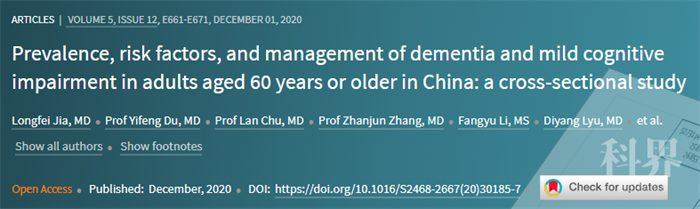
According to a paper published in The Lancet,
“A Cross-Sectional Study: Prevalence, Risk Factors, and Management of Dementia and Mild Cognitive Impairment in Adults Aged 60 and Above in China,”
the prevalence of dementia among the population aged 60 and above in China is 6.04%,
and the prevalence of mild cognitive impairment is 15.54%,
which estimates that there are currently 15.07 million dementia patients and 38.77 million mild cognitive impairment patients among the elderly in China.
Video source: Shanghai Broadcasting Television Station’s “Oriental Finance” program.
The demand for care services for elderly people with dementia is showing a rapid growth trend,
to alleviate the insufficient capacity of family and social care services,
Jingda Technology Co., Ltd. has designed and developed the AI Dementia Care Robot
which introduces Japanese experience in dementia prevention and intervention technology,
and applies artificial intelligence cloud technology in accordance with national conditions,
achieving intelligent risk assessment for dementia,
digital training for dementia prevention and intervention,
and visualization of training effects.
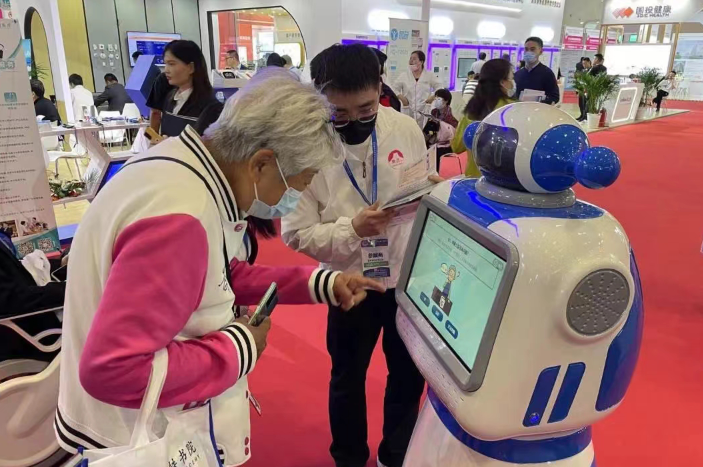
The AI Dementia Care Robot at the China International Aging Service Industry Expo.
The AI Dementia Care Robot
can help elderly care institutions manage the entire process of dementia care,
with care management ranging from 10 to 100 individuals.
The entire process of dementia care management includes
care assessment,
individual care plan,
daily living assistance,
non-drug management of symptoms,
medical care,
functional rehabilitation, and caregiver support
and effect evaluation.
The greatest feature of the AI dementia care expert robot is
the non-drug management of behavioral and psychological symptoms,
which are common issues for elderly dementia patients,
such as anxiety, depression, and insomnia.
Traditional drug treatment methods often have obvious side effects,
and can easily lead to drug dependence.
However, the AI dementia care expert robot uses human-computer interaction,
with comic and voice-over explanations, to provide non-drug management methods for elderly dementia patients.
This approach is not only safer,
but also increases the participation and satisfaction of elderly dementia patients.
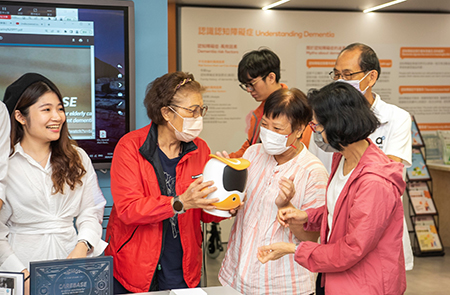
Designed and developed by a team from the Hong Kong Polytechnic University’s School of Design,
the companion intelligent partner robot
features a healing appearance, interactive functions, and a voice system,
which can arouse the curiosity and attention of patients through small actions,
encouraging active communication from patients;
it also has entertainment functions such as audio-visual playback and mini-games,
which can help caregivers increase interaction with patients,
satisfying emotional needs for companionship, care, and entertainment,
bringing joy and satisfaction through interaction,
helping patients alleviate emotions,
and reducing negative behaviors.
Some robots also have functions for reminding and monitoring physical conditions,
such as medication reminders, temperature monitoring, and fall alarms.
The emergence of the AI dementia care robot can greatly save labor care costs,
help elderly care institutions improve the professionalism of dementia care,
and provide more personalized care services for elderly dementia patients.
With the continuous advancement of technology,
the AI dementia care robot
will play an increasingly important role in the field of dementia care,
bringing better care experiences to elderly patients with dementia.
Caregivers can also, with the assistance of technology,
reduce the burden of care and alleviate negative emotions,
re-establish connections with patients.
(The content involved in this article is derived from publicly published materials. Readers who are involved in specific operations or decisions should consult professionals and treat them with caution. This public account does not bear any direct or indirect losses arising from this.)
Source: China Disabled Persons’ Federation (ID: zgcjrzzs)
Written by: Huang Ting
Edited by: Chen Xi, Zhang Shuai
Reference materials: China Aging Association, The Paper, Hong Kong Council of Social Service, China International Aging Service Industry Expo
★ Please indicate the source when reprinting


Video Account


Douyin
(Scan with Douyin)