
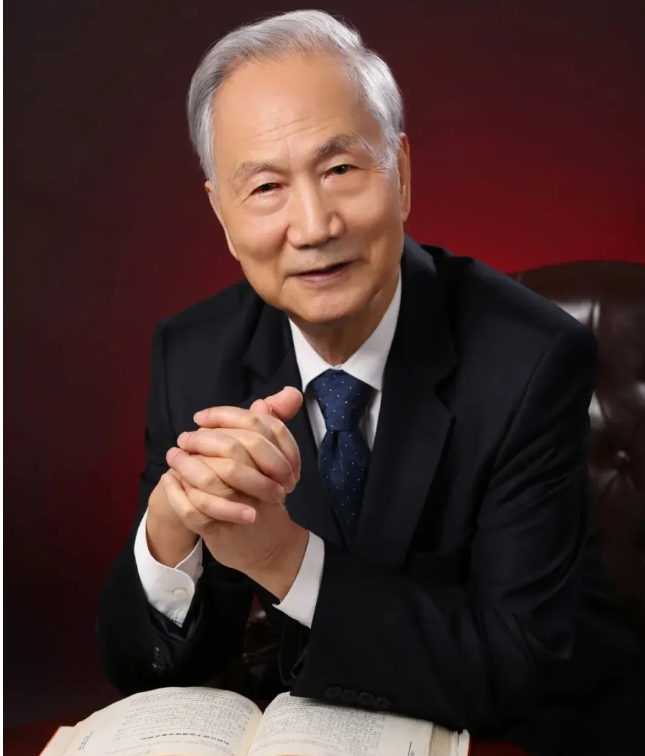
In April 2024, Zhang Bo, an academician of the Chinese Academy of Sciences, professor of the Department of Computer Science at Tsinghua University, and honorary dean of the Tsinghua University Institute of Artificial Intelligence, delivered a speech titled “Entering the ‘No-Man’s Land’, Exploring the Path of Artificial Intelligence” at the Tsinghua University “Humanities Tsinghua Forum”. The entire event was broadcast live by China News Network. On May 25, the “Guangming Daily” published the full text of this speech.
Academician Zhang discussed the two paths of artificial intelligence, the three stages of artificial intelligence, the insecurity of deep learning, the four steps towards general artificial intelligence, and the three major paths for foundational models.
He believes that the current successful AI tools derive their power mainly from two “big” elements: the large model and the large text. Transitioning from large language models to general artificial intelligence requires four steps. The first step is to interact with humans and align with human values; the second step is multimodal generation; the third step is interaction with the digital world, represented by AI agents; and the fourth step is interaction with the objective world, represented by embodied intelligence.
However, stating that the goal of achieving general artificial intelligence requires at least these four steps does not imply that completing these four steps guarantees the realization of general artificial intelligence.
He believes that the goal of the first generation of artificial intelligence is to enable machines to think like humans. The biggest issues with second-generation artificial intelligence are insecurity, lack of trust, uncontrollability, unreliability, and difficulty in promotion. Both first and second-generation AI models and algorithms have many flaws. To date, there is no well-formed theory of artificial intelligence; it is primarily models and algorithms. Therefore, it is essential to vigorously develop a scientifically complete theory of artificial intelligence, on which safe, controllable, trustworthy, reliable, and scalable AI technologies can be developed.
For current AI technologies, although efficiency and quality have improved, the more informationized and intelligent the system becomes, the less secure it is. He stated that the first generation of artificial intelligence utilized three elements: knowledge, algorithms, and computing power, with knowledge being the most important. The second generation primarily used data, algorithms, and computing power. To overcome the inherent shortcomings of artificial intelligence, the only way is to simultaneously utilize these four elements: knowledge, data, algorithms, and computing power.
He believes that in the future, only a few jobs may be replaced by artificial intelligence. Artificial intelligence is exploring the “no-man’s land”, and its charm lies in its perpetual journey. “We should not be overly optimistic about its progress, nor should we be discouraged by its setbacks; what we need is persistent effort.”
The following is the full text of the speech:
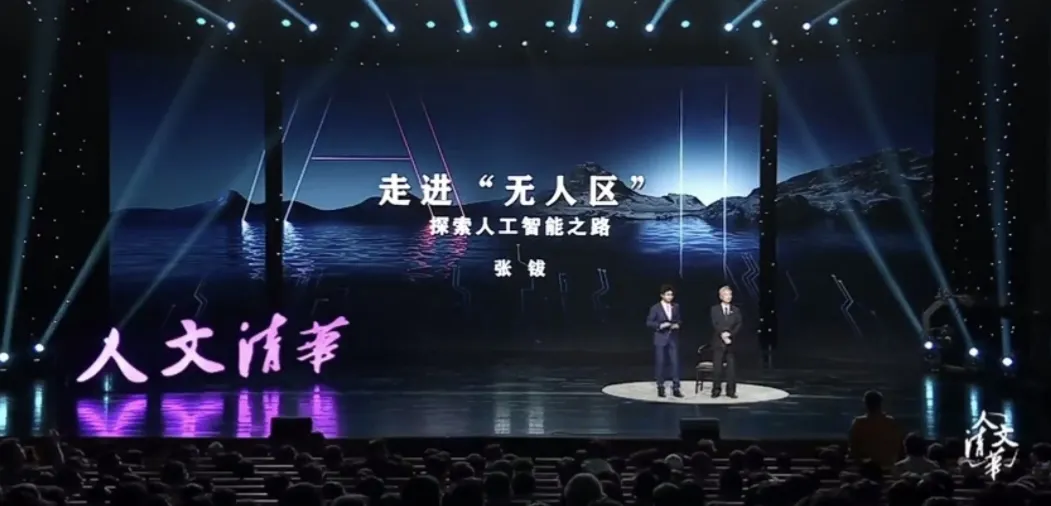
 In 1978, the Tsinghua University AI and Intelligent Control Research Group was established.
The Two Paths of Artificial Intelligence
To date, there is no unified understanding of “what is intelligence” worldwide. However, after years of exploration, artificial intelligence has emerged along two paths. One path is the behaviorist school, while the other is the internalist school.
The behaviorist school advocates simulating human intelligent behavior using machines. “Intelligence” and “intelligent behavior” are two completely different concepts. “Intelligence” resides in our brains, and humans still know very little about it; “intelligent behavior” is the external manifestation of intelligence, which can be observed and simulated. Therefore, the goal pursued by behaviorist AI is the similarity of machine behavior to human behavior, rather than the consistency of internal working principles. Currently, mainstream artificial intelligence is machine intelligence, which only exhibits behavioral similarity to human intelligence, not complete consistency. The internalist school insists that machines must simulate the working principles of the human brain, i.e., brain-like computing. These two schools explore artificial intelligence from different perspectives; the former suggests that machines or other methods can create an intelligent path besides the human path, while the latter asserts that the intelligent path can only rely on humans. Currently, both approaches are still in the exploratory stage.
Human exploration of the path of artificial intelligence began in 1956. At that time, an artificial intelligence symposium was held in the United States, where ten experts from various fields, including mathematics, computer science, cognitive psychology, economics, and philosophy, defined artificial intelligence after eight weeks of discussion. They advocated for creating a machine that could think like humans through symbolic reasoning and symbolic representation. During this meeting, Newell and Simon demonstrated a program called “The Logic Theorist”, which proved part of the principles in Chapter Two of mathematical principles, showing that machines could perform similar reasoning tasks. Ultimately, “artificial intelligence” was defined at this meeting.
In 1978, Tsinghua University established the AI and Intelligent Control Research Group, which was China’s earliest teaching and research institution for artificial intelligence. The group included over thirty teachers, most of whom came from the field of automatic control rather than artificial intelligence. In 1978, the group admitted its first batch of master’s students, and in 1985 began admitting its first batch of doctoral students, allowing for some teaching related to artificial intelligence, although research progress was limited. From 1982 to 1984, the group conducted surveys and visited numerous research institutes and factories in the southwest and northeast regions. Based on their observations, the group identified intelligent robotics as their primary research direction.
In 1985, Tsinghua University established the Intelligent Robot Laboratory, and in 1986, the national “863” development plan was launched, which designated intelligent robotics as a theme. Tsinghua University participated in the first “863” high-tech research project on intelligent robotics and continued to be involved as an expert unit from the first to the fourth sessions. By the fifth session, Tsinghua University became the leading unit for intelligent robotics research, and in 1997, it became the leading unit for space robotics research. The “Intelligent Technology and Systems” National Key Laboratory began construction in 1987 and was officially established in 1990.
Based on these efforts, related research was able to commence. Initially, two theories were established: one is the theory of problem-solving search space and the other is the theory of granular computing, which had a significant international impact. In 2005, Tsinghua University initiated and organized the International Conference on Granular Computing, which continues annually to this day. The second area involved early work in artificial neural networks.
The Three Stages of Artificial Intelligence
Since 1956, the development of artificial intelligence has been divided into three stages: the first generation, the second generation, and the third generation of artificial intelligence.
The goal of the first generation of artificial intelligence is to enable machines to think like humans. Thinking refers to reasoning, decision-making, diagnosis, design, planning, creation, and learning. Whether for management or technical work, two capabilities are required: one is having rich knowledge and experience in a specific field, and the other is having strong reasoning abilities. Reasoning refers to the ability to utilize knowledge, in other words, the ability to draw new conclusions and knowledge from existing knowledge.
Based on this analysis, the founders of artificial intelligence proposed a “knowledge and experience-based reasoning model”, the core of which is that to achieve machine thinking, it is sufficient to input the corresponding knowledge into the computer. For example, if we want the computer to diagnose patients like a doctor, we just need to place the doctor’s knowledge and experience in the knowledge base and incorporate the reasoning process of the doctor into the reasoning mechanism, and the computer can perform machine diagnosis for the patient. The core idea of this reasoning model is knowledge-driven, achieved through a computational model to enable machines to think like humans. The biggest flaw of this model is its lack of self-learning ability, making it difficult to learn knowledge from the objective world; all knowledge is derived from human input. Therefore, the first generation of artificial intelligence can never surpass humans.
The second generation of artificial intelligence emerged during the low tide of the first generation and is primarily based on artificial neural networks. In 1943, the model of artificial neural networks was proposed, which mainly simulates the working principles of human neural networks. The main problem faced by the second generation of artificial intelligence is the transmission of perceptual knowledge. The first generation of artificial intelligence primarily operated under symbolic guidance, aiming to simulate human rational behavior. However, in addition to rational behavior, humans also exhibit a large amount of perceptual behavior, which must be simulated using artificial neural networks.
We often say that knowledge is the source of human wisdom; knowledge is the foundation of rational behavior, and this knowledge comes from education, primarily referring to rational knowledge and methods of problem analysis. However, perceptual knowledge is difficult to convey through language and cannot be acquired from books. Each person initially acquires perceptual knowledge through their recognition of their mother. But, when did this recognition of the mother begin? How was this recognition achieved? These questions remain difficult to answer even today.
All perceptual knowledge is accumulated through continuous observation and listening. The second generation of artificial intelligence’s deep learning adopted this method. For example, in the past, we mainly told the computer the specific characteristics of horses, cows, and sheep through programming; now we compile a large number of photos of horses, cows, and sheep from the internet into training samples for the computer to observe and learn. After learning, the remaining samples are used as test samples to test it, achieving a recognition rate of over 95%. The processes of observation and listening are performed through artificial neural networks, treating recognition tasks as classification problems and utilizing artificial neural networks for classification. The process of learning through neural networks is called deep learning, which enables classification, prediction, and generation.
However, all data (images, voice, etc.) of the second generation of artificial intelligence comes from the objective world, and its recognition can only distinguish different objects but cannot truly understand them. Therefore, the biggest issues with the second generation of artificial intelligence are insecurity, lack of trust, uncontrollability, unreliability, and difficulty in promotion.
The basic idea of the third generation of artificial intelligence is that a theory of artificial intelligence must be developed. To date, artificial intelligence lacks a well-formed theory; it is primarily models and algorithms, and both the models and algorithms of the first and second generations have many flaws. Therefore, it is essential to vigorously develop a scientifically complete theory of artificial intelligence, on which safe, controllable, trustworthy, reliable, and scalable AI technologies can be developed.
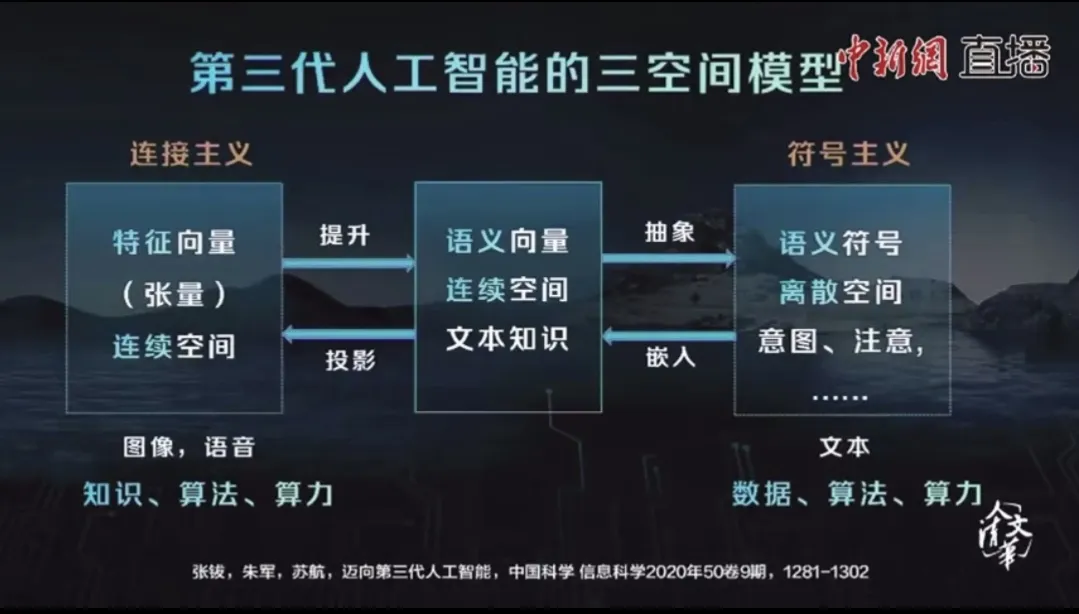
For current artificial intelligence technologies, although efficiency and quality have improved, the more informationized and intelligent the system becomes, the less secure it is. The first generation of artificial intelligence utilized three elements: knowledge, algorithms, and computing power, with knowledge being the most important. The second generation primarily used data, algorithms, and computing power. To overcome the inherent shortcomings of artificial intelligence, the only solution is to utilize the four elements of knowledge, data, algorithms, and computing power simultaneously. Currently, AI tools (large language models) that have been widely adopted can fully utilize these four elements. The Tsinghua University team proposed a three-space model for the third generation of artificial intelligence, connecting the entire perception and cognition system, providing excellent conditions for the development of artificial intelligence theory.
The Insecurity of Deep Learning
During research, researchers discovered the insecurity of artificial intelligence’s deep learning.
One typical case is: researchers created a comparison image of a snow mountain and a dog. Initially, both the computer and humans could identify the snow mountain, but if a slight noise is added to the image, humans still see the snow mountain, while the computer misidentifies it as a dog. This case illustrates that the pattern recognition based on deep learning in artificial intelligence is fundamentally different from human vision; although it can distinguish between a snow mountain and a dog, it does not genuinely recognize either.
The key question here is—what is a dog? How should a dog be defined? Humans typically distinguish it visually, primarily looking at the dog’s shape, but what constitutes a dog’s shape? Dogs have various forms and postures; how can human vision identify a dog among the myriad of shapes? The answer to this question remains unclear to this day. Initially, when computers first recognized dogs, they could not identify them if their position changed; this was a problem of invariance to displacement, which has now been resolved.
However, many unresolved issues remain. For example, computers can recognize dogs of fixed sizes, but they struggle to identify them if they are enlarged or reduced, which is a problem of invariance to size. Currently, computers can only distinguish between dogs and snow mountains based on local textures. Therefore, if a certain texture in the snow mountain image is changed to a fur texture, even if the shape of the snow mountain remains unchanged, the computer will still misidentify it as a dog. Thus, up to now, deep learning in artificial intelligence remains insufficiently safe and reliable.
The “Big Model” and “Big Text” of Large Language Models
The power of currently successful AI tools primarily comes from two “bigs”: the big model and the big text.
The first “big” of the big model refers to large artificial neural networks, which can be used to classify and learn the relationships within data, as well as to predict. This enormous artificial neural network is called a “transformer”. The capability of AI tools is largely dependent on the strength of deep neural networks. Previously, neural networks processed input word by word; now they can input over 2000 characters at once (one token roughly corresponds to one Chinese character). Humanity spent 56 years from 1957 to 2013 exploring the semantic representation of text; now text is represented not through symbols but through semantic vectors, which is also a significant breakthrough.
In the past, computers could only treat text as data; now they can treat it as knowledge, i.e., vector representation. Additionally, “self-supervised learning” has been introduced. Previously, texts provided for computer learning required preprocessing and prior labeling, which was too labor-intensive to support extensive learning. Self-supervised learning means that the original text can be learned by the computer without any preprocessing; it predicts the next word based on previous text, with the predicted content transforming into the next input, somewhat akin to a chain learning method.
The second “big” is big text. After computers achieve self-supervised learning, all texts can be learned without any preprocessing, and the text volume has expanded from the GB level to the TB level. Currently, successful artificial intelligence has learned over 40 TB, equivalent to more than 10 million Oxford dictionaries, and this learning process is not mere rote but involves understanding the content. This has ushered us into the era of generative artificial intelligence. Both the first and second generations of artificial intelligence were constrained by three limitations—specific models for specific tasks in specific domains. The so-called “three specifics” represent “narrow artificial intelligence”, i.e., specialized artificial intelligence.
Currently, successful AI tools can engage in conversations with humans without domain restrictions due to their powerful language generation capabilities, marking a significant advancement in artificial intelligence. Additionally, the generation of diverse outputs is an important feature of current AI tools. The diversity of outputs allows for innovation; because outputs are diverse, it is difficult to ensure that each output is correct. Therefore, the more we hope for creative outputs, the more we must allow for errors. We often find that sometimes AI provides very clever answers, while at other times it produces obvious nonsense, which is a result of diversified outputs.
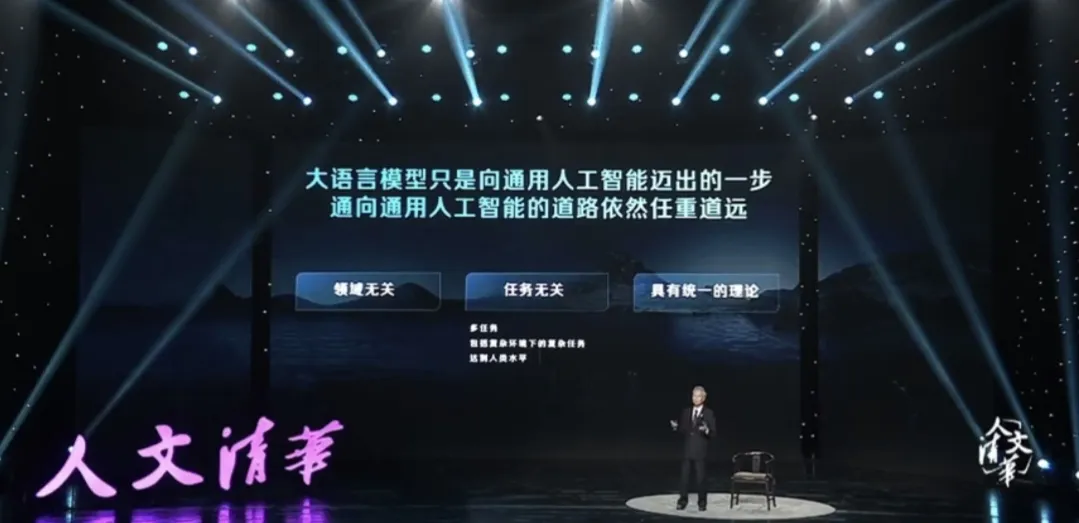
Currently, AI tools have achieved two major breakthroughs: one is generating semantically coherent text similar to that of humans, and the other is realizing natural language dialogue between humans and machines in open domains. Large language models represent a step towards general artificial intelligence, and some Western experts believe this is a dawn for general artificial intelligence, but it is still far from achieving it.
To move towards general artificial intelligence, three conditions must be met. First, the system must be domain-independent. Currently successful AI tools have achieved domain independence in dialogue and natural language processing, but it remains challenging to achieve this goal in handling numerous other issues. Second, the system must be task-independent, meaning it should be able to perform any task. Currently, AI tools can engage in dialogue, perform arithmetic, compose poetry, and write code, but they still struggle to complete complex tasks in complex environments. Third, a unified theory still needs to be established. Therefore, artificial intelligence has a long way to go.
The Four Steps Towards General Artificial Intelligence
Transitioning from large language models to general artificial intelligence requires four steps. The first step is to interact with humans and align with human values; the second step is multimodal generation; the third step is interaction with the digital world; and the fourth step is interaction with the objective world. We are not saying that completing these four steps guarantees the realization of general artificial intelligence; rather, it indicates that at least these four steps must be taken towards the goal of general artificial intelligence.
The first step is alignment with humans. Currently, the content output by AI tools is not always correct. To resolve this issue, human assistance is necessary to help it align with human values. From the practical application of AI tools, its errors need human correction, and the speed of error correction and iteration is quite rapid. At the same time, we must recognize that output errors still exist, but if we want it to be creative, we must allow for mistakes.
The second step is multimodal generation. It is now possible to use large models to generate various modalities of content, including images, sounds, videos, and code. With technological advancements, distinguishing whether a piece of content is machine-generated or human-created will become increasingly difficult, which provides excellent opportunities for “forgery”—also known as “deep forgery”, which uses deep learning methods to “forge”. Imagine if in the future, 95% of the texts on the internet are generated by AI; how can we still obtain true knowledge and truth through the internet? For example, when an event occurs, a wave of supportive or opposing opinions appears online; are these opinions genuine expressions from the majority, or are they manipulated by a few using AI to distort facts? How to effectively prevent AI tools from manipulating public opinion and confusing the truth is a serious issue that requires our attention.
Currently, three breakthroughs have been achieved in the field of artificial intelligence: generating semantically coherent text similar to that of humans in open domains. Among them, semantic coherence is the most important breakthrough, which subsequently leads to breakthroughs in images. Since images only require spatial coherence, while videos further require temporal coherence, we can expect that breakthroughs in language will be followed by breakthroughs in images, and image breakthroughs will certainly lead to breakthroughs in videos. Throughout this developmental process, the demands for computational resources and hardware will increase significantly.
As artificial intelligence develops, many have noticed the phenomenon of “emergence”. For instance, when the system scale does not reach a certain level, the generated images are poor in quality; however, once the scale reaches a certain threshold, the quality of most generated images suddenly improves. This process is called “emergence”, which represents the transition from quantitative change to qualitative change. To date, the reasons for the emergence phenomenon have not been fully understood worldwide.
The third step is the AI agent.To move from large language models to general artificial intelligence, it is essential to connect with the digital world, first operating within the digital realm to solve problems, perceive the quality of its results, and provide feedback. This work greatly benefits the advancement of large model performance.
The fourth step is embodied intelligence. Embodied intelligence means having a physical body. Intelligence alone is not enough; it must also have a body to be able to speak and act. Therefore, for large language models to transition to general artificial intelligence, they must connect with the objective world through robots.
Where is the Path for Foundational Models?
Currently, the rapid development of the information industry is due to the establishment of relevant theories, and hardware and software produced under theoretical guidance are universal. In the past, some large enterprises with a global impact emerged in the information industry, applying and promoting corresponding technologies and achieving rapid informationization throughout the entire chain.
However, the development of the artificial intelligence industry lacks theory, relying solely on algorithms and models, and hardware and software built on algorithms and models are all specialized. “Specialized” means a small market. To date, the artificial intelligence industry has not produced any large enterprises with a global impact, so the AI industry must deeply integrate with vertical fields to develop. However, the situation is changing, and the emergence of foundational models with certain universality will undoubtedly influence industry development.
In 2020, there were 40 unicorn enterprises in the global artificial intelligence industry valued at over $1 billion, which increased to 117 in 2022 and reached 126 by early 2024. This indicates a gradual growth trend. Currently, China has 100 to 200 companies working on large models.
With so many people working on foundational models, what will their future path be?
The first path is to transition to various industries and develop large models for vertical fields. Many industries are currently considering this issue; for example, the oil industry is considering a large model specific to the oil industry, and the financial industry is considering a large model specific to finance. Therefore, the number of general large models will decrease, and most people working on large models will shift towards various vertical fields.
The second path is the most important, which is to fine-tune applications in the industry. In other words, providing open large model software for everyone to develop applications.
The third path involves integrating with other technologies to develop new industries. Many unicorn enterprises abroad have combined AI tools with other technologies to develop new industries, with some transitioning to various industries while others focus specifically on images, videos, and voice. Some large models in China have also achieved relatively good development.
Based on this, there is a pressing need to promote industrial transformation in the field of artificial intelligence. In the future, whether developing hardware or software, it is essential to incorporate them into the foundational model platform. In the past, software was created in a zero-base computer, which was inefficient; now, platforms have learned from over ten million Oxford dictionaries and possess capabilities at least equivalent to that of a high school student. If the same work is conducted on the foundational model platform, it will yield far greater results with less effort, making the adoption of this platform an unstoppable trend. These “high school students” come from the open platforms provided by large model enterprises.
The Limitations of Large Models
All work performed by large models is externally driven and occurs under external prompts. They lack initiative; when doing something under external prompts, they primarily rely on probabilistic prediction methods, leading to some shortcomings not present in humans, such as uncontrollable output quality. Furthermore, they do not know right from wrong, making their output untrustworthy. Meanwhile, they are heavily influenced by external factors and can only follow instructions to complete corresponding tasks. In contrast, humans are entirely different; even when tasks are assigned by others, humans can operate under their conscious control, making them controllable and trustworthy.
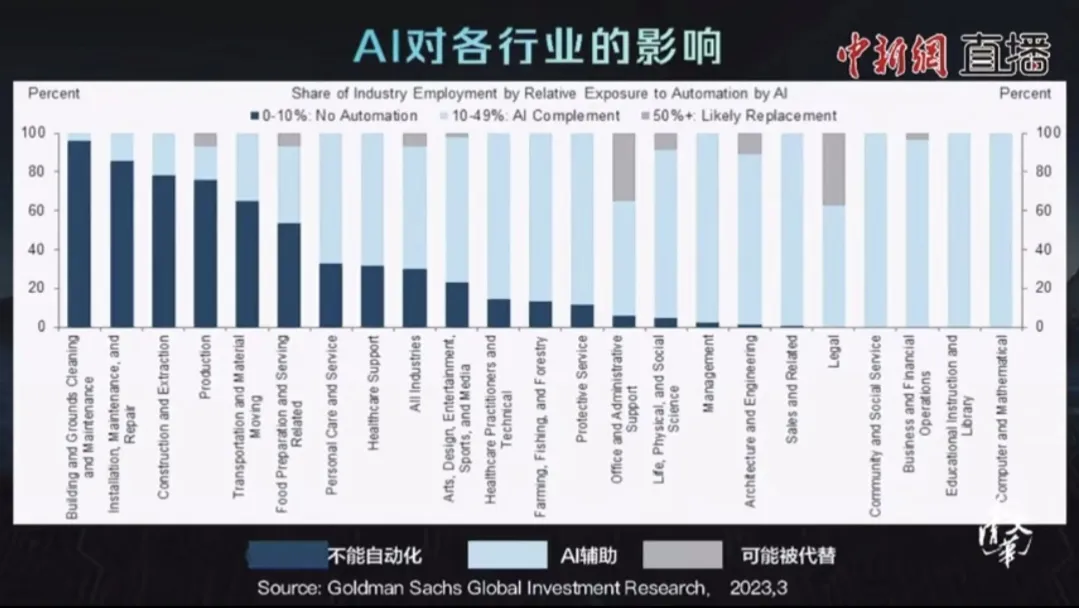
It is evident that current artificial intelligence does not understand its actions. AI tools cannot accurately discern right from wrong and still struggle to initiate self-iteration, requiring human intervention to operate. In the future, artificial intelligence may at most become an assistant to humans, operating under human supervision, with only a few tasks fully delegated to machines.
Research institutions have conducted statistics on the impact of artificial intelligence across various industries, listing numerous sectors where only a few jobs may be replaced by artificial intelligence in the future. This indicates that while artificial intelligence has a significant impact on various industries, most of its role is to assist humans in improving work quality and efficiency, rather than replacing humans in jobs.
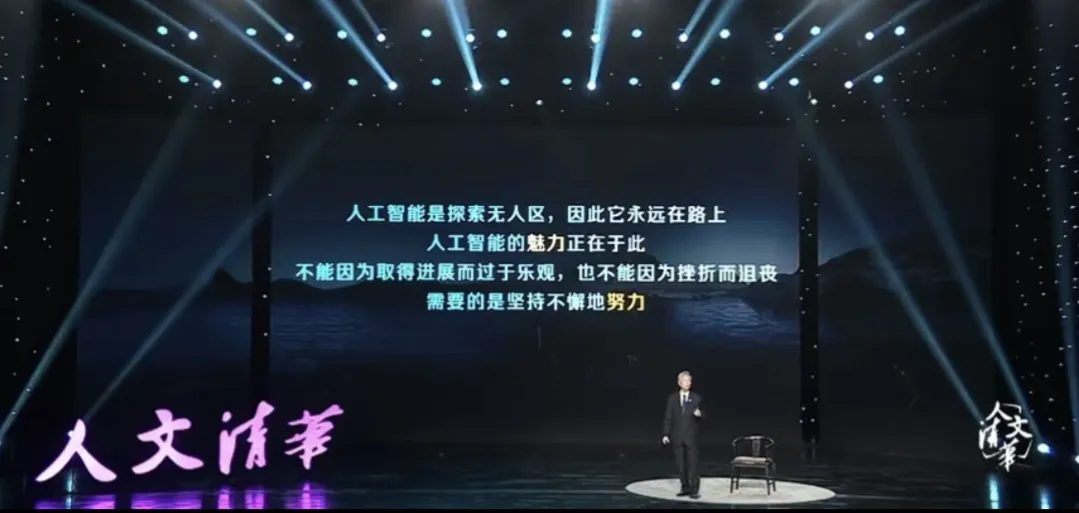
Artificial intelligence is exploring the “no-man’s land”, and its charm lies in its perpetual journey. We should not be overly optimistic about its progress, nor should we be discouraged by its setbacks; what we need is persistent effort.
Source: Intelligent Manufacturing IMS