Introduction:As an important component of the 2024 Service Trade Fair, the National Health Commission’s Health Channel (CHTV) will hold the “2024 Capital International Medical Conference Parallel Forum – Smart Medical and Medical AI Innovation Forum” on September 13 in Beijing. CHTV & Medical Forum Network will bring you a series of reports on AI empowering healthcare.On June 7, 2024, Professor Zhang Xu, an academician of the Chinese Academy of Sciences and director of the Urology Department at the Third Medical Center of the PLA General Hospital, led a team to participate in the European Laparoscopic and Robotic Surgery Challenge Conference in Rome, Italy, where they successfully completed and demonstrated the “world’s longest distance remote prostate cancer radical surgery” using a domestically produced remote surgical robot.At the upcoming “2024 Capital International Medical Conference Parallel Forum – Smart Medical and Medical AI Innovation Forum” in September, Academician Zhang Xu will give a keynote report titled “New Advances in Remote Urology Surgery and Artificial Intelligence“. Before the forum, let us learn about robotic surgery and Academician Zhang Xu’s achievements in this field. We will explain in three phases, with this issue focusing on the basic introduction to robotic surgery.Robotic surgery, a field that integrates cutting-edge technology and medical techniques, has played an increasingly important role in medical practice since the late 20th century. Robotic surgical systems not only greatly enhance the precision and safety of surgeries but also provide patients with smaller trauma and faster postoperative recovery. Since the da Vinci system received FDA approval in 2000, over 7,500 installation platforms have been established globally, performing more than 11 million robotic surgeries[1].The development of robotic surgical systems, particularly the da Vinci system, has undergone several generations of technological innovation. From the initial three robotic arms and lack of bipolar instruments to the later introduction of a fourth arm, longer arms, bipolar hemostasis, and high-definition (HD) vision, these technological advancements have greatly expanded the application range and functionality of robotic surgery. With advancements in technology, robotic surgical systems now offer better ergonomic designs, finer surgical tools, and advanced imaging techniques, making surgeries safer and more effective.What Surgeries Can Be Performed?The application scope of robotic surgery is extremely broad, penetrating multiple medical fields such as urology, gynecology, general surgery, orthopedics, neurosurgery, spinal surgery, as well as endoscopic and intraluminal surgeries. According to a review titled “Clinical Applications of Robotic Surgery Platforms: a Comprehensive Review” published in J Robot Surg in January 2024, robotic surgical platforms like the da Vinci system (Figure 1) have been used for various soft tissue surgeries, such as urological surgeries, gynecological surgeries, general surgeries, and head and neck surgeries, which typically require high precision and complex operational steps; in orthopedics, robotic surgery is mainly used for joint replacement surgeries, for instance, the Mako surgical system, which is primarily used for total hip and partial knee replacements, improving surgical precision and efficiency through preoperative 3D CT planning and intraoperative navigation; neurosurgery and spinal surgery require high precision, with systems like ROSA being used for various neurosurgical and spinal procedures, providing precise instrument placement and reducing hand tremors during surgery; endoscopic surgeries, such as cardiovascular interventions, bronchoscopy, and gastrointestinal endoscopy, have also begun to utilize robotic technology. For example, the CorPath system, used for cardiovascular intervention surgeries, reduces radiation exposure for both doctors and patients and shortens operation time[1].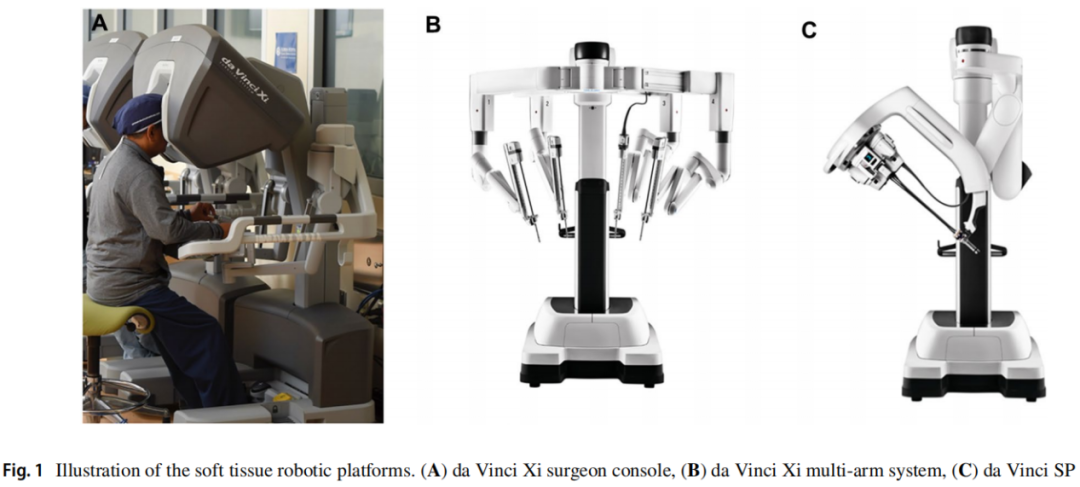 Note: (A) da Vinci surgical console; (B) da Vinci multi-arm system; (C) da Vinci SP.Figure 1 Description of Soft Tissue Robotic PlatformsSafety of Robotic SurgeryAs a cutting-edge technology in minimally invasive surgery, the safety of robotic surgery has always been a focus of medical attention. In discussions about the safety of robotic surgery, a 2023 article titled “Comparison of Safety and Effectiveness between Robotic and Laparoscopic Major Hepatectomy” published in Int J Surg provides us with an in-depth understanding. This article compiled data from 12 retrospective cohort studies involving 1,657 patients, comparing the safety of robotic surgery and laparoscopic surgery. The results showed that there were no significant differences in surgical mortality and overall postoperative complications between robotic and laparoscopic surgeries. However, robotic surgery showed potential advantages in reducing the incidence of severe complications, decreasing the rate of conversion to open surgery, reducing intraoperative blood loss, and shortening postoperative hospital stay (Figure 2)[2].
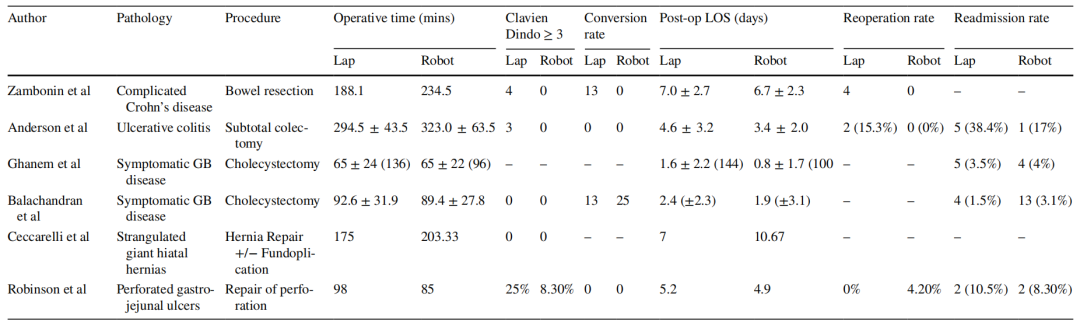
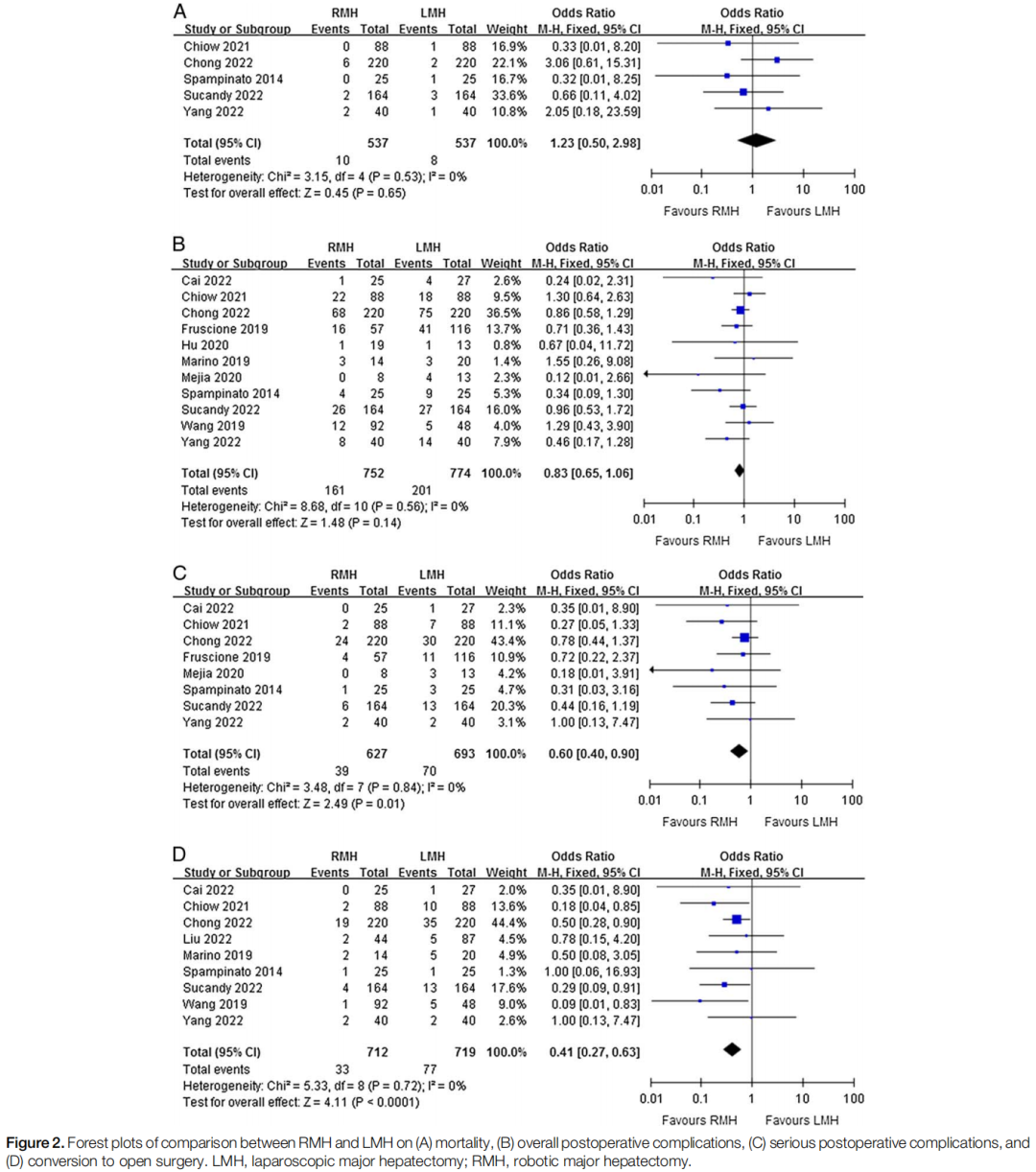 Figure 2 Comparison of mortality rates, overall postoperative complications, severe postoperative complications, and conversion to open surgery between robotic and laparoscopic surgeriesAnother review published in J Robot Surg titled “Robotic Versus Laparoscopic General Surgery in the Emergency Setting: a Systematic Review” also discussed the safety of robotic surgery. This review compared the performance of robotic surgery versus laparoscopic surgery in emergency surgical environments, covering data from 1,063 patients. The study found that under specific circumstances, the incidence of postoperative complications for robotic surgery was as low as that for laparoscopic surgery, although it may require longer surgical times. Additionally, despite the higher costs of robotic surgery, it can shorten patient hospital stays (Table 1). In laparoscopic bowel resection surgeries involving inflammatory bowel disease, the complication rate was higher, while no significant differences were found in other surgeries[3].Table 1 Comparison Results between Robotic and Laparoscopic Surgeries
 Artificial Intelligence and Robotic SurgeryThe integration of artificial intelligence (AI) is significantly enhancing the precision and efficiency of robotic surgery. AI, through deep learning algorithms, can analyze and recognize vast amounts of medical imaging data. For example, in liver surgeries, AI algorithms can analyze preoperative images to predict the presence of microvascular invasion with an accuracy of up to 94%[4]. Furthermore, the application of AI during surgery, such as optical biopsy technology, can identify tumors based on static images and dynamic videos during the procedure, providing real-time decision support for doctors. In surgical training, AI technology reduces training time and improves educational efficiency by providing automatic metrics such as instrument usage and hand movement tracking. AI-generated realistic surgical simulation images and videos, offered at a lower cost, facilitate extensive surgical education, helping to improve surgical skills and shorten learning time (Figure 3).
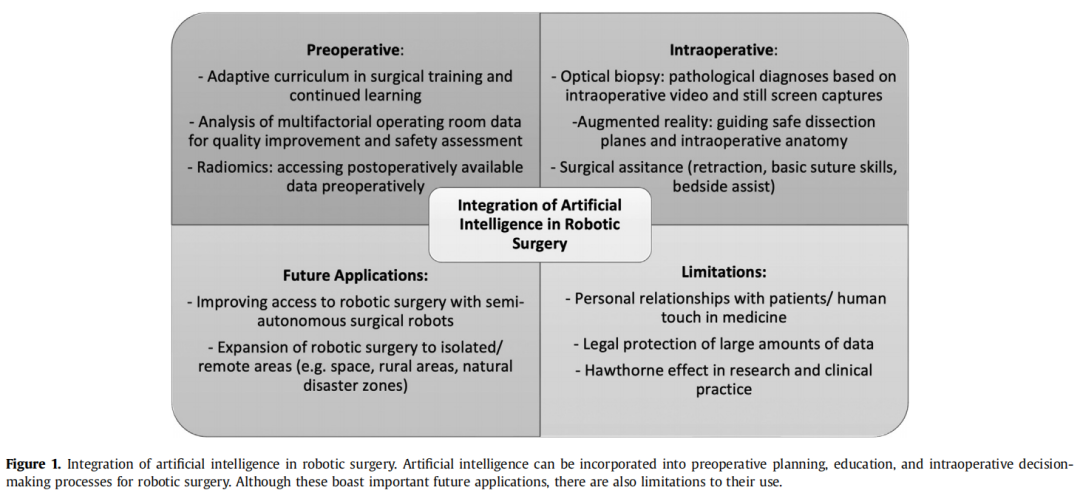 Figure 3 Integration of Artificial Intelligence in Robotic SurgeryOutlook for Robotic SurgeryIn the future, robotic surgery is expected to achieve higher levels of automation, while the optimization of remote surgical technology will enable doctors to perform surgical operations from thousands of miles away, providing high-quality medical services to resource-limited areas. In March 2024, Academician Zhang Xu of the Chinese Academy of Sciences and director of the Urology Department at the PLA General Hospital led surgical teams from Beijing and Hainan to perform prostate cancer radical surgery for a patient at the PLA General Hospital in Hainan, using a robotic remote surgery system to control the surgical robotic arm in real-time from over 3,000 kilometers away. In June, Academician Zhang Xu successfully performed remote surgery for a patient in Beijing using a domestically developed surgical robot in Rome, Italy. The development of remote surgical technology will enable doctors to perform surgeries over greater distances, contributing to the improvement of global medical standards.ConclusionThe rapid development of robotic surgery technology has brought patients more precise and efficient treatment options. Looking forward, we have reason to believe that robotic surgery will continue to bring profound changes to the medical field with its unique advantages. Stay tuned for the next issue, where we will provide a detailed analysis of the progress in remote robotic surgery.
Introduction
 Zhang Xu, AcademicianAcademician of the Chinese Academy of Sciences, chief physician, professor, Level 2 professional technician, Level 1 civil servant, member of the Communist Party of China, and director of the Urology Department at the PLA General Hospital. Member of the expert group of the Central Health Care Committee, candidate chairman of the Urology Branch of the Chinese Medical Association. Founder of laparoscopic and robotic techniques in urology in China, created the minimally invasive technology and theoretical system represented by laparoscopic techniques, widely promoted and applied both domestically and internationally, becoming the standard technology in China’s urology field. Recipient of the National Outstanding Young Scientist Fund, leading talent in military science and technology, and chief expert of the National High Technology Research and Development Program, awarded two second prizes of the National Science and Technology Progress Award.References[1] GAMAL A, MOSCHOVAS M C, JABER A R, et al. Clinical applications of robotic surgery platforms: a comprehensive review[J]. J Robot Surg, 2024, 18(1): 29. DOI: 10.1007/s11701-023-01815-4.[2] MAO B, ZHU S, LI D, et al. Comparison of safety and effectiveness between robotic and laparoscopic major hepatectomy: a systematic review and meta-analysis[J]. Int J Surg, 2023, 109(12): 4333-4346. DOI: 10.1097/JS9.0000000000000750.[3] ANYOMIH T T K, MEHTA A, SACKEY D, et al. Robotic versus laparoscopic general surgery in the emergency setting: a systematic review[J]. J Robot Surg, 2024, 18(1): 281. DOI: 10.1007/s11701-024-02016-3.[4] ZHANG C, HALLBECK M S, SALEHINEJAD H, et al. The integration of artificial intelligence in robotic surgery: a narrative review[J]. Surgery, 2024, 176(3): 552-557. DOI: 10.1016/j.surg.2024.02.005.Editor: MintSecond Review: StoneThird Review: QingyangTypesetting: Half SummerCover Image Source: Medical Forum Network
 1. State Council: Promote the Healthy Development of Traditional Chinese Medicine Service Trade2. Countdown 10 Days! Smart Medical Leads Innovative Future, More Exciting Content Coming Soon3. What Are the Early Symptoms of Prostate Cancer?