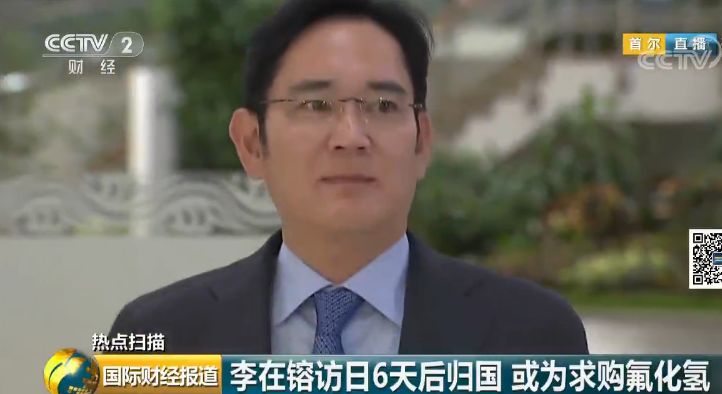
Last night around 9 PM Korean time, Samsung Electronics Vice Chairman Lee Jae-Yong returned to South Korea, concluding a six-day trip to Japan. How does South Korea evaluate Lee Jae-Yong’s visit to Japan, and do South Korean companies and the government have any new countermeasures regarding Japan’s export restrictions?
△ CCTV Finance “International Finance Report” program video
During his six-day stay in Japan, which exceeded previous expectations, Lee Jae-Yong even missed the first two days of meetings between President Moon Jae-In and leaders of South Korea’s top 30 companies.
According to South Korean media reports, during his visit to Japan, Lee Jae-Yong met with relevant Japanese companies and financial figures, but the specific itinerary was not disclosed. Upon arriving at the airport last night, he remained tight-lipped in response to reporters’ questions.
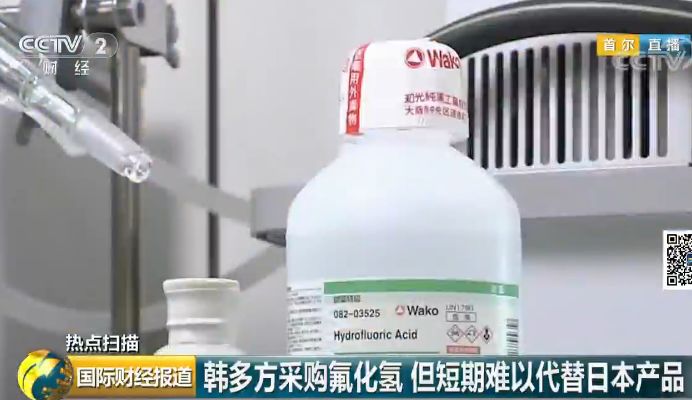
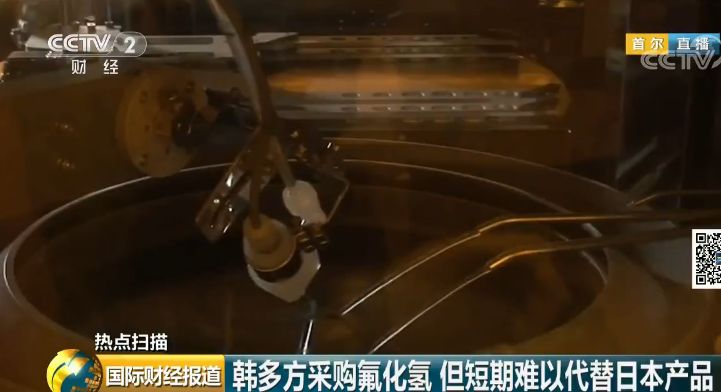
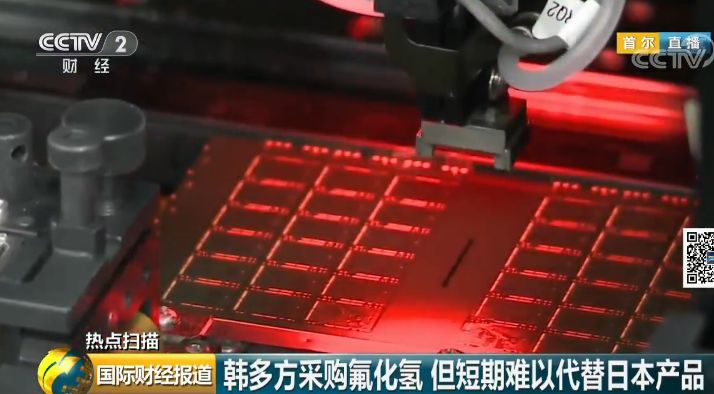
Sources from the South Korean semiconductor industry indicate that the main purpose of Lee Jae-Yong’s trip to Japan was to procure hydrogen fluoride, one of the three semiconductor materials restricted from export to South Korea by Japan. Due to the highly corrosive nature of hydrogen fluoride, it cannot be stored for long periods, and South Korean companies have been importing it in small batches.
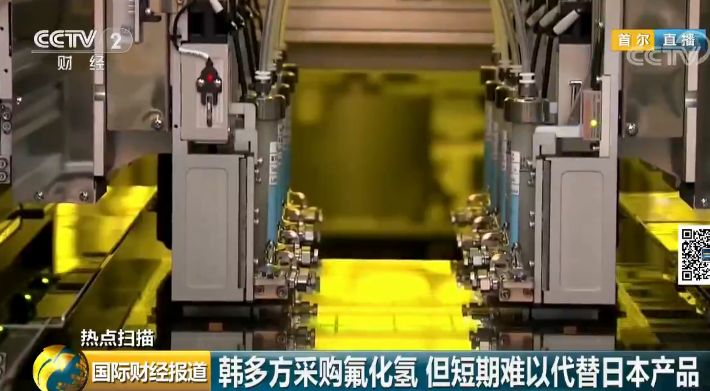
Hydrogen fluoride is primarily used for cutting semiconductor substrates, and in the manufacturing of semiconductor products, it may be used in over 600 processes, sometimes as many as ten times.
Industry speculation suggests that Samsung Electronics’ hydrogen fluoride stock may only last a few weeks, and other South Korean semiconductor companies are also in a dire situation.
Previously, the South Korean industry had hoped that through Lee Jae-Yong’s visit to Japan, they could import hydrogen fluoride from Japanese manufacturers’ overseas factories or obtain it through third-party indirect imports. However, given the ongoing trade dispute between South Korea and Japan, it may be difficult for Japanese companies to take risks.
LG representatives stated that they have already purchased hydrogen fluoride from other countries for testing, and Russia has also indicated through diplomatic channels that it can provide hydrogen fluoride to South Korean companies. However, experts point out that semiconductor raw materials require 1-6 months of testing before mass production, especially since the purity of hydrogen fluoride greatly affects the quality of semiconductor products. Therefore, it is difficult for other products to immediately fill the gap left by Japanese hydrogen fluoride in the short term. It is not an exaggeration to say that when the existing stock of hydrogen fluoride from Japan is exhausted, it may mark the day of shutdown for South Korean semiconductor companies.
Last night, the first talks between South Korea and Japan since the trade dispute ended without results. The South Korean Ministry of Trade, Industry and Energy stated at a press conference after the talks that it has proposed to hold another South Korea-Japan meeting by the 24th of this month, but Japan has not responded directly to this.
The South Korean government stated that it will request the United Nations Security Council or international organizations to investigate whether there are violations of strategic material management regulations between South Korea and Japan. If South Korea is not at fault, the Japanese government should apologize to South Korea and lift the export control measures. The South Korean National Assembly also plans to send a delegation to Japan at the end of this month to seek solutions to the issue of Japan’s export restrictions to South Korea.
Source: CCTV Finance
Editor: Su Xin
Design: Qiu Ju
Proofreader: Zhang Jun
Editor-in-Chief: Meng Nan