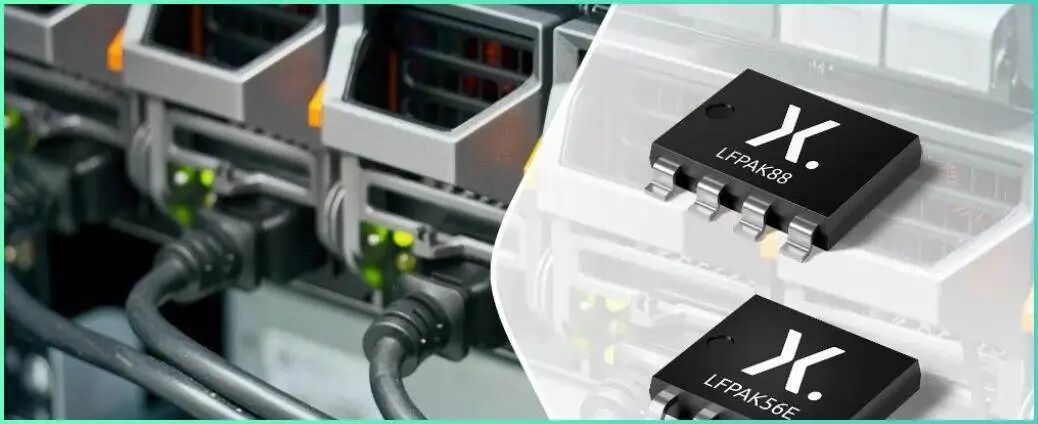
Over 40 Chinese companies are waiting for an answer regarding their production lines. In this round of semiconductor supply chain disruptions, Nexperia’s customers include automotive, home appliances, photovoltaic, and even small items like rice cookers, all asking the same question: How much longer can we hold on? The shadow of shutdowns looms over the entire industry, and this is not an exaggeration. The situation on the ground is stark—some have only a final batch of materials left in their warehouses, others are queuing to buy components, some are preparing to lay off workers, and even some factories are saying: we might completely shut down next week.

01 The Shockwave of Supply Disruptions: No One Can Escape
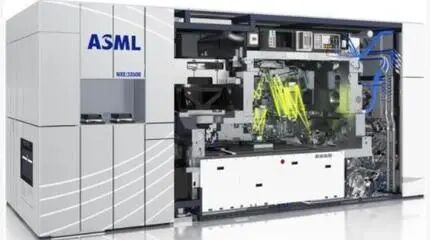
Nexperia, originally the semiconductor division of Philips, has changed hands multiple times and ultimately ended up with China’s Wingtech. As a result, when Europe and the US saw Chinese ownership, they immediately became alert and placed Nexperia on a blacklist. Consequently, even raw materials, EDA software, and small components on production lines are now being restricted. In plain terms, this is no different from a “chokehold”; the tactics employed by Europe and the US are indeed ruthless.
Domestic industries such as automotive, home appliances, inverters, and energy storage have thousands of companies, most of which use Nexperia’s power devices. Small components like transistors, diodes, and MOSFETs may seem insignificant, but when they are out of stock, the entire production line comes to a halt. You might ask if there are domestic alternatives? Yes, but not all models can be switched quickly, and the certification process can take several months. The market cannot wait, and customers are pressing hard; the situation where “one missing component halts the entire line” is a daily reality.
02 Shutdown Crisis: Daily Anxiety for Enterprises
The biggest problem now is, not only the leading manufacturers but also the small and medium-sized suppliers in the second and third tiers are being affected, everyone is unable to secure supplies, and as this trickles down, home appliances, photovoltaics, and automotive industries are all experiencing declines. Some ask why the speed of domestic alternatives is not as fast as expected? Ultimately, it comes down to the “ecosystem”; foreign companies like Nexperia have honed their products over decades, with a wide range of models and stable quality. Once customers get used to them, switching is not as simple as it sounds. Now, everyone is scrambling for chips like they did for masks, with some even hoarding at high prices, and others seeking connections to secure supplies. The industry has even seen the emergence of “second-hand chip scalpers,” where a small component can be sold for several times its original price. This issue is no longer just about technical capabilities; it is more about market confidence and psychological expectations.
03 The Tactics of Europe and the US: Open Suppression, Covert Layout
So the question arises, who benefits from this round of operations? Clearly, while Europe and the US claim to advocate for “market fairness,” they are simultaneously using policies and supply chain restrictions to stifle Chinese enterprises. On the Nexperia side, they claim to strive to ensure supply to the Chinese market, but after rounds of scrutiny, the raw materials, tools, and even management permissions for production lines are being severely restricted, which is beyond what a single enterprise can endure. To put it bluntly, Europe and the US want to take this opportunity to “suppress” Chinese manufacturing, forcing you to use more expensive alternatives or simply halt production, shrinking market share and replacing it with their own. Isn’t that infuriating? However, this crisis is also pushing us to accelerate the pace of domestic production; related companies are indeed working hard on R&D and expanding capacity, but in the short term, complete replacement is very difficult; this is the harsh reality.
04 Breaking Through with Domestic Production: What Are the Challenges?
When it comes to breaking through with domestic production, everyone wants to know what the challenges are. In fact, the biggest challenge is not the inability to produce, but the “ecosystem”—Nexperia’s products have a wide range of models, stable performance, and quick certification, giving customers confidence. For domestic manufacturers to quickly match, it will take at least a few years. Not to mention that some end manufacturers have extremely high requirements for the quality and stability of small components; laboratory tests often require full lifecycle testing, and this entire process not only delays time but also the market window. You might ask if there are supportive policies? Indeed, but the market does not wait; orders can be canceled at any time, and factories can stop production at a moment’s notice; this is the harsh reality of the industry.
Of course, let’s not be too pessimistic; China’s semiconductor industry has made rapid progress in recent years, with companies like China Resources Micro, Yangjie, and Silan Micro already ramping up production, and some models can match Nexperia’s products, but for a complete replacement, we still need the entire industry chain to collaborate; we cannot rely on one or two leading companies to save the entire industry.
05 The Outcome Is Uncertain: Opportunities Amidst Crisis
In short, this supply disruption crisis indeed poses significant pressure in the short term, and many companies will have to tighten their belts to survive the winter, but it also forces domestic manufacturers to accelerate their growth. Whoever can solve the “chokehold” problem first will be able to establish a solid foothold. For ordinary people, the pain of chip shortages may not be felt immediately, but once they see rising prices for home appliances, delayed car deliveries, or even a “shortage wave,” they will understand that this issue is actually quite close to us.
Europe and the US are using this “tripping” tactic, which will eventually force the emergence of China’s own super supply chain. At that point, a reversal of the situation is not impossible. This is the harsh reality of the global supply chain game and the greatest test for Chinese manufacturing. Whether we can turn this crisis into an opportunity for industrial upgrading depends on the next year or two, and we all look forward to it!