In the wave of transformation of electronic devices towards “lightweight, flexible, and intelligent” designs,Flexible Printed Circuits (FPC) are stepping into the spotlight as a key component that breaks the limitations of hardware form factors. Unlike traditional rigid circuit boards (PCB), which are characterized by their “rigid properties,” FPC offers unique flexibility, providing “form freedom” for innovative products such as foldable smartphones, wearable devices, and smart cars, making it the “invisible backbone” of the flexibility revolution in electronic devices.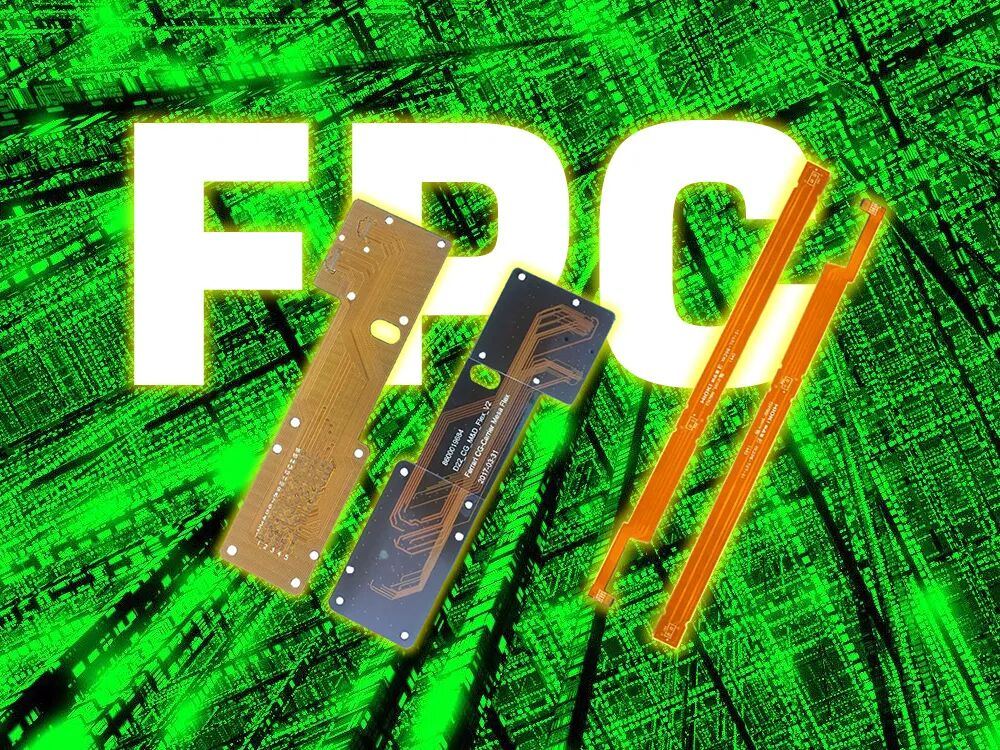 1. Core Characteristics of FPC: The Technical Support Behind Flexibility
The flexible advantages of FPC stem from its special materials and structural design. Its substrates are often made of polyimide (PI) or polyester film, which not only possess excellent high-temperature resistance (capable of withstanding temperatures above 200°C) and corrosion resistance but can also endure tens of thousands of bends without damage; the conductor layer primarily consists of ultra-thin electrolytic copper foil or rolled copper foil, forming precise circuits through etching processes; the protective film (covering film) on the surface further enhances the circuit’s insulation and wear resistance.
Compared to traditional PCBs, the core advantages of FPC focus on three aspects: first, “spatial adaptability,” allowing it to bend, fold, and wrap according to the internal structure of devices, significantly saving installation space, especially suitable for miniaturized electronic components; second, “lightweight,” with a thickness of less than 0.1mm and a weight only one-third that of the same area rigid PCB, meeting the needs of weight-sensitive scenarios such as wearable devices and aerospace; third, “reliability,” as the flexible structure can buffer vibrations and impacts, reducing the failure rate by over 60% compared to traditional wiring harnesses in complex environments like automotive and industrial equipment.
2. Penetration Across Multiple Fields: FPC Reshaping the Application Boundaries of Electronic Devices
Today, FPC has gradually expanded from the early consumer electronics field to diverse scenarios such as automotive, medical, and aerospace, becoming an “invisible driving force” for technological upgrades across various industries.
In the consumer electronics sector, FPC is the “lifeblood component” of foldable smartphones—its “flexible circuits” at the hinge must endure millions of bends during the opening and closing of the screen. Currently, the industry’s leading FPC bending life has surpassed 2 million times, ensuring the durability of foldable smartphones; wearable devices such as smartwatches and fitness bands rely on FPC for “skin-adaptive fitting,” for example, the connection between the heart rate monitoring module and display of the Apple Watch is achieved through ultra-thin FPC, avoiding the discomfort of rigid circuits while adapting to the curvature of the wrist. According to industry data, by 2024, the global FPC market share in consumer electronics is expected to exceed 50%, with demand for FPC driven by foldable smartphones growing by 35% year-on-year.
In the automotive electronics field, the development of new energy vehicles and autonomous driving is generating “incremental demand” for FPC. The wiring harness of traditional fuel vehicles can weigh up to 30-50kg, while replacing part of the harness with FPC can reduce weight by 40% and decrease installation space by 60%—this is crucial for improving the range of new energy vehicles. Additionally, the sensors for autonomous vehicles, such as LiDAR, cameras, and millimeter-wave radars, require FPC for “high-precision signal transmission,” where its anti-interference and stability directly affect the safety performance of autonomous driving. It is predicted that by 2025, the global automotive electronics FPC market will exceed $4 billion, with an annual compound growth rate of 12%.
In the medical electronics field, the “biocompatibility” and “flexible characteristics” of FPC make it a core carrier for innovative medical devices. For example, wearable blood glucose monitors integrate sensors and data transmission modules through ultra-thin FPC, allowing them to bend with body movements when attached to the skin, not affecting daily activities while enabling 24-hour continuous monitoring; the “flexible arms” of minimally invasive surgical robots also rely on FPC to connect miniature motors and control systems, with precise circuit designs allowing the robot to perform operations with an accuracy of 0.1mm.
3. Technological Evolution and Future Trends: How FPC Breaks Through the “Flexibility Limits”
As electronic devices pursue “higher integration, better reliability, and lower costs,” FPC technology is advancing in three major directions:
First, high density. Currently, the mainstream FPC in the industry has line widths and spacings reaching 0.05mm, with some high-end products even breaking through 0.03mm, equivalent to one-third the diameter of a human hair. Through “fine line etching” and “multi-layer stacking technology,” a single FPC can integrate multiple functions such as antennas, sensors, and touch circuits. For example, the FPC in Huawei’s Mate X series foldable smartphones has achieved integration of “display drive + touch + antenna,” reducing the number of components by 30%.
Second, material innovation. To enhance the “weather resistance” and “environmental friendliness” of FPC, companies are developing new substrates—such as using “carbon fiber reinforced PI film,” which increases the tensile strength of FPC by 50% while maintaining flexibility; environmentally friendly FPCs are designed with “lead-free soldering” and “biodegradable substrates,” complying with the EU RoHS 2.0 environmental standards, with penetration rates of such products in the medical and children’s electronics fields exceeding 20%.
Third, cross-industry integration. FPC is deeply integrating with technologies such as “flexible displays” and “flexible batteries,” promoting the realization of “fully flexible devices.” For example, Samsung’s development of a “rollable screen smartphone” involves the collaborative design of its FPC with flexible OLED screens and flexible batteries, allowing the screen to stretch from 6.7 inches to 7.7 inches, while the FPC’s “dynamic bending compensation technology” addresses circuit breakage during the stretching process.
4. Conclusion: FPC, Beyond Just “Flexibility”
From the “smooth opening and closing” of foldable smartphones to the “lightweight upgrades” of new energy vehicles, and the “precise monitoring” of medical devices, the value of FPC has long surpassed the single function of “flexible connections,” becoming the “core code” driving innovation in the form and performance of electronic devices. In the future, with the rise of new scenarios such as metaverse devices, implantable electronics, and low-altitude drones, FPC will further break through the “flexibility limits,” providing infinite possibilities for building a “smarter, more life-adaptive” electronic world for humanity.
END
After reading, click the lower right corner ♥ Recommend
Let the concept of promoting Cantonese culture inspire more people

Global open Cantonese ecological platform

Cantonese NetworkOfficial Website
China Site www.yuetol.com
World Site cantoneseglobal.com
Outstanding Business www.suec.cn

Cantonese NetworkIT
Website Development / Website Operation / 3D DevelopmentWeChat 13922266979www.yuet.net ← Global Cantonese Business Exchange GroupOutstanding Business www.suec.cnGlobal Chinese Excellence B2B Business Platform

CANTONESE BIZ