Click the blue text

Follow us
The principle of resistance change caused by the length/ shape deformation of materials due to strain has been widely applied in sensor manufacturing. Commercial thin film resistive strain gauges amplify resistance changes by sputtering thin metallic serpentine lines onto polyimide films. However, this strain design has high manufacturing costs and thin metal lines are prone to failure after repeated bending, making them unsuitable for deformation monitoring on human bodies and complex 3D surfaces.Composite conductive materials made from conductive nano-fillers and flexible polymers have been widely used in the fabrication of flexible stretchable sensors, but the need for fully tracking random strain in practice has not yet been addressed. The screen printing technology is simple, low in material cost, and has advantages in low-temperature and patterned large-scale production.Recently, Jiangnan University used multi-walled carbon nanotubes/ polydimethylsiloxane (MWCNTs/PDMS) conductive composite ink, to fabricate omnidirectional strain sensors capable of tracking and monitoring strain through printing processes. The related paper titled “MWCNTs/PDMS composite enabled printed flexible omnidirectional strain sensors for wearable electronics” was published in Composites Science and Technology.Paper link: https://www.sciencedirect.com/science/article/pii/S0266353822002603
In this study, the authors patterned the MWCNTs /PDMS conductive ink on polyimide (PET) through screen printing, then coated PDMS on the dried print, and after curing, peeled off to obtain a film of embedded printed MWCNTs / PDMS sensors, with PDMS coated on the other side for encapsulation. This preparation process enables the production of multi-pattern flexible sensors adaptable to various scenarios (Figure 1).
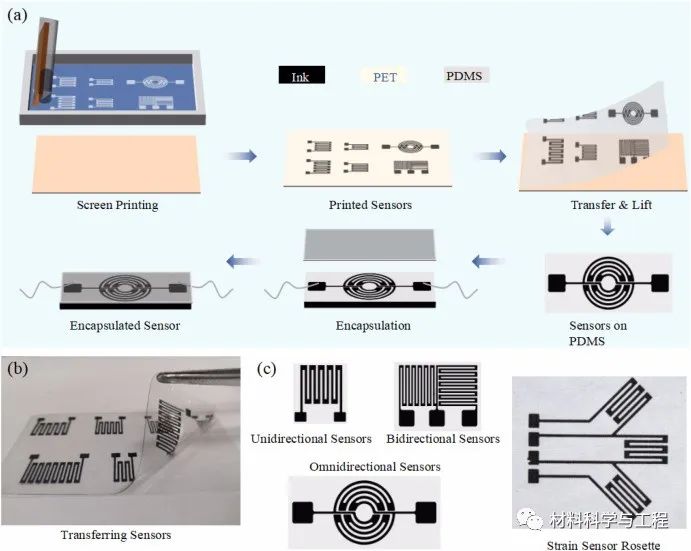
Figure 1. Manufacturing process and illustration of printed flexible strain sensorsThe printability, stability, conductivity, and print quality of the ink affect the sensing performance of flexible sensors. The authors optimized the ink formulation through studies on the viscoelasticity of the ink and the modification of MWCNTs.
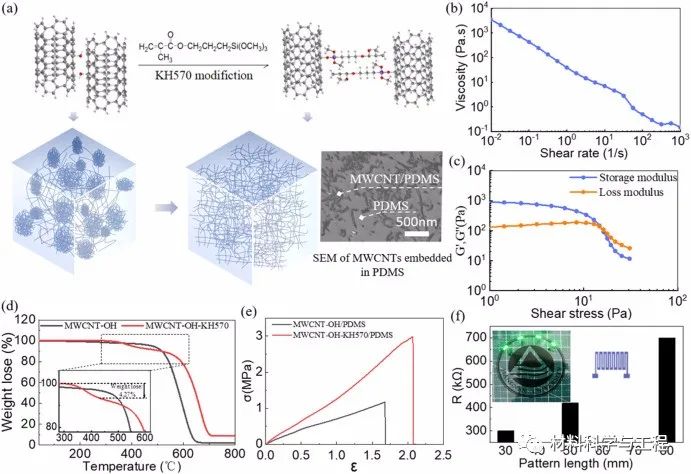
Figure 2. MWCNTs/PDMS composite ink characteristicsThe patterned preparation of the printing process facilitates meeting various manufacturing needs for flexible sensors: a double-ended serpentine can serve as a unidirectional sensor that has good sensing performance for longitudinal (Y direction) tensile strain; through a bidirectional strain sensor design (Figure 4a), it can measure strain in both X and Y directions simultaneously, and by comparing signal strengths, the direction of applied strain can be determined. The design of a circular strain sensor (Figure 4d) can monitor strain in all directions, regardless of the direction of applied strain, the circular sensor will undergo symmetric deformation, showing broad application prospects in engineering structure monitoring. The rose wreath strain sensor (Figure 4g) can determine the strain and locate the direction of strain.
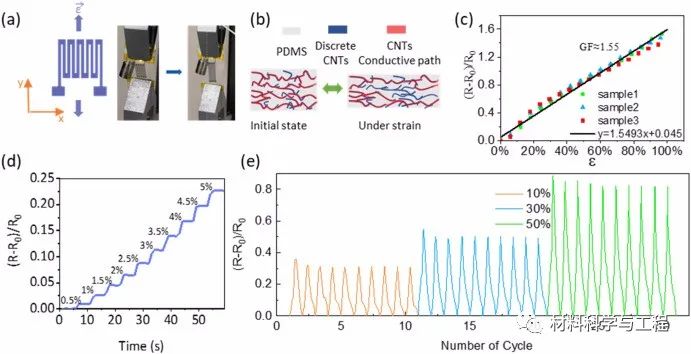
Figure 3. Performance evaluation of printed flexible unidirectional strain sensors
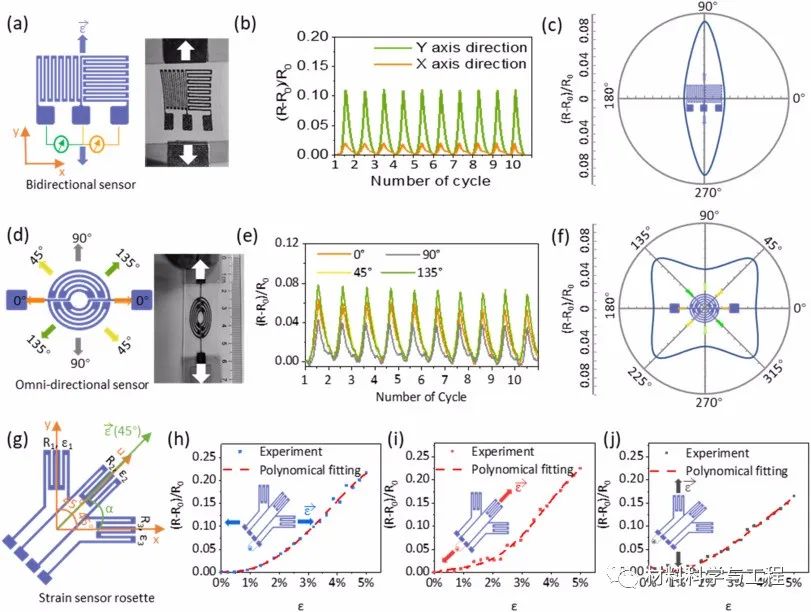
Figure 4. Graphical performance of the strain sensors
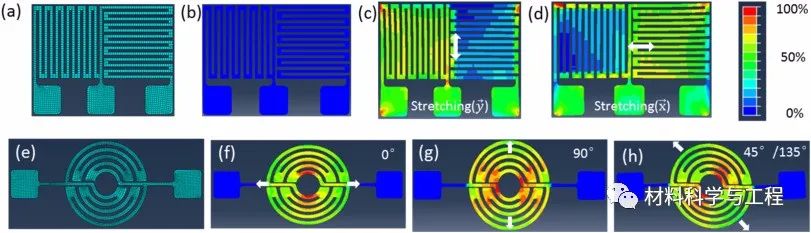
Figure 5. Finite element analysis results of flexible strain sensors
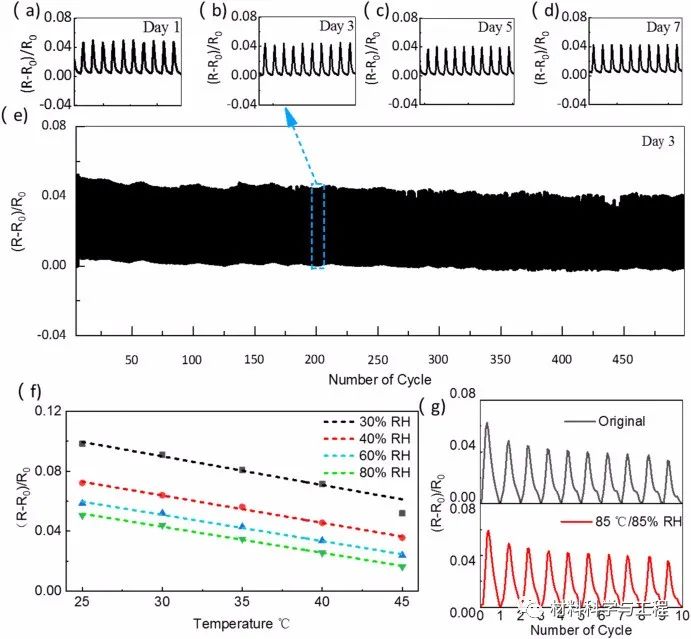
Figure 6. Reproducibility and stability of printed flexible strain sensors
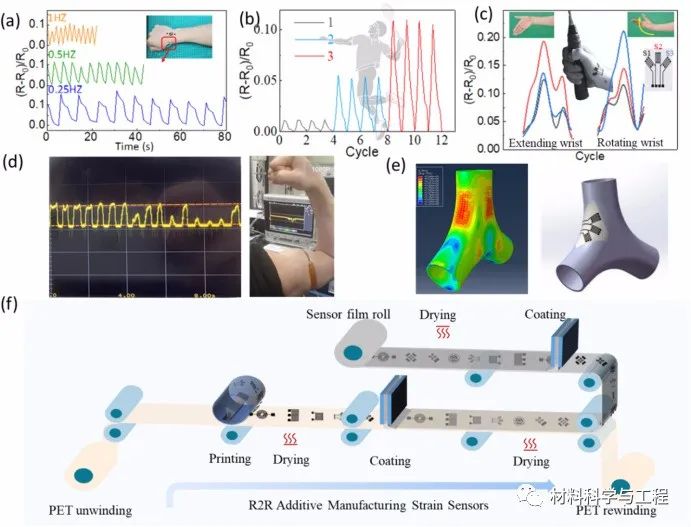
Figure 7. Applications of patterned flexible strain sensors and schematic diagram of additive manufacturing strain sensorsOverall, this research adopted additive screen printing and a one-step transfer process to fabricate flexible strain sensor films, and through pattern design, it meets various strain monitoring needs. This printed sensor exhibits good flexibility and conformability to 3D contour surfaces (such as the human body), sensitivity and stability to cyclic strains, as well as reproducibility and repeatability for long-term use. Finally, the authors demonstrate a simple and rapid process route for large-scale manufacturing, which facilitates the transition of this sensor from laboratory to factory, showing broad application prospects.
Click the link below to enter the JAD journal call for papers

https://www.editorialmanager.com
Click the link below to enter the JAD public account call for papers

http://www.JAdvDielect.com
★
Journal Introduction
★
JAD is an English academic journal founded and edited by Academician Yao Xi, co-sponsored by the World Scientific Publishing Company (WSPC) in Singapore and the International Center for Dielectric Research (ICDR) at Xi’an Jiaotong University. It features dielectric research and covers areas such as fundamental research on dielectrics, piezoelectricity, ferroelectricity, thin/thick films, multiferroic materials, and engineering dielectrics. It aims to provide a platform for scholars engaged in dielectric academic research to showcase and communicate their latest research findings, promoting continuous in-depth research on dielectric theory and applications in the academic community. Currently, JAD is a bimonthly journal indexed by various databases including ESCI, Scopus, CA, CNKI, and DOAJ.

Dielectric Academic Exchange (JAD)
No time to explain, quickly press and hold the QR code on the left to follow us~~
For more detailed content, check out “Read the original text”

Please move your finger and click “Looking” in the lower right corner