A powerful brain is the soul of the system. The i.MX RT series high real-time microprocessors, integrated with the Cortex-M7 core, can reach a maximum clock speed of 600MHz, boasting rich peripherals, high security, and a highly competitive price, making it the “core” competitive advantage of your products.
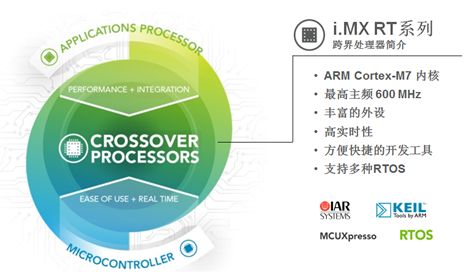
Without the three essential skills, how can one dare to take on such a delicate task? The i.MX RT series cross-domain processor, based on the ARM Cortex-M7 core, with a maximum clock speed of 600MHz, can provide 3015 CoreMark®/1284 DMIPS (> 2 DMIPS/MHz). Thanks to the high-density 512KB TCM SRAM, the i.MX RT series can also achieve ultra-fast real-time response with interrupt latency as low as 20 nanoseconds.
Rich Peripherals:
UART, SPI, I2C, I2S, MQS, CSI, LCD, USB, CAN, KeyPad, ENET, 2D image accelerator, and more; it has everything you’ve seen and haven’t seen.
Diverse Boot Methods:
The chip can boot from QSPI NOR/NAND Flash, SD/eMMC, parallel NOR FLASH/SRAM, etc., meeting your diverse program flashing needs.
Program Security:
The encrypted firmware is stored in external SPI Flash, NAND Flash, and other storage media, and decoded during runtime. The online hardware decoding component ensures that the program’s running speed is not affected.
You might think this is the end, but it’s not. Besides these, we also have:
“In-Depth Cortex-M7 – i.MX RT1050” — The all-Chinese development guide for the i.MX RT1050. Does the name sound familiar?
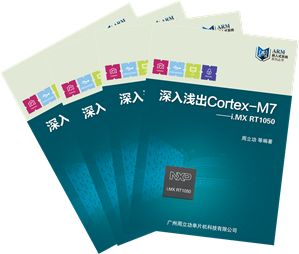
The powerful core, along with rich peripherals, makes the i.MX RT1050 more complex than ordinary microcontrollers. You may be eager to explore such a strong and novel core at first sight, but the scarcity of development materials and help documents may deter you. The book written by Guangzhou Zhou Ligong Microcontroller Technology Co., Ltd. — “In-Depth Cortex-M7 – i.MX RT1050” will help you understand the i.MX RT1050, making it not so difficult to go from beginner to expert.
Don’t worry about being the first to try; the difficulties you are concerned about have already been tested on the “guinea pigs” of the Zhou Ligong engineering team, and rich experiences have been summarized. Here are some highlights of this book, including but not limited to the following points.
Modular Hardware Design Guidance:
We break down the chip application into independent parts, detailing the principles and functions of each part. Every step here is based on our initial experiences on the path of chip exploration, which will accelerate your hardware design.
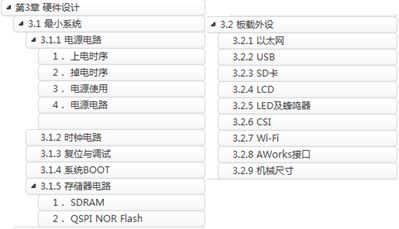
1. Power Design
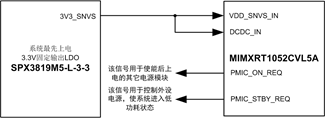
The more powerful the processor, the more complex its power design:
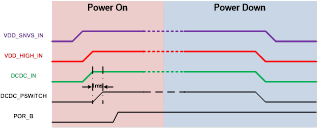
Seeing this diagram, are you a bit worried that you might accidentally “burn the chip”? Don’t worry, once you open the manuscript, you will know that the chip’s power is just a paper tiger.
2. Boot Configuration
With so many boot methods, it can be dizzying. How to combine them is also a headache. Grab the EasyARM-RT1052 development kit, and you’ll find it can be that simple.

3. Debug Circuit Design
The debug circuit is the door to opening a chip, but when you finish the board and connect the debugger, and you can’t get into the program even after stomping your feet, you might find the answer in the reset and debug section.
There are many more things that cannot be listed one by one, but such a hardware design guide will definitely save you a lot of detours.
Software Entry Guidance:
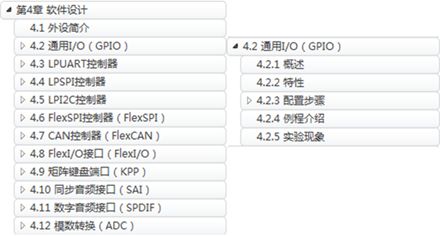
This book includes detailed introductions to 29 internal and external peripherals, including peripheral characteristics, configuration steps, etc. Most importantly, each section explaining a peripheral directly includes example source code and a lot of comments, enabling readers to easily master various internal and external peripherals when using this chip.
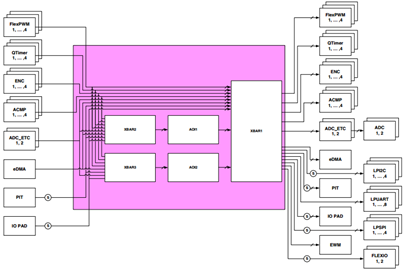
1. XBAR Usage
XBAR acts like a router for internal signals of the chip, allowing your peripherals to interconnect. You can hardly find useful information even on Baidu; why not try giving us a call?
2. More Rich Examples
With numerous peripherals and various combination examples, the Zhou Ligong R&D team continuously improves the software SDK package for the EasyARM-RT1052 development board based on application scenarios and different customer needs:
-
MQS high-quality audio decoding example;
-
Various peripherals triggering ADC acquisition;
-
Resistive screen driving;
-
emWin examples, as well as related porting and design guidance documents;
Many more can be found in the reference materials for the Zhou Ligong development board. Continuously improving and fixing the SDK package will save you a lot of trouble during development.
3. Introduction to High-Definition Display Solutions
The eLCD peripheral of the i.MX RT1050 supports screens with a maximum resolution of 1366×768, but finding an RGB interface high-definition screen is not that easy. We provide a complete solution, allowing your embedded devices to have a visual experience similar to that of a mobile phone.

Download Debugging Methods:
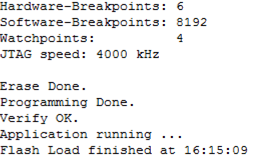
External Flash saves costs but also complicates development and debugging. The simple “download” button becomes: Generate firmware > Open the programmer > Program Flash; the “debug” button might revert to the retro serial port assistant.
Even if you are proficient in compiling IDEs and debuggers, spending time on these development-related tasks is unnecessary cost. We provide convenient and fast debugging methods, allowing everyone to focus on what they are good at.
M1052 Cross-Domain Core Board:
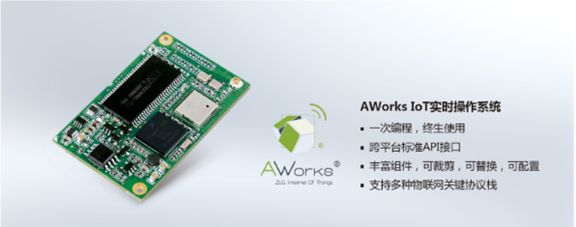
The M1052 cross-domain core board is equipped with the Cortex-M7 RT1050 processor, which not only possesses the strong processing capabilities of an MPU but also retains the simplicity and real-time advantages of an MCU! The M1052 integrates Wi-Fi/Zigbee/LoRa/NFC wireless functions and comes pre-installed with the AWorks real-time operating system, aimed at applications in smart hardware and industrial IoT design.
EasyARM-RT1052 Development Board:
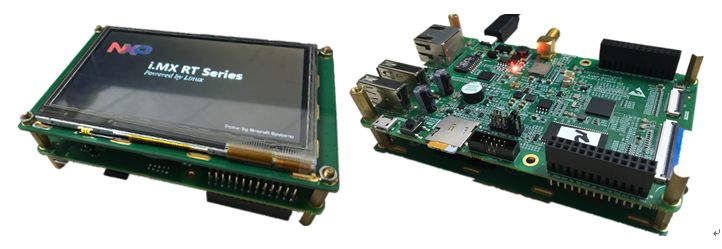
The EasyARM-RT1052 development board, paired with the book, is a carefully designed development kit targeting NXP’s i.MX RT series cross-domain processors by Guangzhou Zhou Ligong Microcontroller Technology Co., Ltd. The main control adopts the NXP i.MX RT series cross-domain processor MIMXRT1052, which combines the advantages of low-power application processors and high-performance microcontrollers, providing ultra-high performance ARM Cortex-M7 core, real-time functionality, and MCU-level usability, applicable in audio subsystems, consumer products, home and building automation, industrial technology design, motor control, and power conversion.
EasyARM-RT1052 Development Board
Seeing this, don’t you particularly want to own such a development kit and manuscript? So what are you waiting for? Quickly send an email to [email protected] to contact us.
Reply with the keyword 【Industrial Control】 in the background to see more related technical topics.
Official WeChat Account Introduction
Zhiyuan Electronics Official WeChat account, a platform gathering 500 engineers for R&D testing sharing, providing you with leading product technologies and solutions in the electronics industry..