 In the past year, terms like “embodied intelligence”, “spatial intelligence”, “general robots”, and “autonomous driving robots” have frequently appeared in discussions.Although they seem to come from different industries, they actually point to the same phenomenon:
AI is transitioning from understanding language to understanding the real world.
The core capability supporting this transformation is — spatial intelligence.
In simple terms, spatial intelligence enables AI to “understand the three-dimensional world and act correctly within it”.
There are three key carriers that embody this capability:
-
Embodied intelligent robots
-
Intelligent driving cars
-
AR smart glasses
You may ask:
Are these three not completely different industries? Why are they all discussing spatial intelligence?
Today, we will clarify the relationship between these three from a technical perspective.
01 Spatial Intelligence: The Unique Skill for AI’s Transition from Two Dimensions to Three Dimensions
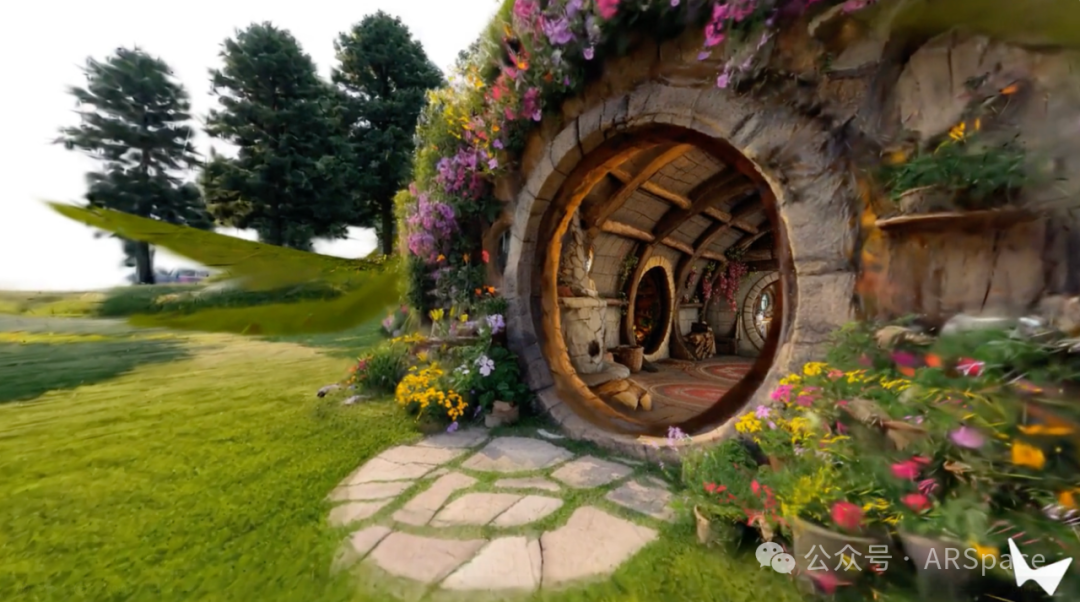
The GPT, Midjourney, text-to-image, and text-to-video technologies we currently use are essentially still operating in a two-dimensional world:
They analyze images, text, and videos, ultimately outputting flat information.
However, the real world is three-dimensional, and even “physically interactive” three-dimensional.
The challenge for spatial intelligence is to enable AI to complete a closed loop in the real physical world:
-
Perceiving the world — understanding rooms, objects, people, roads, actions, and obstacles
-
Understanding and reasoning — knowing what is operable, what is dangerous, and how to move
-
Planning and decision-making — how to move? how to grasp? how to avoid? how to collaborate?
-
Executing actions — using robotic arms, wheels, gestures, or projections to complete tasks
In simple terms:
Without spatial intelligence, robots cannot act, autonomous driving cannot be safe, and AR cannot interact.
02 Why do these three carriers represent three directions of spatial intelligence?
In terms of the core capabilities of spatial intelligence, each of these three carriers has its own characteristics.
- Embodied intelligent robots: strongest in action capability
- Intelligent driving cars: largest environmental scale
- AR smart glasses: most natural human-machine interaction
These three are like the “three pillars” of spatial intelligence, each with different emphases, representing three important application directions:
-
Robots → focusing on the “hands and feet” of AI
-
Autonomous driving → focusing on the “brain training” of AI
-
AR → focusing on the “communication interface” between AI and humans
They are not parallel tracks, but rather mutually reinforcing, together forming a complete ecosystem of spatial intelligence.
03 Carrier One: Embodied Intelligent Robots — The “Ultimate Testing Ground” for Spatial Intelligence
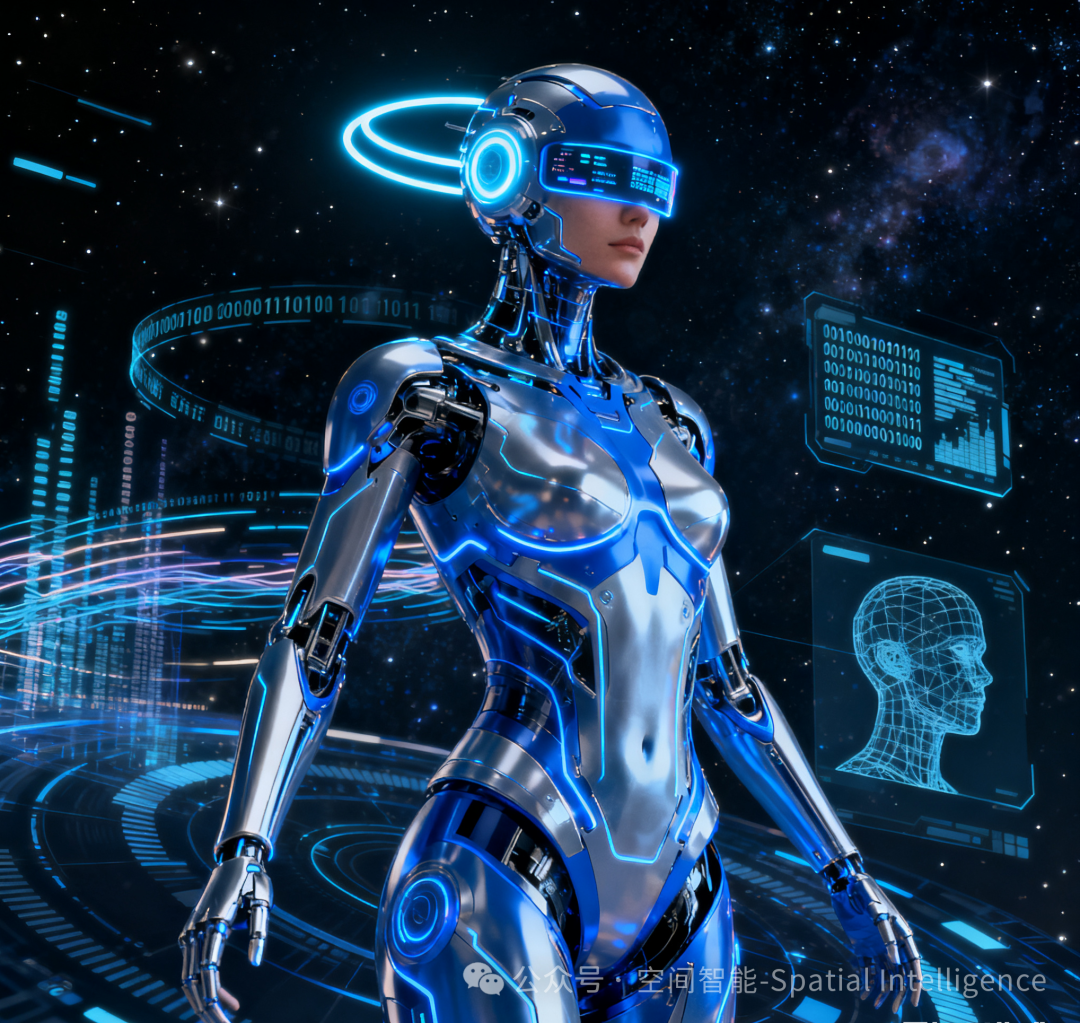
Robots are the carriers that best reflect the value of spatial intelligence, as they must directly confront the complexities of the real world:
Grabbing cups, moving boxes, opening doors, tidying rooms…
These tasks come with extremely high requirements:
-
Close-range three-dimensional reconstruction
-
Precise object recognition and pose estimation
-
Contact force prediction and control
-
Real-time response and action planning
In short:
Robots are the “action capability” test of spatial intelligence, forcing AI to possess operational capabilities in the real world.
Without robots, spatial intelligence would remain at the stage of “understanding the world”; with robots, AI can “influence the world”.
04 Carrier Two: Intelligent Driving Cars — The “Super Training Ground” for Spatial Intelligence
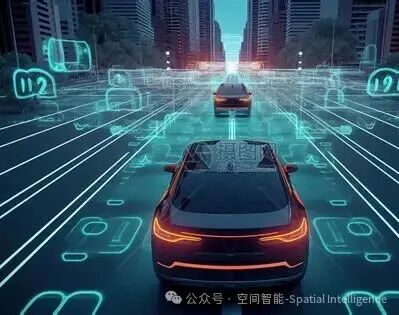
Why is autonomous driving crucial for spatial intelligence?
Because it provides thelargest scale, most diverse scenarios, and lowest cost real-world data source.
Each autonomous vehicle acts like a walking “spatial data collector”:
-
Multiple cameras, millimeter-wave radar, LiDAR
-
Cloud playback, simulation systems, data feedback loops
-
Different cities, different weather, different traffic flows
This data is the “oil” for training spatial large models.
Moreover, autonomous driving imposes extremely high requirements on algorithms:
-
Millisecond-level real-time perception
-
Multi-agent intention prediction
-
Strict safety standards
It forces AI to possess spatial understanding capabilities at an urban scale.
Without autonomous driving, spatial intelligence would struggle to evolve on a large scale.
05 Carrier Three: AR Smart Glasses — The “Human Interface” of Spatial Intelligence
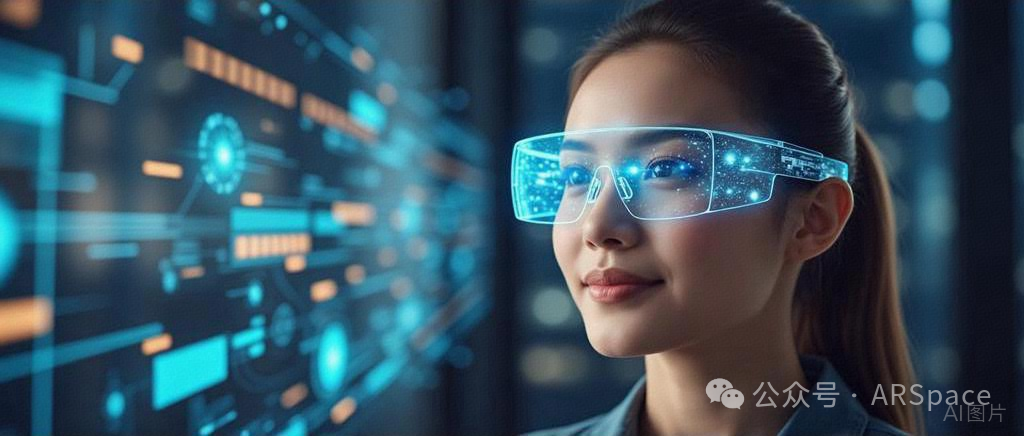
Robots and cars belong to the world of machines,
while AR is where spatial intelligence truly enters the daily lives of “humans”.
The core of AR glasses lies in “spatial display”, which depends on “spatial intelligence”. The core capabilities utilized include:
-
Real-time SLAM (Simultaneous Localization and Mapping)
-
Comprehensive environmental semantic perception
-
Object tracking, gesture recognition
-
Spatial anchors and persistent world models
This allows AI to “see what the user sees”, providing immersive information feedback:
-
Navigation is no longer a map, but arrows appearing on the ground
-
Office work is no longer on a screen, but windows in the air
-
Teaching is no longer a video, but virtual steps appearing in front of you
AR transforms spatial intelligence into a human-perceptible interface, serving as the gateway to future computing.
Importantly:
AR is actually “reverse collecting” long-term spatial data from the perspective of “humans”.
— This provides spatial intelligence with continuous learning opportunities.
06 The three carriers are not in competition, but rather mutually fulfilling
They form a closed-loop ecosystem:
1) Autonomous driving: provides the largest scale of spatial data, supporting the training foundation of spatial models.
2) Robots: validate the action capabilities of spatial intelligence, enabling models to possess “hands-on” abilities.
3) AR: offers the most natural human interaction channel, allowing spatial intelligence to truly impact users’ lives.
Together, they constitute:
Spatial intelligence = perception + reasoning + action + interaction, a complete system.
When this system is integrated, AI’s intelligence in the real world will no longer be fragmented, but will improve as a whole.
07 In Conclusion: Spatial Intelligence Will Be the Main Battlefield of AI in the Next Decade
The past decade has been the era of language intelligence;
the next decade will be the era of spatial intelligence.
Spatial intelligence will change our way of life like smartphones,
and robots, autonomous driving, and AR glasses will be the three critical tracks.
They will collectively drive one thing:
AI will no longer just be a brain on a screen, but will enter our spatial world.
Whoever can break through in spatial intelligence first,
will lead the next technological revolution.
Previous Highlights
Human-Machine AI Collective Intelligence: How AR Glasses and Agents Reshape Intelligent Collaboration in the Physical World
Li Feifei’s Long Article on AI Paradoxes: Spatial Intelligence Becomes the Next Frontier of Artificial Intelligence
Li Feifei and Schmidt Discuss ASI: Will AI Surpass Human Intelligence in Three Years?
Two Nobel Laureates, Three Turing Award Winners, and the Stars of Human AI: Meet the Founders of Modern Machine Learning
Humans Compress the World into Text, but AI is Creating “World Models”
From “Seeing the Virtual” to “Understanding the World”: The Evolution, Differentiation, and Integration of AR Glasses
Breaking News! OpenAI Releases Sora 2, Not Just AI Video, but Building a New Type of Social Universe