Click the link at the end of the article to access the original literature directly.
Research Background

 The sustainable utilization of biomass resources is one of the important ways to address global environmental challenges. Compounds derived from biomass can be converted into high-value chemicals through electrochemical oxidation, which is significant in the field of sustainable chemistry. This study focuses on the electrochemical oxidation of D-glucose using boron-doped diamond (BDD) electrodes to produce rare sugars. Rare sugars are a class of monosaccharides and their derivatives that are present in very low quantities in nature, possessing unique biological activity and potential application value. However, the synthesis of rare sugars faces challenges of high costs and low yields, making the development of efficient synthesis methods significant.
Key Points of the Article

 This article achieves the efficient conversion of D-glucose to rare sugars through electrochemical methods utilizing the characteristics of BDD electrodes.
1. Electrochemical Experiments: The electrochemical oxidation performance of BDD electrodes on D-glucose was studied under constant current (10 mA) and different potentials (1.5−3.0 V vs Ag/AgCl). The results showed that the BDD electrode achieved 95.9% degradation of D-glucose within 6 hours and successfully generated various rare sugars, including D-arabinose (0.126 mmol/L), D-ribose (0.0544 mmol/L), and D/L-glyceraldehyde (total 0.148 mmol/L). In contrast, the Pt electrode achieved only 10.2% degradation of D-glucose under the same conditions, with significantly lower yields of rare sugars.
2. Product Analysis: The reaction products were qualitatively and quantitatively analyzed using HPLC and LC/MS techniques, combined with p-aminobenzoic acid ethyl ester (ABEE) and L-tryptophan amide labeling methods. The results indicated that the highest yield of rare sugars was obtained at 2.5 V vs Ag/AgCl, suggesting that the potential has a significant impact on product distribution.
3. Mechanism Discussion: The generation of rare sugars involves a series of oxidation and decarboxylation reactions, which are facilitated by reactive species (such as hydroxyl radicals) generated electrochemically. The superior performance of the BDD electrode is attributed to its wide potential window, efficient generation of oxidizing species, and unique surface characteristics.
4. Electrode Performance Comparison: The BDD electrode exhibited significant advantages over the Pt electrode in the degradation of D-glucose and the generation of rare sugars. The BDD electrode achieved the highest yield of rare sugars at 2.5 V vs Ag/AgCl, while the Pt electrode yielded significantly lower amounts under the same conditions. This indicates that the BDD electrode has higher efficiency and selectivity in the electrochemical oxidation process.
Graphical Analysis


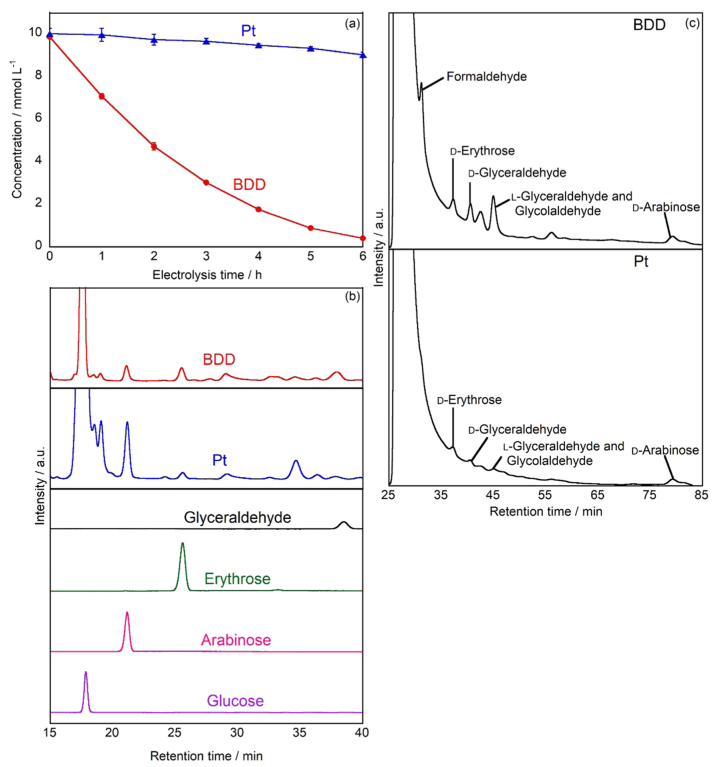
Figure 1: Electrochemical oxidation performance of D-glucose degradation and rare sugar generation
(Image source: J. Am. Chem. Soc.)
Under constant current conditions (10 mA), the concentration of D-glucose rapidly decreased to 0.41 mmol/L within 6 hours when using the BDD electrode, corresponding to a degradation efficiency of 95.9%. In contrast, the Pt electrode achieved only 10.2% degradation. Furthermore, the concentration of rare sugars generated by the BDD electrode was significantly higher than that of the Pt electrode, for example, D-arabinose reached 0.126 mmol/L, while the Pt electrode only reached 0.0381 mmol/L.
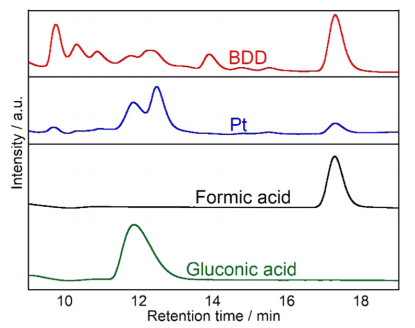
Figure 2: HPLC analysis of organic acid generation
(Image source: J. Am. Chem. Soc.)
HPLC analysis was performed on the concentration changes of organic acids (such as acetic acid and formic acid) generated by the BDD electrode at different potentials. The results showed that the highest concentration of formic acid generated by the BDD electrode at 2.5 V vs Ag/AgCl reached 3.96 mmol/L, while the Pt electrode only reached 0.0752 mmol/L under the same conditions. This indicates that the BDD electrode has higher efficiency in generating organic acids, especially at 2.5 V, where the generation efficiency of formic acid is significantly higher than at other potentials and with the Pt electrode.
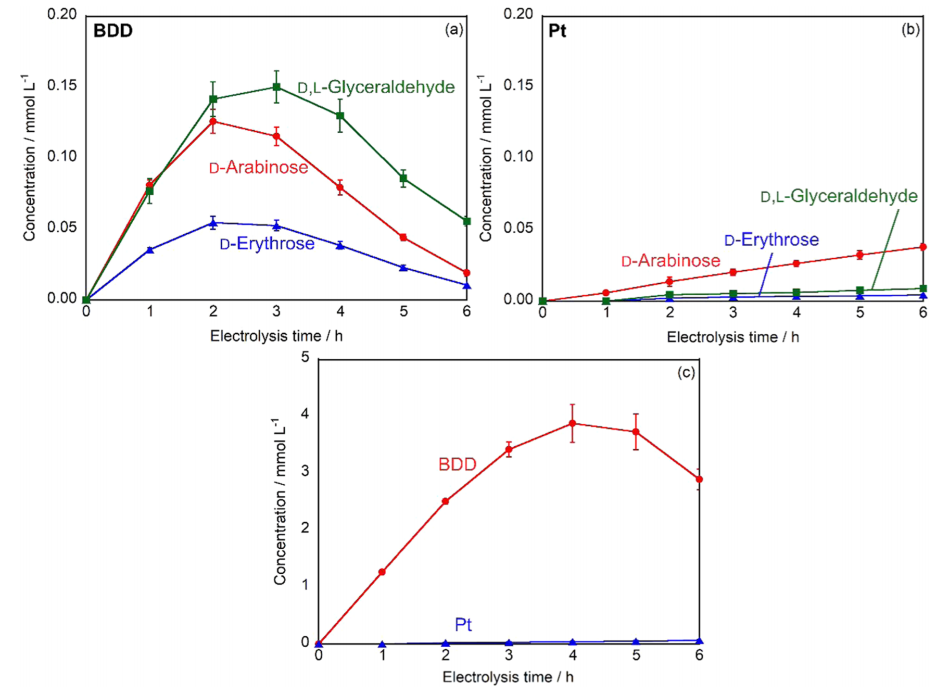
Figure 3: Time dependence of rare sugar generation
(Image source: J. Am. Chem. Soc.)
At different potentials, the concentration changes of rare sugars (D-arabinose, D-ribose, and D/L-glyceraldehyde) generated by the BDD electrode over time showed that at 2.5 V vs Ag/AgCl, the generation efficiency of rare sugars was the highest, with D-arabinose and D-ribose concentrations reaching 0.126 mmol/L and 0.0544 mmol/L, respectively, while the concentration of D/L-glyceraldehyde peaked at 0.148 mmol/L at 3 hours. Therefore, 2.5 V is the optimal potential for generating rare sugars, and the BDD electrode exhibits the highest selectivity and efficiency at this potential.
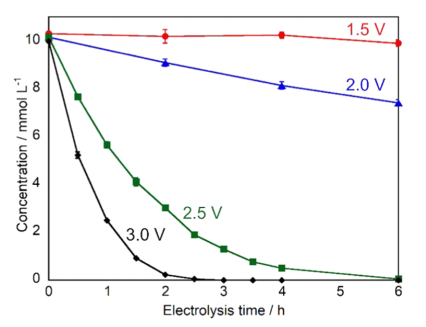
Figure 4: Changes in D-glucose concentration at different potentials
(Image source: J. Am. Chem. Soc.)
At different potentials (1.5−3.0 V vs Ag/AgCl), the time-dependent changes in D-glucose concentration by the BDD electrode showed that the degradation efficiency of D-glucose increased with the potential. At 1.5 V, the degradation efficiency of D-glucose was only 0.7%, while at 3.0 V, D-glucose was completely degraded.
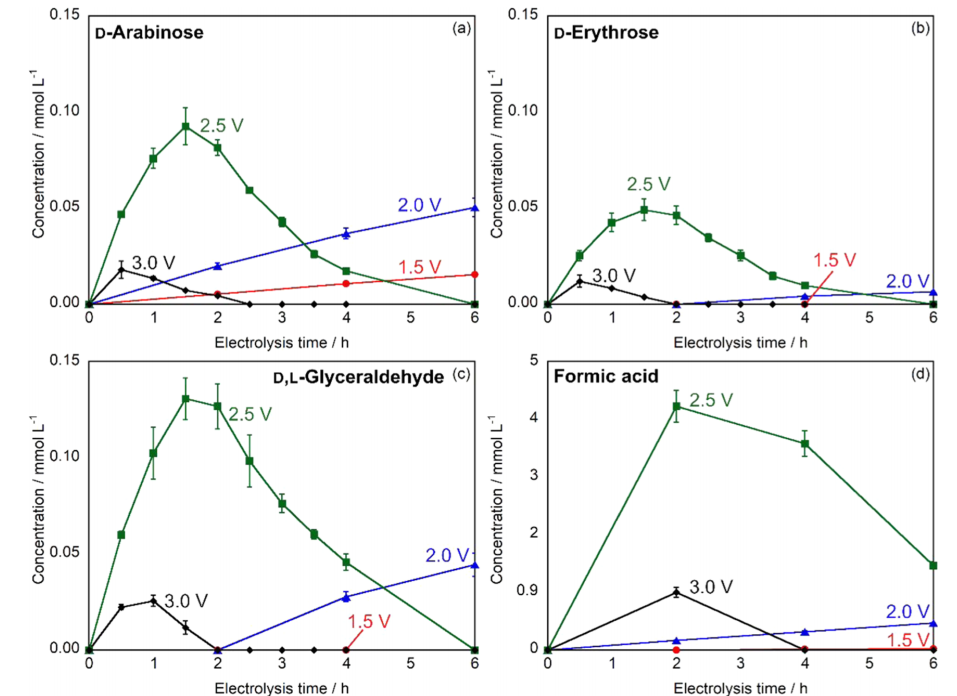
Figure 5: Time dependence of rare sugar and organic acid generation
(Image source: J. Am. Chem. Soc.)
At different potentials, the concentration changes of rare sugars (D-arabinose, D-ribose, and D/L-glyceraldehyde) and organic acids (formic acid) generated by the BDD electrode over time showed that at 2.5 V vs Ag/AgCl, the generation efficiency of rare sugars and formic acid was the highest. The concentrations of D-arabinose and D-ribose peaked at 2.5 V, reaching 0.0929 mmol/L and 0.0492 mmol/L, respectively. This further confirms that 2.5 V is the optimal potential for generating rare sugars and organic acids.
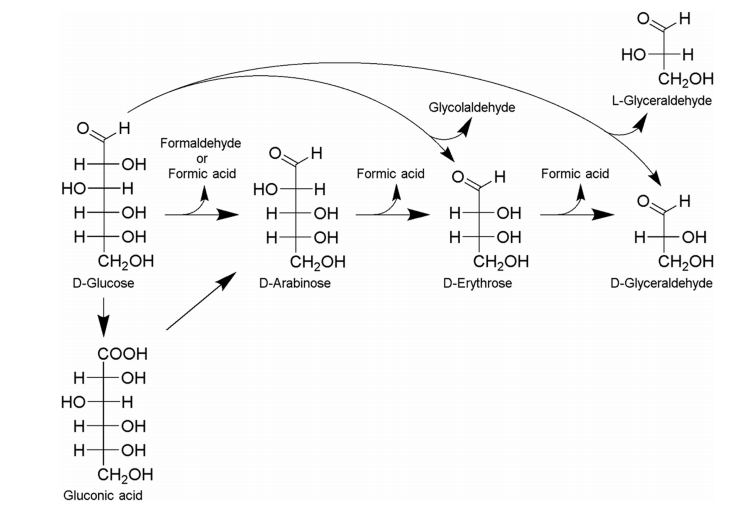
Figure 6: Possible reaction pathways for the electrochemical oxidation of D-glucose
(Image source: J. Am. Chem. Soc.)
The generation of rare sugars involves a series of oxidation and decarboxylation reactions, which are facilitated by reactive species (such as hydroxyl radicals) generated electrochemically. The main pathways include the oxidation of glucose to gluconic acid, followed by decarboxylation to generate D-arabinose, and further reactions to produce D-ribose and D/L-glyceraldehyde. Additionally, D-arabinose and formic acid may also be generated directly through carbon-carbon bond cleavage. These pathways indicate that the BDD electrode has efficient catalytic performance in the electrochemical oxidation process, promoting various reaction pathways.
Conclusion and Outlook

 This study successfully achieved efficient degradation (95.9%) of D-glucose and the generation of various rare sugars, such as D-arabinose (0.126 mmol/L), D-ribose (0.0544 mmol/L), and D/L-glyceraldehyde (0.148 mmol/L) through the electrochemical oxidation of D-glucose using boron-doped diamond (BDD) electrodes. The experiments indicate that 2.5 V vs Ag/AgCl is the optimal potential for generating rare sugars. The BDD electrode significantly outperforms the Pt electrode in rare sugar generation due to its wide potential window and efficient generation of oxidizing species, providing a new sustainable pathway for biomass conversion.
Literature Information


Generation of Rare Sugars by Electrochemical Oxidation of D‑Glucose Using Boron-Doped Diamond Electrode. J. Am. Chem. Soc.2025.
DOI:10.1021/jacs.4c17553
https://doi.org/10.1021/jacs.4c17553
Click to read the original literature directly~
Disclaimer: For more content, please refer to the original text. If there is any infringement, please contact the editor for deletion.