Note:The following content does not constitute any investment advice, guidance, or commitment, and is for academic discussion only.
Data Source: Public announcements from listed companies, industry research reports.
2025.07.13

Word count: 1510, estimated reading time: approximately 3.8 minutes
Introduction:Shanghai’s “Brain Intelligence World” has opened, Neuralink has implanted chips in seven volunteers, and six Chinese companies have simultaneously showcased their strengths in brain-machine interfaces and robotics, with medical rehabilitation likely to be the first to explode.
In recent weeks, brain-machine interface technology has once again become a global focus.
On June 29, Shanghai launched China’s first brain-machine interface future industry cluster park “Brain Intelligence World“, marking the official linkage of the “dual engines” of policy and technology.
On the other hand, Neuralink, owned by Elon Musk, announced that seven volunteers worldwide have successfully implanted brain-machine chips, validating the feasibility of technology through scenarios such as “controlling robotic arms with thoughts” and “playing games with thoughts”, and plans to achieve the goal of restoring vision for the blind by 2026.
Earlier, the Chinese Academy of Sciences and Huashan Hospital affiliated with Fudan University completed China’s first prospective clinical trial of invasive brain-machine interfaces, making China the second country in the world to enter this stage, following the United States.
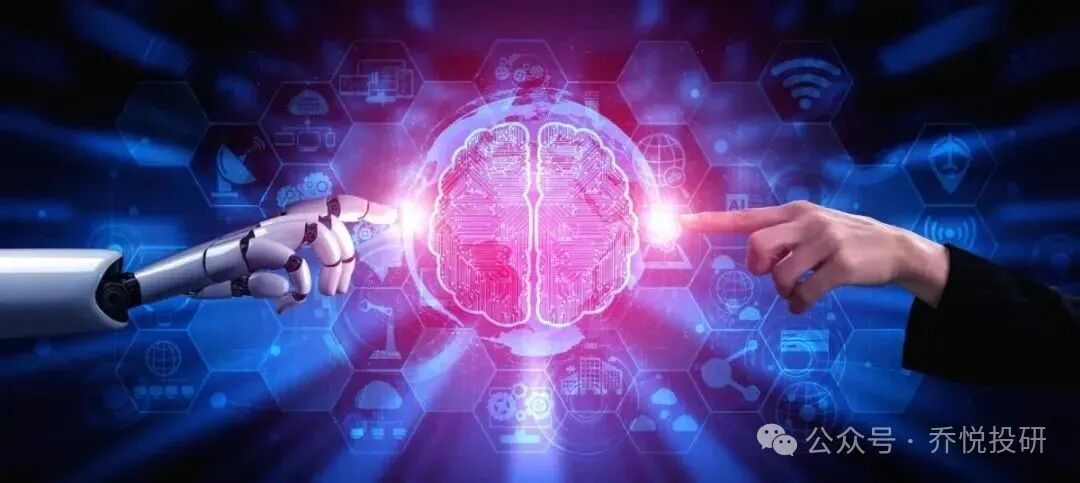
The deep integration of brain-machine interfaces and robotics is essentially an upgrade of the “human-machine interaction revolution“: the former endows robots with neural-level intuitive control capabilities, while the latter provides practical scenarios for brain-machine technology in medical rehabilitation, industrial automation, etc., forming a bidirectional empowerment of technology and scenarios.
Below are six selected companies that are deeply engaged in both tracks for industry tracking and research.
Follow me for daily insights on popular market topics and core company logic.
1. Weisi Medical
Core Field:Medical Equipment
Brain-Machine Interface Layout:Focusing on non-invasive technology, has launched group/multi-parameter biofeedback systems, neonatal EEG monitors, etc., with dozens of patents covering core aspects such as EEG acquisition, signal decoding, AI algorithms, and key electrodes.
Robotics Progress:Developing motion training robots covering the entire rehabilitation cycle for upper and lower limbs, integrating modules such as magnetic stimulation, electrical stimulation, and shock waves, providing comprehensive rehabilitation solutions for neurology, movement, critical illness, and chronic diseases in the elderly.
Core Advantage:A leading company in rehabilitation medicine in China, excelling in pelvic floor/postpartum rehabilitation and mental health rehabilitation; undertaking major national and Jiangsu provincial projects on rehabilitation robots, with strong technical reserves.
2. Nanjing Panda
Core Field:Intelligent Manufacturing, Smart Transportation, Electronic Manufacturing
Brain-Machine Interface Layout:Working on a multimodal human-machine interaction system based on brain-machine interfaces, with related projects selected for Jiangsu Province’s key R&D special projects.
Robotics Progress:Self-developed industrial robots of various specifications, mastering core algorithms for motion control, with products already deployed in workstations and fully automated production lines.
Core Advantage:A pioneer in green service-oriented electronic manufacturing, capable of providing turnkey projects for intelligent manufacturing; has led several major national projects, with a solid technical foundation.
3. Yingqu Technology
Core Field:Intelligent Control Components, Consumer Electronics, Health Environment, Automotive Electronics
Brain-Machine Interface Layout:Collaborating with InteraXon to launch head-mounted EEG acquisition devices in North America, jointly developing various versions of brain-machine products for research, medical, educational, and focus training with Xiamen Beiyang Ruiheng.
Robotics Progress:Self-made industrial testing robots and lightweight intelligent handling robots, optimizing internal production lines while achieving external sales.
Core Advantage:One of the companies with the richest product line in brain-machine interfaces in China; jointly offering a graduate course on “Brain-Machine Interfaces” with Tianjin University to promote talent cultivation and industry integration.
4. Yanshan Technology
Core Field:Large Models, Intelligent Driving, Brain-like Intelligence
Brain-Machine Interface Layout:The Yanshan Brain-like Research Institute specializes in civilian brain-machine interfaces, with products based on EEG closed-loop control having completed principle verification and entered the engineering verification stage.
Robotics Progress:Yanshan’s digital intelligence partners have deployed the self-developed Yan1.3 model on the Intel i3 platform, with the first physical robot already delivered.
Core Advantage:Possesses the original Yan architecture large model (non-Transformer solution), supporting multimodal interaction and multi-terminal adaptation; trains large models with real EEG data to accelerate commercialization.
5. Xiangyu Medical
Core Field:Full Range of Rehabilitation Medical Devices
Brain-Machine Interface Layout:Strategic cooperation with Tianjin University, focusing on brain-machine interfaces and human-machine interaction, co-building a “Brain-Machine Intelligent Auditory Center” based on sensing, materials, and wearable technology to jointly break through key devices.
Robotics Progress:Portable exoskeleton assistive robots are entering small batch trial production, with plans for certification within the year; subsequently, VR technology will be applied to sky rail and mobility robots to enhance training engagement.
Core Advantage:A leading company in full-range rehabilitation devices, covering rehabilitation scenarios for pain, neurology, orthopedics, etc.; has over 1,000 varieties across 55 series in 10 major categories, with an annual production capacity of 200,000 units.
6. Haige Communication
Core Field:Military Communication, Navigation, Drones
Brain-Machine Interface Layout:Mainly focusing on non-invasive technology, breaking through key bottlenecks and optimizing algorithms to promote the engineering application of perception control technology in civilian and special scenarios.
Robotics Progress:Developing core technologies and components for humanoid robots, advancing military-civilian dual-use applications in a timely manner to pave the way for scaling.
Core Advantage:A leader in domestic wireless communication and Beidou navigation; its subsidiary Haige Yichuang leads in communication information services, with innovative simulators at the forefront; products such as shortwave and ultra-shortwave reach top domestic levels or fill gaps.
The content of this article is sourced from the internet,and does not constitute any investment advice, guidance, or commitment, and is for academic discussion only.
It is not easy to organize and write, a simple like would be appreciated, thank you!