Recently, pulse oximeters have become a hot commodity, with smartwatches and bands featuring blood oxygen measurement functions also in high demand among consumers. Blood oxygen monitoring websites and mini-programs have also appeared online.However, some people are puzzled: pulse oximeters are medical devices, while smartwatches are not. Can their measurement results be trusted? Many consumers who have purchased related devices have reported discrepancies in blood oxygen values measured by different devices.So, what are the differences in monitoring between smartwatches, bands, web pages, and pulse oximeters? Can they replace each other? What should be noted when using them?
Actual Measurements Show Differences in Blood Oxygen Results
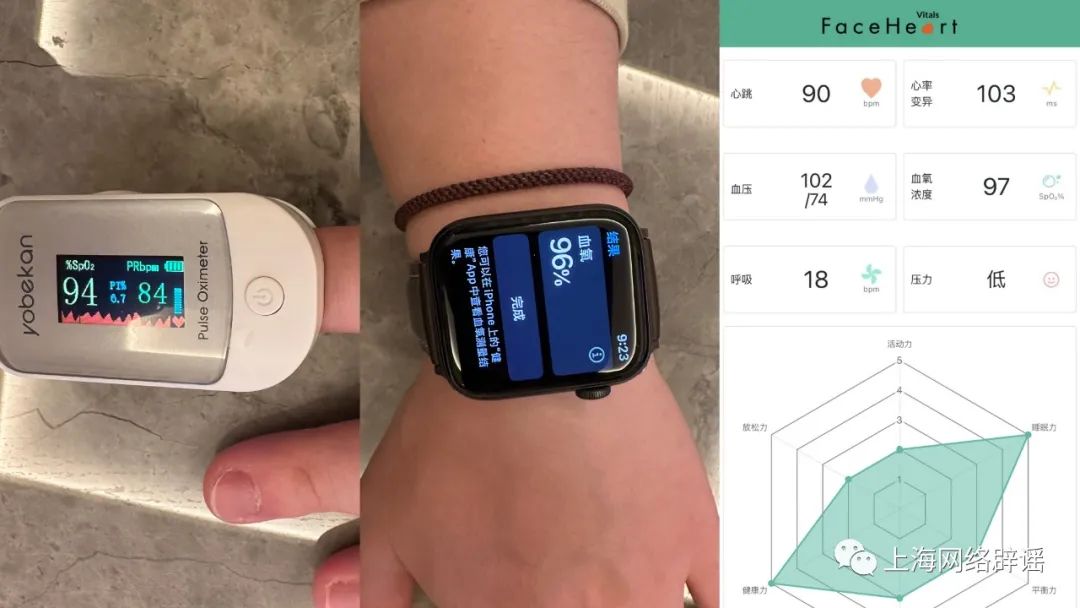
The reporter invited three subjects to measure their blood oxygen levels using different devices at the same time and under the same conditions.The first subject used a Yuyue pulse oximeter and a Youbeikang pulse oximeter for measurement. The subject first measured with their index finger, yielding results of 98% and 97%; when switching to the middle finger, both showed 97%. The measurement results indicated a 1% difference in blood oxygen test results between the two pulse oximeters.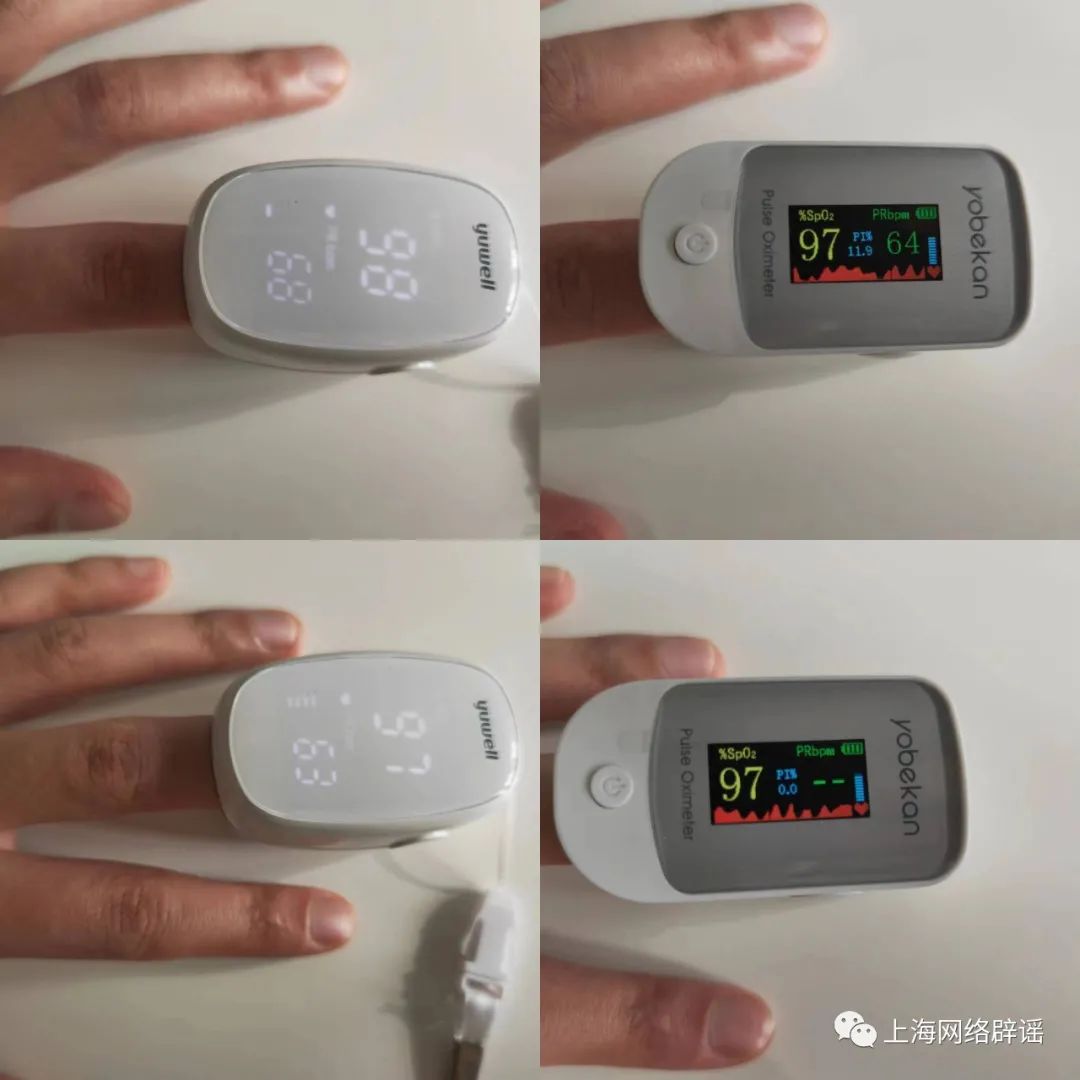 The second subject measured blood oxygen using the Youbeikang pulse oximeter, Apple Watch 8, and the “FaceHeart Vitals” link, yielding values of 94%, 96%, and 97% respectively. The results showed a discrepancy of 2% and 3% between the pulse oximeter and the smartwatch and web results.
 The third subject measured blood oxygen with the Youbeikang pulse oximeter and the “FaceHeart Vitals” link, both showing 98%.
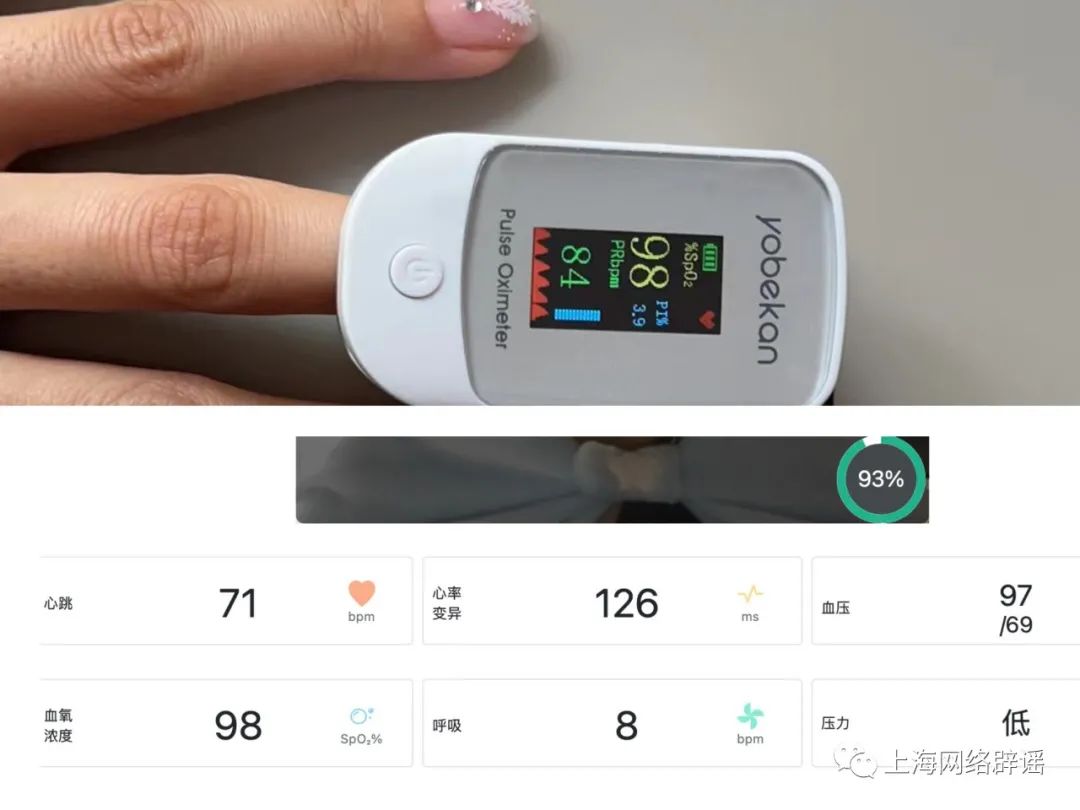 Actual measurements have shown that the monitoring results of two different brands of pulse oximeters differ by only 1%, while there is a 2%-3% difference between the pulse oximeter and the smartwatch or web results.Additionally, many readers have reported to the reporter that they previously experienced significant discrepancies in monitoring results when using smartwatches and pulse oximeters, with some differences reaching as high as 10%; in cases where blood oxygen levels are low (such as elderly individuals at home with consistently low blood oxygen levels), significant fluctuations in blood oxygen results have been observed regardless of which device is used for monitoring.In response, the reporter consulted several Huawei stores, Xiaomi stores, and Apple official stores in Shanghai, where staff members indicated that the blood oxygen monitoring function in smart wearable devices is only for daily life monitoring, and actual measurements should rely on doctors or professional medical devices. A page on a mini-program for measuring blood oxygen also indicates that the monitoring results are for reference only and cannot be used for medical diagnostic purposes. The Apple website also provides a related reminder about how to use the blood oxygen app on the Apple Watch: “The measurement data from the blood oxygen app is not suitable for any medical purposes (including self-diagnosis or consulting a doctor) and is only for general fitness and health purposes.”Sha Xianzheng, head of the Biomedical Engineering Department at China Medical University, stated in an interview that monitoring methods such as smartwatches, bands, and their accompanying mobile apps and web pages can serve as health references and exercise guidance, but they are not as accurate as pulse oximeters used for medical purposes. Due to the varying performance of different smartphone cameras and the complex usage environment, it is difficult to assess the accuracy of actual blood oxygen saturation measurement results.
There Are Considerations for Purchasing and Using Related Devices
Regarding how to purchase a pulse oximeter, the Shenzhen Customs WeChat official account has previously released a message suggesting that consumers choose appropriate pulse oximeter products based on usage, habits, and scenarios:
1) Monitoring long-term bedridden patients
It is recommended to use a desktop multi-parameter monitor integrated with a blood oxygen monitoring module.
2) Home backup
It is recommended to use the most common clip-style pulse oximeter for ordinary home scenarios.
3) Caring for the elderly
It is recommended to use a wrist pulse oximeter with long-term monitoring and alarm functions.
4) For athletes
It is recommended to use a sports watch that integrates blood pressure and blood oxygen monitoring functions.
Pulse oximeters are classified as medical devices and have strict conditions for use. Some individuals have experienced inaccurate measurement results due to improper use or have had to measure repeatedly.When using a pulse oximeter, it is important to note:
1) Finger Position
When monitoring, insert the finger correctly into the finger sleeve according to the instructions, ensuring the device and fingertip are closely fitted, and remain still for 30 seconds before reading. Note: Inserting the probe too deep or too shallow, as well as incorrect orientation of the fingernail, can affect the actual measurement results of blood oxygen saturation, leading to low readings or no display.
2) Finger Temperature
The finger should be warm during measurement; if returning from outdoors, wait until the body warms up before measuring. Some COVID-19 patients may have cold fingertips during fever and chills, and the data measured at this time may be inaccurate.
3) Fingertip Color
It is recommended to clean any dirt or nail polish from the fingertips before monitoring. Nail polish, dirt on the fingertip, conditions like onychomycosis, or thick skin on the fingertip can all lead to deviations in the pulse oximeter readings.
4) External Light Sources
During monitoring, it is advisable to keep indoor lighting soft. If the outdoor light is strong, close the curtains to avoid direct sunlight on the probe. Additionally, strong lights from devices like space heaters may lead to low readings.
There are also considerations when measuring blood oxygen with smartwatches:
1) Do not wear the watch on a bony protrusion of the wrist.
2) Do not wear the watch too tightly or too loosely, as this may lead to inaccurate data.
3) The wrist should remain still during measurement, in a naturally hanging or flat position, without moving back and forth.
4) Tattoos, accessories, and clothing on the wrist can affect measurement results, so remove accessories and roll up sleeves to avoid various interference factors.
You May Also Like:
What happens when coffee meets opera? This newly opened coffee shop in Xuhui is performing “The Drunken Concubine”.
Gather the Five Blessings! Scan the QR code on the street in Xuhui to receive a “custom blessing”.
“Suspended residents” finally “land”! Two buildings here have completed the installation of elevators, achieving “one-click home arrival”.
Meiluo City is transformed into a giant basketball! Come see the dream stage of the Xuhui Citizen Sports Festival.
From “family doctor warm man” to “emergency pioneer,” he carries a stretcher through the old community.
Comprehensive from: Shanghai Internet Rumor Refutation
Editor: Qiu Caihong
Please indicate the source from the official account of Shanghai Xuhui when reprinting.