This expert technical article is brought to you by Feng Xuewei from the Siemens Industrial Expert Team, titled “Differences Between RS232, RS485, and RS422 Serial Communication Standards”.

About Feng: Areas of Expertise:
Siemens Integrated Automation Systems and Technologies, including S7-PLC Automation Systems, Network Communications, Profinet Networks, Factory Network Systems, Industrial Remote Communications, Industrial Information Security, and Industrial Edge Computing.
For more about him, please watch the video.
Scroll down for the main content.

Are you still confused about the differences between RS232, RS485, and RS422 serial communication standards? Let’s clarify everything today, make sure to bookmark this!
Many engineers often refer to RS-232, RS-422, and RS-485 as communication protocols, which is incorrect. They are merely mechanical and electrical interface standards for serial communication (at most the physical layer of network protocols). So, what are the differences?
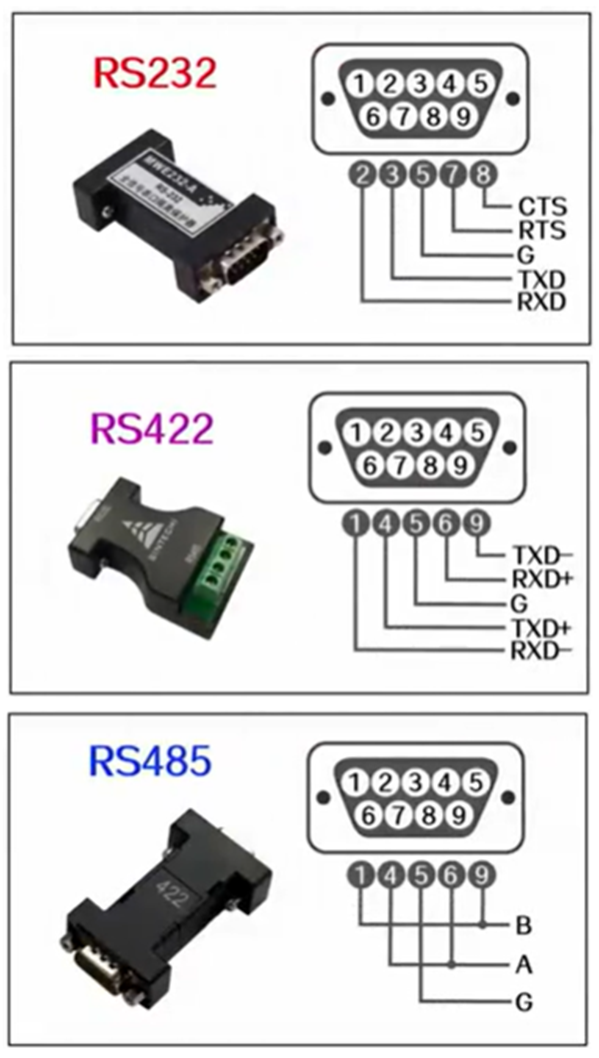
The first difference: Different hardware pin interface definitions:
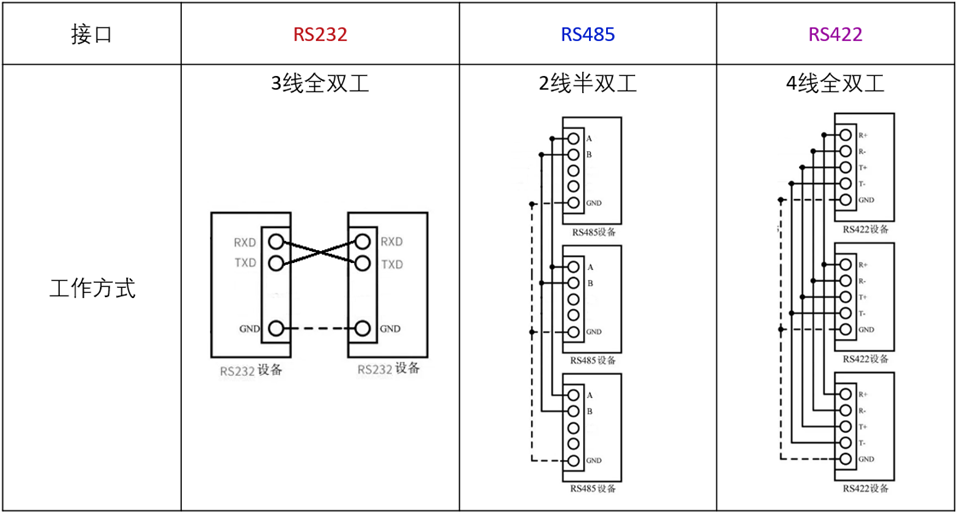
The second difference: Different working modes
-
RS232: 3-wire full duplex
-
RS485: 2-wire half duplex
-
RS422: 4-wire full duplex
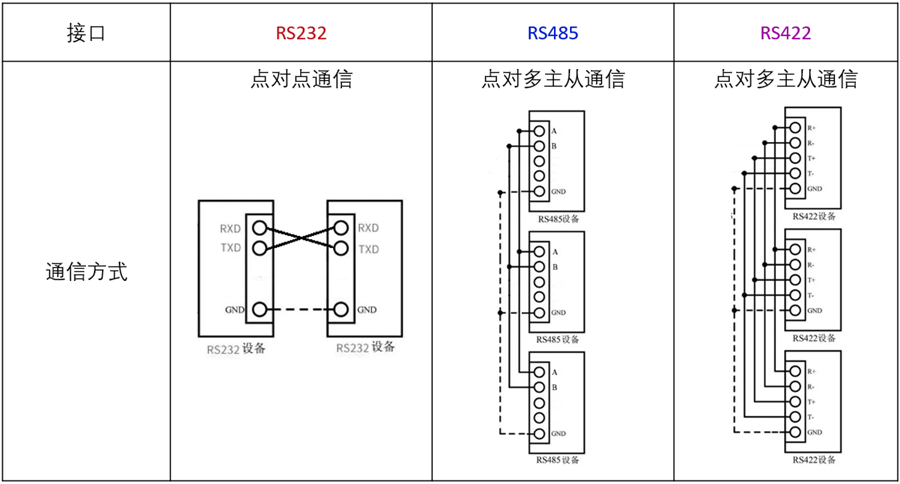
The third difference: Different communication methods
-
RS232: Can only achieve point-to-point communication
-
RS485: Can achieve point-to-multipoint master-slave communication
-
RS422: Also can achieve point-to-multipoint master-slave communication
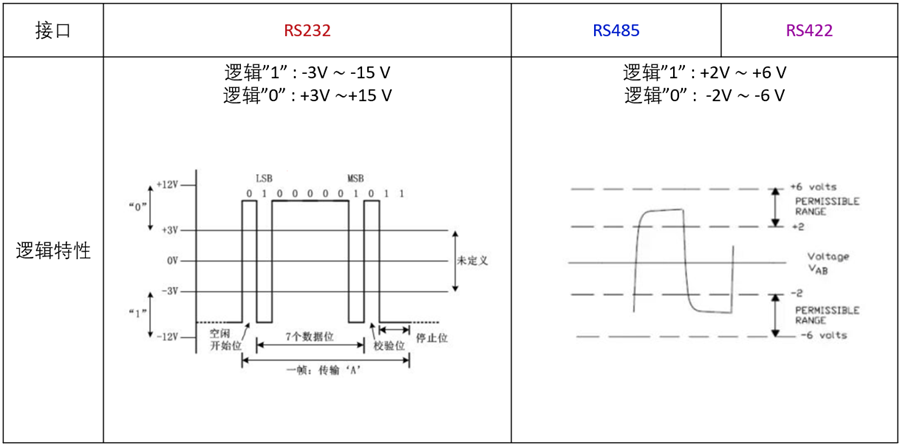
The fourth difference: Different logical characteristics
-
RS232: Logic ‘1’: -3V ~ -15V; Logic ‘0’: +3V ~ +15V
-
RS485: Logic ‘1’: +2V ~ +6V; Logic ‘0’: -2V ~ -6V
-
RS422: Logic ‘1’: +2V ~ +6V; Logic ‘0’: -2V ~ -6V
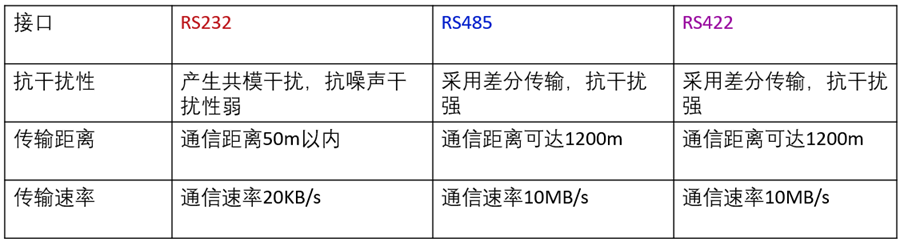
The fifth difference: Different anti-interference capabilities, transmission distances, and transmission rates
-
Comparison of RS-232 and RS-485
-
Anti-interference: RS485 interface uses a balanced driver and differential receiver combination, which has good noise immunity. RS232 interface uses one signal line and one return line forming a common ground transmission method, which is susceptible to common-mode interference.
-
Transmission distance: The maximum standard transmission distance for RS485 is 1200 meters (at 9600bps). RS232 has a limited transmission distance, with a maximum standard value of 50 meters, practically only usable at around 15 meters.
-
Communication capability: RS-485 interface allows up to 128 transceivers to be connected on the bus, enabling users to conveniently establish a device network using a single RS-485 interface. RS-232 only allows point-to-point communication.
-
Transmission rate: RS-232 has a lower transmission rate, with a baud rate of 20Kbps in asynchronous transmission. RS-485 has a maximum data transmission rate of 10Mbps.
-
Comparison of RS-422 and RS-485
1. RS-422 has 4 signal lines: two for transmitting (T+, T-), and two for receiving (R+, R-). Since RS-422 separates sending and receiving, it can transmit and receive simultaneously (full duplex).
2. RS-485 has only two data lines: sending and receiving are both A and B. Because RS-485 shares the two lines for sending and receiving, it cannot transmit and receive simultaneously (half duplex).
Feel free to leave your thoughts in the comments section. More knowledge points can be found on the Siemens 1847 Industrial Learning Platform, search for the keyword “Siemens 1847”!
I will continue to share more knowledge about networks and communications, don’t forget to follow me to stay updated!
Expert technical articles are continuously updated,
Everyone is welcome to follow along.