What are the differences between Mitsubishi PLC and Siemens PLC? What are the advantages and disadvantages of each? How should one choose which brand to learn?
Firstly, their programming philosophies are different. Mitsubishi PLC is a Japanese brand, and its programming is intuitive and easy to understand, making it relatively easy to learn. In contrast, Siemens PLC is a German brand, with more abstract instructions and a steeper learning curve, but it has fewer instructions, while Mitsubishi has many, so the learning periods for both are similar.
The advantage of Mitsubishi lies in discrete control and motion control. Mitsubishi has a rich set of instructions, including dedicated positioning commands, making it easy to control servos and stepper motors. Implementing certain complex motion controls is also a strong suit of Mitsubishi. On the other hand, Siemens is weaker in this area, lacking dedicated instructions, which means that while servo or stepper positioning control can be achieved, the programming is complex and the control accuracy is not high.
Process control and communication control are Siemens’ strengths. Siemens’ analog modules are inexpensive and the programming is straightforward, whereas Mitsubishi’s analog modules are expensive and complex. Siemens also makes communication easy with simple programming, while Mitsubishi is weaker in this regard. Therefore, for different devices and control methods, we should reasonably select PLCs, leveraging their strengths and avoiding their weaknesses. For example, for devices that only require motion control, such as robotic arms, Mitsubishi PLCs may be a good choice. For devices requiring servo or stepper positioning control, Mitsubishi PLCs are also preferred; however, for central air conditioning, wastewater treatment, and temperature control that involves a lot of analog signals, Siemens PLCs are more suitable. For devices that need to collect data from many on-site instruments via communication, Siemens is a better choice. The differences are significant. The chips are undoubtedly different (reflected in capacity and processing speed), but the biggest difference lies in the programming software’s approach and structure.
I personally believe that Mitsubishi (a mid-to-high-end Japanese brand) PLC software is at least five years behind Siemens. Without discussing medium and large systems, let’s compare the Mitsubishi FX series, which has a comparative advantage, with Siemens S7-200 series.
1. Mitsubishi’s programming software has evolved from the early FXGPWIN to the recent GX8.0 (as far as I know, the latest). Like all Japanese brands, the programming philosophy of this software is a top-down single vertical structure, while Siemens’ MicroWIN has both vertical and horizontal structures, and supports local variables in subroutines, allowing the same function to be programmed once, greatly reducing development difficulty and time.
2. The S7-200 has always supported powerful floating-point operations, with programming software directly supporting decimal input and output. In contrast, Mitsubishi only introduced this feature in the FX3U series in recent years; earlier FX2N series floating-point capabilities were essentially nonexistent.
3. The S7-200’s analog input and output programming is very simple and convenient, allowing AD and DA values to be accessed without programming. In contrast, Mitsubishi’s FX2N and earlier series require very cumbersome FROM TO instructions. FX3U now supports this feature, but it came at least five years late.
4. The CPU226 and CPU224XP standard configurations include two 485 ports (PPI ports) with a maximum communication speed of 187.5K. All previous series of Mitsubishi FX3U had only a single, poor 422 port, with a speed of 9.6K. If you need to connect intelligent instruments, you must purchase special modules like FX2N0-485BD.
5. The CPU226 has a program capacity of 20K and data capacity of 14K, while FX2N only has 8K. The later FX3U series has improved, but the FX2N series has two advantages: first, the high-speed counter instructions are more convenient than S7-200. Second, the 422 port is more robust than Siemens’ PPI port (because the PPI port of the 200 series is not optically isolated, non-standard operations and imitation programming cables may lead to serial port damage). Siemens recently launched the S7-1200 series, which directly supports Ethernet interfaces, and due to the integration of counting and measurement, closed-loop control, and motion control technologies, FX3U has been far surpassed by Siemens again. This comparison only pertains to small machines. As for Siemens’ 300 and 400 series and larger TDC series, there is no need to elaborate; in a word, those who use them know. Siemens’ PCS7 software is undoubtedly profound, and all Japanese brands can only look up to it.
Learning PLC is easy with Mitsubishi because of its straightforward approach. From a learning perspective, Siemens is undoubtedly better. Once again, using PCS7 reveals how inferior Japanese software is.
Moreover, Siemens PLC has two communication ports, while Mitsubishi has only one. The two communication ports can connect one for downloading data and the other for connecting a touch screen for debugging the program. Otherwise, you would have to keep unplugging and plugging the touch screen data line, which is very cumbersome.
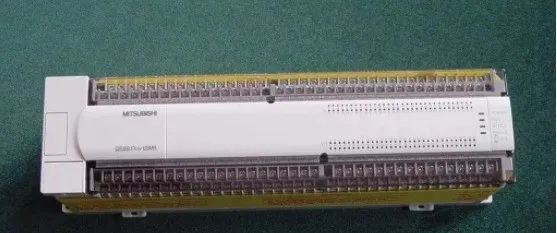
Mitsubishi Series PLCMitsubishi PLC, also known as Mitsubishi Power Line Communication, is a key product manufactured by Mitsubishi Electric in Dalian. The following models of Mitsubishi PLC are commonly found in the Chinese market: FR-FX1N, FR-FX1S, FR-FX2N, FR-FX3U, FR-FX2NC, FR-A, FR-Q, FX1S series: Mitsubishi PLC is an integrated compact unit PLC with complete performance and communication functions and scalability. It is an ideal choice if installation space and cost are considerations.
FX1N series: This is a powerful, popular PLC launched by Mitsubishi Electric. It has extended input and output, analog control, communication, and linking capabilities. It is widely used in general sequential control. FX2N series: This is the most advanced series in the FX family. It features high-speed processing and expandable special function modules that meet individual needs, providing maximum flexibility and control capabilities for factory automation applications.
FX3U: This is the newly launched third-generation Mitsubishi PLC, which can be regarded as a small supreme product. Its basic performance has been significantly enhanced, and the transistor output basic unit has a built-in 3-axis independent positioning function with a maximum of 100kHz, along with new positioning instructions, making the positioning control function more powerful and user-friendly. FX1NC, FX2NC, FX3UC Mitsubishi PLC: These maintain the original strong functionalities while achieving a significant reduction in I/O wiring interfaces, lowering wiring costs and saving considerable time.
Q series Mitsubishi PLC: This is a large PLC launched by Mitsubishi, with CPU types including basic CPU, high-performance CPU, process control CPU, motion control CPU, redundant CPU, etc. It can meet various complex control needs. The rapid development of Mitsubishi Electric’s business in China aims to better meet domestic users’ demands for high-performance and low-cost Q series products, leading to the introduction of the economical QUTESET type Mitsubishi PLC, which features a self-contained 64-point high-density mixed unit in a 5-slot Q00JCOUSET; another model comes with 2 16-point digital input and 2 16-point digital output in an 8-slot Q00JCPU-S8SET, fully compatible with Q00J’s performance specifications and supporting software like GX-Developer, thus offering excellent cost performance.
A series Mitsubishi PLC: This uses Mitsubishi’s dedicated sequential control chip (MSP), with speed/instructions comparable to large Mitsubishi PLCs; A2ASCPU supports 32 PID loops, while QnASCPU has no limit on the number of loops, which can change with memory capacity; program capacity ranges from 8K steps to 124K steps, and if a memory card is used, QnASCPU memory can be expanded to 2M bytes; multiple special modules are available, including networking, positioning control, high-speed counting, temperature control, etc.
Programming Languages
In the FX series programmable controllers, in addition to the basic instruction table transformation method, ladder diagram programming can be used to graphically represent the ladder symbols, as well as SFC (Sequential Function Chart) design corresponding to mechanical action processes, and these programs can be interchanged. If the instruction table and ladder diagram programs are written according to certain rules, they can also be transformed into SFC diagrams. 2. High-speed processing: Mitsubishi series PLCs can achieve high-speed processing, with built-in high-speed counters in FX series programmable controllers that interrupt process specific input relay high-speed pulses, thus being independent of scan time, allowing for high-speed pulses up to 60kHz/h. C-R filters are set in the programmable controllers to prevent input signal jitter and noise interference. Pulses can be captured, and during pulse capture, signals from specific inputs can be monitored, and special auxiliary relays can be set using interrupt processing during input.
3. FX PLC supports sequential control. The scan cycle of the programmable controller is constant, and using subroutines allows for fixed-cycle processing and synchronized execution of instructions. The program can be modified during operation without stopping the device.
4. Application instructions: FX series PLCs are based on the pursuit of “basic functions, high-speed processing, and ease of use”. FX programmable controllers have basic instructions for data transmission and comparison, arithmetic operations and logic operations, data looping and shifting, as well as input/output refreshing, interrupts, high-speed calculator-specific comparison instructions, high-speed pulse output, and other high-speed processing instructions, along with initialization instructions for standard mechanical control actions in SFC control. Additionally, floating-point operations and PID calculations are provided for more complex control.
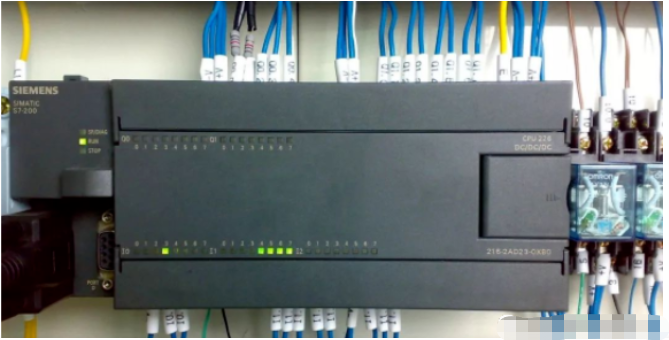
Siemens Series PLC
Siemens AG (FWB: SIE, NYSE: SI) is one of the world’s largest electromechanical companies, established in 1847 by Werner von Siemens. Siemens’ SIMATIC modular controllers have significant advantages, including immediate usability, long-term compatibility, and operability, and can function in harsh environments; the modules can also be expanded and upgraded. Siemens products are highly resistant to vibration, utilizing centralized and distributed I/O control. Therefore, in recent years, Siemens has made significant inroads into the Chinese market and established a solid foothold, largely due to the quality and performance of Siemens products, including S7-200, S7-300, and S7-400.
The S7-200 is suitable for manufacturing a range of machinery or as part of standalone solutions, with STEP 7 Micro/WIN engineering configuration software applied to it, suitable for low-performance automation tasks.
It is a low-cost micro system. Siemens S7-300 is compactly designed and installed on DIN rails, integrating many functions within the CPU and maintaining data on micro memory for maintenance-free operation. It belongs to the fault-tolerant type with isochronous mode on PROFIBUS. Siemens S7-400 features various rack types with superior high-speed processing and communication capabilities, allowing configuration changes during operation, supporting isochronous mode on PROFIBUS (as shown in the figures), and belongs to the fault-tolerant and hot-swappable type. The three H CPUs of S7-400 support hardware synchronization, providing powerful solutions without any loss of information and offering advanced support for engineering tasks without additional programming costs, easily expandable for safety applications.
Siemens PLCs now comprehensively use high-performance 16-bit and 32-bit microprocessors, high-performance chip-based microprocessors, RISC (reduced instruction set computer) CPUs, etc., and configure multiple microprocessors in a single PLC for multi-channel processing, while also producing many intelligent modules containing microprocessors, making fourth-generation PLC products true multifunctional controllers with logical control, process control, motion control, data processing, and networking communication functionalities.
Content sourced from the internet, copyright belongs to the original authorDisclaimer: If there are copyright issues, please contact for removal!No individual or institution bears related legal responsibilities.