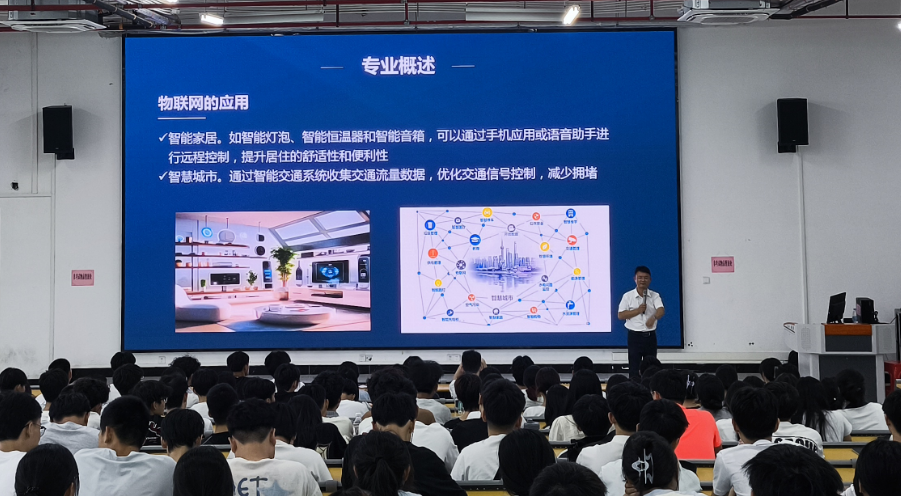
To help the 2025 cohort of IoT application technology freshmen gain a deeper understanding of the professional characteristics and clarify their future learning goals more quickly, on the afternoon of September 14, the School of Electronic Engineering and Artificial Intelligence held an introduction meeting for the IoT application technology major in Lecture Hall 1. The program leader, Teacher Wu Fei, provided a comprehensive and in-depth explanation from multiple aspects including the overview of the major, advantages, training objectives, employment directions, career prospects, training venues, and equipment, guiding freshmen to plan their future academic and career paths.
Exploring IoT Technology: Decoding the Genes of “Internet of Everything”
The lecture began with “What is the Internet of Things?” and illustrated the core concept of “connecting everything and intelligent collaboration” through typical industry cases such as smart homes, smart cities, and industrial IoT. By systematically breaking down key technologies such as sensor technology, embedded development, and network connectivity, students began to establish an understanding of the IoT technology system and application scenarios, breaking the abstraction of technology and perceiving the charm of industry applications.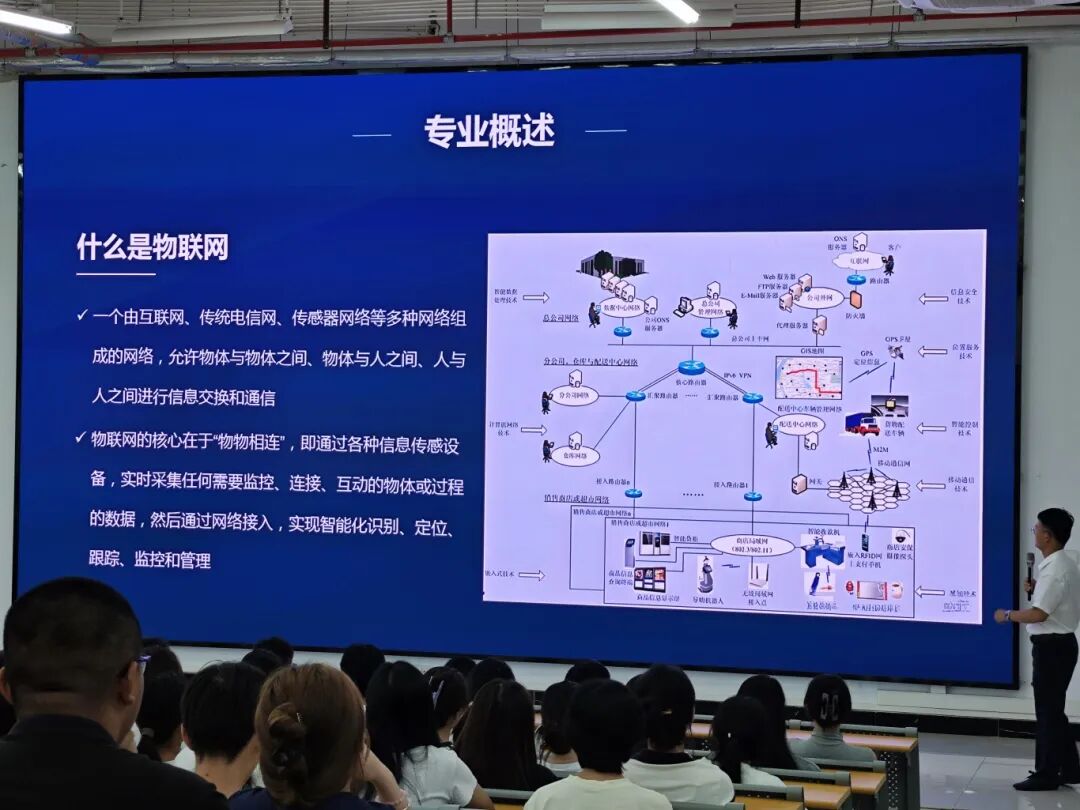
Innovative Talent Cultivation Model: Practicing the Integration of “Position, Course, Competition, and Certification”
The content focuses on analyzing the three major advantages of the program: “dual-core training, integration of position, course, competition, and certification, and school-enterprise collaboration.” While solidifying core skills such as equipment installation and debugging, and system development, the program integrates the cultivation of professional qualities and innovative abilities throughout the process; by aligning with job requirements, it merges vocational skills competition standards and “1+X” certification requirements to achieve integrated training of “learning skills, preparing for competitions, obtaining certificates, and fitting positions”; relying on real projects and internship bases from enterprises, it strengthens practical abilities, ensuring that what is learned is applied, and accurately meets industry needs.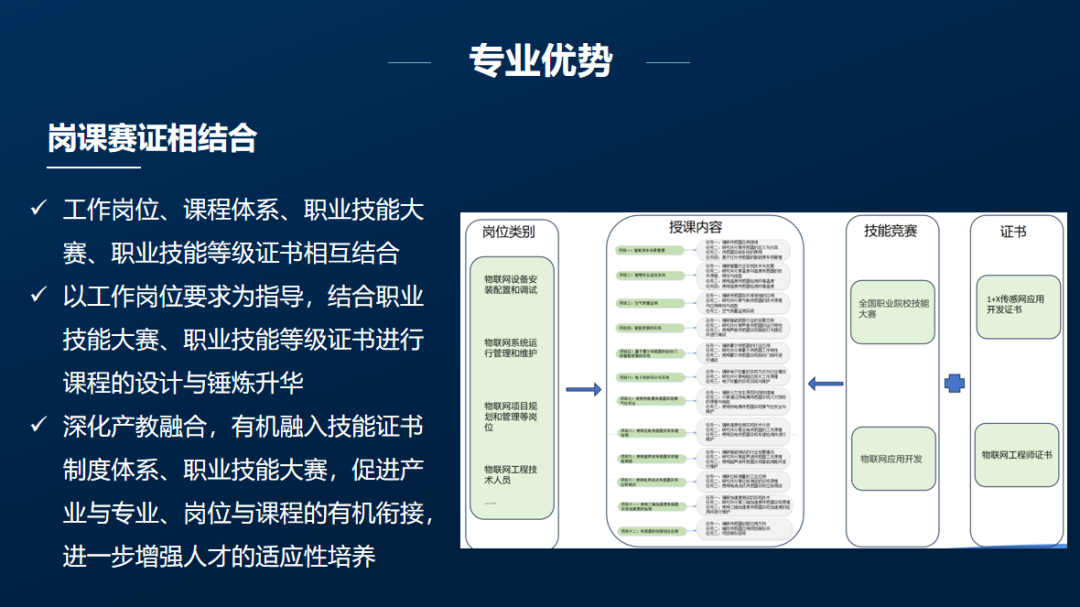
Career Prospects Outlook: Opening New Blue Ocean in a Trillion Market
The lecture combined the national strategic position of IoT and industry development trends, systematically sorting out employment directions in multiple fields such as smart homes, smart cities, industrial IoT, agricultural intelligence, and platform development. Citing industry data, it pointed out that by 2025, the global market size will reach $4 trillion, with a domestic talent gap expected to exceed 16 million. The career advancement path from junior technical operations to senior R&D management is clear, and salary levels continue to grow with skill enhancement, showcasing broad development space and a stable career future for students.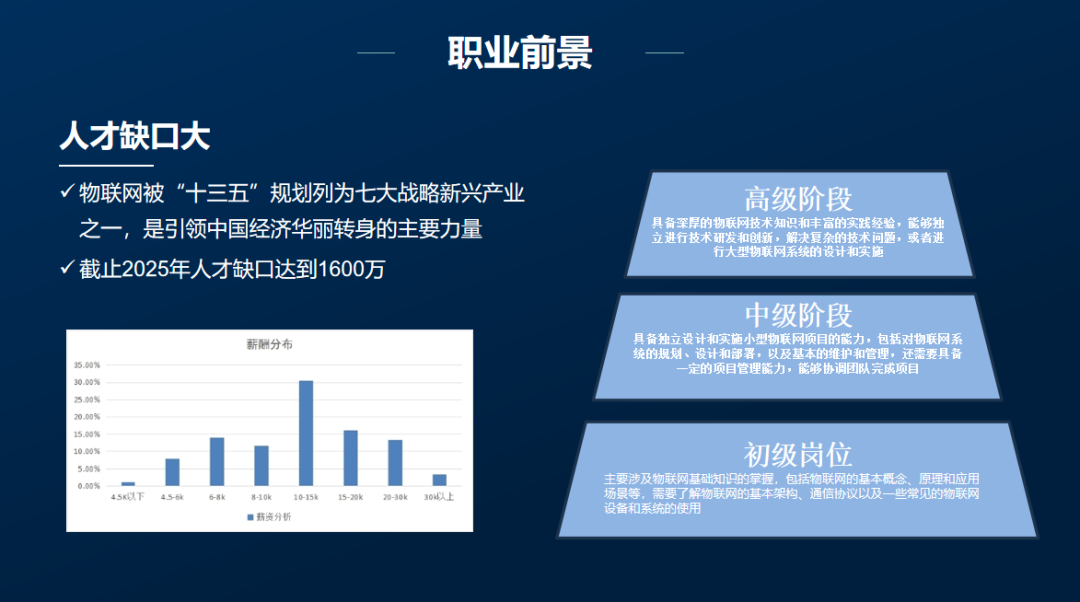
After the lecture, Zhang, a freshman from the IoT application technology program, shared: “This lecture not only helped me understand the specific learning content of the major but also showed me the future development prospects. I am particularly looking forward to participating in school-enterprise cooperation projects to apply theoretical knowledge in practice.” Another freshman, Li, stated: “Teacher Wu’s detailed introduction to employment directions clarified my learning goals for the next three years. I will work hard to obtain vocational skill certificates to lay a solid foundation for future employment.” Freshmen generally believe that through this lecture, they not only eliminated their confusion about the major but also feel confident and expectant about their future academic careers.
Image: Wu Shengshang
Text: Cao Chenggan
First Review and Edit: Wu Shengshang, Cao Chenggan
Second Review and Edit: Wu Fei
Third Review and Edit: Liu Huanlan