In March 2020, the U.S. Department of Defense was researching improvements to the OLED helmet-mounted display (HMD) of the F-35 Lightning II, addressing issues such as green glow, light leakage, and extending the HMD’s lifespan by over four years to reduce maintenance costs. The first batch of redesigned OLED HMDs that met joint contract specifications has been delivered to the U.S. Navy and Marine Corps. In November 2021, Kopin Corporation received follow-up orders for F-35 helmet LCD displays, continuing to provide high-brightness LCDs for the aircraft. To date, the company has supplied thousands of micro-displays for F-35 pilots’ helmets. Additionally, in January 2022, the U.S. Air Force was seeking a series of upgrade programs for the F-22 fighter, exploring 14 potential upgrade plans, including the integration of Thales Group’s Scorpion helmet display/weapon cueing system.
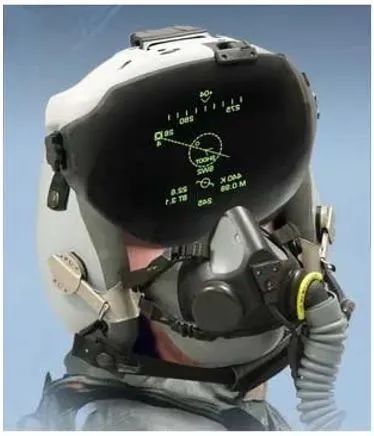
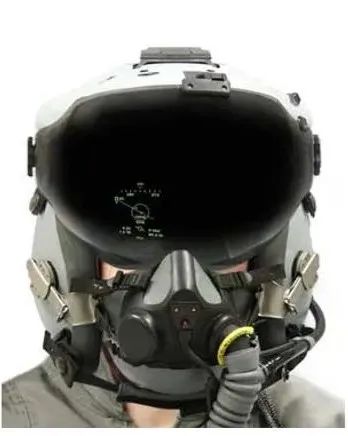
VSI Company’s Joint Helmet Targeting System
In March 2022, the European Defence Agency (OCCAR) awarded a contract to Airbus Helicopters to upgrade the Tiger Mk III attack helicopter for France, Spain, and Germany, with standard configurations including Thales Group’s TopOwl helmet-mounted display system, FlytX avionics system, and integrated Safran Group’s Strix NG targeting systems, among others. In October 2021, the U.S. Army awarded Elbit Systems a contract worth up to $76 million for the Integrated Helmet and Display Sighting System (IHADSS) for the AH-64 Apache helicopter, aimed at enhancing situational awareness and flight safety for U.S. Army attack helicopters.
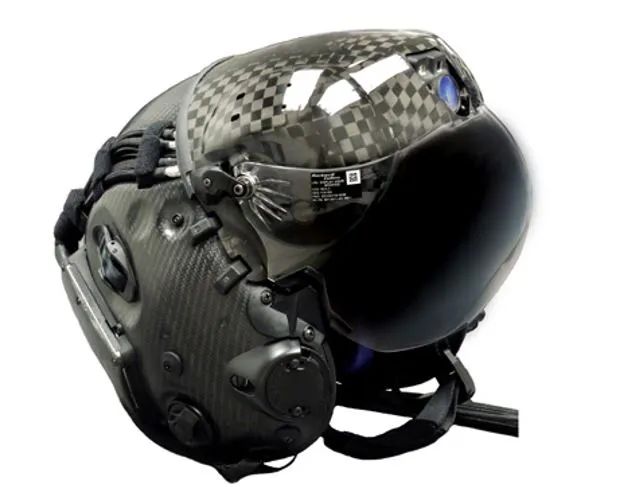
Helmet Display System on the F-35 Fighter
The display in a fighter cockpit is a critical human-machine interface: this expensive (priced at $400,000 to $800,000 per helmet) high-tech helmet, which can “see through” the non-windowed parts of the aircraft, is much more than just a helmet; it is a “workspace”—providing both battlefield displays and situational awareness. Since the mid-1980s, significant progress has been made in the development of flat displays and helmet-mounted displays, which have been applied in advanced fighters like the F-22 and Rafale, marking the entry of cockpit displays into the sixth generation—an era of helmet-mounted and flat displays, providing a solid material foundation for the cockpit displays of modern combat aircraft.Human Factors Requirements for Helmet Display/Targeting SystemsThe human factors requirements for the Helmet Display/Targeting System (HDSS) include: ① Information should be displayed in a format that is visual, intuitive, and matches human cognitive characteristics, allowing the information format to directly express the content, reducing decoding errors and enabling rapid and accurate information acquisition; ② Clear objectives for information display; ③ Use of formats that enhance readability, strengthening the logical relationship between the display format and the represented meaning.Evolution of Helmet Display/Targeting SystemsMilitary helmet display/targeting systems have developed with the increasing demand for night vision imaging on fixed-wing and rotary-wing pilots’ helmets and the effective utilization of human capabilities in helmet-mounted aiming devices. Night vision goggles (NVGs) are the result of the evolution of night combat capabilities, significantly enhancing pilots’ overall situational awareness and safety by more than doubling the existing field of view (FOV), enabling pilots to achieve near daylight tactics at night, reducing their time in threat airspace, and improving targeting and tracking abilities.Night vision devices based on image intensifier tube (I2T) technology, pilot-direct-view night observation devices/NVGs (NOD/NVG) have been in use for nearly 30 years in military aviation.In the 1980s, the U.S. military conducted a competition for the development of integrated night vision system helmets, aimed at reducing the compensatory effect of wearing external, clip-on NVGs.The third-generation I2T NVGs can now provide a visual acuity of 20/25 (as measured by the Snellen chart, which indicates visual sensitivity at an environmental illumination of 25, with a displayed brightness of 20) even on clear nights with only starlight; the FOV has increased from an initial 30º to 45º.Current military aviation NVGs typically use a 40º FOV (AN/AVS-6 and AN/AVS-9), characterized by the widest FOV at high resolution and high cost.
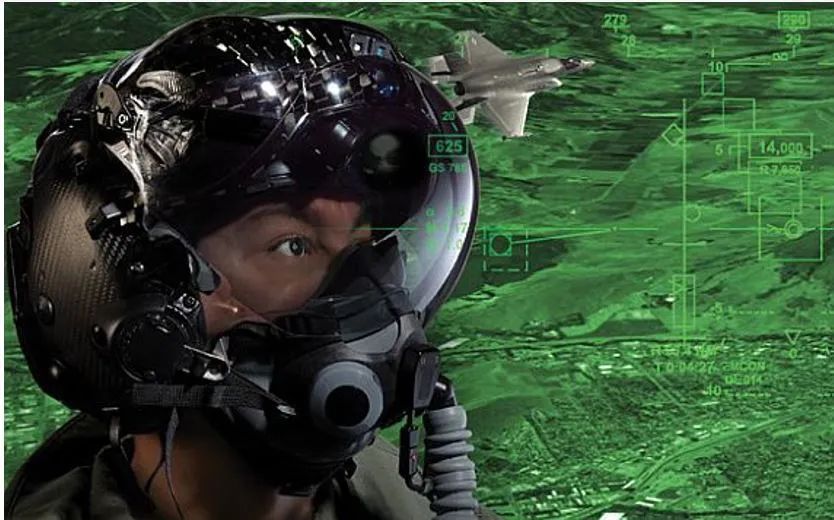
F-35 Fighter Helmet Display System Featured on Popular Science Magazine Cover
As combat personnel sought a method to view enemy aircraft rather than through the heads-up display (HUD), allowing for the launch of AIM-9X missiles, the second wave of HMD development began in the 1990s. Ultimately, Insight Technology developed the Joint Helmet Mounted Cueing System (JHMCS), which is equipped on F-15, F-16, and F/A-18 fighters, supporting night vision and providing geographic coordinate references for the pilot’s line of sight through the onboard computer.All three variants of the F-35 are equipped with the third-generation helmet display system (HMDS) produced by Rockwell Collins ESA Vision Systems, which features two LCD displays that provide color images to both eyes simultaneously.Key Technologies of Helmet Display/Targeting SystemsThe HMDS is designed to enable near-daylight tactical operations at night and display HUD data along with video information from the pilot’s perspective, providing a narrow 20º field of view (or 40º wide field of view) to the pilot’s right eye, allowing the pilot to see radar and navigation characters on the helmet display while receiving cueing information for short-range air-to-air missiles, assisting the pilot in terrain recognition, target detection, and weapon cueing, thereby reducing the pilot’s workload in flying the aircraft, detecting, tracking, and engaging targets, and responding to emergencies, first used in the Israeli Air Force. The U.S. Air Force and Navy adopted a baseline approach similar to the U.S. Army’s Virtual Cockpit Optimization Program (VCOP), providing pilots with 3D visual, auditory, and tactile capabilities. Essentially, the information projected onto the HMD’s visor is the same as that projected onto the aircraft’s HUD, but due to the inclusion of an electromagnetic head position tracking device in the combined helmet cueing/targeting system, pilots wearing the HMD can monitor flight parameters while aiming and selecting their targets and weapons.The key components of the HMDS include the HUD, HMD, and helmet cueing/targeting system, with critical technologies being tracking (aiming line measurement) technology and aiming line display technology. Furthermore, the combined helmet cueing/targeting system with night vision capability has achieved significant success in application.Currently, helmet displays utilize micro-displays as information output elements, with typical effective display screen diagonal sizes ranging from 5.6 to 17.5mm; pixel counts from 320×240 to 1280×1024; pixel sizes from 10 to 50µm, with resolutions approximately 10 times that of direct-read LCD pixel sizes (0.28mm).The Joint Helmet Mounted Cueing System (JHMCS) on the F-35 is a modular helmet-mounted targeting system placed on a lightweight HGU 55/P helmet shell, featuring a monocular, CRT-based system with day modules and night modules. The day module is a monocular, 20º FOV projection display that shows images on the visor; the optional night module includes a 40º FOV night vision cueing display (NVCD) from the pilot’s night vision imaging system (ANVIS) or a “Four-Eyes” panoramic NVG NVCD (100º×40º FOV, naval type) that projects images directly onto the visor. The system also includes a character system or video system that can be inserted into the night vision screen, along with a high-precision electromagnetic head tracking system, providing pilots with complete situational awareness within the cockpit’s field of concern.The NVCD uses an aircraft and weapon character system to directly project characters and images onto the pilot’s helmet visor, allowing the pilot to see radar and navigation characters while receiving cueing information for short-range air-to-air missiles—enabling the pilot or shooter to visually mark and identify missile targets; ground targets can also be observed, with the helmet cueing system allowing the pilot to simply keep their gaze fixed for a moment to lock onto the target—automatically directing the forward-looking infrared (FLIR) camera in the targeting pod to lock onto the target; high-confidence, variable-focus FLIR-generated video is then displayed on the down-looking display for crew members to analyze potential targets and determine action routes. This information is displayed only to the right eye, belonging to the monocular type; during nighttime operations, operators need to remove the visor and securely attach the NVCD to traditional goggles.In April 2016, Elbit Systems launched the JHMCS II, which is the highest resolution, color, smart, and video visor projection system globally, suitable for both day and night environments, uniquely enabling pilots to conveniently switch work modes during evening or dawn flights. The JHMCS II’s innovative head tracking technology allows pilots to aim sensors and weapons in any direction while receiving incremental situational awareness information, creating intelligent visuals within the cockpit; displays between pilots and crew members are also integrated; threats and unknown targets are projected onto an all-around, intuitive display visor, already applied to aircraft such as the F-16 and C-130.Helmet Display/Targeting SystemsIn the field of helmet display/targeting systems, two major projects from two manufacturers are the helmet display system on the F-35 by RCEVS and the Q-Sight long-range targeting system by BAE Systems on the Eurofighter.
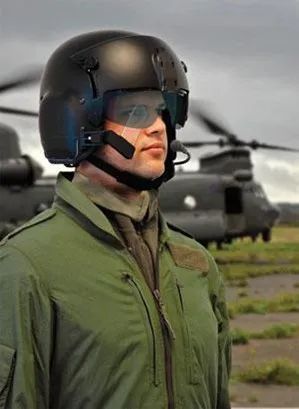
Q-Sight Helmet Optical Targeting System
RCEVS’s F-35 Fighter Helmet Display System. The F-35 Gen III “Light” HMDS is an advanced, fully day/night integrated solution designed to improve pilot combat precision, efficiency, and safety. With this system, pilots wearing the product can maintain spatial orientation of their surroundings and continuously monitor critical flight information by aiming weapons at a target and monitoring that target while controlling the displayed character system and information of high quality within their HMDS field of view.This Gen III HMDS integrates three advanced technologies: HMD, HUD, and night vision technology projected directly onto the visor. Compared to the Gen II HMDS, major upgrades include improved night vision cameras, enhanced LCD displays, automatic alignment technology, and improved software.Wearing a binocular HMDS displayed on both eyes and eliminating the HUD is one of the key features of the F-35. This HMDS uses two diagonal 0.7in, 1280×1024 pixel AMLCD projectors placed on either side of the helmet to display covered images and character systems; night vision imaging is relayed through an optical system to a 40º×30º (horizontal×vertical) binocular field of view. The pilot sees an off-axis, virtual HUD with a 30º FOV, displaying the aircraft’s specific performance, threat information, and target cues, eliminating the need for a posture indicator; employing the character system of the JHMCS; introducing a forward-looking night vision detector placed above the helmet and real-time imaging generated by six infrared cameras with wavelengths of 3-5 microns installed around the aircraft in the distributed aperture system (DAS). On the touch-sensitive downward-facing display, there is an HMD page. As a virtual HUD, the F-35 becomes the first tactical fighter in nearly 50 years to eliminate the traditional HUD.The integrated night vision capability is another major advantage it provides to F-35 pilots. From the pilot’s perspective, the most significant change in this HMDS is the introduction of a night camera within the helmet, which has about twice the performance of the previous generation HMDS. If the pilot wants to view infrared imaging, the DAS is activated; if the pilot wants to see enhanced images, the helmet camera is activated.The displayed images can also be simplified. Related information layers can be removed, reducing the displayed images to the minimum necessary to comprehend any high-density tactical situation; customizable display images are also available. Furthermore, Rockwell Collins has left several HMDS control switches on the control stick, facilitating pilots wearing the system to switch between the DAS and image-enhanced cameras; the curvature adjustments at the front and back of the helmet have also been greatly simplified.The Gen III HMDS first flew in April 2007. In March 2016, the F-35 successfully completed the first series of ground tests combining all three schemes to reduce the risk of neck injury to pilots during ejection; the Joint Program Office (JPO) combined lightweight, medium, and heavyweight dummies, conducting about 10 tests, and by the end of 2016, launched a lighter helmet, coinciding with the launch of its ejection seat.In January 2016, the F-35 helmet display system was featured on the cover of the January/February issue of Popular Science magazine, accompanied by the article “The Latest Fighter Pilot.” A JPO Air Force Colonel stated that the F-35 helmet is like “wearing a portable computer on your head.”BAE Systems’ Q-Sight Helmet Optical Targeting System.BAE Systems has developed the lightweight Q-Sight Gunner’s Remote Targeting System (GRSS) helmet optical targeting system for fighter pilots using its unique optical system. The first Q-Sight system was delivered to the Royal Navy in November 2010, applied to the Eurofighter. Its advanced mission capabilities meet affordability, compatibility with current helmet setups, and night vision requirements, significantly enhancing accuracy and target recognition capabilities.The lightweight Q-Sight HMD is derived from the development of a user-customized optical system: displaying images obtained from the gun-mounted thermal weapon sight (TWS) on the “see-through” display of the gunner’s helmet; it can interconnect with the TWS, seamlessly switching, intercepting, tracking, and hitting targets between the goggles and TWS, improving the effectiveness and accuracy of the gunner’s target strikes. It is a small device mounted on the helmet, weighing less than 4 ounces, utilizing the company’s patented holographic waveguide imaging technology (which BAE refers to as quantum technology), directly coupling the LCD output to an intelligent magnetic card with a combined lens, displaying flight and mission information and video images on a transparent screen as thick as a credit card, providing day/night “heads-up, eyes-on-outside” capability, eliminating the need for bulky, complex projectors and lenses in between.The low-cost, lightweight display of the Q-Sight can be installed on the right or left side of the helmet according to user preferences, plug-and-play for any standard helmet without modifying the platform, replacing existing displays; its optical technology is highly compatible and interoperable with standard night vision goggles, achieving seamless transitions between day and night operations.The lightweight and high-definition features of the Q-Sight alleviate eye and neck strain and common issues, meeting pilots’ needs for long-duration missions and increasing complexity of agreed rules, enhancing human-machine efficiency. The helmet’s lightweight improves pilot comfort, and the wide field of view allows pilots to look up and view the outside world while performing their tasks.BAE Systems’ Attacker II Next-Generation Helmet Display/Targeting System.At the 2014 Farnborough Airshow, BAE Systems showcased the Attacker II next-generation helmet display/targeting system, which features the introduction of night vision and target tracking technology within a projection display system on a visor.
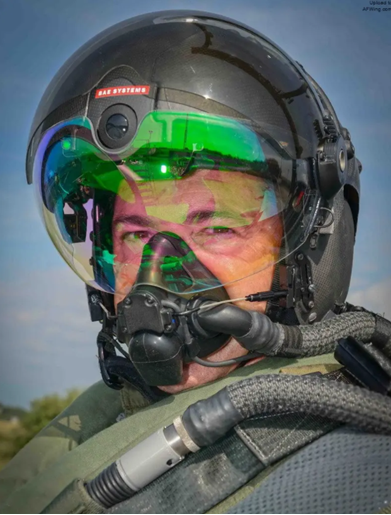
Attacker II Next-Generation Helmet Display System
The Attacker II helmet, also known as the Head Equipment Assembly (HEA) or Helmet Targeting System (HMSS), has its night vision sensor located above the pilot’s eyebrows, employing active pixel night vision sensor technology, eliminating the need for external night vision goggles, with the captured night vision images processed directly by the helmet’s built-in processor, avoiding delays; the tracking system introduces a new LED head position tracking technology, ensuring that the pilot’s head position is “continuously synchronized” with the onboard computer system, projecting images onto a liquid crystal display with a 40º×32º field of view; the introduction of combined photoelectric-inertial technology improves the refresh rate of navigation characters on the display.The Attacker II has been upgraded to a 1920×1080 pixel, fully overlapping, color binocular full HD display, clearly readable in daylight, suitable for bright sunlight environments above cloud layers; digital image processing technology has a fully compatible analog interface, allowing traditional fighters to also use this digital helmet; the helmet’s field of view, comfort, and immersive night vision effects far exceed those of traditional night vision goggles.Thales Group’s Industrial-Grade Augmented Reality TopOwl Helmet Targeting Display.At the 2011 Paris Air Show, Thales Group first showcased its high-performance TopOwl helmet targeting display, which presents a virtual image of the surroundings for helicopter pilots; it introduces augmented reality capabilities to enhance situational awareness for helicopter pilots under demanding visual conditions, and has been selected by armed forces from 16 countries, such as the U.S. Marine Corps’ UH-1Y and AH-1Z.As the first industrial-grade product, the TopOwl helmet targeting display enhances reality HMSD, projecting artificially synthesized peripheral environment visuals onto the visor’s dual, fully overlapping 40º field of view, displaying flight data and symbols, usable for controlling machine guns, rockets, and missiles; synthetic visuals are generated in real-time and added to the actual terrain visuals, with the data in the images sourced from integrated databases, GPS positioning, heading data, and precise pilot aiming line measurement data from TopOwl.Night vision goggles are mounted on either side of the helmet, and with a single click, the TopOwl helmet targeting display system can switch between augmented projection and high-resolution infrared imaging projection, improving visibility and flight safety under degraded visual environments (DVE) such as nighttime flying, light discipline, or white glare from bright reflections causing a milky sky.The TopOwl helmet targeting display features a character system that maintains manual flying performance, pitch-black night vision performance, and precise targeting capabilities with low fatigue levels, achieving military night vision performance of level 5 (visibility level during cloudy nights without moonlight, ambient light sources, or starlight), providing real combat advantages.Thales Group’s Scorpion Helmet Cueing System.The Scorpion Helmet Cueing System (HMCS) is now standard equipment on the U.S. Air Force’s F-16 Block 30 and A-10C aircraft. This helmet features a super-thin color monocular display located between the pilot’s eyes and night vision goggles, with a 26º×20º field of view, capable of displaying weapon aiming and critical flight data; more importantly, it is compatible with night vision goggles, always displaying color symbol systems, allowing customers to choose red, orange, or green symbols based on operational needs and aviation practices.
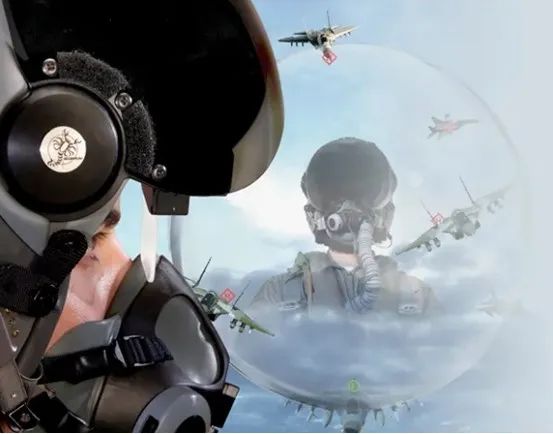
Scorpion Helmet Cueing System with Color Symbol Display Capability
This helmet is a “force multiplier” for combat, providing target cues in potentially degraded visual environments (DVE) while also displaying them in full-color characters, facilitating target illumination and coordinating onboard detectors to assign targets of interest. The Scorpion HMCS can be directly mounted onto standard helmets, allowing seamless transitions between helmet-mounted displays and guided displays, providing all necessary equipment for the flight fleet, facilitating product maintenance, and reducing the aircraft’s total lifecycle costs.Elbit Systems’ Integrated Helmet and Display Targeting System for Helicopters.The integrated helmet and display targeting system used on the AH-64 Apache armed helicopter can directly project aiming information and infrared images onto a single display, with the helmet also capable of directly controlling the 30mm M230 chain gun and nose-mounted sensors. Currently, a more capable integrated helmet for Apache pilots (AAIH) is under development.
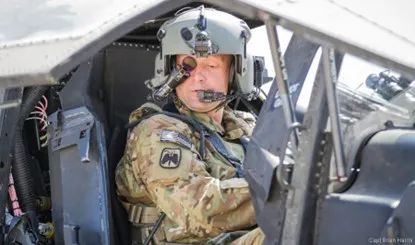
Elbit Systems’ Integrated Helmet and Display Targeting System
Development Outlook for Helmet Display/Targeting SystemsThe HMDS can be considered a HUD that rotates with the head; its targeting system can track the pilot’s head position and allow other target sensors and weapon indicators to track the helmet’s aiming line, subsequently displaying combat flight information on the helmet visor, overcoming the limitations of fixed HUD visibility and limited sightlines, while effectively reducing the pilot’s workload. At this stage, due to the limited information capacity of HMD displays, it is still challenging to completely replace the HUD; a prudent approach is to initially prioritize the HUD while using the HMD as a supplement; further along, to prioritize the HMD while using a low-profile HUD as a supplement; ultimately, as HMD technology matures and performance improves, it will replace the HUD.To some extent, the HMDS acts as a “force multiplier” system, providing a relatively ideal solution to the common cockpit display issues, as advanced HMDs have already replaced HUDs on the U.S. JSF fighter.
Copyright Statement: This article was published in the July 2022 issue of Military DigestMagazine, Author:Zhuge Hui, please be sure to indicate “reprinted from Military Digest” if you need to reprint.
Follow us

More Exciting Content