According to MEMS Consulting, a research project in Europe is developing a palm-sized gas sensor and analyzer that can be installed on streetlights to detect various toxic gases in real-time.
The project, named “PASSEPARTOUT,” is led by Munster Technological University in Ireland, with a total budget of 6.9 million euros, and is scheduled to conclude this year. The project has developed a compact and more cost-effective gas sensor that can provide a comprehensive understanding of the types and concentrations of toxic gases.
This gas sensor device uses hyperspectral laser sensors to detect multiple trace gases in dynamic environments in real-time, including nitrogen dioxide (NO2), sulfur dioxide (SO2), carbon monoxide (CO), ozone (O3), and particulate matter.
Its quartz-enhanced photoacoustic spectroscopy (QEPAS) sensor utilizes lasers to heat trace samples in the air.
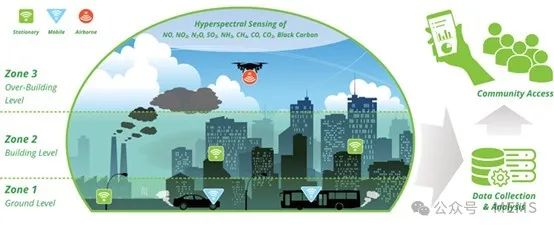 Schematic of the PASSEPARTOUT three-level sensor network
Dr. William Whelan-Curtin, the project coordinator, said: “QEPAS is particularly suitable for detecting and quantifying trace gases in challenging environments.”
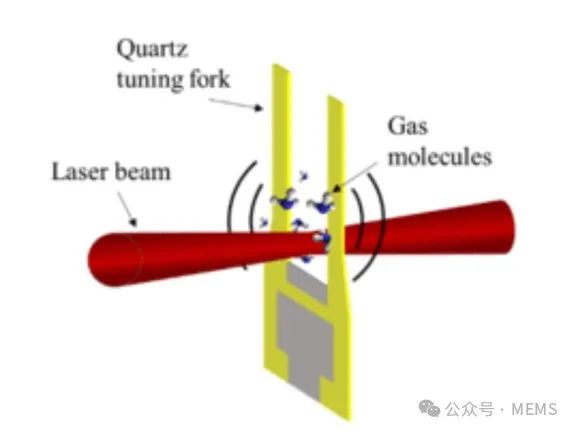 QEPAS uses a quartz tuning fork transducer to convert sound waves into electrical signals
Dr. William Whelan-Curtin explained: “We use a quartz tuning fork with sharp mechanical resonance to detect the signals generated by gas samples while suppressing background noise. This quartz tuning fork can detect sound waves produced by gases during heating and cooling. The signals are then analyzed to determine the concentration of the target gas. The wavelength of the laser can be adjusted to match the characteristic absorption spectrum of the target gas, which means our system can classify and detect specific gases such as carbon monoxide or sulfur dioxide.”
Its powerful sensing capabilities enable the PASSEPARTOUT detector to monitor the environment, continuously providing dynamic, real-time air quality information. Dr. William Whelan-Curtin stated: “Even the smallest fluctuations in the concentration of toxic gases can be captured in time, allowing for more effective and timely interventions.”
This miniature PASSEPARTOUT hyperspectral optical sensor will provide a more comprehensive solution for understanding urban air quality. He said: “To establish a widely covered sensor network and take timely, meaningful measures for smart cities, it is clearly not feasible to use the current high-cost sensing methods.”
Currently, accurately assessing urban air quality is very challenging. Air quality varies significantly over time, distance, and regions. Traditional monitoring methods struggle to capture these subtle changes adequately. PASSEPARTOUT is working to provide a system with high precision and excellent spatial resolution to detect nitrogen oxides, sulfur dioxide, ammonia, methane, carbon monoxide, carbon dioxide, and black carbon.
The project aims to popularize real-time urban networks. He stated: “We hope to make this technology as widespread as video surveillance by installing detectors on every streetlight. As part of the project, we are also developing a smartphone app for real-time air quality detection. In the future, we hope to integrate it into Google Maps, so users can see not only traffic hotspots but also the freshest air routes on their way to work or school.”
Ultimately, the project aims to improve people’s health and help citizens around the world enjoy clean air. The technology is priced at less than one thousand euros, enabling municipal authorities, environmental agencies, and researchers to make targeted interventions and policy decisions at a very low cost.
The PASSEPARTOUT team is trialing their technology at landfills, seaports, University of Bari, and several schools.
Further Reading:“Environmental Gas Sensor Technology and Market – 2023 Edition”“Sensirion Gas Sensor SGP40 Product Analysis” “Sensirion Gas Sensor SGP30 Product Analysis”