✅ Author Profile: A research enthusiast and MATLAB simulation developer, skilled in data processing, modeling simulation, program design, complete code acquisition, paper reproduction, and scientific simulation.
🍎 Previous reviews, follow the personal homepage: MATLAB Research Studio
🍊 Personal motto: Investigate to gain knowledge, complete MATLAB code and simulation consultation available via private message.
🔥 Content Introduction
In industrial production, agricultural greenhouses, and warehousing logistics, temperature is a critical environmental parameter. Its real-time, continuous, and accurate monitoring directly relates to production safety, product quality, and resource optimization. Traditional wired temperature monitoring systems face issues such as complex wiring, high costs, and poor flexibility, making it difficult to meet the multi-point distributed monitoring needs in complex scenarios.
Wireless Sensor Networks (WSN) have become an important technological means in environmental monitoring due to their flexible deployment, low cost, and strong scalability. Among them, the XBee module, as a mature wireless communication module, features low power consumption, long-distance transmission, and strong anti-interference capabilities, allowing for the rapid establishment of stable wireless communication links. MATLAB, on the other hand, possesses powerful data collection, processing, analysis, and visualization capabilities, providing efficient software support for monitoring systems.
This study integrates XBee wireless communication technology with MATLAB data processing capabilities to design a continuous monitoring system for temperature sensor wireless networks. It achieves real-time collection, transmission, storage, analysis, and anomaly warning of multi-point temperature data, providing a reliable technical solution for temperature monitoring needs across various industries, with significant theoretical value and practical application significance.
II. Overall System Design Scheme
The system adopts a “distributed collection – wireless transmission – centralized processing” architecture, divided into three main modules: Temperature Collection Module,XBee Wireless Transmission Module and MATLAB Monitoring Center Module, with each module working together to achieve full-process monitoring of temperature data. The overall system architecture is shown in Figure 1 (Note: This is a textual description; a schematic diagram can be added in practical applications):
- Temperature Collection Module: Composed of multiple temperature sensor nodes, each responsible for collecting real-time temperature data at its location and transmitting the data to the local XBee transmission module;
- XBee Wireless Transmission Module: Divided into transmitting and receiving ends, the transmitting end is bound to the temperature collection nodes, wirelessly transmitting the collected temperature data to the receiving end; the receiving end is connected to the computer’s serial port, converting the wirelessly received data into wired signals for transmission to the MATLAB monitoring center;
- MATLAB Monitoring Center Module: Receives data through serial communication, performs filtering, storage, analysis, and visualization, and sets temperature thresholds to achieve anomaly warnings.
III. Hardware Selection and Circuit Design
3.1 Core Hardware Selection
To ensure system stability and data accuracy, the core hardware selection is as follows:
- Temperature Sensor: The DS18B20 digital temperature sensor is selected, with a measurement range of -55℃ to 125℃, accuracy of ±0.5℃ (within the range of -10℃ to 85℃), supporting single-bus communication, simple wiring, and suitable for multi-point distributed collection;
- Microcontroller: Each temperature collection node is paired with an STM32F103C8T6 microcontroller, responsible for controlling the DS18B20 to collect temperature, process data, and communicate with the XBee module;
- XBee Module: The XBee-PRO S2C module is selected, operating in the 2.4GHz frequency band, with a transmission distance of up to 1.6km (in open outdoor environments), supporting ZigBee protocol, capable of constructing star, tree, and other network topologies to meet multi-point monitoring needs;
- Power Module: The collection nodes are powered by lithium batteries (with a charging module), while the MATLAB monitoring end is powered through the computer’s USB interface for the XBee receiving end, ensuring continuous system operation.
3.2 Key Circuit Design
- Temperature Collection Circuit: The VCC pin of the DS18B20 is connected to the 3.3V power supply of the STM32, the GND pin is grounded, and the DATA pin is connected to the GPIO pin of the STM32 through a 4.7kΩ pull-up resistor to achieve single-bus data transmission;
- Communication Circuit between XBee and Microcontroller: The TX/RX pins of the XBee module are cross-connected to the RX/TX pins of the STM32 (serial communication), achieving bidirectional data transmission; at the same time, the VCC pin of the XBee module is connected to the 3.3V power supply, and the GND pin is grounded to ensure stable power supply;
- Circuit Connection between XBee Receiving End and Computer: The XBee receiving module is connected to the computer’s serial port via a USB-to-TTL converter, enabling the transmission of wireless data to the computer, providing an interface for MATLAB data collection.
IV. System Testing and Performance Analysis
4.1 Test Environment Setup
A certain industrial workshop was selected as the test scene, deploying 5 temperature collection nodes (located in different areas of the workshop), with the XBee receiving end placed in the workshop control room, and the computer running the MATLAB monitoring program. The test duration was 24 hours to verify the system’s continuous operation stability and data accuracy.
4.2 Test Result Analysis
- Communication Stability: During the 24-hour test, the XBee wireless link did not experience disconnections, with a data transmission success rate of 99.8%. Only two brief data packet losses occurred when large equipment in the workshop was started (which were compensated through MATLAB’s data retransmission mechanism), demonstrating strong anti-interference capability of the system;
- Data Accuracy: The temperature data collected from each node was compared with a high-precision thermometer (accuracy ±0.1℃), with errors within ±0.3℃, meeting the industrial-grade temperature monitoring accuracy requirements;
- Real-time Performance: The data collection cycle was set to 10 seconds per instance, with a delay of about 0.5 seconds from data reception to visualization in MATLAB, demonstrating good real-time performance, meeting continuous monitoring needs;
- Anomaly Warning Accuracy: Simulating a temperature threshold exceedance at a certain node (placing the node in a 60℃ environment), MATLAB issued a warning within 1 second, achieving a warning accuracy rate of 100%, with complete anomaly records.
V. Research Conclusions and Outlook
5.1 Research Conclusions
This study successfully designed and implemented a continuous monitoring system for temperature sensors based on MATLAB and XBee. Through hardware selection optimization and software function development, it achieved real-time collection, wireless transmission, precise processing, and visual monitoring of multi-point temperature data. Test results indicate that the system hasstable communication, accurate data, strong real-time performance, and reliable warnings, effectively addressing the limitations of traditional wired monitoring systems and meeting temperature monitoring needs in industrial and agricultural fields.
5.2 Future Outlook
- Function Expansion: Adding humidity, light, and other multi-parameter collection modules to construct a multi-dimensional environmental monitoring system;
- Network Optimization: Introducing the Mesh network topology of the XBee module to further expand the monitoring range and enhance network redundancy;
- Intelligent Upgrade: Combining MATLAB’s machine learning toolbox to analyze historical temperature data, achieving temperature change trend prediction, providing more proactive support for production decisions;
- Remote Monitoring: Deploying the monitoring interface as a web application through MATLAB Web App Server, enabling remote access and monitoring via mobile devices such as smartphones and tablets.
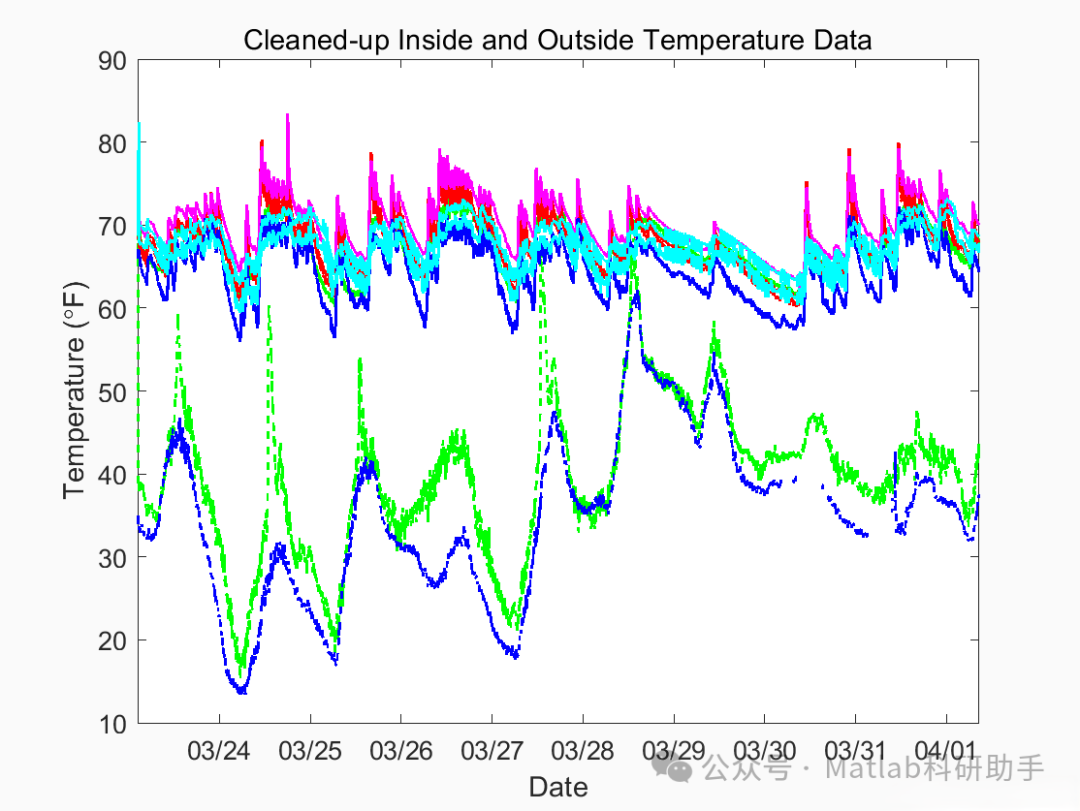
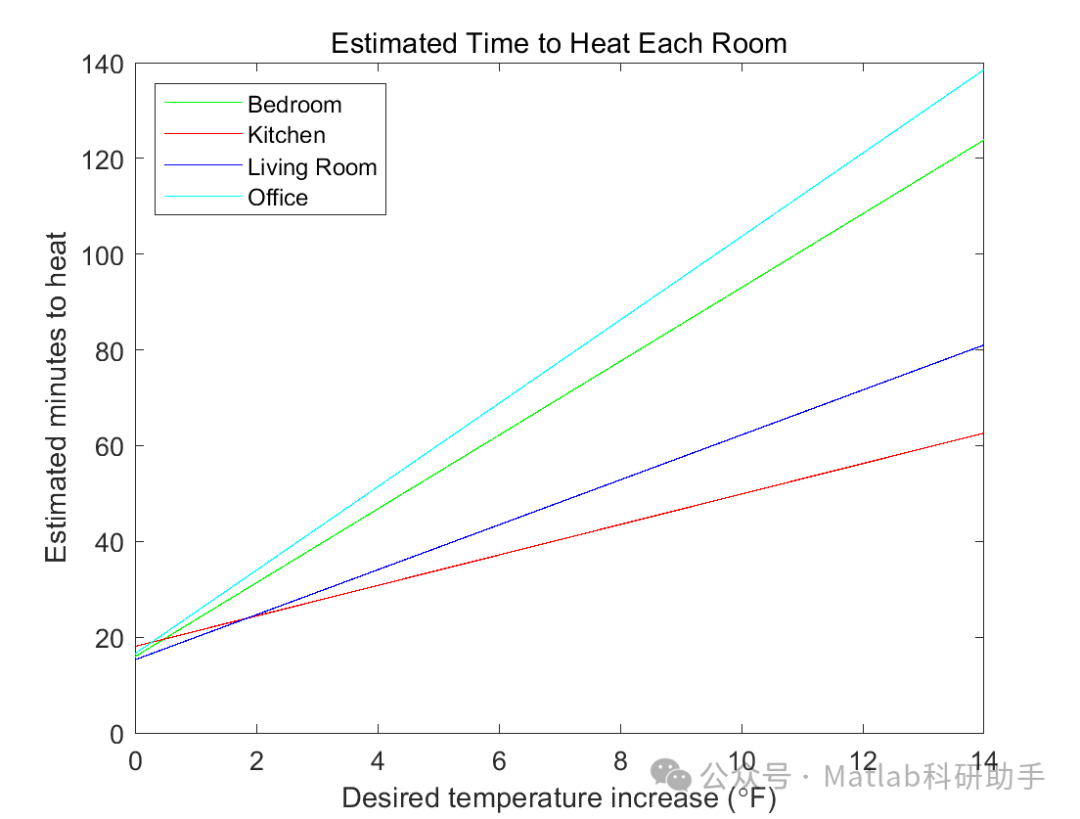
⛳️ Operation Results
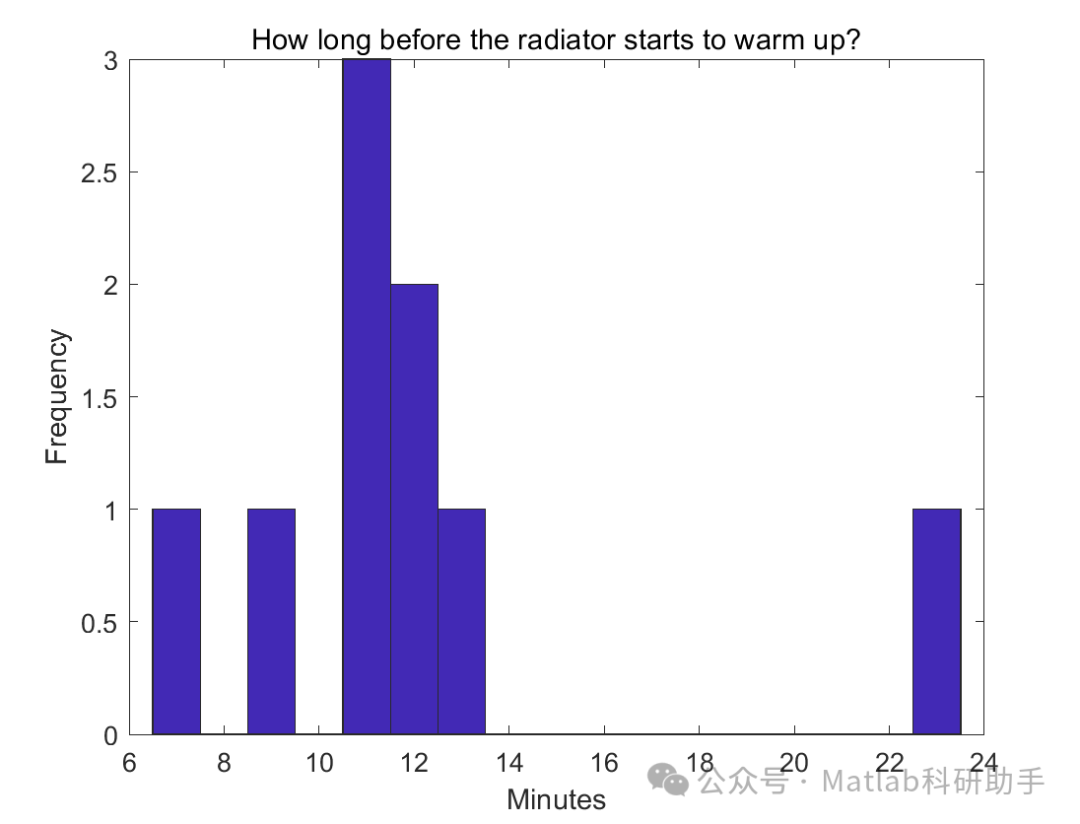
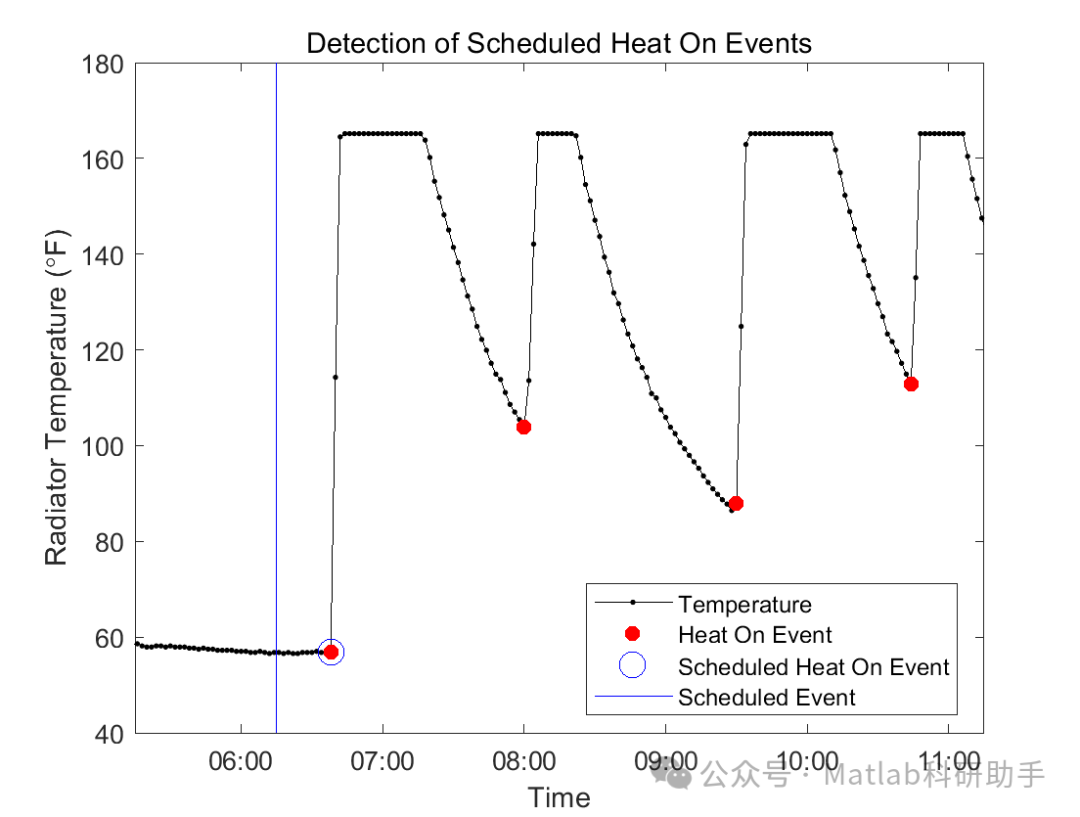
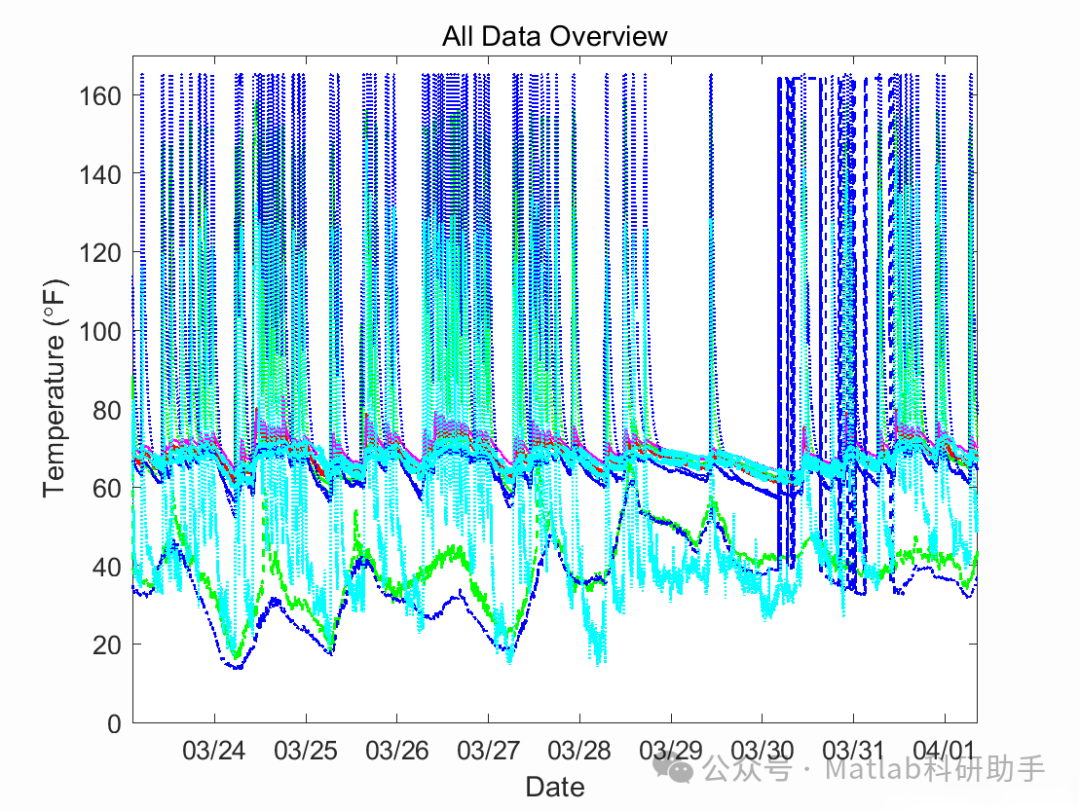
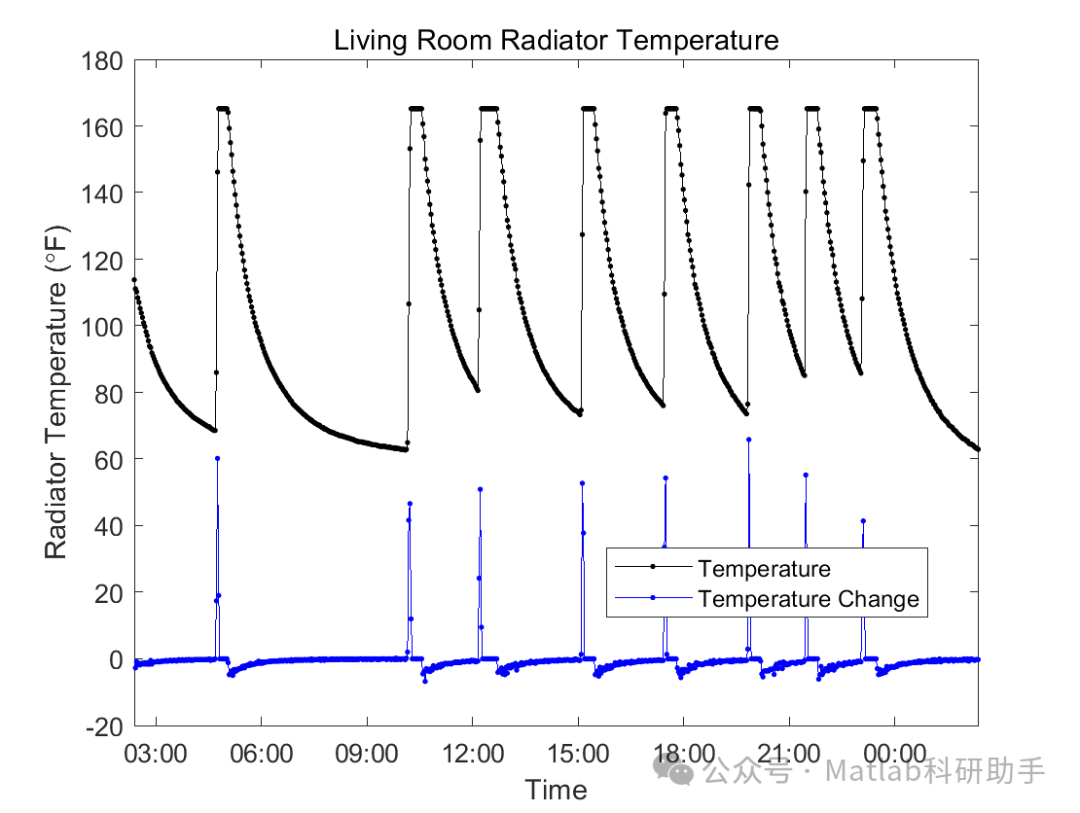
🔗 References
[1] Ni Jifeng. Research on Wireless Sensor Network Node Design and Positioning Technology Based on Ranging [D]. Zhejiang University of Technology [2025-09-12]. DOI:10.7666/d.y1921160.
[2] Wu Zhitao, Liu Wei, Song Yuqiang. Wireless Communication and Data Processing between PC and MEMS Digital Sensors Based on MATLAB [C]// 13th National Engineering Geophysical and Geotechnical Testing Academic Conference. China Architectural Society, 2013.
📣 Partial Code
🎈 Some theoretical references are from online literature; if there is any infringement, please contact the author for deletion.
👇 Follow me to receive a wealth of MATLAB e-books and mathematical modeling materials
🏆 The team specializes in guiding customized MATLAB simulations in various research fields, supporting research dreams:
🌈 Various intelligent optimization algorithm improvements and applications
Production scheduling, economic scheduling, assembly line scheduling, charging optimization, workshop scheduling, departure optimization, reservoir scheduling, three-dimensional packing, logistics site selection, cargo location optimization, bus scheduling optimization, charging pile layout optimization, workshop layout optimization, container ship loading optimization, pump combination optimization, medical resource allocation optimization, facility layout optimization, visible base station and drone site selection optimization, knapsack problem, wind farm layout, time slot allocation optimization, optimal distributed generation unit allocation, multi-stage pipeline maintenance, factory-center-demand point three-level site selection problem, emergency life material distribution center site selection, base station site selection, road lamp post arrangement, hub node deployment, transmission line typhoon monitoring devices, container scheduling, unit optimization, investment optimization portfolio, cloud server combination optimization, antenna linear array distribution optimization, CVRP problem, VRPPD problem, multi-center VRP problem, multi-layer network VRP problem, multi-center multi-vehicle VRP problem, dynamic VRP problem, two-layer vehicle routing planning (2E-VRP), electric vehicle routing planning (EVRP), hybrid vehicle routing planning, mixed flow workshop problem, order splitting scheduling problem, bus scheduling optimization problem, flight shuttle vehicle scheduling problem, site selection path planning problem, port scheduling, port shore bridge scheduling, parking space allocation, airport flight scheduling, leak source location.
🌈 Time series, regression, classification, clustering, and dimensionality reduction in machine learning and deep learning
2.1 BP time series, regression prediction, and classification
2.2 ENS voice neural network time series, regression prediction, and classification
2.3 SVM/CNN-SVM/LSSVM/RVM support vector machine series time series, regression prediction, and classification
2.4 CNN|TCN|GCN convolutional neural network series time series, regression prediction, and classification
2.5 ELM/KELM/RELM/DELM extreme learning machine series time series, regression prediction, and classification
2.6 GRU/Bi-GRU/CNN-GRU/CNN-BiGRU gated neural network time series, regression prediction, and classification
2.7 Elman recurrent neural network time series, regression prediction, and classification
2.8 LSTM/BiLSTM/CNN-LSTM/CNN-BiLSTM long short-term memory neural network series time series, regression prediction, and classification
2.9 RBF radial basis neural network time series, regression prediction, and classification
2.10 DBN deep belief network time series, regression prediction, and classification
2.11 FNN fuzzy neural network time series, regression prediction
2.12 RF random forest time series, regression prediction, and classification
2.13 BLS broad learning time series, regression prediction, and classification
2.14 PNN pulse neural network classification
2.15 Fuzzy wavelet neural network prediction and classification
2.16 Time series, regression prediction, and classification
2.17 Time series, regression prediction, and classification
2.18 XGBOOST ensemble learning time series, regression prediction, and classification
2.19 Transform various combinations of time series, regression prediction, and classification
Covering wind power prediction, photovoltaic prediction, battery life prediction, radiation source identification, traffic flow prediction, load prediction, stock price prediction, PM2.5 concentration prediction, battery health status prediction, electricity consumption prediction, water body optical parameter inversion, NLOS signal identification, precise prediction of subway stops, transformer fault diagnosis.
🌈 In image processing
Image recognition, image segmentation, image detection, image hiding, image registration, image stitching, image fusion, image enhancement, image compressed sensing.
🌈 In path planning
Traveling salesman problem (TSP), vehicle routing problem (VRP, MVRP, CVRP, VRPTW, etc.), three-dimensional path planning for drones, drone collaboration, drone formation, robot path planning, grid map path planning, multimodal transport problems, electric vehicle routing planning (EVRP), two-layer vehicle routing planning (2E-VRP), hybrid vehicle routing planning, ship trajectory planning, full path planning, warehouse patrol.
🌈 In drone applications
Drone path planning, drone control, drone formation, drone collaboration, drone task allocation, drone secure communication trajectory online optimization, vehicle collaborative drone path planning.
🌈 In communication
Sensor deployment optimization, communication protocol optimization, routing optimization, target location optimization, Dv-Hop positioning optimization, Leach protocol optimization, WSN coverage optimization, multicast optimization, RSSI positioning optimization, underwater communication, communication upload and download allocation.
🌈 In signal processing
Signal recognition, signal encryption, signal denoising, signal enhancement, radar signal processing, signal watermark embedding and extraction, electromyography signals, electroencephalography signals, signal timing optimization, electrocardiogram signals, DOA estimation, encoding and decoding, variational mode decomposition, pipeline leakage, filters, digital signal processing + transmission + analysis + denoising, digital signal modulation, bit error rate, signal estimation, DTMF, signal detection.
🌈 In power systems
Microgrid optimization, reactive power optimization, distribution network reconstruction, energy storage configuration, orderly charging, MPPT optimization, household electricity.
🌈 In cellular automata
Traffic flow, crowd evacuation, virus spread, crystal growth, metal corrosion.
🌈 In radar
Kalman filter tracking, trajectory association, trajectory fusion, SOC estimation, array optimization, NLOS identification.
🌈 Workshop scheduling
Zero-wait flow shop scheduling problem (NWFSP) , permutation flow shop scheduling problem (PFSP) , hybrid flow shop scheduling problem (HFSP) , zero idle flow shop scheduling problem (NIFSP), distributed permutation flow shop scheduling problem (DPFSP), blocking flow shop scheduling problem (BFSP).
👇