Abstract:The trend of learners engaging in cross-domain learning requires a shift from passive educational services with fragmented domains to proactive learning support services that connect contexts. However, the current technical ecosystem of learning environments lacks the capability to provide personalized services for complex learning contexts. How to seamlessly collaborate various intelligent services in learning environments at the intelligent and knowledge levels to construct an open and interconnected learning environment has become an important research topic in smart education. Learning environment computation is fundamental to the design, evaluation, and optimization of learning environments, as well as a basic computational problem for smart education. The computational framework for smart education learning environments empowers smart learning environments through learning context models and intelligent learning environment function models, and realizes the technical and resource deployment of smart learning environments based on typical learning contexts, supporting the transition from large-scale education to a data-driven, contextualized, and personalized smart education ecosystem. Its core functions can be divided into three main parts: representation and modeling of learning contexts, generation and recommendation of teaching strategies, and analysis and evaluation of learning performance. Teaching experiments are the basis for the evolution of learning environments. The evolution model of learning environment computation based on teaching experiments can optimize real multi-scene learning environments through the verification of teaching strategies based on teaching experiments and enhancement of teaching strategy libraries based on self-learning algorithms. Currently, applications related to “teaching management and assessment” built on the learning environment computation framework have served hundreds of millions of users and have been applied to personal self-study, collaborative learning, classroom lectures, and other learning contexts. Experiments on learning environment computation aimed at motivation stimulation and behavior intervention and those for differentiated teaching have also been conducted.
Keywords:Smart Education; Smart Learning Environment; Learning Environment Computation; Logical Framework; Evolution Model; System Architecture
Authors:Zhou Wei1, Du Jing1, Wang Yan2, Liu Jiahao1, Huang Ronghuai1 (1, National Engineering Research Center for Internet Education Intelligent Technology and Application, Beijing Normal University, Beijing 100875; 2, Sichuan Open University, Chengdu, Sichuan 610073)
1. Introduction
New generation information technologies such as big data, cloud computing, and artificial intelligence are leading a new round of technological revolution, promoting the restructuring and reengineering of processes across various fields of human production and life, and are also changing the organizational and service models of education, driving human education to evolve towards the stage of “smart education” (Huang Ronghuai, 2022). In the systematic integration of technology and education, learning environments urgently need transformation and upgrading to support a smart education ecosystem characterized by data-driven, personalized, and contextualized approaches (Huang Ronghuai et al., 2019).
Currently, driven by the Internet, learning environments have transitioned from “closed campuses” to “Internet learning environments” (Huang Ronghuai et al., 2017), extending from schools to families, society, and other domains (Zhuang Rongxia et al., 2017). However, there is a serious disconnection between schools, families, and society, with poor information sharing, severe data islands, and difficulty in coordinating learning support services, resulting in challenges in connecting learning contexts across domains. From the perspective of the service targets of learning environments, the trend of learners engaging in cross-domain learning requires a shift from passive educational services with fragmented domains to proactive learning support services that connect contexts. However, the current technical ecosystem of learning environments lacks the capability to provide personalized services for complex learning contexts. Therefore, how to seamlessly collaborate various intelligent services in learning environments at the intelligent and knowledge levels to construct an open and interconnected learning environment that can adapt to the characteristics of smart learning such as complexity, personalization, and randomness (Huang Ronghuai et al., 2017) has become an important research topic in smart education.
Learning environment computation serves as a bridge that effectively connects physical spaces, information spaces, and social spaces. It is fundamental to the design, evaluation, and optimization of learning environments and is a core concern in building an intelligent network in the field of education. It is also one of the basic computational problems for smart education, helping to address issues such as the trustworthy and secure protection of digital privacy, and the construction of learning support service mechanisms based on multi-modal integration in complex scenarios (Huang Ronghuai et al., 2019). This paper proposes a computational framework for smart education learning environments around the main characteristics of data-driven, personalized, and contextualized smart education, including computational and reasoning models for learning environments, evolution models of learning environment computation based on teaching experiments, and service-oriented learning environment computation system architecture. This framework will help in the design and optimization of the next generation of learning environments, accelerating the transformation of learning environments’ systems and equipment from experimental prototype research to production and deployment, and supporting the balance between large-scale education and personalized training.
2. Logical Framework for Learning Environment Computation Aimed at Smart Education
In the systematic integration of technology and education, in order to better support the characteristics of data-driven, personalized, and contextualized smart education, this paper proposes a logical framework for learning environment computation aimed at smart education. This framework is built on the foundation of learning context models (Huang Ronghuai et al., 2010) and intelligent learning environment function models (Huang Ronghuai et al., 2012), empowering smart learning environments through learning environment computation, and based on typical learning contexts, realizing the technical and resource deployment of smart learning environments, supporting the transition from large-scale education to data-driven, personalized, contextualized smart education ecosystems. As shown in Figure 1, this framework mainly empowers smart education through three major functional links.
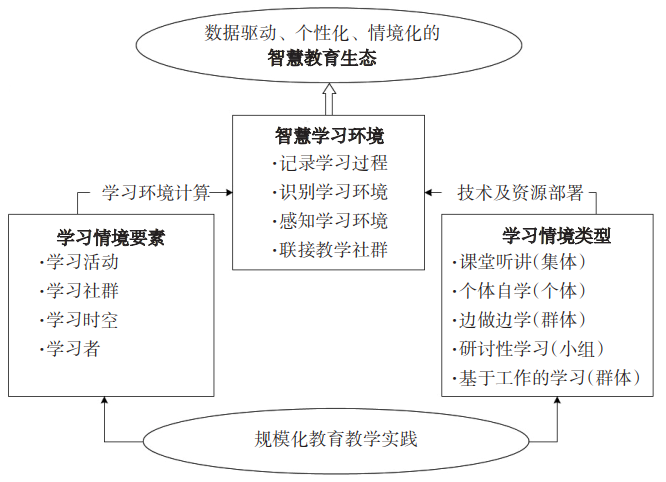
Figure 1. Logical Framework for Learning Environment Computation Aimed at Smart Education
1. Representation and Modeling of Learning Contexts: A Prerequisite for Realizing the Contextual Features of Smart Education
Learning context refers to a comprehensive description of one or a series of learning events or activities, involving elements such as learning activities, learning time and space, learning communities, and learners. Typical learning contexts include classroom lectures (collective), individual self-study (individual), seminar learning (group), learning by doing (group), and work-based learning (group) (Huang Ronghuai et al., 2010). Different learning contexts require different learning needs and environmental requirements from learners (Kobsa, 2005). The representation and modeling of learning contexts provide the basis for proposing fine-grained contextual adaptation strategies, such as providing personalized training services based on learners’ knowledge levels.
The representation and modeling of learning contexts is one of the core functions of learning environment computation and also a prerequisite for realizing the contextual features of smart education. Contextualization is one of the main features of smart education, emphasizing that intelligent technologies need to reasonably combine teaching models, methods, and learning processes based on different educational scenarios; it also aims to reduce users’ perception of the technology itself while meeting user needs (Huang Ronghuai et al., 2019). Learning environment computation facilitates the realization of contextual features of smart education in two ways: first, by proactively perceiving learning contexts based on computation, providing adaptive learning services for learners. With the continuous development of technologies such as the Internet of Things and cloud computing, contextual computing has received attention from academia and industry. It processes the acquired contextual information to derive the services required by users and actively provides contextual perception services (Li Weiping et al., 2015). Second, by constructing an open and interconnected learning environment, providing learners with cross-domain and context-connected learning services. Utilizing intelligent technologies to build a new generation of learning environments that organically integrate virtual reality with real contexts, schools with families and society, formal education with informal education, to create learning spaces that provide connectivity and contextual learning experiences across domains for students is one of the core areas of technology empowering education (Huang Ronghuai, 2022).
2. Deployment of Smart Learning Environments: Bringing Possibilities for Balancing Large-Scale Education and Personalized Training
The personalized characteristics of smart education emphasize that the application of intelligent technologies should respect the individual differences between people in education, using intelligent technologies as tools to achieve the educational goals of teaching without discrimination and teaching according to aptitude (Huang Ronghuai et al., 2019). This requires that the learning environment created by intelligent technologies must be capable of recommending teaching strategies that adapt to contexts, as well as learning resources that are necessary, appropriately difficult, well-structured, suitably media-rich, and clearly navigable, while matching learning partners that can promote a sense of belonging and emotional identification, thereby facilitating effective learning activities (Huang Ronghuai et al., 2010). Currently, utilizing intelligent technologies to explore the most suitable learning paths, learning resources, and learning partners for learners is a hot research topic in personalized adaptive learning technologies.
The focus of smart learning environment deployment is to generate a learning space or activity space that can perceive learning contexts, identify learner characteristics, provide appropriate learning resources and convenient interactive tools, automatically record learning processes, and assess learning outcomes to facilitate effective learning by learners. This learning space or activity space possesses technical features such as process recording, context identification, environmental perception, and community connectivity (Huang Ronghuai et al., 2012), which can provide the basis for establishing learner models, updating learning contexts, and evaluating learners’ learning effects more comprehensively and accurately. The deployment of smart learning environments needs to comprehensively consider the characteristics of different learning contexts, reasonably allocate technologies and resources, provide personalized teaching strategies for learners, and conduct scientific assessments of learning performance to promote effective learning.
3. Optimization of Learning Environments: Transforming the Educational Ecosystem Through Data-Driven Approaches
Data-driven approaches are also one of the main characteristics of smart education, emphasizing the effective application of massive high-quality educational application scenario data to transform and upgrade traditional educational scenarios, enhancing analytical and supportive capabilities to achieve the transformation of the educational ecosystem in the intelligent era (Huang Ronghuai et al., 2019). The formation of a smart education ecosystem is a long-term process that requires continuous optimization of learning environments. The intelligent upgrade and transformation of existing learning environments should utilize cloud-edge-end intelligence, achieving multi-dimensional intelligence through computation and reasoning, enabling data sharing, device collaboration, knowledge interconnection, and collective intelligence fusion, providing effective support for easier, more engaged, and more effective learning. Teaching experiments are the basis for the evolution of learning environments. The data-driven feature of learning environment computation manifests as the continuous acquisition of massive, heterogeneous, high-concurrency, multi-dimensional, and multi-modal data from educational teaching practices across multiple scenarios. Through the acquisition and accumulation of experiential knowledge, the complexity and variability of real learning contexts can be understood, and the internal structure, content, form, and methods of learning environments can be continuously optimized, allowing learning environments to operate autonomously and collaboratively. The educational social experiment of mining large-scale, long-term data to improve educational teaching practices has become a new paradigm of data-intensive educational research (Huang Ronghuai et al., 2020).
3. Core Functions of Learning Environment Computation
Based on the above analysis, this paper posits that learning environment computation refers to the identification of learner characteristics and perception of learning contexts through an intelligent network environment. It uses cognitive computing and knowledge reasoning methods to provide proactive, precise, and adaptive learning support services based on the representation and modeling of learning contexts, generation and recommendation of teaching strategies, and analysis and evaluation of learning performance, with the goal of iteratively optimizing learning environments. Computation and reasoning are the core of learning environment computation and the foundation for realizing the main features of data-driven, personalized, and contextualized smart education. To better connect and coordinate the personalized and contextualized learning support services required by smart learning environments, and to fully leverage the data value of educational teaching practices, this paper proposes a learning environment computation and reasoning model. This model is built on the general architecture of contextual computing (Li Weiping et al., 2015) and mainly includes learning context representation and modeling based on computation and reasoning, generation and recommendation of teaching strategies, and analysis and evaluation of learning performance, as shown in Figure 2. According to the general process of contextual computing “modeling, execution, optimization,” the core functions of learning environment computation can be divided into three main parts: first, representation and modeling of learning contexts, including data acquisition of learning contexts and establishment of learning context models; second, generation and recommendation of teaching strategies, which actively provide personalized and contextualized teaching strategies for learners based on the representation and modeling of learning contexts and execute them; third, analysis and evaluation of learning performance, which involves analyzing the effects of executing teaching strategies, feeding back to the reasoning engine and teaching experts, and subsequently optimizing teaching strategies and updating learning contexts.
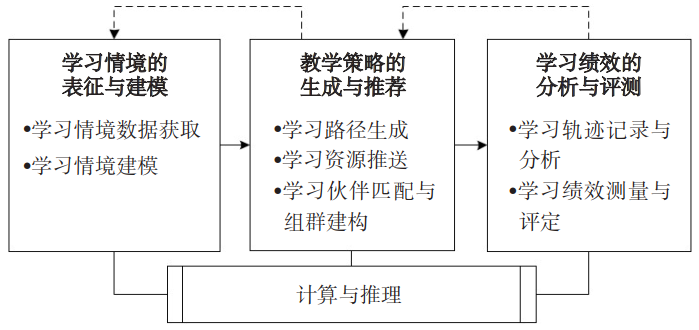
Figure 2. Computation and Reasoning Model of Learning Environments
1. Representation and Modeling of Learning Contexts
The representation and modeling of learning contexts refer to the perception of learning environment information, representation of learner models, and collection of related information, as well as the spatiotemporal relationship marking of learning tasks, which is based on the acquisition of learning context data and formal methods to define and model learning context models.
(1) Acquisition of Learning Context Data
Learning context data comes from diverse sources, involving multiple domains (including physical and virtual environments), including real-time monitoring data from sensors such as GPS geographic information, sound, light, electricity, temperature, and humidity information; information from databases of learning systems, such as learner information, historical performance data, etc.; and data obtained from cloud service interfaces, such as learner relationship information in social networks. Data from various sensing devices is often multi-modal, redundant, complex, noisy, and of low quality, so it needs to be filtered, dimensionally reduced, and feature-extracted before application. Through pattern recognition, raw sensor data is converted into usable data. Data from information systems such as learning management systems, student management systems, and academic management systems is often heterogeneous, which poses challenges for learning context modeling. For the former, a type of edge computing gateway should be constructed to shield the differences in the underlying architecture of sensors through various communication protocols and provide a unified data operation interface for data acquisition. For example, some scholars have used device information access components (Li et al., 2010), access gateways (Zou Ping et al., 2020), and dynamic data consistency components (Xu et al., 2005) to solve the problem of efficiently receiving and processing data from sensors. For the latter, data extraction, transformation, and loading tools should be constructed to fuse scattered, disorganized, and non-uniformly standardized data together, such as data middle platforms (Zhai Xuesong et al., 2021). Additionally, some scholars have constructed a contextual intelligence framework that provides infrastructure for perceiving, fusing, and inferring multi-modal temporal data streams, including tools supporting visualization and debugging, as well as components encapsulating various perception and processing technologies (Bohus et al., 2021).
(2) Learning Context Modeling
According to different application scenarios, scholars have proposed various formal methods to represent and store contextual information, such as key-value pairs (Schilit et al., 1994), colored Petri nets (Bao Jie et al., 2012), object-oriented (Kumar et al., 2020), description logic (Hu Bo et al., 2013), and ontology (Sarwar et al., 2019) methods to establish contextual models. Relevant elements of learning contexts include learning activities (learning objectives, content, evaluation requirements, etc.), learning spatiotemporal aspects, learners (learning styles, cognitive abilities, knowledge levels, knowledge states, emotions, attention, etc.), and learning communities (roles and relationships within learning groups) (Du Jing et al., 2020). Based on the stability of learning context information, learning context information can be divided into static context information and dynamic context information. Static context information refers to relatively stable individual characteristics that affect learning outcomes, such as learning styles and cognitive abilities; dynamic context information refers to individual states related to learning activities that can change with context and time, such as knowledge levels, emotional states, attention states, etc. (Huang Ronghuai et al., 2012). Dynamic context information is the basis for fine-grained personalized recommendations, so learning context models should be able to support the dynamic maintenance and updating of learning context information well. Current formal representation methods for learning contexts often migrate from general knowledge representation methods and do not consider the characteristics of learning environments and educational teaching. Therefore, designing a learning context modeling method that can comprehensively integrate the advantages of various formal representation methods while considering the practical realities of education and teaching is one of the important directions for future research in learning environment computation.
2. Generation and Recommendation of Teaching Strategies
The generation and recommendation of teaching strategies refer to learning path generation, learning resource pushing, and matching learning partners and group construction.
(1) Learning Path Generation
The key issue in personalized adaptive learning is how to generate suitable learning sequences based on learner characteristics and dynamically adjust them under changing contexts, forming sequences of knowledge units and learning tasks (examples, problems, exercises, etc.) that best suit learners’ learning needs. The difficulty lies in balancing the logical relationships between knowledge points (such as relevance, prerequisites, etc.) while adapting to learners’ personalized learning characteristics (Iglesias et al., 2009). The logical relationships between knowledge points serve as constraints for the learning path algorithm generation, clarifying the prerequisite knowledge that needs to be learned before learning a specific knowledge point. At the same time, adaptive learning must also make corresponding adjustments to learning progress, content, and methods based on learners’ personalized characteristics, such as cognitive abilities, knowledge levels, and learning styles. Therefore, learning path generation algorithms generally use ordered acyclic graphs to represent domain knowledge, optimizing the goal, and employing heuristic search methods for solutions, such as genetic algorithms (Huang et al., 2007), ant colony algorithms (Wang et al., 2008), etc.
(2) Learning Resource Pushing
The optimization objectives of learning resource pushing algorithms include appropriate difficulty, reasonable structure, and suitable media. Typical recommendation methods include collaborative filtering algorithms and heuristic search algorithms. Collaborative filtering algorithms recommend relevant content to target users based on the preferences of related users. This involves first identifying a group of similar users whose preferences match those of the target user, analyzing the behavior patterns of this group, and recommending content suitable for this group to the target user (Lemire et al., 2005). Collaborative filtering algorithms do not require detailed content considerations for the recommended items, causing minimal interference during user access to applications, and are relatively easy to implement, making them one of the most successful and widely used techniques (Wang Yonggu et al., 2011; Leng Yajun et al., 2014), but they do not adequately consider learners’ personalized characteristics. Heuristic search methods model the learning resource recommendation problem through multi-objective combination optimization to find optimal solutions, such as binary particle swarm optimization (Yang Chao, 2014; Li Haojun et al., 2017; De-Marcos et al., 2007), but they require pre-labeling of knowledge, content, etc., which is relatively costly.
(3) Matching Learning Partners and Group Construction
The main basis for forming learning partners includes random selection or based on preferences, learning achievements, etc. Random strategies establish partnerships based on the order of learners’ participation, with typical projects including C-Notes (Milrad et al., 2002), xTask (Ketamo, 2003), Musex (Yatani et al., 2010), etc. Preference strategies establish partnerships based on the familiarity level between learners, such as CatchBob! (Soute et al., 2010). Achievement strategies establish partnerships based on learners’ learning performances, such as Call (Almekhlafi, 2006). For each strategy, methods such as homogeneous grouping, heterogeneous grouping, and profit-based grouping are used to match learning partners and construct groups. Some researchers have proposed algorithms for grouping learners based on differences in their mastery of different knowledge points, as well as profit-based grouping algorithms, with the former aiming to assign learners who master similar knowledge points to different groups, while the latter maximizes the average profit of all learners within the group (Liu et al., 2016).
3. Analysis and Evaluation of Learning Performance
To verify the effectiveness of personalized teaching strategies that adapt to learning contexts, it is necessary to conduct analysis and evaluation of learning performance. The analysis and evaluation of learning performance mainly include recording and analyzing learning trajectories, measuring and assessing learning performance, etc. The results of learning performance analysis and evaluation can provide valuable feedback information for the representation and modeling of learning contexts, generation and recommendation of teaching strategies, optimizing teaching strategies, updating learning contexts, reconstructing domain knowledge, etc., thereby continuously optimizing the internal structure of learning environments and supporting the realization of the data-driven characteristics of smart education.
(1) Recording and Analyzing Learning Trajectories
Recording and analyzing learning trajectories primarily involves analyzing and mining non-intellectual factors such as learning styles, emotions, and attention, and updating learning context models. Typical methods for identifying learning styles include the Felder-Silverman questionnaire model (Felder et al., 2005), hidden Markov models (Cha et al., 2006), Bayesian networks (Garcia et al., 2007), and composite neural networks (Li Chao et al., 2018). Typical methods for recognizing learner emotions include physiological signal measurement methods based on wearable devices (Cai Jing, 2010), facial expression recognition methods based on computer vision (Sun Bo et al., 2015), text analysis methods based on logs (Liu Yu et al., 2019), and multimodal analysis methods based on feature fusion, decision fusion, and hybrid multimodal fusion (Poria et al., 2015). Typical methods for recognizing attention include contact methods based on eye trackers (Wang Xue, 2015) and head posture and gaze direction tracking methods based on deep vision (Baltrušaitis et al., 2016; Lang et al., 2017).
(2) Measurement and Assessment of Learning Performance
Measurement and assessment of learning performance mainly utilize probabilistic models to mine indicators that directly represent learning outcomes, such as knowledge levels and knowledge states, to optimize teaching strategies and update learning context models, for instance, updating reasoning knowledge bases when performance improvements are statistically significant. Typical methods for estimating knowledge levels include Item Response Theory (IRT) focused on individual abilities (Baker, 2001), Bayesian Knowledge Tracing (BKT) (Corbett et al., 1994), and multidimensional item response theory models focused on multiple abilities (Ackerman et al., 2010). The knowledge state of learners is an important attribute in learner models, serving as a key reference indicator for remedial teaching and a decision basis for generating personalized learning paths and adaptive learning resource recommendations. Cognitive diagnosis enables the assessment of learners’ unobservable knowledge states, providing finer-grained information for teaching interventions. Typical cognitive diagnosis models include rule space models (Yu Na et al., 2007) and deterministic input noise and gate (DINA) models (Kang Chunhua et al., 2010).
4. Evolution Model of Learning Environment Computation
To utilize educational teaching practice data more efficiently, drive the evolution of learning environments, and iteratively optimize learning environments to better support smart education, this paper proposes an evolution model of learning environment computation based on teaching experiments. This model optimizes real multi-scene learning environments through the verification of teaching strategies based on teaching experiments and enhancement of teaching strategy libraries based on self-learning algorithms, as shown in Figure 3.
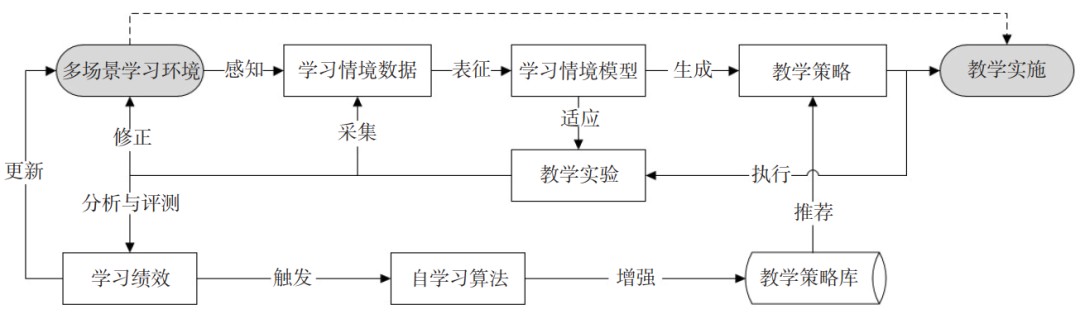 Figure 3. Evolution Model of Learning Environment Computation
1. Verification of Teaching Strategies Based on Teaching Experiments
Teaching experiments are a research method that observes teaching activities under controlled objective conditions for certain teaching research purposes, aiming to explore the causal relationships between certain independent and dependent variables in teaching contexts, providing a basis for teaching innovation (Gu Mingyuan, 1998). Educational experiments generally include steps such as discovering and defining problems, proposing hypotheses, defining variables, formulating experimental plans, controlling interfering variables, selecting experimental design patterns, choosing experimental venues, implementing experimental plans, observing experiments, evaluating experimental results, and writing experimental reports (Wang Cesan, 1998).
The general process of teaching strategy verification is as follows: first, perceive multi-scene learning environments and collect learning context data, representing and modeling to form learning context models; then generate teaching strategies that adapt to contexts and execute them in a verification teaching environment, conducting teaching experiment research; finally, analyze and evaluate learning performance to verify the effectiveness of the generated teaching strategies that adapt to learning contexts, thereby correcting multi-scene learning environments. To achieve the controlled conditions of teaching experiment research more efficiently, modular learning systems have been developed in the industry, such as Moodle (Romero et al., 2008), the Generalized Intelligent Framework for Tutoring (GIFT) (Sottilare et al., 2012), supporting the development of verification teaching environments through combinations of learning activity sequences. However, these products only support single learning contexts and domains, so platforms supporting cross-domain multi-context teaching experiment research are an important direction for future research in learning environment computation.
2. Enhancement of Teaching Strategy Libraries Based on Self-Learning Algorithms
The analysis and assessment of learning performance trigger self-learning algorithms. For verified effective strategies, if it is a new strategy, it is added to the strategy library; otherwise, the corresponding strategy parameters are updated. For invalidated strategies, if it is a new strategy, it is added to the strategy library; otherwise, the validity judgment in the strategy library is modified. Based on teaching experiments, machines enhance the teaching strategy library through self-learning algorithms of teaching strategies, making the recommendation algorithms for adaptive learning contexts based on the teaching strategy library increasingly accurate, providing more scientific decision support for teaching implementation. Learning environment computation involves “humans in the loop” (Monarch, 2021), allowing machines to learn from human expert experiences and continuously evolve, forming a teaching strategy library oriented towards knowledge automation, representing the relationships between teaching strategies, learning contexts, and learning performance, ensuring that teaching strategies that adapt to contexts can facilitate learning. This includes coarse-grained adaptive teaching strategies (e.g., adaptive strategies based on learning styles, cognitive abilities, and knowledge levels), fine-grained adaptive teaching strategies (e.g., adaptive strategies based on knowledge states and emotional states), and teaching strategies that adapt to learning time and space and technological environments (e.g., recommending micro-course resources in mobile learning to enhance learners’ ability to utilize fragmented time).
The evolution model of learning environment computation based on teaching experiments provides a mechanism that allows machines to accumulate massive, long-term data and continuously learn from human expert experiences, making the representation and modeling of learning contexts, generation and recommendation of teaching strategies, and analysis and evaluation of learning performance based on computation and reasoning more precise and adaptive, enabling learning environments to achieve self-adaptive and self-optimizing features for upgrades.
5. Computational Architecture of Learning Environments
The formation of a smart education ecosystem characterized by data-driven, personalized, and contextualized approaches requires the collaboration of numerous intelligent applications and services based on learning environment computation. To open the core functions of learning environment computation in a knowledge service manner while ensuring safety and privacy, supporting the smart education ecosystem, this paper designs the computational architecture of learning environments based on the architecture of intelligent network technology platform (Wang Feiyue et al., 2018). This architecture mainly consists of an environmental perception layer, a connection computing layer, a knowledge reasoning layer, and a teaching service layer, as shown in Figure 4.
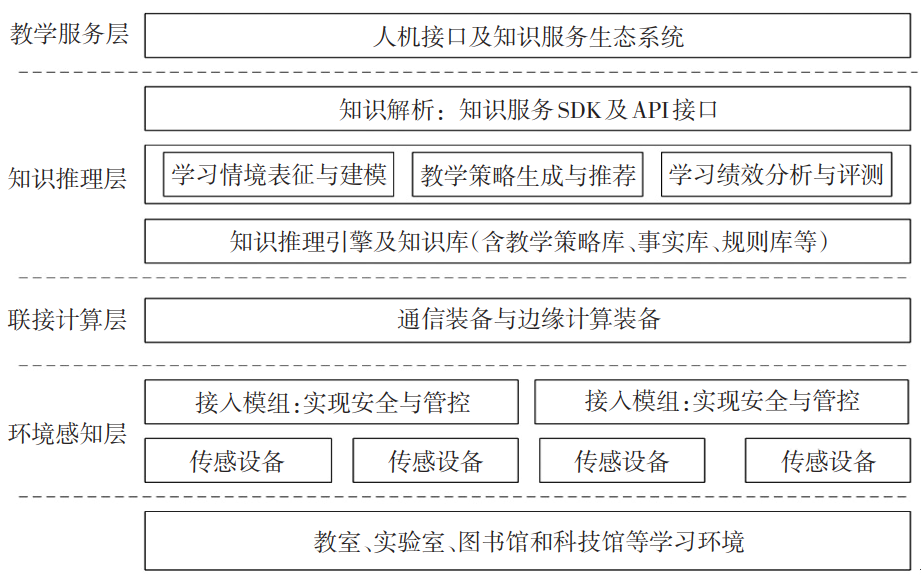 Figure 4. Computational Architecture of Learning Environments
1. Environmental Perception Layer
The environmental perception layer connects various sensing devices to learning environment data, achieving the acquisition of learning context data aimed at learning scenarios in classrooms, laboratories, libraries, and technology venues. The Internet of Things is a key technology for the environmental perception layer. However, the openness, inclusiveness, and anonymity of the Internet of Things also lead to potential information security risks (Sun Qibo et al., 2010). Access modules are modular components that integrate chips, memory, functional interfaces, etc., on circuit boards, capable of performing signal transmission, noise filtering, signal conversion, and other functions, serving as key devices for achieving intelligent connectivity. In the computational architecture of learning environments, access modules primarily ensure the security and control of sensing devices in various learning environments to meet the confidentiality, authenticity, integrity, and non-repudiation of device network connections.
2. Connection Computing Layer
The connection computing layer achieves integrated management of communication equipment and edge computing resources through edge computing gateways, connecting cross-domain learning environments and transforming data from sensing devices into features and patterns required by upper layers, updating learning context information. Edge computing is a key technology for the connection computing layer, which executes computations at the network edge, migrating part or all of the computation tasks of traditional cloud computing centers to be executed near data sources, characterized by low latency, low cost, privacy security, and local autonomy. This can address the issue of cloud computing’s limitations in bandwidth and computational resources, which cannot efficiently process the massive data generated by sensors (Shi Weisong et al., 2017). By processing data and sending features and patterns to upper layer services instead of uploading raw data, it not only saves computational resources but also avoids the leakage of learners’ privacy or sensitive information.
3. Knowledge Reasoning Layer
The knowledge reasoning layer interprets knowledge service requests from upper layers and uses reasoning engines to synthesize expert experiences from knowledge bases, providing adaptive knowledge services for learning contexts, including representation and modeling of learning contexts, generation and recommendation of teaching strategies, and analysis and evaluation of learning performance. Knowledge engineering technology is a key technology for the knowledge reasoning layer. Expert systems use computer models of human expert reasoning to address complex problems in the real world that require expert explanations and arrive at conclusions similar to those of experts. It consists of knowledge bases and knowledge reasoning engines (Zhang Yudong et al., 2010). The knowledge base of learning environment computation includes basic fact bases, rule bases, and teaching strategy bases in education and teaching. The evolution model of learning environment computation utilizes self-learning of teaching strategies based on teaching experiments, endowing this layer with features of knowledge automation and new generation knowledge engineering technology (Wang Feiyue et al., 2017).
4. Teaching Service Layer
The teaching service layer provides services to various educational systems through natural interactive human-machine interfaces, forming a knowledge service ecosystem. Under the collaboration of edge computing and cloud computing, the functions and resources of learning environment computation are opened to the smart education ecosystem in the form of knowledge services. Service computing is the key technology for this layer. Services are not only the basic way to access and amplify the capabilities of various infrastructure (Han Yanbo et al., 2011), but also the fundamental method to expand the applications of learning environment computation. Developers and researchers can invoke human-machine interfaces through the software development kits (SDK) and application programming interfaces (API) of the knowledge reasoning layer, shielding the technical details of learning environment computation, allowing algorithms that require multidisciplinary knowledge and high software development skills to be invoked in a standardized manner, reducing the costs and skills required for the development of intelligent education ecosystem services such as adaptive learning systems, intelligent tutoring systems, and environmental management systems.
The design and research of new learning environments lack standards and tools, especially the implementation of computation and reasoning requires high knowledge and skill thresholds, causing related research to mostly remain at the theoretical level and lack practical validation. The computational architecture of learning environments achieves interconnection and interoperability of heterogeneous networks through the environmental perception layer, connecting intelligent algorithms required by smart learning environments through connection computing and knowledge reasoning in the intermediate layer, and providing standard SDK and API interfaces, while offering knowledge services through natural interactive human-machine interfaces at the top layer, supporting the formation of a smart education ecosystem.
6. Application Examples of Learning Environment Computation
The learning environment computation framework provides a practical top-level design and technical path for the design and optimization of learning environments, supporting the formation of data-driven, personalized, and contextualized smart education ecosystems. The team from the National Engineering Research Center for Internet Education Intelligent Technology and Application has begun engineering the learning environment computation framework. Currently, applications related to “teaching management and assessment” built on the learning environment computation framework have served hundreds of millions of users and have been applied to personal self-study, collaborative learning, classroom lectures, and other learning contexts. Experiments on learning environment computation aimed at motivation stimulation and behavior intervention and those for differentiated teaching have also been conducted.
1. Learning Environment Computation Experiments for Motivation Stimulation and Behavior Intervention
Compared to classroom learning, online learning requires learners to self-regulate their learning processes and maintain motivation to achieve learning goals (Olga Wiberg et al., 2020). Online collaborative learning also requires learners to continuously perceive and monitor their own and their group’s learning status during the collaboration process. Designing online learning environments must particularly consider strategies for motivating learners and intervening in their behaviors. Learning environment computation supports discovering which strategies can more effectively promote learning.
In the online teaching of high school trigonometric functions based on self-regulated learning (SRL), to verify the relationship between motivational design and self-regulated learning intervention teaching strategies and learning performance, four types of teaching strategies and their corresponding online learning environments were constructed through the generation and recommendation of teaching strategies, corresponding to the motivation design group, SRL intervention group, motivation design and SRL intervention group, and control group. 236 first-year high school students were randomly assigned to each group. Through analysis and assessment of learning performance, changes in learners’ motivation, self-learning abilities, and learning achievements were compared, finding that when learners received guidance and intervention in both motivation and self-regulated strategies, their learning performance was the best (Gu et al., 2019). In the design of social regulation learning tools aimed at collaborative learning, to support the social regulation process, learning tasks and plans of learners and learning groups were perceived through representation and modeling of learning contexts; by generating and recommending teaching strategies, a strategy of randomly determining learning partners was adopted, supporting real-time negotiations among group members and viewing completion progress; visualizing collaboration frequency and task progress, and supporting modules for task planning, communication sharing, group perception, and evaluation reflection through self-evaluation and mutual evaluation of learning performance, enhancing the quality of collaborative learning (Chen Kailiang et al., 2020).
2. Learning Environment Computation Experiments for Differentiated Teaching
Differentiated teaching refers to the organization of teaching by dividing students into several groups based on ability and other criteria, with teachers teaching each group according to different levels of coursework (National Science and Technology Terminology Review Committee, 2013). The premise of differentiated teaching is to achieve precise diagnosis of learners’ abilities. This requires constructing a learner ability measurement model, allowing machines to learn the parameters of the model from learners’ learning trajectory data. The implementation of differentiated teaching also accumulates performance data of learners. Mining performance data and updating measurement models can lead to more accurate diagnoses of learners’ abilities, subsequently recommending better differentiated teaching strategies. In the practice of differentiated teaching, the internal structure of learning environments is continuously optimized, while the application scenarios are also expanded.
For instance, to support differentiated teaching for Chinese as a second language learners, it is essential to accurately diagnose learners’ Chinese proficiency. Researchers estimated learners’ language abilities based on their Chinese proficiency test (HSK) scores as initial values and pushed the questions closest to learners’ abilities to them; then, based on learners’ responses, the Item Response Theory (IRT) model was used to update learners’ language abilities until the reliability of the estimated abilities met standards. Experiments showed that this method had a strong correlation with traditional written tests (ρ=0.8715), and the average test length was reduced from 140 to 26, indicating its ability to diagnose learners’ language abilities more quickly and accurately, providing decision-making basis for class division and differentiated teaching (Zhou et al., 2019). This service has also expanded to scenarios such as vocabulary ability assessment for elementary school students in minority areas, with over 2000 elementary school students achieving diagnosis of their Chinese language abilities through this tool.
7. Conclusion
Currently, in the technical ecosystem of learning environments, isolated intelligent technologies have achieved certain results in intelligent learning services. However, when facing the rapidly evolving learning environments of a new generation of learners, how to seamlessly collaborate various intelligent services in learning environments at the intelligent and knowledge levels remains an open question. Looking ahead, if the computation and reasoning models and computational architecture of learning environments can be fully realized, it will have a revolutionary impact on the efficiency and forms of education and teaching. The learning environment computation framework will become an important production tool for promoting educational development in the intelligent era, providing practical technical paths and top-level design support for the design and optimization of socialized and popularized learning environments, and effectively addressing ethical issues related to the application of artificial intelligence in education from a technical perspective, supporting the healthy and orderly transformation of smart education.
Notes:
① “Humans in the loop” is an important component of the new generation artificial intelligence theoretical system, which designs strategies for efficient collaboration between machines and humans to enhance the performance of machines and the efficiency of humans.
② Data source: The elementary school vocabulary testing system for Chinese as a second language developed by the National Engineering Research Center for Internet Education Intelligent Technology and Application and the Institute of Chinese Information Processing (http://aied.bnu.edu.cn/xxszc).
References:[1][Sweden] Olga Wiberg, [Jordan] Mohammed Khalil, [Netherlands] Martini Bass (2020). A Review of Empirical Studies on Self-Regulated Learning and Learning Analytics in Online Learning Environments[J]. Xiao Junhong. China Distance Education, (12):28-41,58,93.[2] Bao Jie, Lu Tao (2012). Modeling and Simulation of Context-Aware Systems Based on Petri Nets[J]. Computer Applications Research, 29(2):621-625.[3] Cai Jing (2010). Research on Skin Conductance Response Signals in Emotion State Recognition[D]. Chongqing: Southwest University.[4] Chen Kailiang, Bao Haogang, Li Yanyan et al. (2020). Design and Application of Social Regulation Learning Tools in Collaborative Contexts[J]. Modern Educational Technology, 30(6):86-92.[5] Du Jing, Gao Bojun, Zhou Wei et al. (2020). Comparative Study of Context-Aware Models in Foreign Adaptive Learning Support Systems[J]. Journal of Distance Education Research, 41(8):58-66.[6] Gu Mingyuan (1998). Encyclopedia of Education[M]. Shanghai: Shanghai Education Press:1710.[7] Han Yanbo, Chen Junliang, Wang Qianxiang (2011). Preface to the Special Issue on Cloud Computing and Service Computing[J]. Journal of Computer Science, 34(12):2251-2252.[8] Hu Bo, Wang Zhixue, Dong Qingchao et al. (2013). Context Knowledge Acquisition and Reasoning Methods Based on Description Logic[J]. Computer Science, 40(4):199-203.[9] Huang Ronghuai (2022). On the Systematic Integration of Technology and Education[J]. China Distance Education, (7):4-12,28.[10] Huang Ronghuai, Chen Geng, Zhang Jinbao et al. (2010). Five Laws on Technology Promoting Learning[J]. Open Education Research, 16(1): 11-19.[11] Huang Ronghuai, Liu Dejian, Liu Xiaolin et al. (2017). The Basic Pattern of Educational Reform Promoted by the Internet[J]. China Educational Technology, (1):7-16.[12] Huang Ronghuai, Wang Huanhuan, Zhang Muhua et al. (2020). Educational Social Experiments for the Intelligent Era[J]. Journal of Distance Education Research, 41(10):5-14.[13] Huang Ronghuai, Yang Junfeng, Hu Yongbin (2012). From Digital Learning Environments to Smart Learning Environments—The Transformation and Trends of Learning Environments[J]. Open Education Research, (1):75-84.[14] Huang Ronghuai, Zhou Wei, Du Jing et al. (2019). Three Basic Computational Problems for Intelligent Education[J]. Open Education Research, 25(5):11-22.[15] Kang Chunhua, Xin Tao (2010). New Developments in Measurement Theory: Multidimensional Item Response Theory[J]. Progress in Psychological Science, 18(3):530-536.[16] Leng Yajun, Lu Qing, Liang Changyong (2014). A Review of Collaborative Filtering Recommendation Technology[J]. Pattern Recognition and Artificial Intelligence, 27(8):720-734.[17] Li Chao, Zhou Hong (2018). Dynamic Analysis and Research of Learning Styles Based on Composite Neural Networks[J]. Computer Engineering and Applications, 54(6):150-155.[18] Li Haojun, Zhang Guang, Wang Wanliang et al. (2017). A Personalized Learning Resource Recommendation Method Based on Multidimensional Feature Differences[J]. Systems Engineering Theory and Practice, 37(11):2995-3005.[19] Li Weiping, Wang Wusheng, Mo Tong et al. (2015). A Review of Contextual Computing Research[J]. Computer Research and Development, 52(2):542-552.[20] Liu Yu, Zhao Yunge (2019). Sentiment Analysis of Short Chinese Texts Based on Teaching Evaluation[J]. Modern Electronic Technology, 42(6):30-33.[21] National Science and Technology Terminology Review Committee (2013). Educational Terminology[EB/OL].[2022-05-01].https://www.termonline.cn/word/65499/1.[22] Shi Weisong, Sun Hui, Cao Jie et al. (2017). Edge Computing: A New Computing Model in the Era of the Internet of Everything[J]. Computer Research and Development, 54(5):907-924.[23] Sun Bo, Liu Yongna, Chen Jiubing et al. (2015). Emotion Analysis Based on Facial Expressions in Smart Learning Environments[J]. Modern Distance Education Research, (2):96-103.[24] Sun Qibo, Liu Jie, Li Shan et al. (2010). The Internet of Things: Concept, Architecture and Key Technologies Research Review[J]. Journal of Beijing University of Posts and Telecommunications, 33(3):1-9.[25] Wang Cesan (1998). Teaching Experiment Theory[M]. Beijing: People’s Education Press: 194.[26] Wang Feiyue, Zhang Jun (2017). Intelligent Network: Concept, Issues and Platforms[J]. Acta Automatica Sinica, 43(12):2061-2070.[27] Wang Feiyue, Zhang Jun, Zhang Jun et al. (2018). Industrial Intelligent Network: Basic Concepts, Key Technologies, and Core Applications[J]. Acta Automatica Sinica, 44(9):1606-1617.[28] Wang Xue (2015). Application of Eye Movement Tracking Experimental Method in Multimedia Learning Research[J]. Laboratory Research and Exploration, 34(3):190-193.[29] Wang Yonggu, Qiu Feiyue, Zhao Jianlong et al. (2011). Research on Personalized Recommendation of Learning Resources Based on Collaborative Filtering Technology[J]. Journal of Distance Education, 29(3):66-71.[30] Yang Chao (2014). Learning Resource Recommendation Method Based on Particle Swarm Optimization Algorithm[J]. Computer Applications, 34(5):1350-1353.[31] Yu Na, Xin Tao (2007). Introduction and Review of Rule Space Models[J]. China Examination (Research Edition), (9):14-19.[32] Zhai Xuesong, Chu Xiaoyan, Zhang Zihui et al. (2021). Research on Digital Governance of Educational Informatization Based on Middle Platform Architecture[J]. Journal of Distance Education Research, 42(6):40-46.[33] Zhang Yudong, Wu Lenan, Wang Shuihua (2010). A Review of Expert System Development[J]. Computer Engineering and Applications, 46(19):43-47.[34] Zhuang Rongxia, Fang Haiguang, Zhang Ying et al. (2017). Analysis of Development Characteristics of Urban Typical Domain Learning Environments[J]. Journal of Distance Education Research, 38(2):82-90.[35] Zou Ping, Zhang Hua, Ma Kaidi et al. (2020). Research on Perception Access and Intelligent Gateway Technology for Manufacturing Resources Based on Edge Computing[J]. Computer Integrated Manufacturing Systems, 26(1):40-48.[36] Ackerman, T. A., Gierl, M. J., & Walker, C. M. (2010). Using Multidimensional Item Response Theory to Evaluate Educational and Psychological Tests[J]. Educational Measurement Issues & Practice, 22(3):37-51.[37] Almekhlafi, A. G. (2006). The Effect of Computer Assisted Language Learning (CALL) on United Arab Emirates English as a Foreign Language (EFL) School Students’ Achievement and Attitude[J]. Journal of Interactive Learning Research, 17(2):121-142.[38] Baker, F. B. (2001). The Basics of Item Response Theory[M]. Portsmouth: Heinemann:1-3.[39] Baker, R. S., Martin, T., & Rossi, L. M. (2016). Educational Data Mining and Learning Analytics[M]// Rupp, A. A., & Leighton J. P. The Wiley Handbook of Cognition and Assessment: Frameworks, Methodologies, and Applications. New Jersey: Wiley:379-396.[40] Baltrušaitis, T., Robinson, P., & Morency, L. P. (2016). Openface: An Open Source Facial Behavior Analysis Toolkit[C]//Proceedings of the 2016 IEEE Winter Conference on Applications of Computer Vision (WACV). IEEE:1-10.[41] Bohus, D., Andrist, S., & Feniello, A. et al. (2021). Platform for Situated Intelligence[EB/OL]. [2022-05-08]. https://arxiv.org/pdf/2103.15975.pdf.[42] Cha, H. J., Kim, Y. S., & Park, S. H. et al. (2006). Learning Styles Diagnosis Based on User Interface Behaviors for the Customization of Learning Interfaces in an Intelligent Tutoring System[C]// Proceedings of the International Conference on Intelligent Tutoring Systems. Springer, Berlin, Heidelberg:513-524.[43] Corbett, A. T., & Anderson, J. R. (1994). Knowledge Tracing: Modeling the Acquisition of Procedural Knowledge[J]. User Modeling and User-Adapted Interaction, 4(4):253-278.[44] De-Marcos, L., Pagés, C., & Martinez, J. J. et al. (2007). Competency-Based Learning Object Sequencing Using Particle Swarms[C]// Proceedings of the 19th IEEE International Conference on Tools with Artificial Intelligence (ICTAI 2007) (Vol. 2). IEEE:111-116.[45] Felder, R. M., & Spurlin, J. (2005). Applications, Reliability and Validity of the Index of Learning Styles[J]. International Journal of Engineering Education, 21(1):103-112.[46] Garcia, P., Amandi, A., & Schiaffino, S. et al. (2007). Evaluating Bayesian Networks’ Precision for Detecting Students’ Learning Styles[J]. Computers & Education, 49(3):794-808.[47] Gu, P., & Lee, Y. (2019). Promoting Students’Motivation and Use of SRL Strategies in the Web-Based Mathematics Learning Environment[J]. Journal of Educational Technology Systems, 47(3):391-410.[48] Huang, M., Huang, H., & Chen, M. (2007). Constructing a Personalized E-Learning System Based on Genetic Algorithm and Case-Based Reasoning Approach[J]. Expert Systems with Applications, 33(3):551-564.[49] Iglesias, A., Martínez, P., & Aler, R. et al. (2009). Learning Teaching Strategies in an Adaptive and Intelligent Educational System Through Reinforcement Learning[J]. Applied Intelligence, 31(1):89-106.[50] Ketamo, H. (2003). xTask-An Adaptable Learning Environment[J]. Journal of Computer Assisted Learning, 19(3):360-370.[51] Kobsa, A. (2005). User Modeling and User-Adapted Interaction[J]. User Modeling and User-Adapted Interaction, 15(1):185-190.[52] Kumar, B. A., & Sharma, B. (2020). Context Aware Mobile Learning Application Development: A Systematic Literature Review[J]. Education and Information Technologies, 25(3): 2221-2239.[53] Lang, C., Siemens, G., & Wise, A. et al. (2017). Handbook of Learning Analytics[M]. New York: SOLAR, Society for Learning Analytics and Research:61-160.[54] Lemire, D., Boley, H., & McGrath, S. et al. (2005). Collaborative Filtering and Inference Rules for Context-Aware Learning Object Recommendation[J]. Interactive Technology and Smart Education, 2(3):179-188.[55] Li, W., Chu, W., & Tung, F. et al. (2010). A Uniform Device Information Access for Context-Aware Middleware[C]// Proceedings of the 2010 IEEE International Conference on Web Services (ICWS). IEEE:654-657.[56] Liu, Y., Liu, Q., & Wu, R. et al. (2016). Collaborative Learning Team Formation: A Cognitive Modeling Perspective[C]// Proceedings of the International Conference on Database Systems for Advanced Applications. Springer, Cham:383-400.[57] Milrad, M., Perez, J., & Hoppe, U. (2002). C-Notes: Designing a Mobile and Wireless Application to Support Collaborative Knowledge Building[C]// Proceedings of the IEEE International Workshop on Wireless and Mobile Technologies in Education. IEEE:117-120.[58] Monarch, R. M. (2021). Human-in-the-Loop Machine Learning: Active Learning and Annotation For Human-Centered AI[M]. New York: Simon and Schuster:1-20.[59] Poria, S., Cambria, E., & Hussain, A. et al. (2015). Towards an Intelligent Framework for Multimodal Affective Data Analysis[J]. Neural Netw, 63:104-116.[60] Romero, C., Ventura, S., & García, E. (2008). Data Mining in Course Management Systems: Moodle Case Study and Tutorial[J]. Computers & Education, 51(1):368-384.[61] Sarwar, S., Qayyum, Z. U., & García-Castro, R. et al. (2019). Ontology Based E-Learning Framework: A Personalized, Adaptive and Context Aware Model[J]. Multimedia Tools and Applications, 78(24):34745-34771.[62] Schilit, B., Adams, N., & Want, R. (1994). Context-Aware Computing Applications[C]// Proceedings of the 1994 First Workshop On Mobile Computing Systems and Applications. IEEE:85-90.[63] Sottilare, R. A., Brawner, K. W., & Goldberg, B. S. et al. (2012). The Generalized Intelligent Framework for Tutoring (GIFT)[EB/OL]. [2022-05-01]. https://www.researchgate.net/profile/Robert-Sottilare/publication/6_The_Generalized_Intelligent_Framework_for_Tutoring_GIFT/links/5442b1ee0cf2a6a049a89e85/The-Generalized-Intelligent-Framework-for-Tutoring-GIFT.pdf.[64] Soute, I., Markopoulos, P., & Magielse, R. (2010). Head Up Games: Combining the Best of Both Worlds by Merging Traditional and Digital Play[J]. Personal & Ubiquitous Computing, 14(5):435-444.[65] Wang, T., Wang, K., & Huang, Y. (2008). Using a Style-Based Ant Colony System for Adaptive Learning[J]. Expert Systems with Applications, 34(4):2449-2464.[66] Xu, C., & Cheung, S. (2005). Inconsistency Detection and Resolution for Context-Aware Middleware Support[J]. ACM SIGSOFT Software Engineering Notes, 30(5):336-345.[67] Yatani, K., Onuma, M., & Sugimoto, M. et al. (2010). Musex: A System for Supporting Children’s Collaborative Learning in a Museum with PDAs[J]. Systems & Computers in Japan, 35(14):54-63.[68] Zhou, W., Hu, R., & Sun, F. et al. (2019). An Intelligent Testing Strategy for Vocabulary Assessment of Chinese Second Language Learners[C]// Proceedings of the Fourteenth Workshop on Innovative Use of NLP for Building Educational Applications. Florence: Association for Computational Linguistics:21-29. Author Profiles:Zhou Wei, PhD candidate, National Engineering Research Center for Internet Education Intelligent Technology and Application, Beijing Normal University (Beijing 100875); Du Jing, PhD, Assistant Researcher, National Engineering Research Center for Internet Education Intelligent Technology and Application, Beijing Normal University (Beijing 100875); Wang Yan, Associate Researcher, Sichuan Open University (Chengdu, Sichuan 610073); Liu Jiahao, Master’s candidate, National Engineering Research Center for Internet Education Intelligent Technology and Application, Beijing Normal University (Beijing 100875); Huang Ronghuai (Corresponding Author), PhD, Professor, Doctoral Supervisor, National Engineering Research Center for Internet Education Intelligent Technology and Application, Beijing Normal University (Beijing 100875).
Funding Projects:National Education Science “13th Five-Year Plan” 2019 Annual National Key Project “Research on Artificial Intelligence and Future Education Development” (ACA190006).
Citation: Zhou Wei, Du Jing, Wang Yan, Liu Jiahao, Huang Ronghuai (2022). Computational Framework for Smart Education Learning Environments[J]. Modern Distance Education Research, 34(5):91-100.
Source: Modern Distance Education Research
Previous Issues Recommended
1. Promoting Systematic Integration of Technology and Education, Building a New Ecosystem of Smart Education—The 2022 Global Smart Education Conference Opens in Beijing
2. The National Smart Education Strategy Joint Research Program Releases Research Results and Initiates a Global Smart Education Cooperation Alliance
3. [PPT] Zhong Binglin: Actively Responding to New Challenges in Educational Digital Transformation丨2022 Global Smart Education Conference
4. [PPT] Academician Zhang Jingzhong: In-Depth Intelligent Mathematics Education Technology丨2022 Global Smart Education Conference
5. Chen Li: How to Effectively Implement the “Overall Plan for Deepening the Reform of Education Evaluation in the New Era”丨2022 Global Smart Education Conference
6. [PPT] Wang Jixin: How to Improve the Quality of Rural Education丨2022 Global Smart Education Conference
7. Zheng Qinghua: The Fourth Industrial Revolution and Educational Innovation丨2022 Global Smart Education Conference
8. [Report] Hybrid Education, Learning, and Evaluation Guidance Framework (PDF Download Available)
9. [Report] The First Global Basic Education Artificial Intelligence Curriculum Report Released
10. [Report] Digital Education Survey for Primary and Secondary Schools: Urban-Rural Case Studies
11. Huang Ronghuai: Promoting Deep Integration of Technology and Education
12. Yang Zongkai: Leveraging the Role of the National Smart Education Platform