Table of Contents | 2024 Issue 3 Special Topic: 6G Integrated Sensing and Communication
Discussion on the Application of Integrated Communication, Sensing, and Computing in the Internet of Vehicles
Immersive XR Practices and Prospects Based on 6G Integrated Sensing and Communication
Key Technologies for Integrated Sensing and Communication in 3D Transportation Systems
Exploration of 6G Integrated Sensing and Computing Architecture and Scenario Empowerment
Wireless Resource Management Under Deep Integration of Communication, Sensing, Computing, and Storage
Integrated Communication, Sensing, and Computing for Edge Intelligent Networks: Architecture, Challenges, and Prospects
Cloud-Edge-End Integrated Communication and Sensing Architecture Based on Placement Distribution Arrays
System-Level Performance Simulation Evaluation of Communication and Sensing Integration Based on NR
RIS-Assisted Integrated Sensing and Communication: Joint Design of Beamforming and Reflection Phase Shift
Frequency-Doppler Multiplexed Communication Sensing Integrated Waveform
Research on Edge Intelligent Sensing Model Optimization Methods for Airborne Federated Learning
Dynamic Topology-Based UAV Network Computing Task Offloading Method
3D Joint Positioning for Integrated Communication and Sensing Systems
Design of Non-Uniform Sensing Signals for Integrated Sensing and Communication
Terahertz Sensing Cooperative Mobile Communication Methods and Performance Evaluation Paradigms
Design of Integrated Sensing and Communication Protocol Based on Network-Assisted Full-Duplex Non-Cellular Systems
“Mobile Communications” 2024 Issue 3
17【6G Integrated Sensing and Communication】 Special Topic
Performance Analysis and Rate Region Characterization of Uplink Cooperative Sensing, Communication and Computation
Yang Junyi, Fu Yuchuan, Li Changle
(National Key Laboratory of Integrated Business Network, Xi’an University of Electronic Science and Technology, Xi’an, Shaanxi 710071)
【Abstract】This paper analyzes the performance of integrated communication, sensing, and computation in the Internet of Vehicles scenario. For the uplink of Integrated Sensing and Communication (ISAC), communication and rate (CMR) and sensing rate (SR) are evaluated by analyzing the diversity order and the high Signal-to-Noise Ratio (SNR) slope, while the general forms of CMR, SR, and Computation and Rate (CPR) are derived. In addition, the achievable uplink CMR-SR-CPR region is characterized. Simulation results indicate that the integration of communication, sensing, and computation can provide higher gains for CMR, SR, and CPR compared to traditional frequency division communication and sensing systems.
【Keywords】Internet of Vehicles; Performance Analysis; Integrated Sensing and Communication; Mobile Edge Computing; Rate Region
doi:10.3969/j.issn.1006-1010.20240124-0001
Classification Number: TN929.5 Document Mark Code: A
Article Number: 1006-1010(2024)03-0121-04
Citation Format: Yang Junyi, Fu Yuchuan, Li Changle. Performance Analysis and Rate Region Characterization of Uplink Cooperative Sensing, Communication and Computation[J]. Mobile Communications, 2024,48(3): 121-124.
YANG Junyi, FU Yuchuan, LI Changle. Performance Analysis and Rate Region Characterization of Uplink Cooperative Sensing, Communication and Computation[J]. Mobile Communications, 2024,48(3): 121-124.

0 Introduction
The traditional communication, sensing, and computing systems in the Internet of Vehicles (IoV) cannot meet the requirements of autonomous driving for precise sensing, extremely low latency, and highly reliable transmission and processing[1]. With the development of artificial intelligence and 6G technology in recent years, the integration of communication, sensing, and computation (ISCC) in the IoV is becoming a trend and is of great significance for the development of intelligent transportation systems. Thanks to the latest advances in signal processing and computing nanotechnology, Mobile Edge Computing (MEC) collaborative ISAC technology will be a promising approach to achieving ISCC[2-3]. ISAC allows sensing and communication (S&C) to share the same time, frequency, power, and hardware resources. Compared to Frequency-Division Sensing and Communication (FDSAC), ISAC does not require separate frequency bands and hardware infrastructure, making it more efficient in terms of spectrum, energy, and hardware[4-5]. On the other hand, MEC can significantly reduce computation offloading latency by bringing computing power closer to distributed devices in wireless infrastructure[6-7]. To meet the extremely high performance requirements of autonomous driving, such as ultra-low latency, high reliability, and higher transmission rates, future IoVs should gradually enhance the degree of integration of communication, sensing, and computation[8].
Currently, most research in the ISAC field focuses on waveform or beamforming design. In contrast, there is limited work on the fundamental performance analysis of ISAC systems. Reference [9] provides a comprehensive review of the research progress on the basic limits of ISAC. It first proposes a system-level classification method for traditional radio sensing (such as radar sensing and wireless positioning) and ISAC, summarizes the main performance metrics and limits used in sensing, communication, and ISAC, and finally introduces the latest research progress on various fundamental limits. Reference [10] considers a point-to-point (P2P) ISAC model under vector Gaussian channels and proposes using the CRB-rate region as a fundamental tool to describe the basic S&C trade-offs, particularly describing the S&C performance at the two corner points of the CRB-rate region, and provides an outer boundary and various inner boundaries for the achievable CRB-rate region along with reachable strategies. The research reveals the dual trade-offs in ISAC systems, consisting of the subspace trade-off (ST) dependent on resource allocation and data modulation schemes used for S&C and the deterministic-random trade-off (DRT). Reference [11] discusses the performance trade-offs of communication and sensing in ISAC systems with a single communication user (CU) from the perspective of estimation theory using the CRB metric for radar sensing and the minimum mean square error metric for communication. From the information perspective, the S&C performance of ISAC systems is evaluated by the sensing rate and communication rate, which can be used to assess the theoretical limits on how much environmental or data information can be recovered. Reference [12] characterizes the communication-sensing rate (SR-CR) region achieved in single CU ISAC systems from an information theory perspective. Reference [13] optimizes the weighted sum of communication rate and sensing rate in downlink MIMO-ISAC systems with a single communication user terminal (UT). This work focuses more on dual-functional S&C (DFSAC) precoding design without considering the impact of channel fading and multi-user interference and neglects discussions on the fundamental performance of ISAC systems, such as diversity order and high SNR slope. Furthermore, Reference [14] extends Yuan et al.’s work to multi-user scenarios and discusses the high SNR slopes of communication rate and sensing rate as well as the inner boundaries of the SR-CR region.
All of these works discuss the main features of ISAC and analyze its performance from an information theory perspective. Typical information theory performance metrics for ISAC include estimation or sensing rate for radar sensing and communication rate, which can be used to allocate various resources in the IoV. However, existing work integrates communication and sensing without considering the heterogeneous computing capabilities in IoV systems. To promote the integration of communication, sensing, and computation in IoV, it is necessary to weigh the performance relationships between them and the inherent conflicts among the three. Therefore, this paper considers the MEC-assisted ISAC paradigm and analyzes the fundamental performance of the integration of communication, sensing, and computation. Since the computation results in the downlink are usually small, the feedback process of computation results is generally ignored for ease of analysis[15]. Thus, this paper focuses on the uplink. First, the composition of the entire ISAC system and the specific scenario description are introduced, then the general forms of communication and rate, sensing rate, and computation and rate are derived from an information theory perspective, along with approximate expressions for communication and rate and sensing rate under high SNR. Finally, the performance of the proposed scheme is verified through comparative simulations.
1 System Description
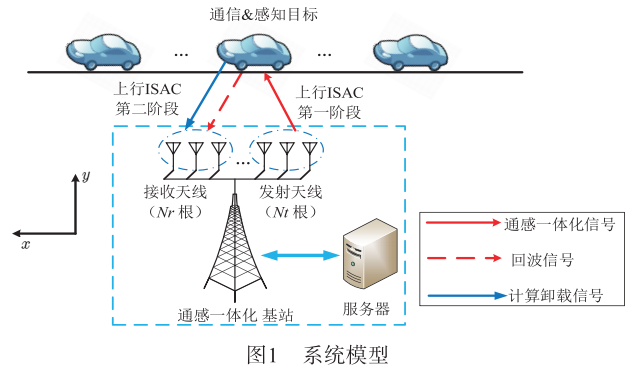
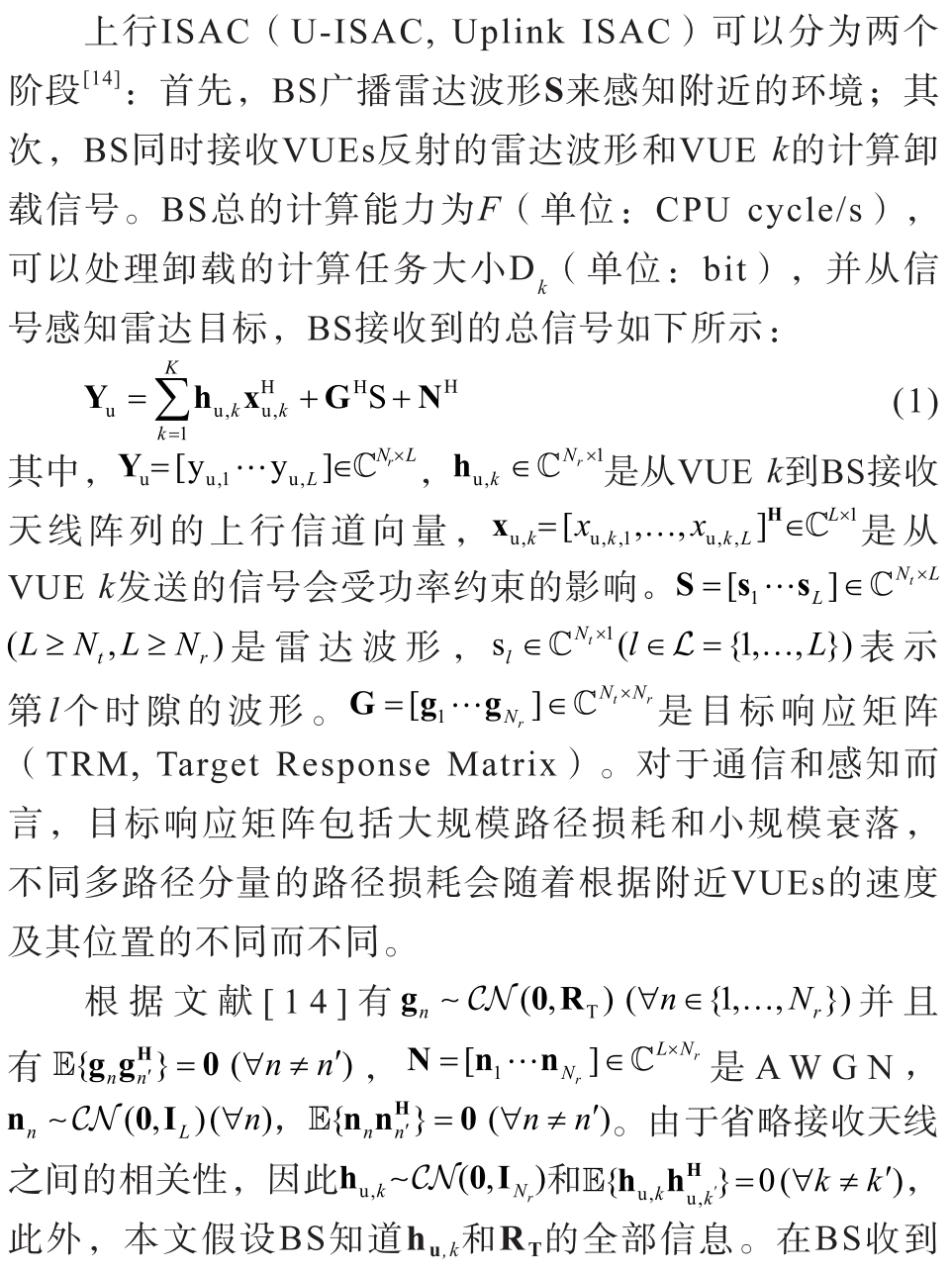
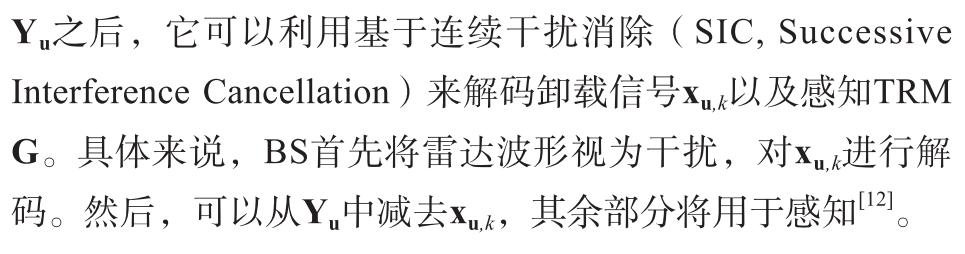
As shown in Figure 1, an ISAC base station serves K single-antenna vehicle user devices (VUEs) while sensing the surrounding environment to determine the positions and velocities of the VUEs. The BS is equipped with two spatially widely separated antenna arrays, with Nt (Nt ≥K) transmitting antennas and Nr (Nr ≥K) receiving antennas, structured as shown in Figure 1. This paper considers the structure of MIMO radar, where the receiving antennas are widely separated[16]. In this case, the spatial correlation between receiving antennas can be ignored[16].
2 Performance Analysis
2.1 Communication Performance
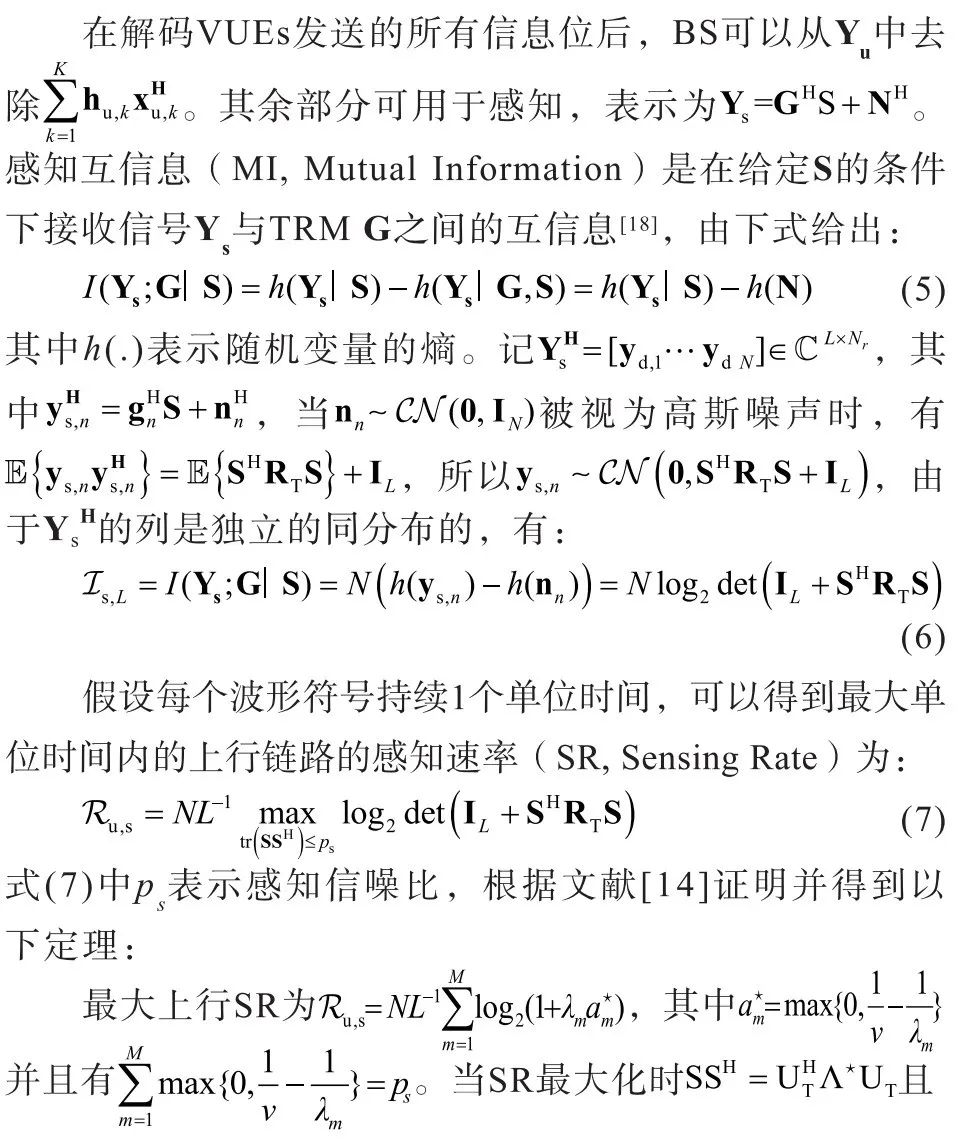
2.2 Sensing Performance

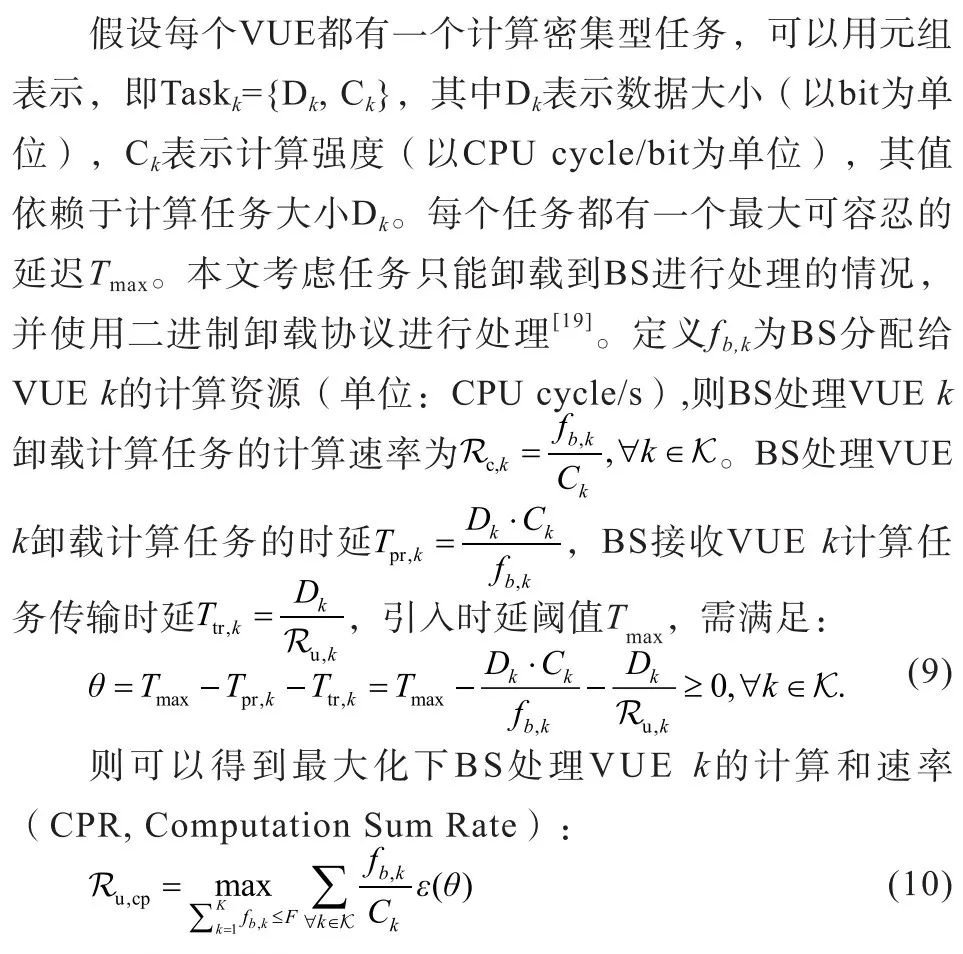
2.3 Computation Performance
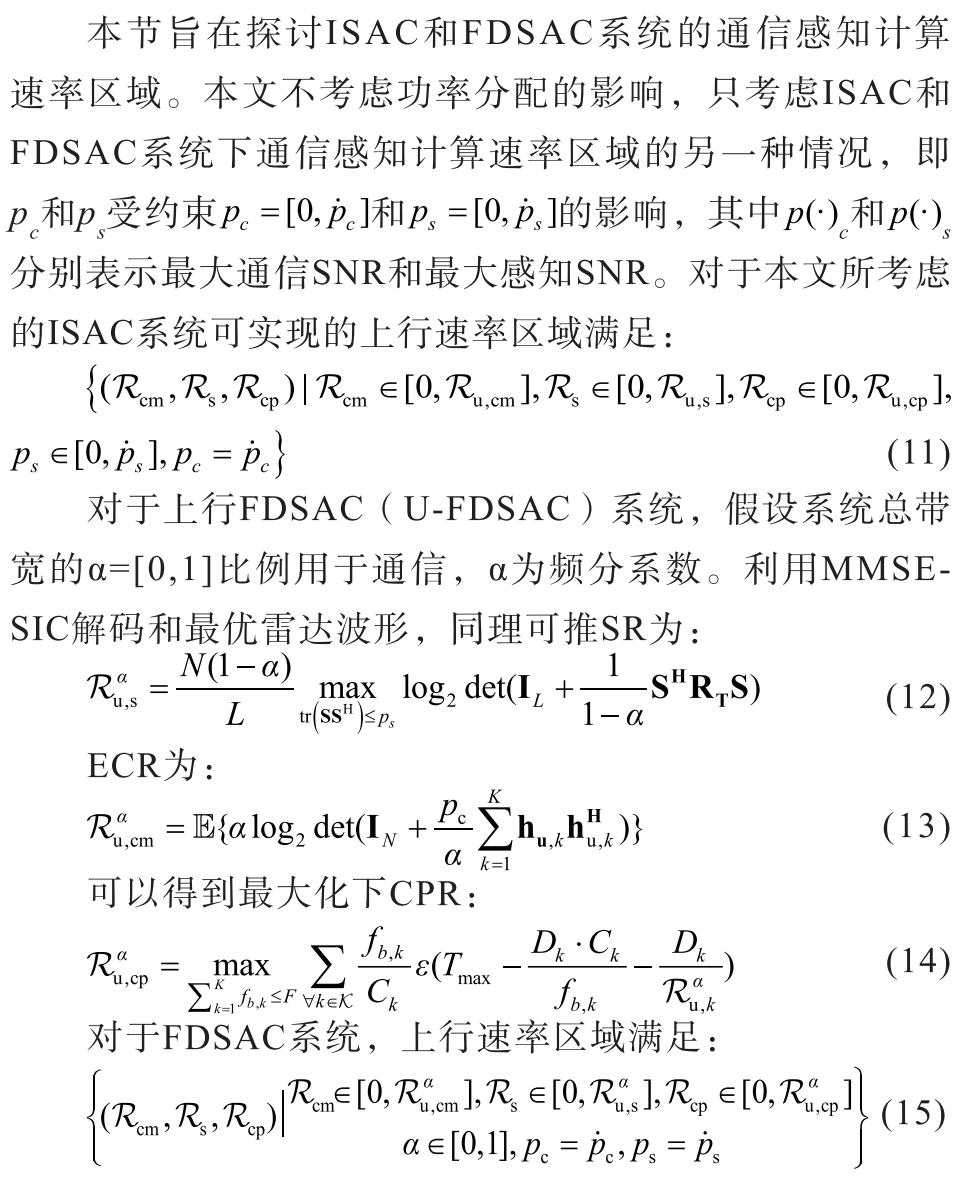
2.4 Rate Region Characterization
3 Simulation and Result Analysis
This section consists of two parts: the first part introduces the simulation settings, and the second part analyzes the performance.
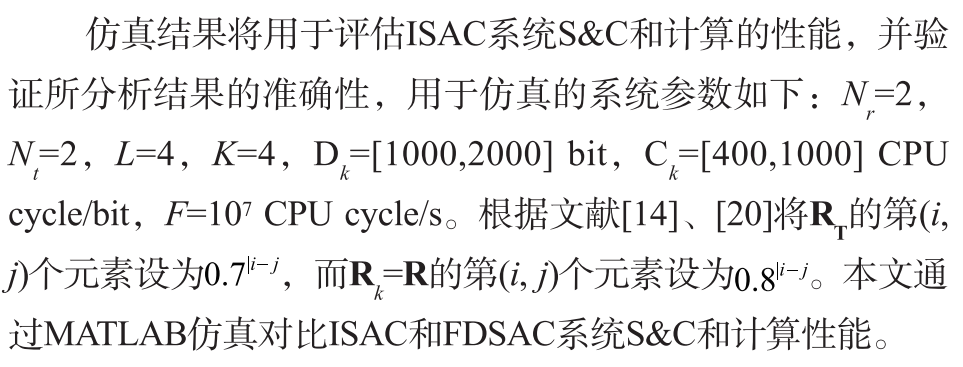
3.1 Simulation Settings
3.2 Simulation Result Analysis
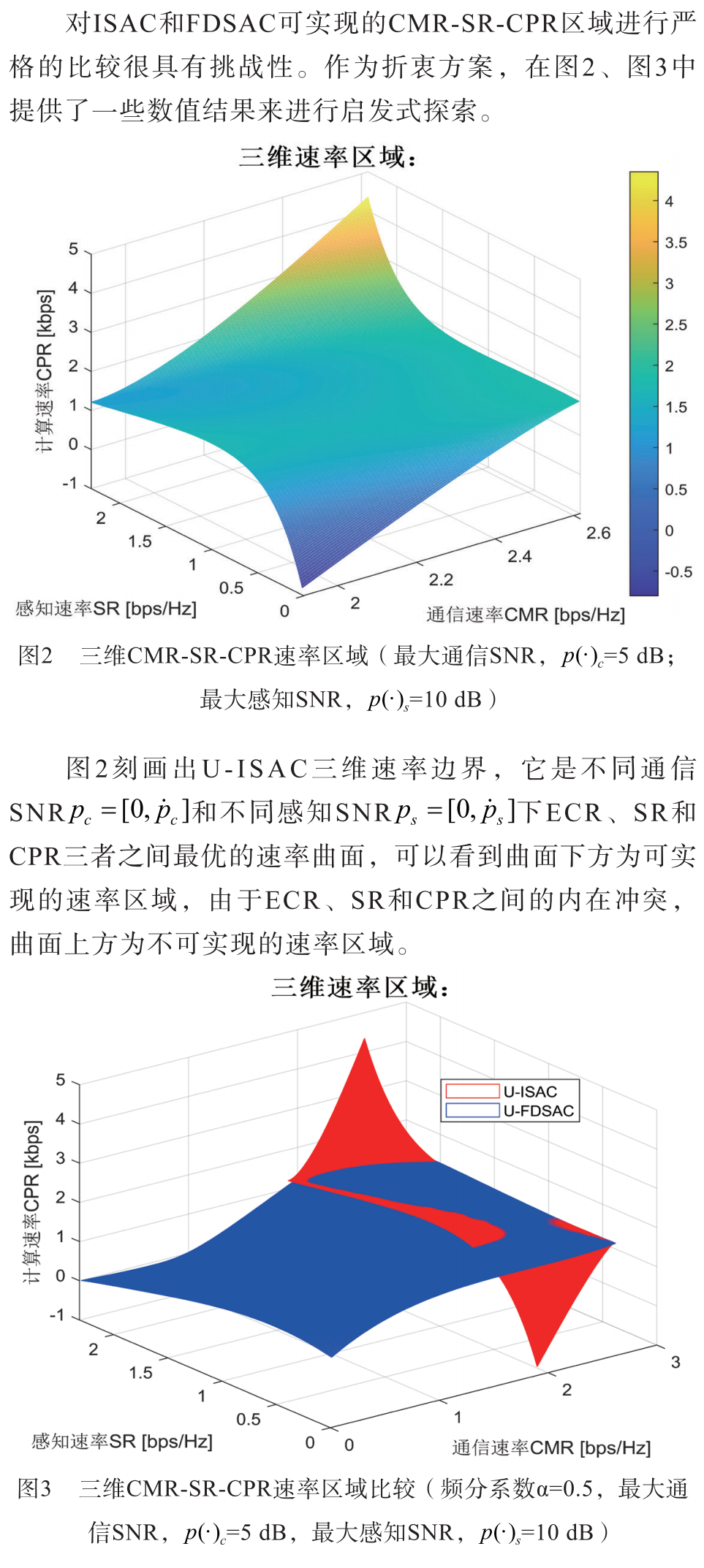
4 Conclusion
This paper analyzes the system performance of the integration of uplink communication, sensing, and computation in the Internet of Vehicles scenario, while deriving the general forms of CMR, SR, and CPR to describe ECR, SR, CPR, and the three-dimensional CMR-SR-CPR rate region. Simulation results indicate that the integration of communication, sensing, and computation can provide higher gains for CMR, SR, and CPR compared to traditional frequency division communication and sensing systems. Future work will further explore the performance of downlink and the impact of vehicle mobility on system performance.
References:(Scroll to browse)
[1] Ma Zhonggui, Li Zhuo, Liang Yanpeng. A Review and Prospect of Integrated Sensing, Communication, and Computation in Autonomous Driving IoV[J]. Journal of Engineering Science, 2023,45(1): 137-149.
[2] Zhao L, Wu D, Zhou L, et al. Radio Resource Allocation for Integrated Sensing, Communication, and Computation Networks[J]. IEEE Transactions on Wireless Communications, 2022,21(10): 8675-8687.
[3] Ding C, Wang J-B, Zhang H, et al. Joint MIMO Precoding and Computation Resource Allocation for Dual-Function Radar and Communication Systems With Mobile Edge Computing[J]. IEEE Journal on Selected Areas in Communications, 2022,40(7): 2085-2102.
[4] Liu F, Masouros C, Petropulu A P, et al. Joint radar and communication design: Applications, state-of-the-art, and the road ahead[J]. IEEE Trans. Commun., 2020,68(6): 3834-3862.
[5] Cui Y, Liu F, Jing X, et al. Integrating sensing and communications for ubiquitous IoT: Applications, trends, and challenges[J]. IEEE Network, 2021,35(5): 158-167.
[6] Qiu T, Chi J, Zhou X, et al. Edge computing in industrial Internet of Things: Architecture, advances and challenges[J]. IEEE Commun. Surveys Tuts., 2020,22(4): 2462-2488.
[7] Wang J, Liu K, Li B, et al. Delay-sensitive multi-period computation offloading with reliability guarantees in fog networks[J]. IEEE Trans. Mobile Comput., 2020,19(9): 2062-2075.
[8] Dong Mengyuan, Fu Yuchuan, Niu Xiaojian. Integrated Sensing and Communication in 6G IoV: Current Status and Challenges[J]. Radio Communication Technology, 2023,49(1): 37-45.
[9] Liu F, Cui Y, Masouros C, et al. Integrated sensing and communications: Toward dual-functional wireless networks for 6G and beyond[J]. IEEE journal on selected areas in communications, 2022,40(6): 1728-1767.
[10] Xiong Y, Liu F, Cui Y, et al. On the Fundamental Tradeoff of Integrated Sensing and Communications Under Gaussian Channels[J]. IEEE Transactions on Information Theory, 2023,69(9): 5723-5751.
[11] Kumari P. Adaptive virtual waveform design for millimeter-wave joint communication-radar[J]. IEEE Trans. Signal Process., 2020,68(2): 715-730.
[12] Chiriyath A R. Inner bounds on performance of radar and communications co-existence[J]. IEEE Trans. Signal Process., 2016,64(2): 464-474.
[13] Yuan X. Spatio-Temporal Power Optimization for MIMO Joint Communication and Radio Sensing Systems With Training Overhead[J]. IEEE Transactions on Vehicular Technology, 2021,70(1): 514-528.
[14] Ouyang C, Liu Y, Yang H. Performance of Downlink and Uplink Integrated Sensing and Communications (ISAC) Systems[J]. IEEE Wireless Communications Letters, 2022,11(9): 1850-1854.
[15] Du J, Zhao L, Feng J, et al. Computation offloading and resource allocation in mixed fog/cloud computing systems with min-max fairness guarantee[J]. IEEE Trans. Commun., 2018,66(4): 1594-1608.
[16] Tang B, Li J. Spectrally constrained MIMO radar waveform design based on mutual information[J]. IEEE Trans. Signal Process, 2019,67(3): 821-834.
[17] Heath Jr R W, Lozano A. Foundation MIMO Communication. Cambridge, U.K.: Cambridge Univ. Press, 2018.
[18] Yang Y, Blum R S. MIMO radar waveform design based on mutual information and minimum mean-square error estimation[J]. IEEE Trans. Aerosp. Electron. Syst., 2007,43(1): 330-343.
[19] Mao Y, You C, Zhang J, et al. A survey on mobile edge computing: The communication perspective[J]. IEEE Commun. Surveys Tuts., 2017,19(4): 2322-2358.
[20] Ouyang C, Liu Y, Yang H. On the Performance of Uplink ISAC Systems[J]. IEEE Communications Letters, 2022,26(8): 1769-1773. ★
Scan the QR code to read and download this paperon the Knowledge Network

★Original article published in “Mobile Communications”2024 Issue 3★
doi:10.3969/j.issn.1006-1010.20240124-0001
Classification Number: TN929.5 Document Mark Code: A
Article Number: 1006-1010(2024)03-0121-04
Citation Format: Yang Junyi, Fu Yuchuan, Li Changle. Performance Analysis and Rate Region Characterization of Uplink Cooperative Sensing, Communication and Computation[J]. Mobile Communications, 2024,48(3): 121-124.
YANG Junyi, FU Yuchuan, LI Changle. Performance Analysis and Rate Region Characterization of Uplink Cooperative Sensing, Communication and Computation[J]. Mobile Communications, 2024,48(3): 121-124.
 Author BiographyYang Junyi:Master’s student at Xi’an University of Electronic Science and Technology, research direction in integrated communication, sensing, and computation in the Internet of Vehicles.Fu Yuchuan:Currently an associate professor and master’s supervisor at Xi’an University of Electronic Science and Technology, research direction in IoV, intelligent driving, etc.Li Changle:Currently a professor and doctoral supervisor at Xi’an University of Electronic Science and Technology, research direction in 6G and future intelligent wireless networks, IoV, and autonomous driving technology.
Submission method for “Mobile Communications” is online submission
Please log in to the web submission system
Link address:http://ydtx.cbpt.cnki.net
 Highlights【2024 Special Call for Papers–Issue 7】Endogenous Intelligent Technology for 6G【2024 Special Call for Papers–Issue 8】Integration of 6G and AI【2024 Special Call for Papers–Issue 9】Integrated Networks of Air, Land, and SeaTable of Contents | 2024 Issue 4 Special Topic: RIS-Assisted Integrated Sensing and Communication Table of Contents | 2024 Issue 3 Special Topic:6G Integrated Sensing and CommunicationTable of Contents | 2024 Issue 2 Special Topic:Semiotic CommunicationTable of Contents | 2024 Issue 1 Special Topic: Technologies for Integrated Satellite-Ground Networks Aimed at 6G
 #Scan to follow us#《移动通信》Interpreting Communication with Papers
“Mobile Communications” magazine is supervised by China Electronics Technology Group Corporation and hosted by the Seventh Research Institute of China Electronics Technology Group Corporation. It is a “dual-effect journal” of the Chinese journal matrix, a high-quality electronic journal of the Ministry of Industry and Information Technology, a source journal of Chinese scientific and technological papers statistics, a journal included in the high-quality scientific journal grading directory of the China Communication Society, and a journal included in the high-quality scientific journal grading directory of the China Electronics Society. Domestic continuous publication number: CN44-1301/TN, International Standard Serial Number: ISSN1006-1010, Postal delivery code: 46-181.