
C Language Learning
Assessment Successfully Completed


To solidify the professional foundation of the members and assess the effectiveness of the month-long intensive C language study, on November 21, the Development Department of the Software College at Taiyuan University of Technology organized a C language learning assessment, which was successfully completed under the coordination of the department head with the participation of all department members.

After the recruitment work of the new semester’s Science and Technology Association, the Development Department carefully formulated a month-long systematic C language learning plan based on the department’s development needs and the members’ capabilities. During the learning process, the department implemented a “weekly plan + weekly tasks + weekly feedback” closed-loop management model, clearly defining the learning themes and core objectives each week. For example, the first week focused on basic syntax such as numerical operations and control structures, the second week delved into pointer operations and string handling, the third week concentrated on memory management and structure applications, and the fourth week involved developing a contact management system to apply theoretical knowledge. Members were required to submit weekly learning reports containing code implementations, running screenshots, and study notes, which were reviewed by department leaders who provided feedback for improvement. Through a multi-faceted approach of “theoretical self-study + case discussions + hands-on coding + precise feedback,” members were guided to gradually master the core content of C language syntax rules, data structures, and function design, helping them quickly build a programming knowledge framework and laying a solid foundation for further learning in front-end and back-end development.
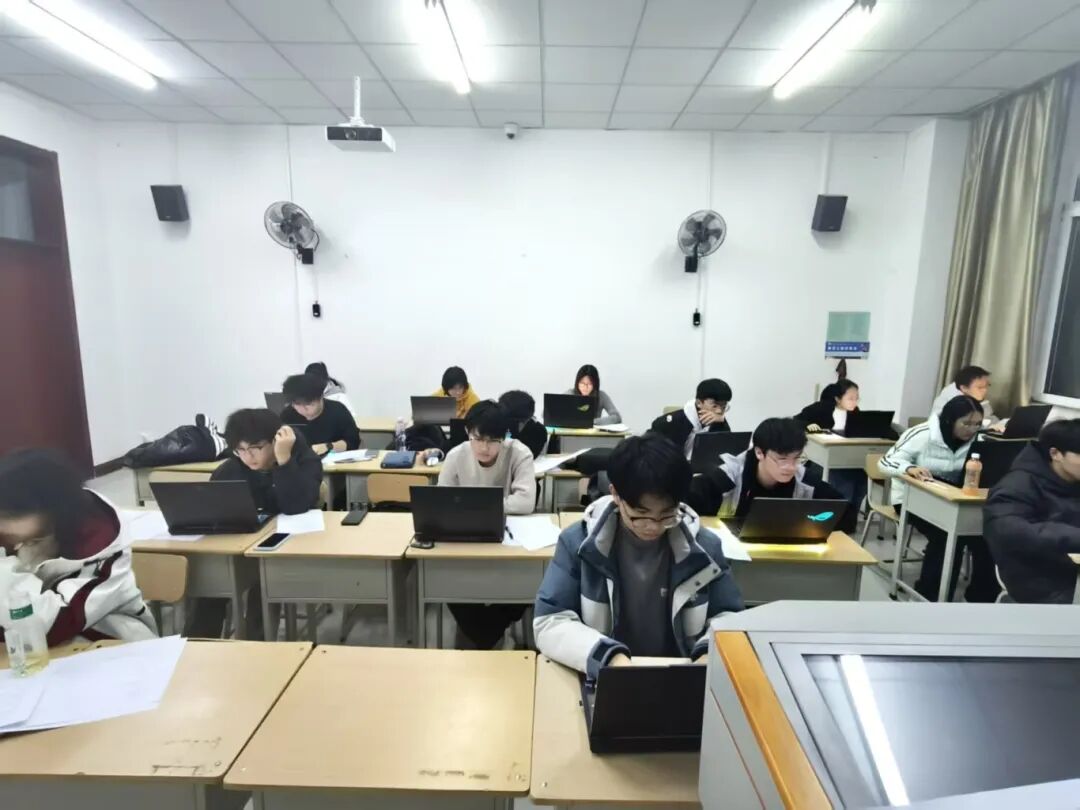
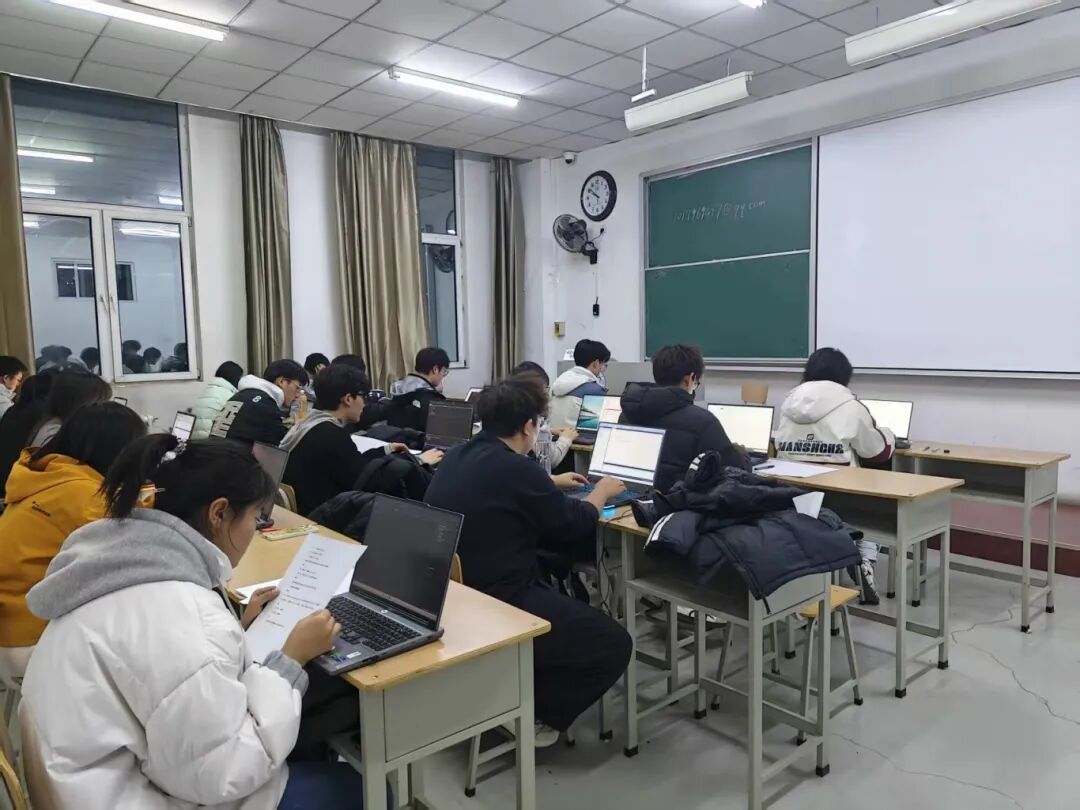
November 21 evening C language assessment scene
With the conclusion of the intensive learning phase, to comprehensively understand the learning situation of the members, the department leaders carefully prepared the C language assessment paper, which covered both basic knowledge points and practical application abilities, including key modules such as variable definitions, loop structures, array operations, and pointer usage. The assessment focused on evaluating members’ coding, logical analysis, and problem-solving abilities. During the assessment on the evening of November 21, members answered calmly and carefully reviewed the questions, strictly adhering to the assessment discipline, demonstrating a good learning attitude and rigorous academic quality. After the assessment, the department head completed the grading of the papers overnight, analyzing the answers question by question and accurately identifying common issues and individual weaknesses.
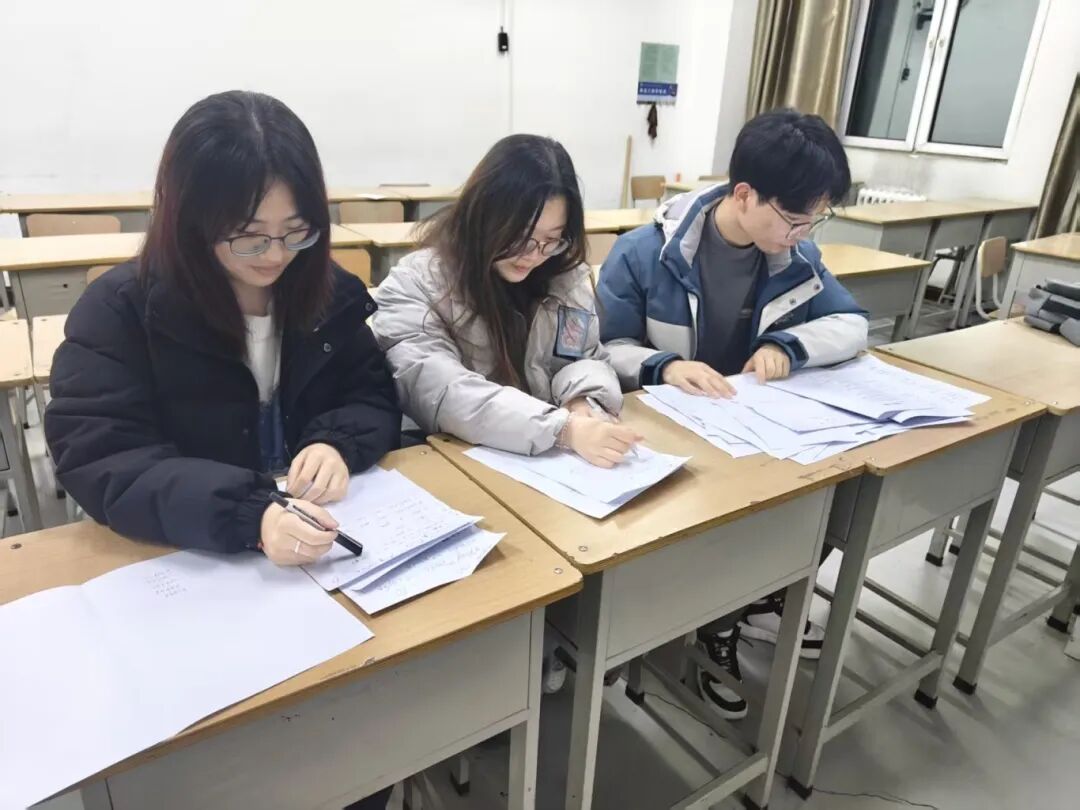
The department head completing the grading of the papers
The three department heads stated that this assessment is not only a comprehensive evaluation of the learning outcomes over the month but also an important basis for future learning planning. Based on the assessment results and weekly learning report feedback, members have basically mastered the core skills of C language, laying a solid foundation for subsequent technical learning. Based on the functional positioning of the Development Department, starting this week, the department will divide the technical directions into front-end and back-end based on assessment performance, member interests, and learning feedback, and will subsequently conduct targeted specialized learning—focusing on core technologies such as HTML, CSS, and JavaScript for the front-end direction, and targeting object-oriented concepts, databases, and server development for the back-end direction, continuously deepening members’ professional skills. The heads emphasized that C language is an important cornerstone of programming learning, and they hope that members will take this assessment as a new starting point, maintain enthusiasm for learning based on the selected direction, and solidify their professional foundation to prepare for future participation in departmental technical development, academic competitions, and other work.
This C language learning assessment and the month-long systematic training fully reflect the Development Department’s talent cultivation philosophy of “solidifying the foundation, closed-loop management, and precise training,” which not only effectively stimulated members’ initiative to learn but also completed the initial screening and reserve of technical talents. In the future, the Software College’s Development Department will take the division of directions as an opportunity to build a “front-end + back-end” dual-track learning system, conduct more targeted activities such as technical salons and project practice, and under the guidance of teachers and various chairs, build a quality platform for cultivating high-quality technical talents, helping members achieve more efficient growth in their professional fields.
END Taiyuan University of Technology Software College– Media Center 2014 –
Source: Software College Science and Technology Association
Text: Zhao Shitao, Yao Sirui
Images: Ren Yaling, Xia Ruihan
Layout: Zheng Dongxin
Editors: Guo Fangcai, Qiao Jiaqi
Initial Review: Wang Hui
Re-review: Guo Fei
Final Review: Zhang Wenji
Submission Email:[email protected]