In road maintenance and construction projects, sealants are commonly used materials for sealing cracks to prevent moisture infiltration and extend the lifespan of pavements or structures. When purchasing sealants, you often see values like 0°C, -10°C, and -20°C. What do these values represent? How should you choose the right product based on these values?ROAD MAINTENANCE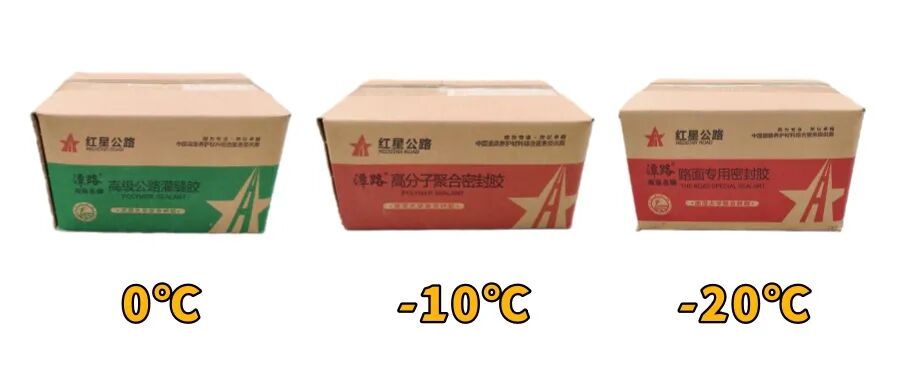 01What Do These Values Represent?
In simple terms, the values of 0°C, -10°C, and -20°C represent the sealant’s “low-temperature flexibility” index, which reflects the lowest environmental temperature at which the material can maintain elasticity without cracking.
These values are determined through standardized laboratory tests (such as low-temperature flexibility tests or tensile tests). They indicate:
★ At this temperature and above, the sealant can maintain good flexibility and elasticity, adapting to the thermal expansion and contraction of cracks.
★ If the environmental temperature is below this value, the sealant may harden and become brittle, failing to stretch or contract with the expansion of the cracks, leading to tearing or detachment, which compromises the seal.
Therefore, these values are key indicators for assessing the performance of sealants, especially their durability in low-temperature environments.
02The Impact of Material Values
Cracks in pavements or concrete structures expand and contract repeatedly with temperature changes. During high summer temperatures, materials expand, and cracks narrow; during low winter temperatures, materials contract, and cracks widen.The core function of sealants is to maintain a sealed state throughout these dynamic changes.
If the selected sealant’s low-temperature rating does not match the local climate conditions, for example, using a 0°C product in a cold region, the sealant is likely to fail during winter low temperatures, causing cracks to reopen, moisture to infiltrate, and accelerating structural damage. This not only reduces the effectiveness of repairs but also increases long-term maintenance costs.
03How to Choose the Right Product Based on Values
When selecting a sealant, it is recommended that the low-temperature rating of the chosen product be lower than the historical minimum temperature of the project location, with a safety margin of 5-10°C.Here are some common reference choices:
[0°C]: Suitable for warm southern regions, such as Guangdong, Guangxi, and Fujian, where winter temperatures rarely drop below 0°C.
[-10°C]: Suitable for central and eastern regions, such as Jiangsu, Zhejiang, and Hubei, where winter minimum temperatures are generally above -5°C.
[-20°C]: Suitable for northern and northwestern regions, such as Beijing, Hebei, Shanxi, and Shaanxi, where winter temperatures may drop to around -15°C.
[-30°C and below]: Suitable for northeastern and Inner Mongolia regions, where winter temperatures may drop below -25°C.
04What Else Should Be Considered Besides Low-Temperature Ratings?
Low-temperature performance is an important criterion for selecting sealants, but it is not the only indicator. A high-quality sealant should also possess the following characteristics:
● High-temperature resistance: It should not soften or flow under high summer temperatures, typically requiring resistance above 60°C.
● Adhesion: It should bond firmly to the crack walls and not easily detach.
● Elastic recovery rate: It should be able to return to its original state after stretching, adapting to the repeated movement of cracks.
● Aging resistance: It should maintain stable performance under natural conditions such as UV exposure and rain, ensuring good durability.
Conclusion
The values of 0°C, -10°C, and -20°C for sealants directly reflect their low-temperature performance and are key to ensuring the durability of repair effects. Choosing products suitable for local climate conditions not only enhances project quality but also effectively reduces long-term maintenance costs.
If you have any questions or need further information, feel free to message us. Hongxing Highway provides professional road materials and comprehensive road solutions.
·END·
Hongxing Highway
Because of professionalism · Excellence follows


Road Materials: Sealants, cold patch materials, emulsified asphalt, anti-cracking tapes, seam tapes, geotechnical products, diamond patches, cold-mix permeable colored asphalt, snow melting agents, etc.
Road Equipment: Crack cleaning machines, grooving machines, sealing machines, blowers, cutting machines, plate compactors, impact compactors, road rollers, emulsified asphalt spreaders, hot recycling mixing machines, snow melting spreaders, etc.
Pipeline Maintenance: Pipeline periscopes, pipeline inspection robots, manhole cutting machines, manhole spraying machines, etc.
Road Machinery: Hot recycling asphalt pavement maintenance vehicles, asphalt-stone synchronous sealing vehicles, dry sweepers, comprehensive snow removal vehicles, emulsified asphalt sprayers, cleaning and suction vehicles, pipeline dredging vehicles, emergency drainage vehicles, etc.
Road Construction: In-situ cold recycling, crack treatment, etc.