“
On September 16, according to Reuters, citing two informed sources, Nvidia’s latest AI chip RTX 6000D, tailored for the Chinese market, has seen a lukewarm market response since its launch, with major Chinese tech companies such as Alibaba, Tencent, and ByteDance currently choosing not to place orders.
Nvidia’s spokesperson responded, stating: “The market competition is fierce, and we are always committed to providing the best products within our capabilities.” Alibaba, Tencent, and ByteDance have not responded to requests for comment.
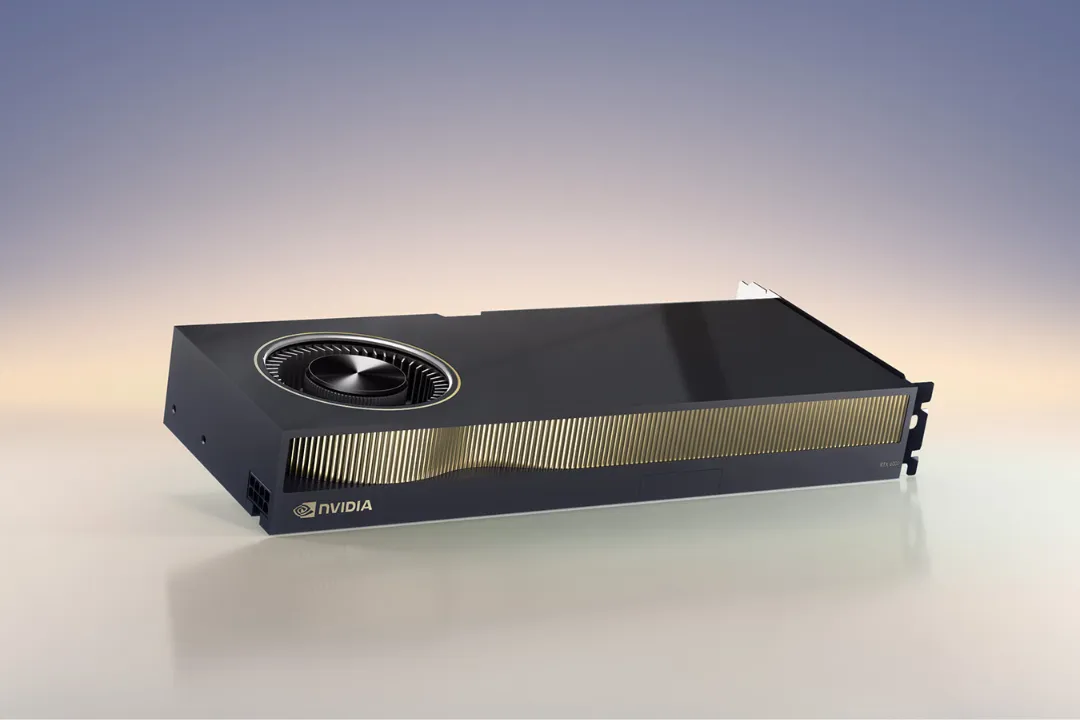

Chinese manufacturers have become more cautious towards Nvidia.
 RTX 6000D is another product launched by Nvidia to fill the gap left by the H20, which was banned in April this year. It uses Nvidia’s Blackwell architecture GPU, paired with GDDR memory, and has a memory bandwidth of 1398GB/s, just below the 1.4TB/s threshold set by the restrictions imposed by the U.S. in April. Although the H20 chip uses the older Hopper architecture, it has a memory bandwidth of up to 4TB/s, priced between $10,000 and $12,000.RTX 6000D is primarily used for AI inference tasks, but its performance and pricing strategy have not gained widespread acceptance among Chinese customers. Several sources indicate that the RTX 6000D is priced at around 50,000 RMB, but sample tests show its performance lags behind the RTX 5090 chip, which is banned from being sold to China, and the price of the RTX 5090 is less than half that of the RTX 6000D. This disparity in price-performance ratio has made many companies cautious about procuring the RTX 6000D.At the same time, the cold market performance of the RTX 6000D sharply contrasts with earlier optimistic forecasts from institutions. JPMorgan reported last month that it expected Nvidia to produce about 1.5 million RTX 6000 units in the second half of this year. Earlier, Morgan Stanley predicted that Nvidia would have 2 million RTX 6000D units in production. According to one informed source, Nvidia plans to start delivering a small number of RTX 6000D units to Chinese customers as early as this week.
It is worth mentioning that, although Nvidia regained the sales license for the H20 chip to China in July, shipments of the H20 have not yet started for various reasons, including Nvidia needing to resolve issues related to a recent agreement with the U.S. government, which mentions that part of the revenue from chip sales to China must be remitted to the U.S. government.Additionally, sources revealed that Chinese regulatory authorities had summoned companies like Tencent and ByteDance to inquire about the procurement situation of the H20 chip and expressed concerns about information risks, making Chinese companies more cautious about whether to continue purchasing the H20. Subsequently, Nvidia emphasized that its products do not have any “backdoor risks” and will not allow anyone to remotely access or control them.
The market response to the RTX 6000D occurs against the complex backdrop of Sino-U.S. technology trade:This week, China’s State Administration for Market Regulation stated that Nvidia violated antitrust laws and decided to conduct further investigations; meanwhile, Nvidia has yet to alleviate Chinese manufacturers’ concerns regarding the safety of its AI chips. Furthermore, these companies are more looking forward to the planned B30A chip, and whether it can obtain U.S. government approval for export remains to be seen.
The B30A is also a new AI chip developed for the Chinese market, expected to have six times the performance of the H20, while costing only twice as much as the H20. Sources say the B30A is based on the Blackwell architecture, and will adopt a single-chip design, with an overall computing power about half that of Nvidia’s flagship B300 dual-chip version. The B30A is also expected to be equipped with HBM and NVLink, consistent with the H20 based on the previous generation Hopper architecture.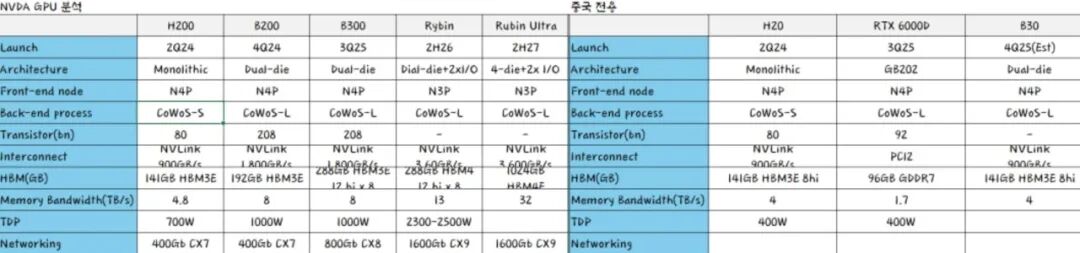
China’s access to cutting-edge AI chips is one of the biggest focal points of the Sino-U.S. trade tensions. The H20, RTX 6000D, and B30A are all “downgraded versions” of Nvidia’s products aimed at the Chinese market, designed to comply with U.S. export restrictions. The U.S. hopes to curb China’s technological progress and maintain its lead in AI development.

Domestic manufacturers have never stopped their self-development efforts.

Today, Chinese companies clearly have more diversified options, not only with increasingly mature domestic alternatives, but also Alibaba and Baidu are using self-developed AI chips to train large models to partially replace Nvidia GPUs. It is understood that Alibaba has been applying its self-developed chips in the training of its lightweight AI models since the beginning of this year, and recently unveiled its self-developed chip, Alibaba Pingtouge (Wanka) PPU; Baidu is also actively promoting the localization of chips and is currently testing the Kunlun P800 chip for training its latest version of the Wenxin large model. Additionally, at yesterday’s 2025 Tencent Global Digital Ecosystem Conference, Tencent highlighted that its heterogeneous computing platform has been adapted to mainstream domestic chips.
This trend is driven by the improvement of domestic AI chip technology and the promotion of supply chain diversification, not only to “hedge risks,” but also to take practical actions to reduce dependence on Western chips and promote the construction of a self-controllable industrial chain. In the future, as more companies join in, domestic AI chips are expected to achieve greater breakthroughs in performance and ecology, fundamentally changing the market landscape.
Although Alibaba and Baidu are increasing the application of self-developed chips, both companies have not completely abandoned Nvidia’s products. When developing cutting-edge AI models, they continue to use Nvidia’s chips to ensure the efficiency and effectiveness of model training.
Data shows that as of January 26, the fiscal year, the Chinese market brought Nvidia $17 billion in revenue, accounting for 13% of its total sales. From market data, although Nvidia’s global market share exceeds 90%, it is expected that by 2025, Nvidia’s share in the Chinese AI chip market will be 54%. However, as major companies shift to domestic chips, Nvidia’s market share in China will further decline, possibly even falling below 50%.
By 2025, domestic acceleration cards in China’s data centers have already accounted for 34.6%, and it is expected to exceed half by 2027, which is a remarkable speed. However, choosing chips is not just about performance and price; safety, ecology, and future risks must also be considered. Huawei’s Ascend has already caught up with international levels in overall performance through combined technologies, and its production capacity is gradually following — Mizuho Securities expects this year’s shipment to exceed 700,000 units, enough to meet a quarter of domestic demand.
Follow the video account EEPW Chip Perspective
Insight into the Chip World
Understand Chip Trends

Scan to add
EEPW Assistant WeChat!
Join the professional engineer technical exchange group | Apply for free development boards | Free DIY development components | Participate in red envelope welfare activities, various surprises continue~

👆 If you wish to meet often, feel free to star 🌟 and bookmark it~
Like our content? Click“Looking” and share it with your friends~

↓↓↓↓ ClickRead the original text, to seemore news