
China’s chip industry adds 300,000 new positions each year, but only 30,000 graduates from formal education programs.When Huawei faced a chip supply shortage, people suddenly realized that the expertise hidden in laboratories is determining the country’s future. Three years after the Ministry of Education announced the list of the first 19 pilot universities for chip talent, graduates from these previously overlooked ordinary universities have surprisingly secured 83% of the chip engineer positions in the Yangtze River Delta.The key to talent cultivation lies in the deep integration of industry and education..

Students majoring in microelectronics at East China University of Technology, like Zhang Xiaoyang, can independently complete the entire chip testing process by their junior year. This student from Jiangxi, who barely passed the college entrance examination, gained practical experience earlier than students from prestigious universities on the campus’s 8-inch wafer teaching experimental platform. “The first lesson upon enrollment was to disassemble smartphone chips, and the professor pointed to the cleanroom above, saying: ‘Every speck of dust here could ruin a million-dollar product.'”This seamless connection from the workshop to the classroom is the core competitiveness of the pilot universities..
Data shows that the 19 universitieshave an average of 17.8 joint laboratories with enterprises, which is 3.2 times that of traditional engineering universities. The microelectronics experimental center at Taiyuan University of Technology was built with an investment of 120 million yuan and has a packaging testing production line that is rare among domestic universities.“We do not conduct ‘highbrow’ research; instead, we train technicians who can identify anomalies in production lines.”The dean of the university revealed the breakthrough path for ordinary universities at an industry forum—building classrooms in workshops and writing papers on machines..
The strategic layout behind choosing universities hides deeper wisdom. The first batch of pilot universities covers the Beijing-Tianjin-Hebei region (5), the Yangtze River Delta (7), the Pearl River Delta (4), and the central and western regions (3), which matches the manufacturing cluster distribution in the “China Integrated Circuit Industry Map.” Fuzhou University’s EDA laboratory communicates real-time data with local packaging and testing companies, allowing students to verify the parameters they debug in factories that same evening. “Companies in the Yangtze River Delta have resident recruitment officers at the university, and it has become common for outstanding interns to earn over 10,000 yuan a month,” revealed the secretary-general of the Suzhou Semiconductor Industry Association.
There are numerous cases where industry demand has forced educational reform. Xi’an University of Electronic Science and Technology increased the hours for the analog circuit course from 64 to 96, with the additional 32 hours conducted in the packaging testing workshop. “Traditional textbooks still discuss 0.35-micron processes, while we directly teach 18-nanometer processes,” the professor said with a wry smile, pointing to the yellowing textbooks.This paradox of ‘outdated textbooks + advanced practice’ reflects the true speed of industrial development..
Parents’ most concerned employment data provides the answer: the average employment rate for graduates from the 19 universities in 2023 is 98.7%, which is 26 percentage points higher than the national average for microelectronics majors.Offers displayed by graduates from a central university show that the starting salaries offered by seven employers range from 120,000 to 180,000 yuan.“When the interviewer saw that I had six months of internship experience at SMIC, they immediately signed the tripartite agreement,” said graduate Liu Tao, proving thatindustry experience is more persuasive than the halo of prestigious universities..
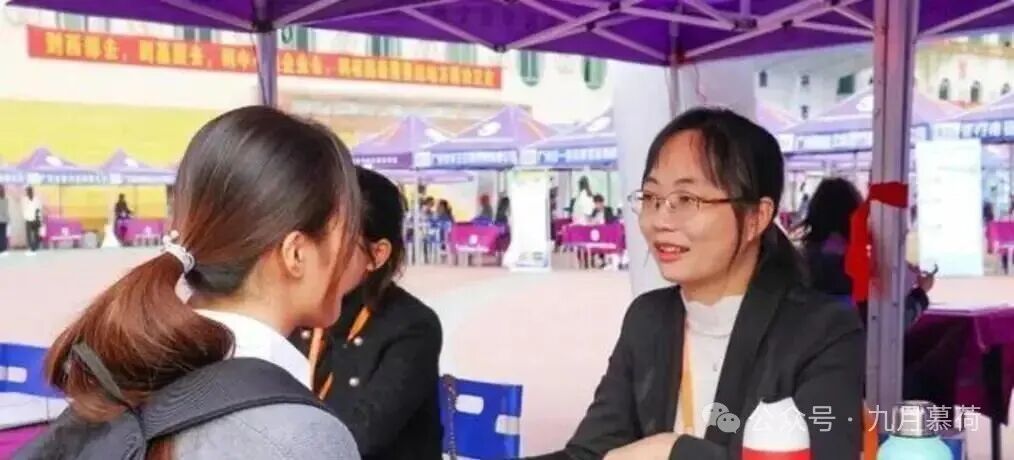
The wisdom of choice is revealed through comparison.985 universities have a graduate school rate of 75% in microelectronics, while pilot universities only have 29%—this 46% difference is being transformed into the practical engineers most sought after by the industry. An HR representative from an IC design company in Guangdong admitted: “We prefer to hire ‘skilled workers’ from ordinary universities rather than spend two years training ‘dreamers’ from prestigious schools.” This harsh comparison unveils the final veil of educational utilitarianism.
Three golden suggestions for candidates: 1. Choose universities with a complete“design-manufacturing-packaging” teaching chain. 2. Investigate the depth of school-enterprise cooperation (number of joint laboratories/internship duration). 3. Compare the generational level of teaching equipment such as EDA software and photolithography machines.
The essence of education is to establish a real connection between people and the world. When students from Harbin University of Science and Technology debug equipment on the production line at Huahong Semiconductor, and when teachers from Hangzhou Dianzi University bring industry projects into the classroom,we finally see: the most grounded education often nurtures the most shocking breakthroughs. Those previously underestimated universities are now writing a new chapter in China’s chip industry with their oil-stained lesson plans.