Follow+Star Public Account Number, don’t miss out on exciting content
As the graduation season approaches in September and October, many recent graduates and newcomers in the Bluetooth headset and audio development field have been messaging me asking: What knowledge is required to get started in Bluetooth audio software development?What level of proficiency is needed to be capable of working in related jobs? Many friends who have not entered the industry feel lost, but in reality, the knowledge required for Bluetooth audio software development is not much different from that of general microcontroller software development. As someone who has been deeply involved in the Bluetooth audio software field for many years, I will outline the learning path from basic to advanced in Bluetooth audio software development, providing a clear reference for everyone.
To understand the skill requirements for Bluetooth audio software engineers, the job descriptions from various companies serve as the most direct reference. Below are the job details from several companies (some information sourced from the internet).
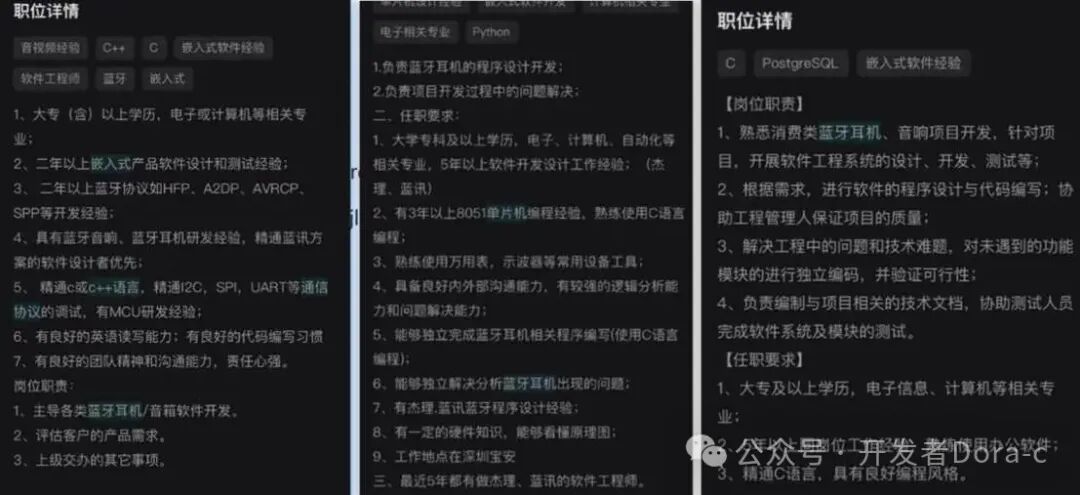
From the job details in the image above, we can extract the core requirements of the positions. Based on these requirements, the skill system for Bluetooth audio software development can be divided into four major modules: “Fundamental Professional Skills”, “Advanced Professional Skills”, “Platform SDK Development and Debugging” and “Comprehensive Soft Skills”, with specific content as follows.
1. Fundamental Professional Skills1. Programming Languages:C/C++ is essential.
Most mainstream Bluetooth audio products on the market currently use single-chipSOC (System on Chip) solutions, andC/C++ is the preferred programming language for embedded system development.
Among them,C language, with its simplicity, flexibility, and efficiency, can fully leverage hardware resources, making it the core language for Bluetooth audio software development. The level of mastery should ideally reach“proficient” level.
– Deep understanding of core concepts ofC language, such as pointers, memory models, and memory management techniques;
– Understanding compiler optimization principles, able to write targeted optimized code to improve software running efficiency;
–Familiar with C language standards (such as C99), and capable of designing complex embedded software architectures.
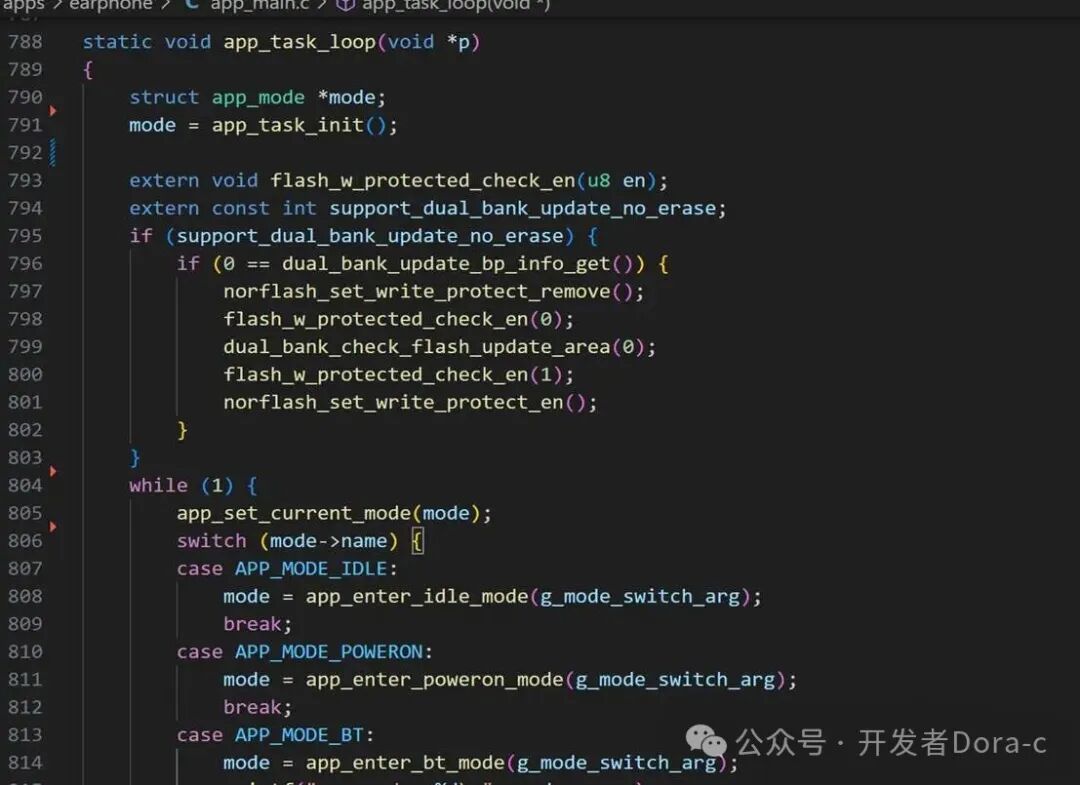
2. Hardware Fundamentals: Understanding hardware logic is key.
The essence of Bluetooth audio software development is to write programs that control hardware to achieve product functionality, so we must also master some basic circuit knowledge. By reviewing the system block diagram, we can clarify what functional modules the product has; by looking at the circuit schematic, we can understand the logical details that need to be controlled by software for each module.
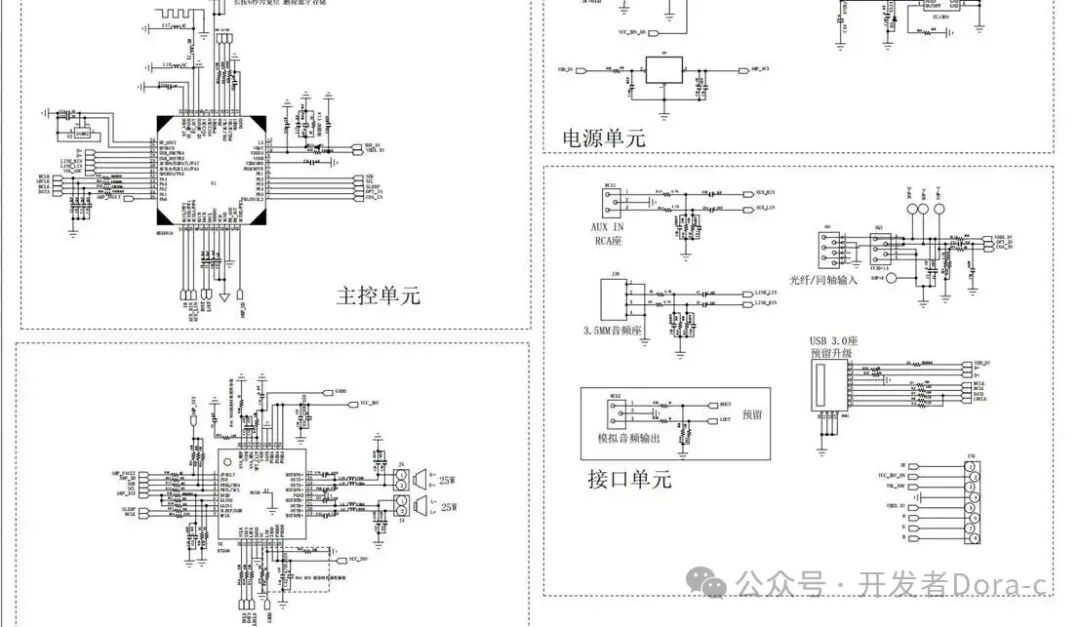
3. Common Interface Protocols: Mastering the hardware “communication language”.
Here, the interface protocols refer toUART, IIC, SPI, IIS, etc.
In the actual product development process, we often need to connect special functional modules (such as external sensors, audio processing chips, storage chips, etc.), andUART, I2C (IIC), SPI, IIS and other communication interface protocols are the “languages” that software uses to communicate with these modules, and it is essential to master their working principles and debugging methods. Only with a common language can normal communication occur.
2. Advanced Professional Skills
1. Basic Knowledge of Bluetooth: Focus on core protocols and architecture.
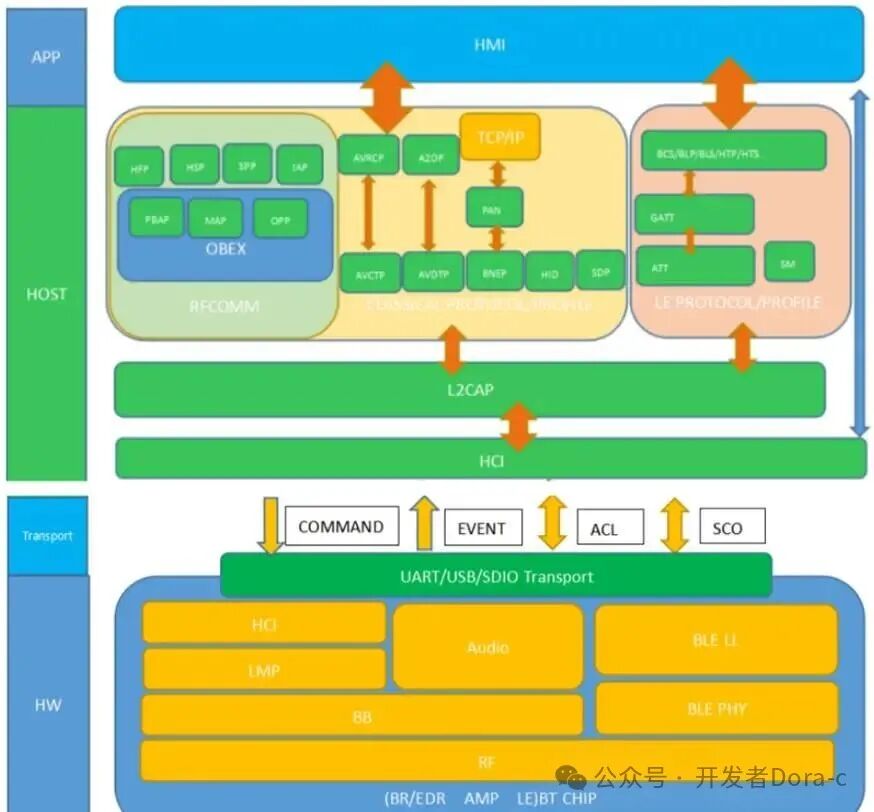
The core of Bluetooth audio products is Bluetooth wireless communication technology, and we need to systematically master the core foundational knowledge of Bluetooth development. In actual Bluetooth product development, although chip manufacturers usually integrate the Bluetooth protocol stack into theSDK in the form of precompiled modules or libraries, developers do not need to delve into writing protocol stack code, but still need to understand its core logic and usage:
– Deep understanding of the layered architecture of the Bluetooth protocol stack (HCI, L2CAP, SDP, RFCOMM, etc.);
– Focus on mastering commonly used Bluetooth audio protocols, such asA2DP (audio transmission), AVRCP (control), HFP (calling);
–Master the data transmission mechanisms of BLE and the usage of SPP.
2. Basic Knowledge of Audio
“Audio” is the core attribute of Bluetooth audio products. Mastering basic audio knowledge not only enables basic audio transmission functions but also optimizes sound quality and quickly locates faults. This requires us to understand the basics of audio and its concepts, focusing on the following points:
– Signal Basics: Understanding the difference between analog and digital signals, mastering the core processes of audio digitization (sampling, quantization, encoding).
– Key Parameters: Clarifying the definitions and relationships of core audio parameters, such asBit Rate = Sampling Rate × Bit Depth × Number of Channels
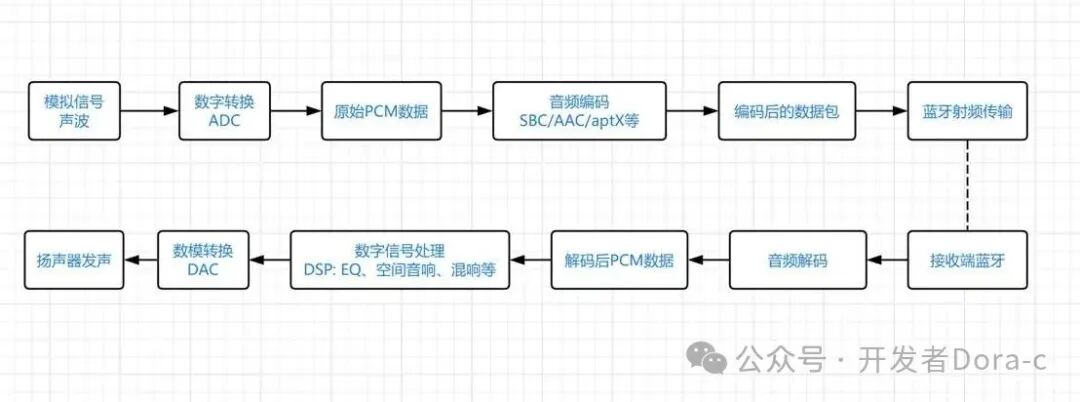
– Data Flow: Understanding the Bluetooth audio data processing flow is crucial for debugging issues, as shown in the figure below.
3. Common Testing Instruments: From “Code Implementation” to “Productization”
Mastering the use of professional testing instruments is a hallmark of a Bluetooth audio development engineer moving from “junior” to “senior” and is key to ensuring product quality. Below are some common testing instruments to focus on.
– Bluetooth Protocol Analyzer: It allows you to see all Bluetooth packets in the air, making it the ultimate tool for debugging complex issues such as connections, pairing, and audio stream control. Representative models include:Frontline BPA600, Ellisys Bluetooth Explorer, Teledyne LeCroy BLAS, etc.
– Audio Analyzer: It can objectively measure the quality of sound, generating standard test signals and analyzing the device’s output as a “benchmark.” Representative models include:Audio Precision (APx500 series), Rohde & Schwarz (UPL), Keysight (U8903B), etc.
– Bluetooth Tester: Bluetooth technology is a wireless technology, and its RF (RF) performance directly determines the stability and range of connections. These instruments are used to verify whether the device’s RF indicators meet standards. Representative models include:Bluetooth TesterCMU200/CMU300, Anritsu MT8852, Agilent N4010, etc.
3. Platform SDK Development and Debugging
Unlike the pure software field, Bluetooth embedded development is a model of “hardware-software integration”. The development of Bluetooth audio products heavily relies on chip platforms, making mastery of the platform’sSDK development crucial.
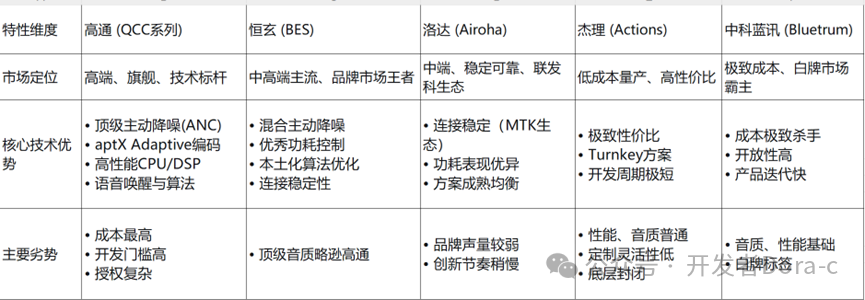
It is recommended to start with platforms that have a high market share, as they have abundant resources and active communities, making problem-solving easier. For example, once you master one platform, learning other platforms will be much faster because the core concepts are similar, only the tools and implementation methods differ. Different development platforms generally include the following:
SDK (Software Development Kit): This is core, containing all the low-level drivers, protocol stacks, audio processing algorithms, application frameworks, and sample code for the chip.
Datasheet (Data Sheet): Describes the hardware characteristics of the chip, such as pin definitions, memory distribution, peripheral (I2C, I2S, SPI, UART) configurations, electrical characteristics, etc. Essential for low-level driver development.
Application Note (Application Note): The most valuable technical document for learning, providing detailed guidelines on how to implement specific functions.
Below is a simple comparison of mainstream Bluetooth audio development platforms.
4. Comprehensive Soft Skills
The content within the knowledge framework is only part of the professional skills of an excellent engineer. In addition to technical expertise, the following soft skills are also essential for becoming an outstanding Bluetooth audio development engineer.
– Communication Skills: Frequent communication with electronic engineers (to coordinate hardware design), testing engineers (to synchronize testing requirements), and customers (to understand product demands) is necessary to ensure accurate information transfer;
–Problem Analysis Skills: When facing unexpected issues during development (such as Bluetooth disconnections or sound distortion), it is necessary to quickly identify the root cause (whether it is a protocol issue, hardware driver issue, or audio algorithm issue) and propose solutions;
–Team Collaboration Skills: Bluetooth audio development is a team project, requiring cooperation with upstream and downstream roles to jointly advance project progress and ensure timely and quality product delivery;
–Learning Ability: Bluetooth technology and audio algorithms evolve rapidly (such as new audio codecs and low-power Bluetooth protocol upgrades), necessitating a habit of continuous learning to keep up with new technologies and trends in the industry.
Bluetooth audio software development is not“inaccessible”. I wish everyone can grow into a senior engineer capable of independently managing projects. Writing is not easy, so if this helps your development, please don’t hesitate to click the like button and give a little heart below. Thank you. The weekend is coming, so I wish all of you a pleasant weekend and smooth development.
———— END ———–
Follow me for more content on Bluetooth headset software development