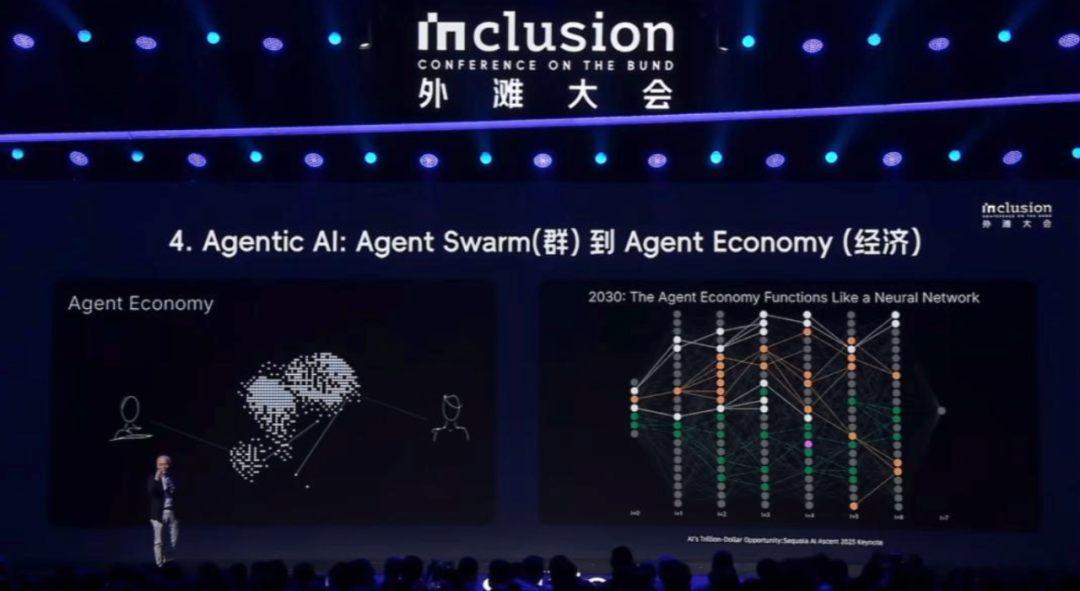
By 2025, the focus of discussions around artificial intelligence has quietly shifted from “What can we do with AI” to “What can AI do autonomously for us”. At the heart of this transformation is the rise of AI Agents, which are no longer just passive tools but active “agents” capable of understanding objectives, formulating plans, and autonomously executing complex tasks.
As predicted by Zhang Hongjiang, a partner at Source Code Capital and a foreign member of the National Academy of Engineering, we are entering an era of “agent swarms”. In this era, the combination of “super individuals + agents” will become a disruptive productivity paradigm, fundamentally reshaping business processes and triggering unprecedented structural changes.
From “Tools” to “Agents”: The Essential Difference of Agents
To understand the profundity of this transformation, we must first distinguish between AI tools and AI agents.
-
AI Tools (e.g., ChatGPT): They are powerful “question-answer engines” and “content generators”. You provide a prompt, and it gives a response. The entire process is passive, unidirectional, and discrete. It does not follow up proactively and cannot directly operate your software or interact with the external world.
-
AI Agents: They are proactive, closed-loop systems. You assign them an objective, and they autonomously break it down into a series of tasks, then utilize various tools (such as browsers, code interpreters, APIs) to execute these tasks, reflecting and adjusting based on the results until the objective is achieved.
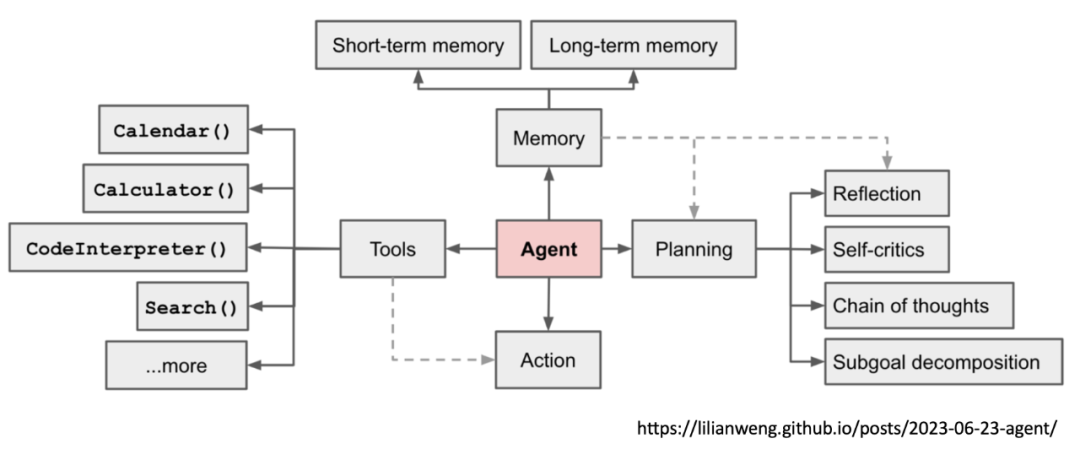
In simple terms, if traditional AI is your “co-pilot”, providing you with information and suggestions; then an AI agent is your “autopilot”, capable of directly controlling the steering wheel and driving towards the destination. For more reference: A must-read summary about AI agents
The Transformation in the Real World: Agents are Already in Action
This is not a distant sci-fi concept; the transformation is already happening in various business scenarios, producing quantifiable significant impacts.
1. Customer Service: From “Labor-Intensive” to “Intelligent Autonomy”
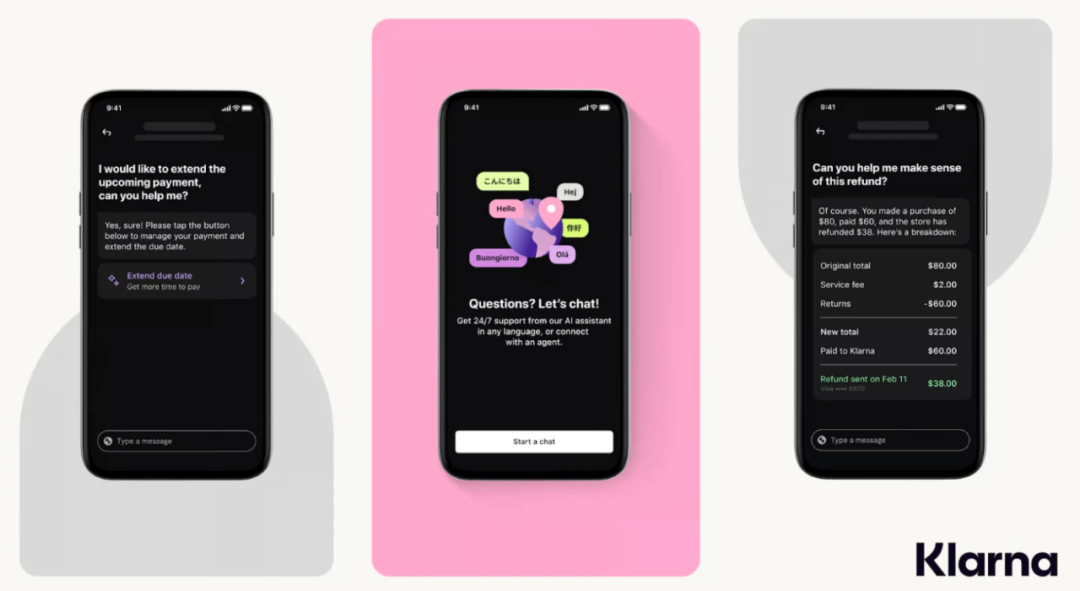
The case of fintech giant Klarna is exemplary. By deploying an AI customer service agent based on OpenAI technology, Klarna achieved astonishing results within a month.
-
Processing Capacity: The agent handled up to 2.3 million customer conversations, equivalent to two-thirds of the company’s customer service inquiries.
-
Work Efficiency: Its workload is equivalent to that of 700 full-time human customer service representatives.
-
Business Impact: Not only was customer wait time significantly reduced, but the rate of repeat inquiries dropped by 25%, and it is expected to save the company $40 million in operational costs annually.
This agent is no longer a simple FAQ bot; it can access customer data, handle complex requests such as refunds and order modifications, and provide service in 24 languages, achieving a high level of automation and intelligence in customer service processes.
2. Software Development: From “Team Combat” to “Human-Machine Collaboration”
Previously, the much-anticipated AI software engineer Devin demonstrated the potential of “super individuals” in the field of technology development. In a public demonstration, Devin successfully completed real development work on the freelance platform Upwork.
-
Autonomous Problem Solving: A client requested a fix for a bug in a computer vision model’s code. Devin autonomously set up the coding environment, reproduced the issue, wrote the fix, and tested it, ultimately resolving the problem perfectly.
-
End-to-End Capability: It can start from a simple instruction and complete the entire software project from planning, coding, debugging to deployment.
For further reference: Alarm bells: The first AI software engineer Devin
The actual capabilities and cost-effectiveness of Devin are still under discussion, as Devin was born in 2024, while today there are better frameworks supporting multi-agent collaboration, such asopen-source frameworks (like CrewAI, AutoGen) that build “AI-native workflows” to complete product development. Below is a practical case:
Alex is a developer with a product idea but lacks the time and energy to complete all engineering tasks independently. He wants to develop a SaaS product called “InsightFlow” that can automatically connect users’ Google Analytics and social media accounts, analyze traffic data through AI, and automatically generate weekly growth strategy reports.
This project, if done in the traditional model, would require at least a 4-person team working for several weeks:
-
1 Product Manager: Conduct market research and write the PRD.
-
1 Backend Engineer: Responsible for the database, API integration, and authentication system.
-
1 Frontend Engineer: Develop the user interface and data visualization.
-
1 QA Engineer: Ensure product quality.
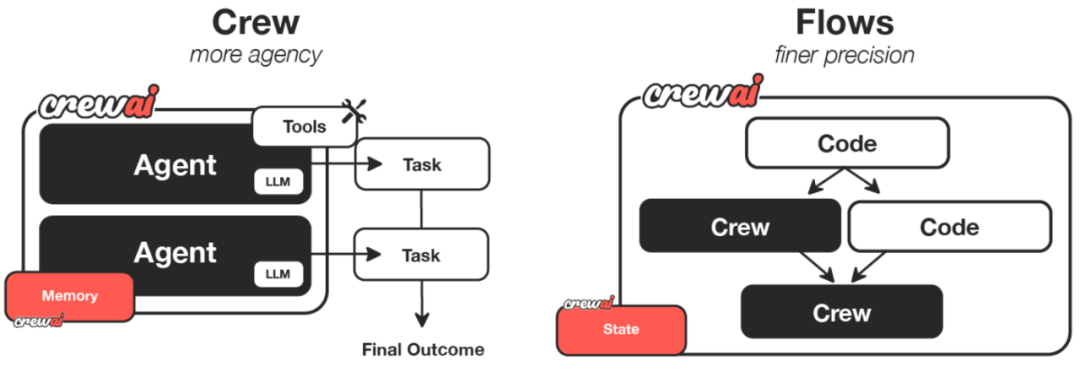
However, today Alex did not form a team; he simply utilized the CrewAI framework to create his “virtual AI employee team”. He first constructed a market analysis agent and a product manager agent to help him with strategy and planning, taking 3 hours. Alex only needed to set a clear goal: “I want a SaaS application that can connect GA and X platform, analyze data, and generate weekly reports.” The AI team would then step in to help him solve the problems:
-
Market_Analyst_Agent: Automatically researches competitors online, analyzes their strengths and weaknesses, and provides differentiation suggestions for InsightFlow.
-
Product_Manager_Agent: Receives Alex’s goals and market analysis results, autonomously generates a complete product requirement document (PRD) that includes user stories, feature lists, and technology stack recommendations (such as React + Python/FastAPI + PostgreSQL).
Then, virtual developers and testers (agents) complete the implementation, taking 2 days (the agents worked continuously for 48 hours), while Alex participated in reviewing the PRD, confirming the technology selection, issuing the “start development” command, and conducting code reviews and architectural oversight at key points.
-
Backend_Developer_Agent: Based on the PRD, autonomously writes the database model, OAuth authentication process, calls GA and X platform APIs, and constructs core analysis logic. It can even search for the latest API documentation online as needed.
-
Frontend_Developer_Agent: Works in parallel with the backend agent, using React and Tailwind CSS to build user login, data source connection, and report display interfaces based on user stories in the PRD.
-
QA_Engineer_Agent: During development, this agent automatically writes unit tests and integration tests for the backend code. When it discovers a bug (for example, an API call error), it does not directly report it to Alex but automatically creates a bug report and assigns it to the Backend_Developer_Agent, who then fixes it and resubmits it, forming an internal closed loop of development and testing.
Alex ultimately confirms the product features, decides to launch, and lets the virtualDevOps_Agent and marketing personnel complete the finishing touches.
-
DevOps_Agent: Automatically writes Dockerfile and deployment scripts, connects to Vercel and Heroku via API, and deploys the frontend and backend to the online environment.
-
Marketing_Writer_Agent: Automatically generates product introduction copy for the product’s official website, product release tweets, and even a blog post introducing the product highlights based on product features.
In less than 3 days, Alex—this “super individual”, as the sole decision-maker and commander, led his AI team to complete a fully functional, tested, and successfully launched version 1 of the SaaS application.
For more framework references: Analyzing “The Top Ten AI Agent Frameworks in Software Development”
3. Cross-Application Operations: Breaking Down Software Silos to Achieve Workflow Automation
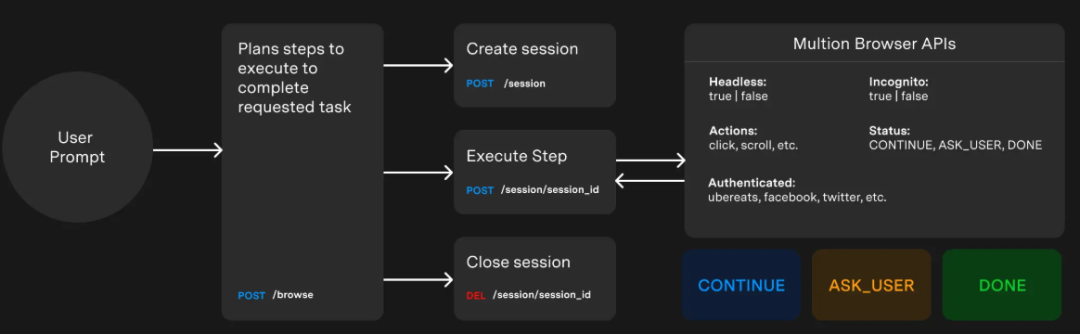
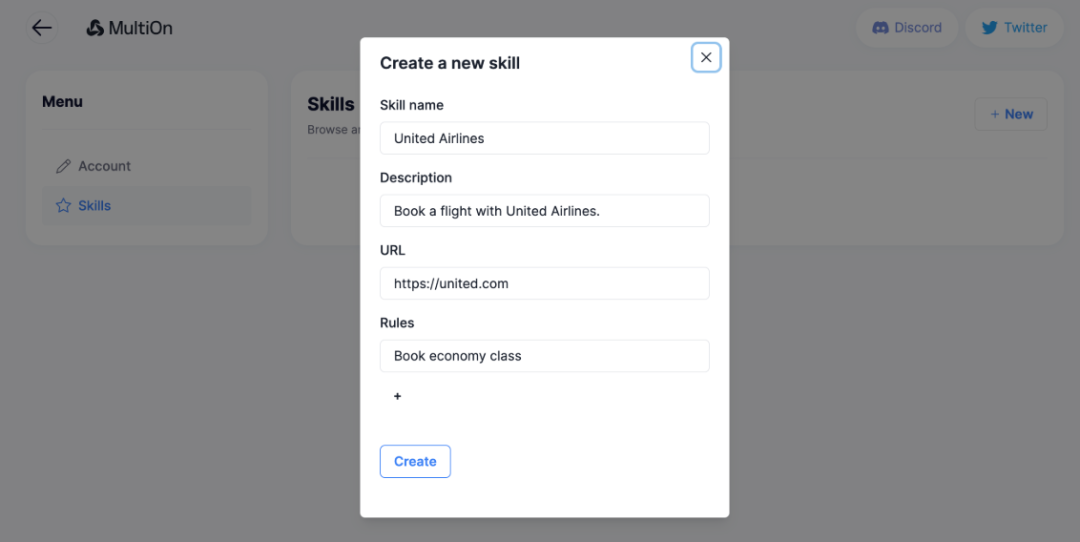
An AI agent named Multi-On (similar to Manus) aims to become the execution layer of a “universal operating system”. It can use any web or desktop application by observing the screen and operating the mouse and keyboard like a human.
-
Application Scenario: You can say to it: “Help me book a flight to San Francisco tomorrow afternoon, under $500, choose a window seat, and then sync the order information to my calendar.”
-
Execution Process: Multi-On will autonomously open the airline’s website, search for flights, filter results, fill in passenger information, select seats, complete payment, and then open the calendar application to create an event.
For enterprises, this means breaking down previously isolated systems such as CRM, ERP, and financial software. The cumbersome processes that required manual “copy-pasting” between different software can now be seamlessly connected by an agent, achieving true end-to-end process automation.
“Super Individuals + Agents”: The Core Formula for Future Productivity
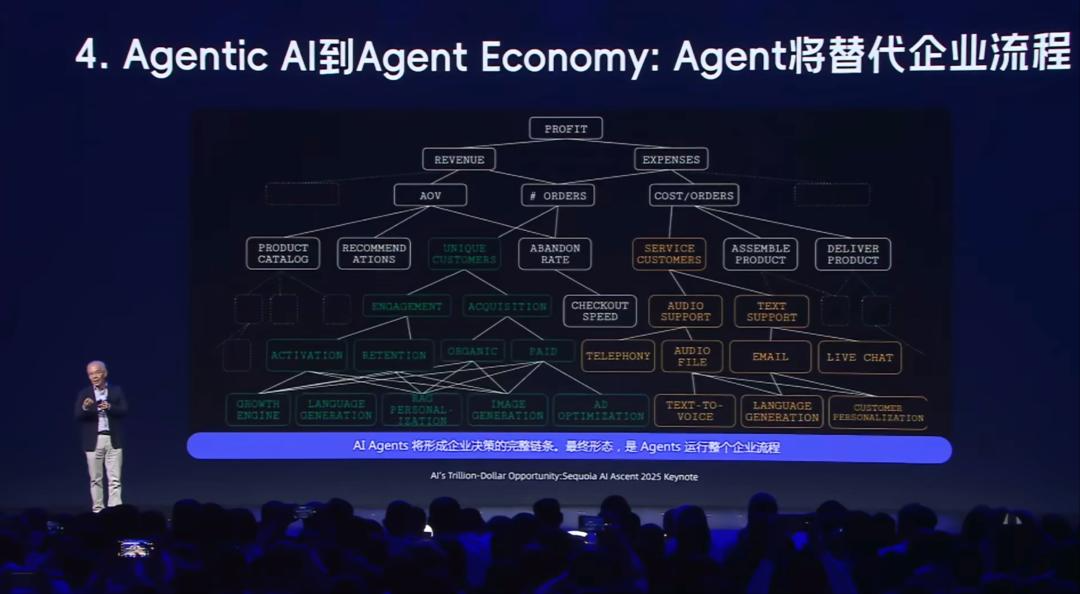
Zhang Hongjiang’s insights are becoming a reality. The above cases reveal a clear future picture:
-
Structural Changes in Enterprises: Traditional departments that rely heavily on human labor for process operations (such as customer service, basic development, data labeling, and marketing execution) will face reconstruction. Business processes will no longer be “humans adapting to systems”, but “agents adapting to objectives”, leading to flatter, more agile, and efficient organizational structures.
-
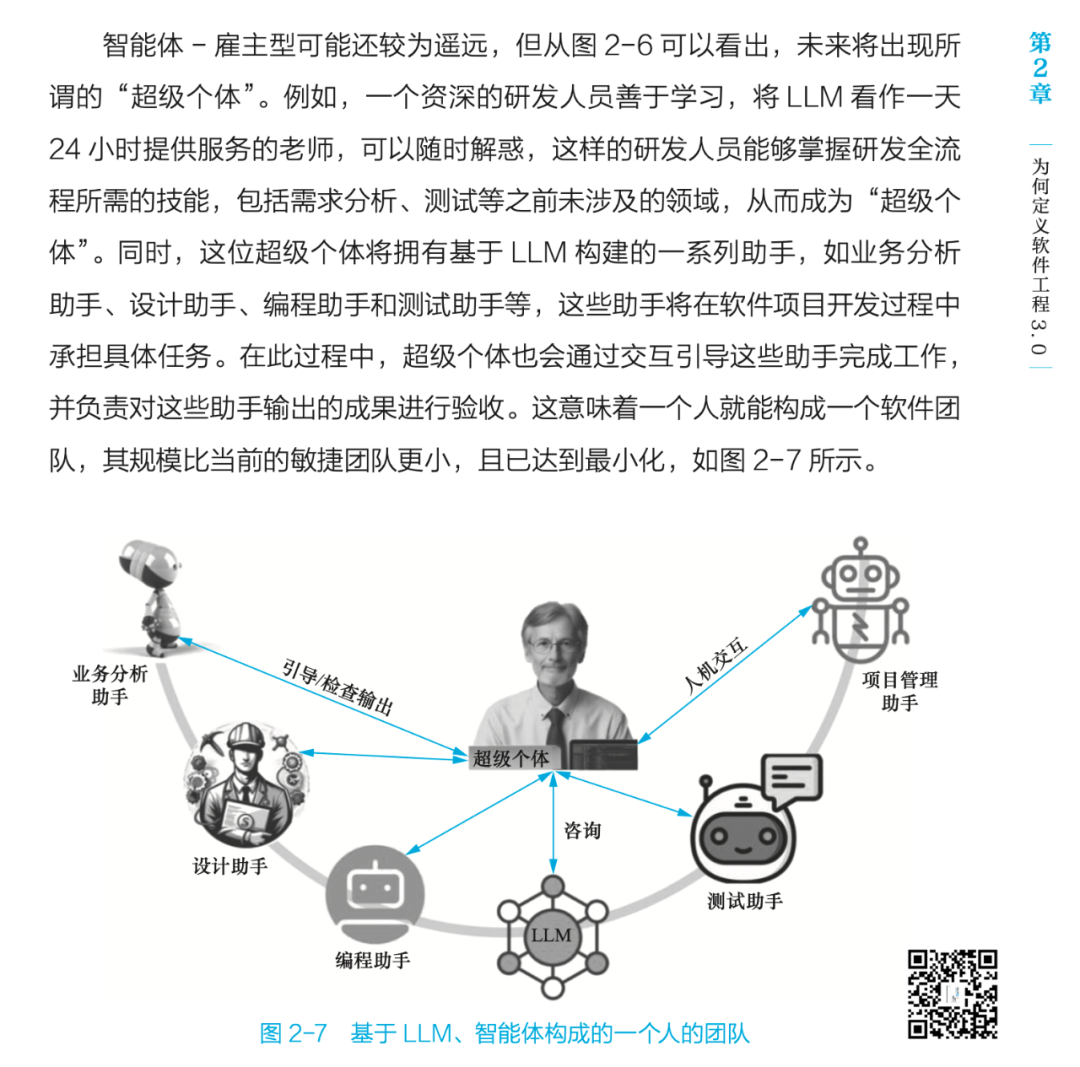
The Rise of “Super Individuals”: The value of individuals will no longer depend on their efficiency in repetitive tasks, but on their ability to ask the right questions, define complex objectives, and creatively utilize agent clusters. A top strategic expert can leverage an agent cluster to complete market analysis and strategy formulation in a day, which previously required a team several weeks to accomplish. An independent developer can also take on complex software projects that only large companies could handle, thanks to AI partners like Devin.

(Below is an excerpt from section 2.4 of “Software Engineering 3.0”)
Conclusion
We are at a critical turning point. The emergence of AI agents is not merely a simple efficiency tool, but a profound revolution concerning production relationships and individual value. It liberates humans from repetitive labor, allowing them to focus more on high-level intellectual activities such as strategy, innovation, and decision-making.
In the future, successful enterprises and individuals will be those who embrace “agent thinking” first and are adept at dancing with “agent swarms”. This is not just a technological wave, but a structural opportunity regarding how organizations and individuals evolve. As Zhang Hongjiang pointed out, an era of “agent economy” driven by countless interacting agents and powered by “super individuals” has already begun.