Industrial robots are multi-joint mechanical arms or multi-degree-of-freedom robots designed for industrial applications.Industrial robots replace humans in production and are an important development trend for the manufacturing industry in the future. They are the foundation for achieving intelligent manufacturing and are also the guarantee for future industrial automation, digitization, and intelligence.The harsh production environment, the aging population leading to a labor shortage, and high costs of manual training are driving the growth in demand for industrial robots.
Today
Huasu Robot Technology Lecture
invites you to learn about
“Basic Composition and Classification of Industrial Robots”
It’s packed with useful information!

Basic Components of Industrial Robots
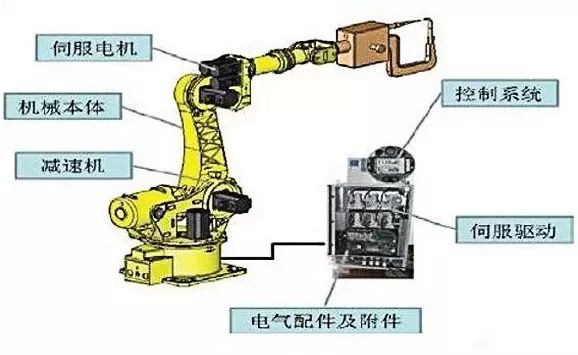
Industrial robots consist of the body, drive system, and control system, which are three basic components.
-
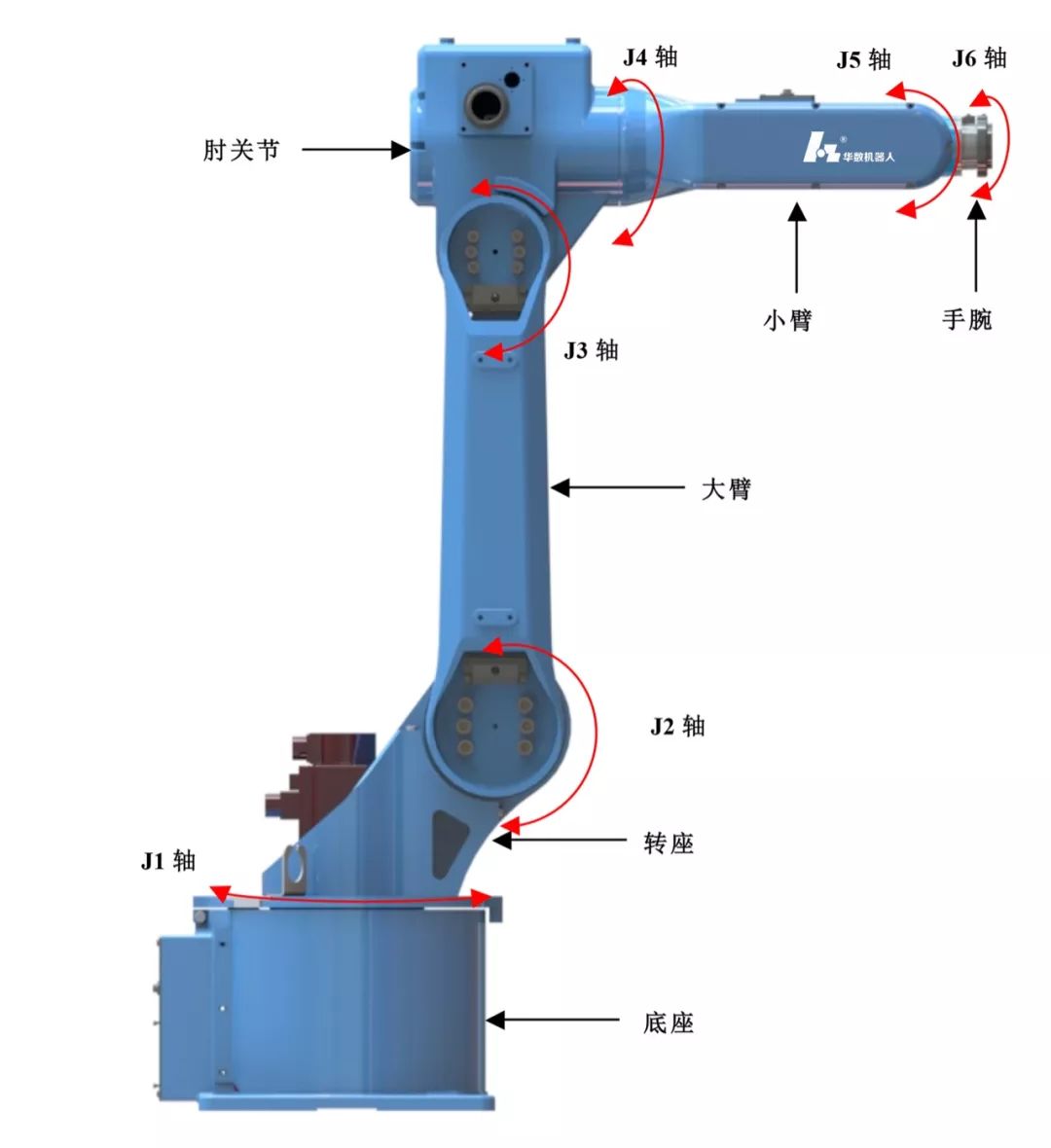
Body: This includes the base and the actuators, comprising the arm, wrist, and hand, and some robots also have locomotion mechanisms. The wrist part is also known as the end effector interface, where grippers, tools, sensors, etc., can be installed.
-
Drive System: This includes the power unit and transmission mechanism, which enable the actuators to perform corresponding actions.
-
Control System: It issues command signals to the drive system and actuators according to the input program, controlling the industrial robot to operate as required.
Classification of Industrial Robots
Classification by Joint Coordinate Form
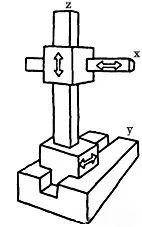
Cartesian Robots (PPP)
Cartesian robots, also known as single-axis mechanical arms, change the spatial position of their end effector (hand) through the movement along three mutually perpendicular coordinate axes: x, y, and z.
Cylindrical Robots (RPP)
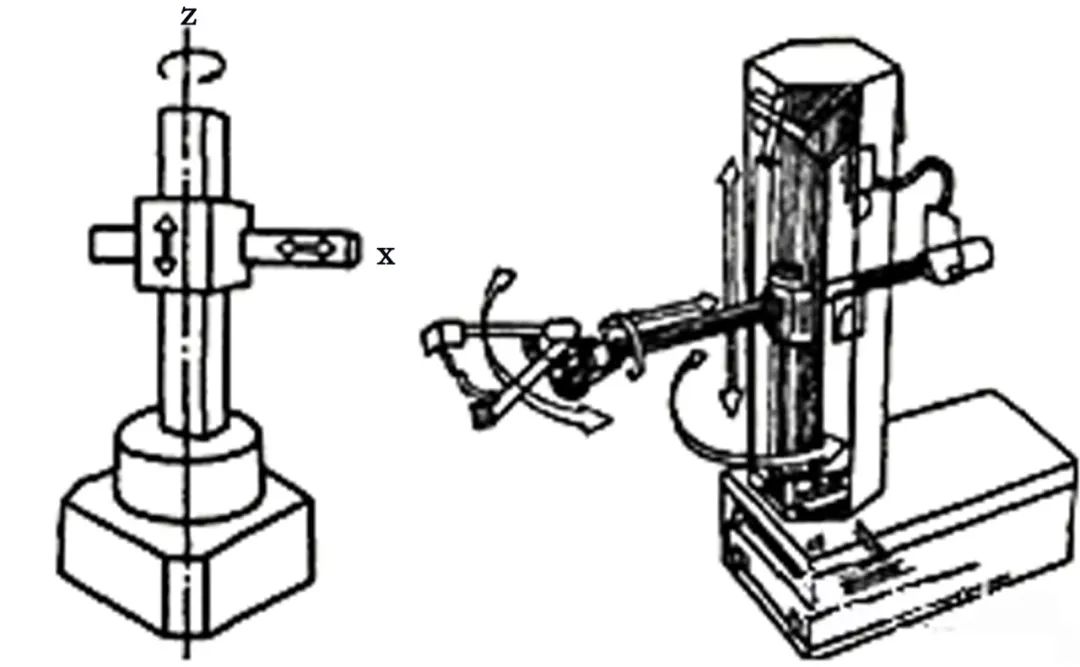
The spatial position change of the end effector of these robots is achieved by two moving coordinates and one rotating coordinate.
Spherical Robots (RRP)
Also known as polar coordinate robots, the motion of the robot arm consists of one linear motion and two rotations, which are along the x-axis extension, y-axis pitch, and z-axis rotation.
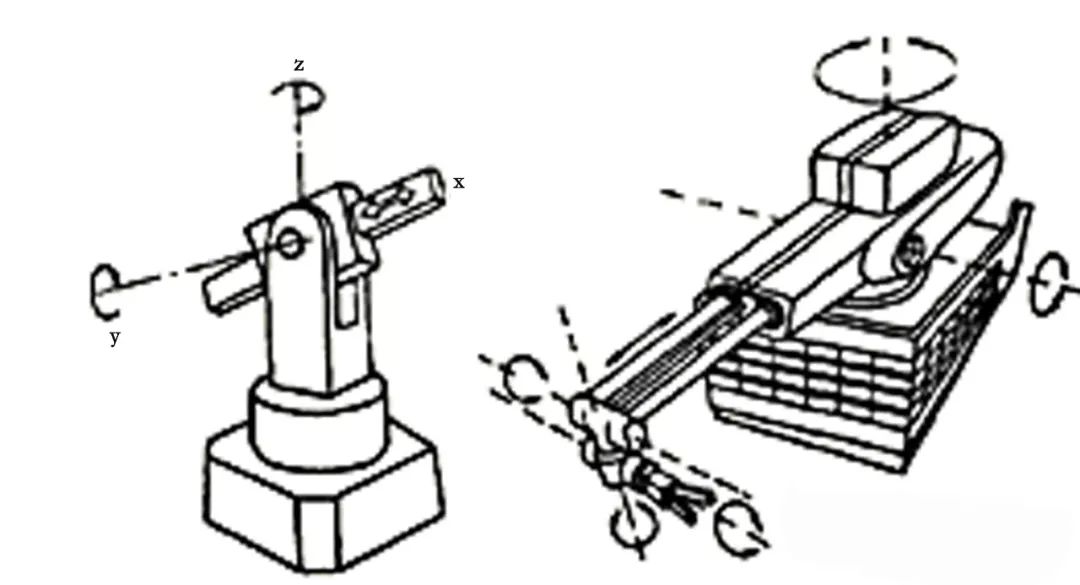
Joint Robots (RRR)
Also known as articulated robots or jointed robotic arms, they are suitable for various industrial automation tasks such as automatic assembly, painting, handling, welding, etc. They are divided into vertical joint robots and planar (horizontal) joint robots.
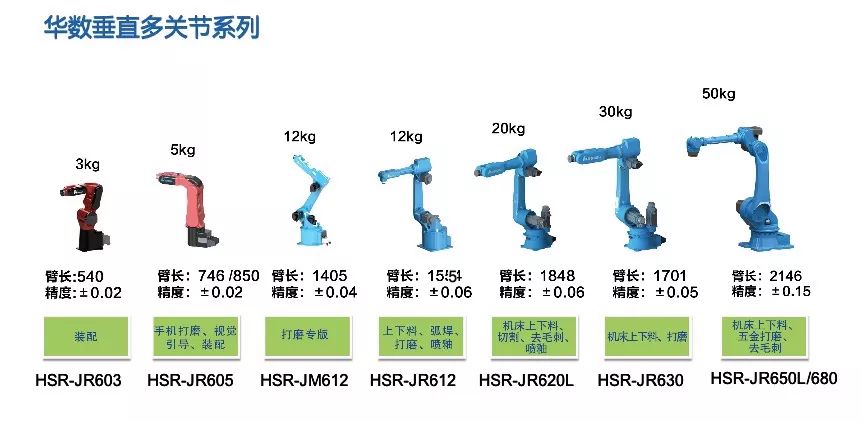
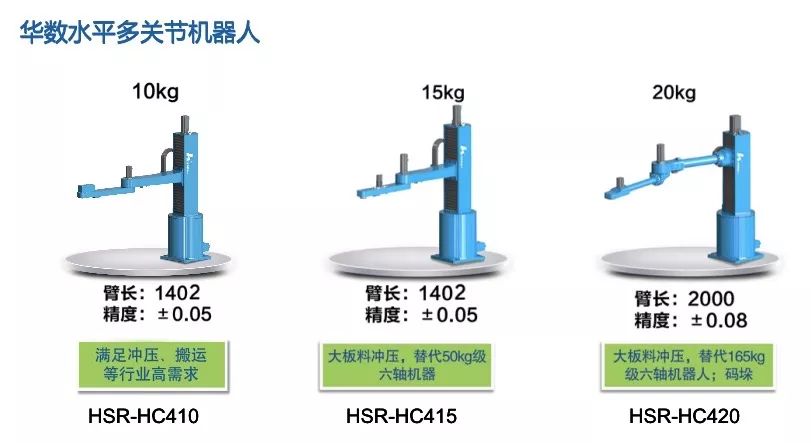
Additionally, they can be classified based on the working nature of joint robots, such as handling robots, palletizing robots, welding robots, painting robots, laser cutting robots, etc.
Classification by Robot Axis Count
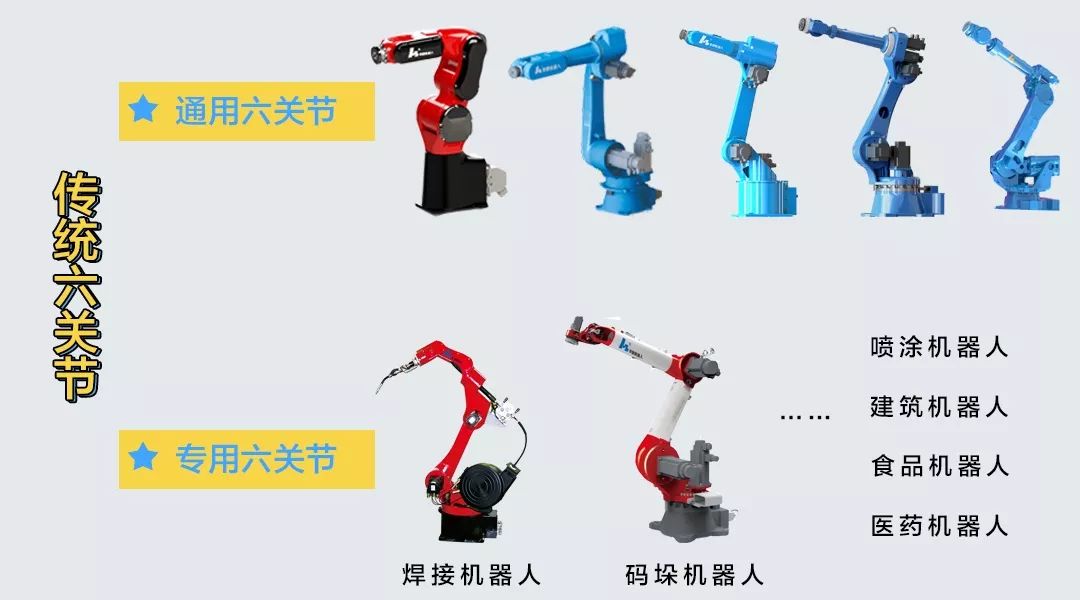
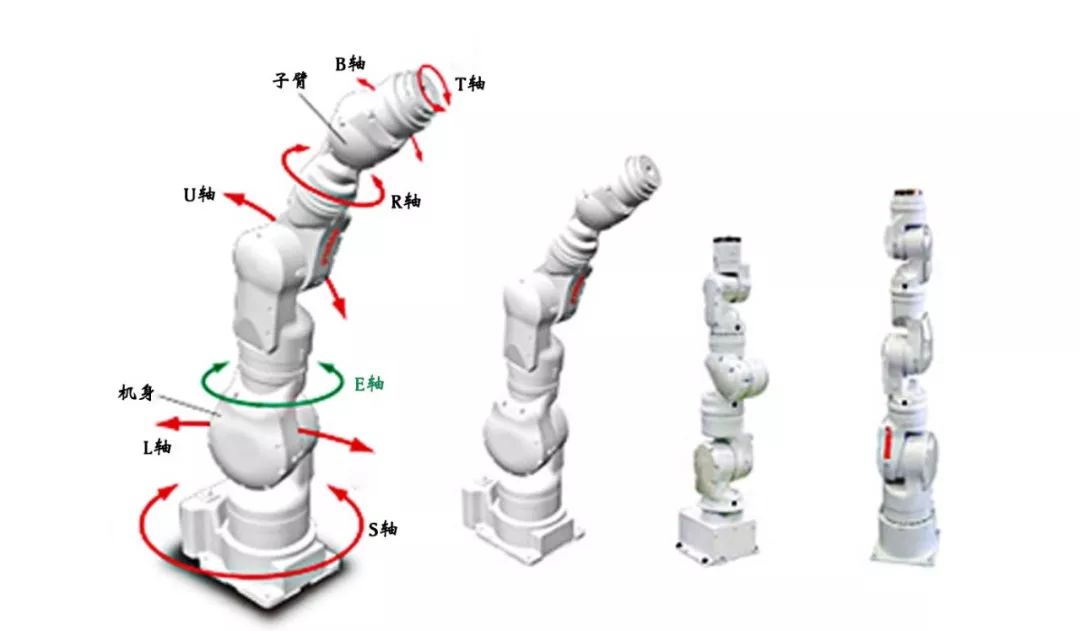
Traditional Six-Axis
Six-axis robots have six serially connected rotational joints, which are divided into general-purpose six-axis robots and specialized six-axis robots.
Seven-Axis Robots
Also known as redundant robots. Compared to six-axis robots, the additional axis allows the robot to avoid certain specific targets, making it easier for the end effector to reach specific positions and adapt more flexibly to certain special working environments.
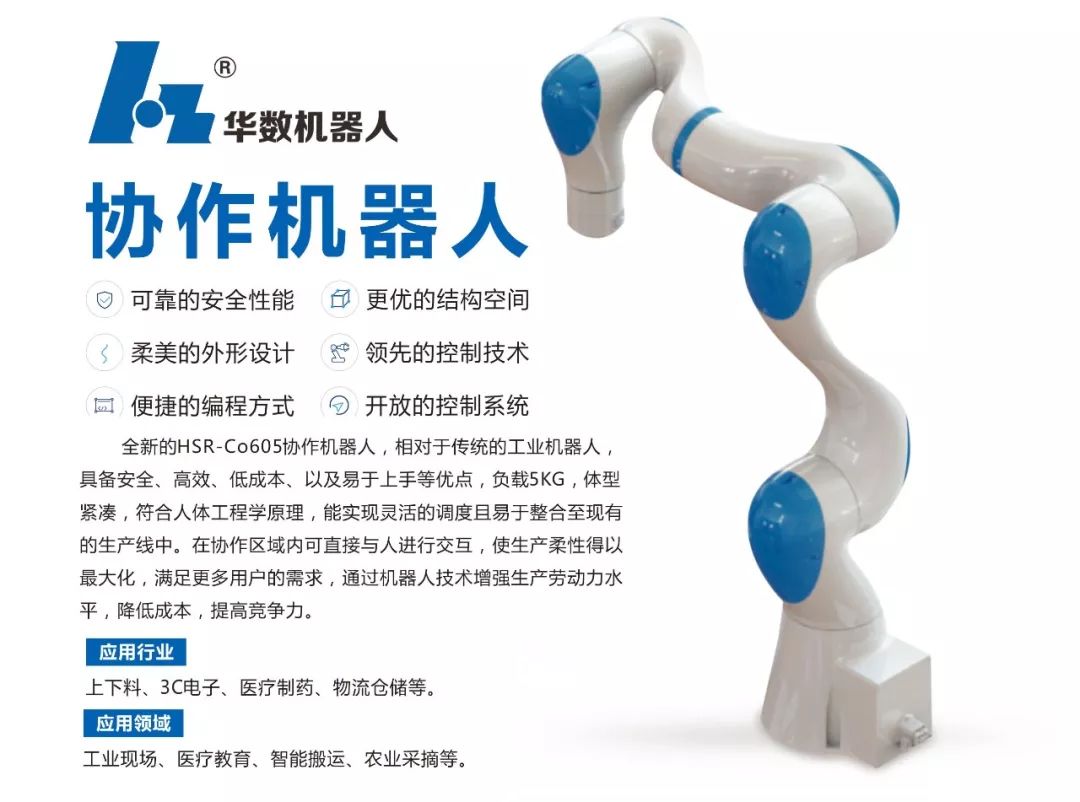
Collaborative Robots
Also known as cobots or co-robots, these robots can safely interact with humans directly. Collaborative robots can combine the precision and repeatability of robots with the unique skills and abilities of humans, where humans excel at solving imprecise and ambiguous problems, while robots have advantages in precision, strength, and durability.
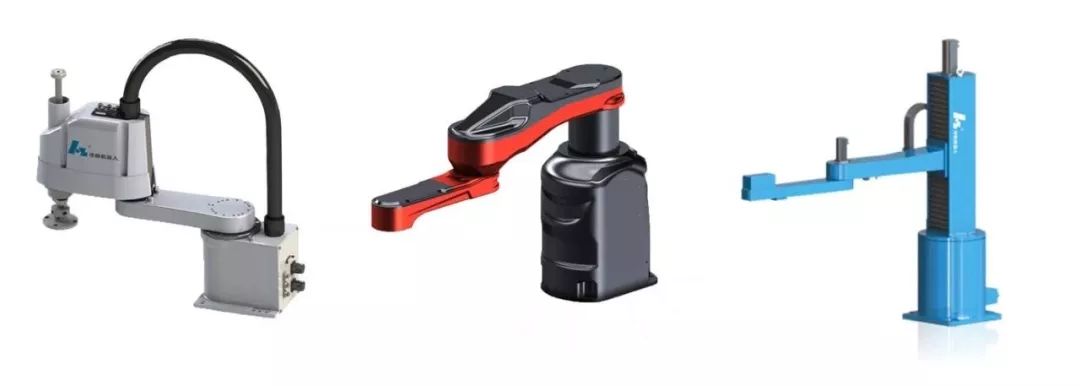
Four-Axis/SCARA Robots
Four-axis robots refer to “Selective Compliance Assembly Robot Arms” where the arms can move freely within a geometric plane, that is, translational degrees of freedom in the X, Y, Z directions and rotational freedom around the Z-axis.
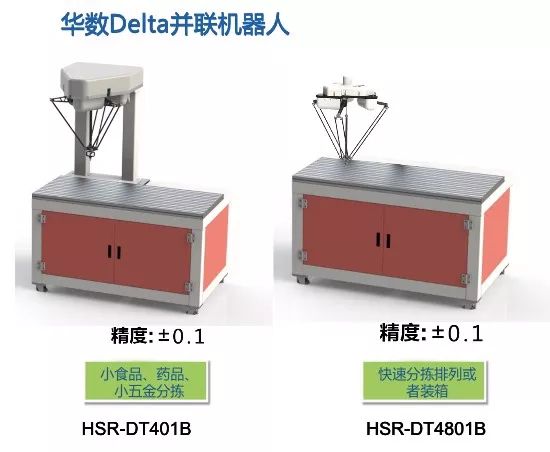
Delta Parallel Robots
Delta robots are high-speed, lightweight parallel robots that generally capture target objects through teaching programming or vision systems. They determine the spatial position of the gripper center (TCP) by three parallel servo axes, enabling operations such as transporting and processing target objects.
Classification by Control System
Classification by feedback presence
Divided into open-loop control and closed-loop control
Classification by desired control quantity
Divided into force control, position control, hybrid control
Force control includes: direct force control, impedance control, force-position hybrid control
Position control includes: single-joint position control (position feedback, position velocity feedback, position velocity acceleration feedback), multi-joint position control (decomposed motion control, centralized control)
Classification by intelligent control
Divided into fuzzy control, adaptive control, optimal control, neural network control, fuzzy neural network control, expert control
Source: Huasu Robotics  Editor ▎Wang Yan Reviewed ▎Yu Yongchu
Jinfen Mall Hot Book Rankings
☞ Jinfen’s favorite book rankings☞ Mechanical book rankings☞ Production management rankings☞ Design software rankings

- How to Quickly Publish Articles in Automotive Engineer Magazine
- October 2022 Automotive Production and Sales: Continued Growth Year-on-Year, New Energy Vehicles Set New Historical Highs
- Domestic Solid-State Battery and Process Patents
- A Massive Automotive Supply Chain Behind Domestic Car Companies, Recommended to Collect!
- Discussion on Tool Application Technology for Automotive Parts Processing
- BYD to Supply Batteries for Tesla, Eight Major Processes of Blade Battery Production are Not Simple!
- What are the “4680” and “All-Solid Ear” Batteries? Currently, No Company Dares to Publicly Disclose This Technology!
- 3D Printed Tools Assist in Efficient Processing of Motor Housings and Transmissions
- It is a “Smart Level” Process Tool that Ensures Automotive Quality, Indispensable in Industrial Production
- Necessity and Goals of Digital Factory Construction for New Energy Batteries
- 5G Empowerment Recommended by Ren Zhengfei is Already Published! This PPT Lets You Know All the Content.
- Great Wall’s Xushui Smart Factory: 286 Robots Create Luxury and Safety for VV5s

For submissions, please click the image above