3D printing opens up a world full of creativity, but it is important to print safely. Here is some knowledge about potentially harmful gases.With the increasing popularity of 3D printers, a range of new issues has emerged, the most significant of which is the potential health hazards posed by the gases released when 3D printing objects. Multiple studies have shown that the gases emitted during the operation of 3D printers pose a threat to human health, making it crucial to be familiar with these risks and how to avoid them.
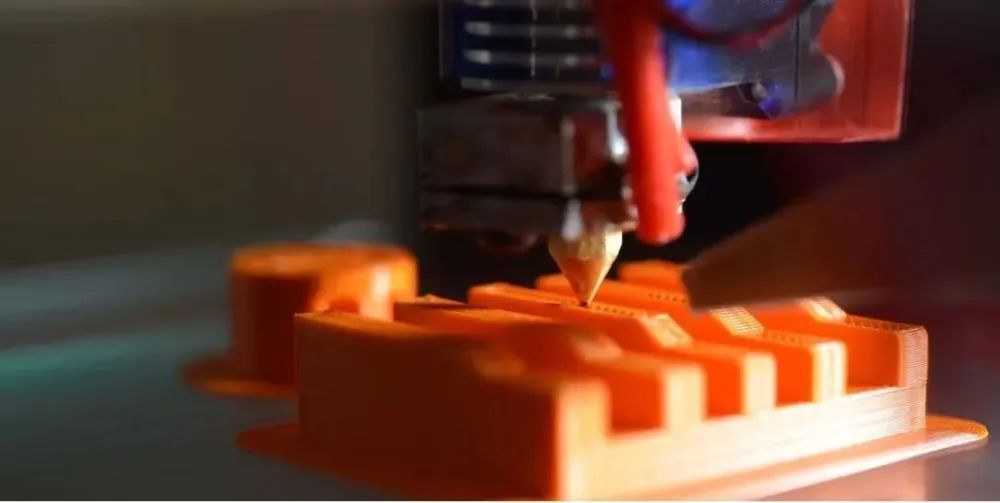
What Gases Are in 3D Printers?When a 3D printer operates, it emits gases containing particles from plastics, metals, and other materials. This volatile gas includes two types of components: UFP and VOC. Ultra-fine particles (UFP) are very small and can cause inflammation of the eyes and nasal cavities if proper safety equipment is not worn.Volatile organic compounds (VOC) include various compounds emitted from certain solids and liquids. According to the EPA’s article on indoor air quality (https://www.epa.gov/indoor-air-q … -indoor-air-quality), some of these are harmless and have a sweet smell, while others may have negative effects on health in the short or long term. You should be cautious to avoid prolonged exposure to VOCs and UFPs.Inhaling gases from 3D printers can lead to respiratory issues and other health problems. These gases can also irritate the eyes. When absorbed through the skin, they can increase the risk of skin irritation and other issues.
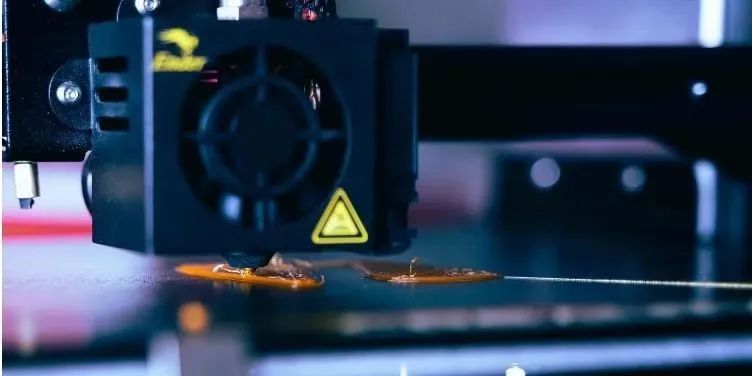
Risks of Inhaling 3D Printer GasesInhaling gases from 3D printers can lead to various health risks, such as:Allergic reactions: Some 3D printing filaments contain components that may trigger allergies or irritate the respiratory system. According to a study published in Environmental Science and Technology (https://pubs.acs.org/doi/10.1021/acs.est.9b04168), ABS and PLA filaments have a higher likelihood of causing allergies or inflammation.Skin contact: Gases from 3D printers can also come into contact with the skin, leading to potential irritation. Specifically, extrusion-based 3D printers use thermoplastics that can be dangerous if they come into direct contact with the skin and cause chemical burns. The CDC’s article on 3D printing safety (https://www.cdc.gov/niosh/newsroom/feature/3Dprinting.html) mentions that skin contact with harmful 3D printing materials is one of the hazards of this technology.Respiratory issues: Some gases emitted from 3D printers contain gaseous substances that can damage the respiratory system. These gases may irritate the eyes, nose, and throat, leading to coughing, headaches, dizziness, and other symptoms of respiratory distress. According to the same study in Environmental Science and Technology, particles emitted from 3D printers can negatively impact indoor air quality, and extensive exposure can affect respiratory health. The study also found that emissions from ABS filaments tend to be more harmful because ABS produces more emissions.Long-term Effects of 3D Printer Gases on HealthProlonged exposure to the gases emitted during 3D printing can lead to the following effects:Cell damage: A study conducted by the Chemical Insights Research Institute using human airway epithelial cells (https://chemicalinsights.org/wp-content/uploads/Chemical-Insights_3D-Toxicity-Report_final.pdf) found that long-term exposure to 3D printer gases can damage cells.Carcinogens: Certain types of thermoplastics used during 3D printing contain carcinogenic substances, which may lead to cancer if inhaled or ingested over extended periods. According to a 2016 study by the American Chemical Society (https://pubs.acs.org/doi/full/10.1021/acs.est.5b04983), ABS and HIPS filaments produce significant amounts of styrene, which is classified as a possible human carcinogen by the International Agency for Research on Cancer.How to Protect Yourself from Harmful 3D Printer Gases
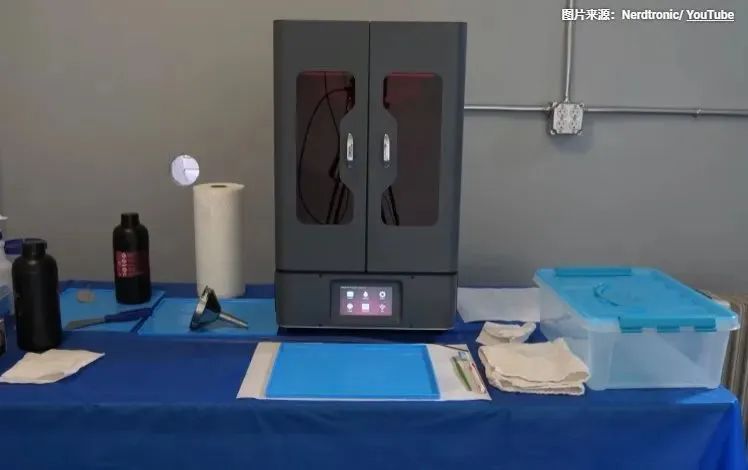
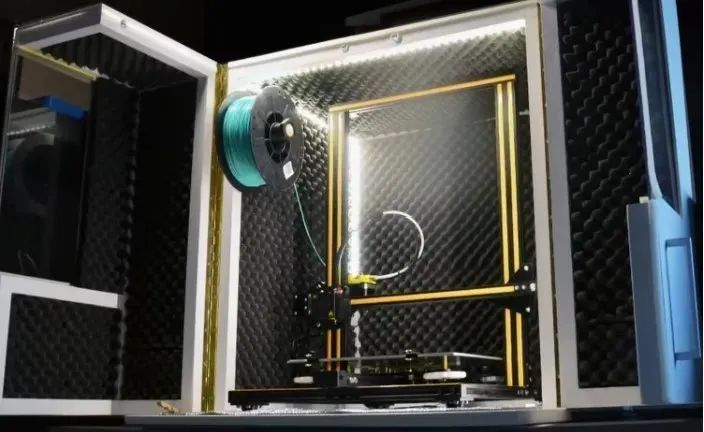
△ A closed resin 3D printer opened and placed on a table. Image source: Nerdtronic/ YouTubeYou can take several measures to reduce your exposure to 3D printer gases in your home or office environment. These include:Ensuring proper ventilation: Make sure your 3D printer has adequate ventilation and airflow to minimize the accumulation of 3D printer gases. You can achieve this by opening windows, using fans to circulate air, or installing an exhaust system.Wearing a respirator: If you are using particularly odorous materials (such as ABS), wearing a respirator designed to prevent odors and particulates may help. Some also have special filters to prevent specific materials like nylon and polycarbonate.Using safer materials: Filaments like ABS produce a lot of toxic gases and should be avoided. You should consider opting for filaments like PLA and PETG that emit fewer toxic gases.Regularly cleaning your printer: Be sure to clean your 3D printer regularly to prevent dust and other particles from accumulating in the air during printing. Regular cleaning of the printer also helps reduce unpleasant odors. You can start by cleaning the 3D printer bed and then move on to other parts.Enclosing: Install an enclosure around your 3D printer to help control fumes and keep them away from others in the space. The National Institute for Occupational Safety and Health (NIOSH) also recommends using an enclosure to capture gases. Examples of 3D printer enclosures are shown below.
Fans: Install fans near the printer to help expel some gases from the workspace faster and improve ventilation circulation.Temperature control: Monitor and adjust the temperature of the 3D printer to reduce the gases produced by the filament.Filament storage: Store filaments in a cool place, away from sunlight or direct heat sources, to prevent the release of harmful gases.Heated build platform: Using a heated build platform helps prevent the filament from overheating and reduces the amount of gas emitted.Wearing protective gear: Wear safety glasses to protect your eyes from gases released during printing and wear gloves to protect against sharp edges on printed objects.Taking necessary precautions when using a 3D printerThe gases produced by 3D printers can be harmful to your health, so it is essential to take all necessary precautions to reduce exposure to these gases, including adequate ventilation and protective equipment. By taking these steps, you can ensure that 3D printing is safe for you and your family or colleagues. If you are exposed to dangerous levels of these gases, you should seek medical help from a qualified professional.Source: Tencent News Client