Application of Virtualization Technology in Highway Toll Systems

Application of Virtualization Technology in Highway Toll Systems

Thesis

Authors: Tang Dongdong, Zhang Xiaopeng (COSCO Shipping Technology Co., Ltd.)

Abstract: With the increasing public demand for travel, some highway toll station systems face issues such as low lane passage efficiency, leading to congestion during peak hours. This paper proposes the use of server virtualization technology at toll stations to solve the problem of insufficient computing power of existing lane industrial control machines, which results in low passage efficiency; by adopting software virtualization technology, the lane transaction functionality is incorporated into the station-level transaction system, addressing the problems of ETC lane interference and duplicate charging inherent in traditional lanes. The application of virtualization technology can also achieve narrow island lanes, increasing the number of lanes and thereby enhancing passage efficiency. Additionally, the application scenarios of virtualization are suitable for both the renovation of existing toll stations to improve passage efficiency and for new toll stations, creating a “cloud + edge + terminal” overall architecture model to establish a smart tolling scenario characterized by “virtualization, narrow islands, unmanned operation, cashless transactions, device IP, and rapid passage,” thereby enhancing the passage efficiency and service quality of highway toll stations.

0

Introduction

Highways serve as an important support for national economic development. By the end of 2022, the total mileage of national highways reached 177,000 kilometers, and the development of the highway system has transitioned from ordinary highways to smart highways [1]. After the cancellation of provincial boundary toll stations, the tolling model has shifted from a traditional provincial charging model to a nationwide “one network” charging model, achieving the goal of “one trip, one payment, one inspection, one bill.” However, as the public’s demand for better travel continues to grow, toll station entrances and exits are becoming hotspots for traffic congestion. In response, various provinces and cities have adopted different pilot and exploratory approaches. The Qingfeng Toll Station in Guangdong is one of the busiest toll stations in the province with the highest traffic volume. By optimizing the layout of ETC lanes and mixed manual ETC lanes, it avoids congestion caused by intermingled traffic; Jiangsu, Fujian, and Guizhou have launched “cloud tolling” pilots to separate lane transactions from external device control, improving overall toll station passage efficiency; Chongqing’s G5013 Science City Toll Station employs “ramp pre-transaction + three-level guidance + lane verification” technology to improve the passage efficiency of ETC lanes by preventing abnormal vehicles from entering ETC lanes and causing congestion. Thus, it is evident that the exploration of a new generation of intelligent toll stations is in full swing across various regions.
As of March 2023, there are a total of 11,000 toll stations on national highways, with an average daily traffic volume of 33.45 million vehicles. Therefore, as a direct window unit providing travel services to the public, enhancing the efficiency of vehicle passage through toll stations is an important means to effectively meet the travel needs of the public. Improving the efficiency of vehicle passage through toll stations plays a significant role in the following five aspects: shortening travel time, improving entrance and exit efficiency, reducing vehicle waiting time at toll stations, allowing drivers and passengers to reach their destinations more conveniently and quickly; reducing traffic congestion, preventing excessively long vehicle waiting times, and alleviating the inconvenience caused by congestion; enhancing road safety, reducing the risk of fatigue driving caused by long waiting times; improving service quality, as toll stations are important places for serving vehicles and passengers, enhancing toll station efficiency can improve service quality; promoting economic development, as highways are important transportation infrastructure, improving passage efficiency can promote economic development, facilitating the smooth flow of people, logistics, and capital, providing strong support for local economic development. In summary, enhancing the passage efficiency of toll station entrance and exit lanes and alleviating congestion at toll stations is of great significance for improving the travel experience of vehicles and accelerating social and economic development.

1

Overview

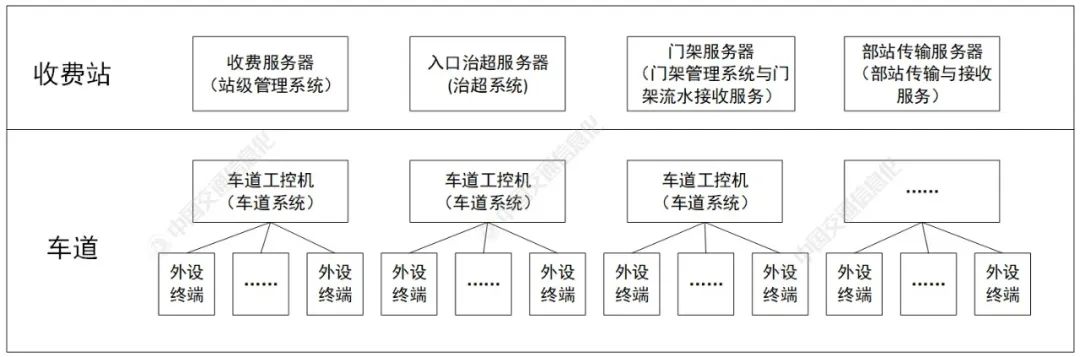
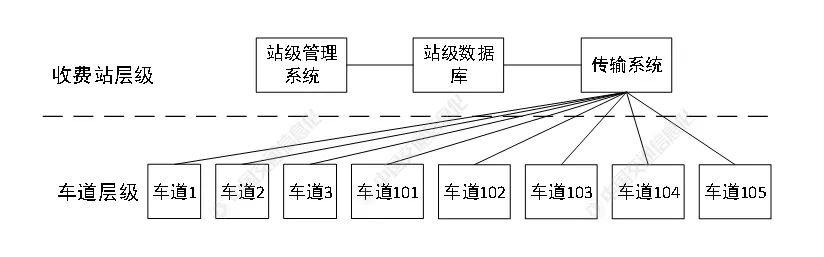
The existing hardware and software architecture of toll stations is shown in Figure 1. The toll station level mainly consists of servers and corresponding application software, which can be divided into toll servers, entrance overload control servers, gantry servers, and transmission servers based on business types. The toll lanes are mainly composed of industrial control machines distributed across each lane and corresponding external devices (referred to as peripherals), which include roadside unit controllers, card readers, printers, mobile payment terminals, fee display units, barrier machines, coils, canopy lights, information boards, weighing platforms, vehicle recognition devices, and self-service card machines. Against the backdrop of increasing traffic volume and diversified tolling services, the operational bottlenecks of traditional toll station architecture are gradually becoming apparent: the resources of lane industrial control machine systems cannot meet the increasing tolling demands, leading to computing power bottlenecks in lane industrial control machines, making it difficult to enhance lane tolling efficiency; the various lane industrial control machines operate independently, making real-time sharing of transaction data between lanes impossible, leading to ETC transaction interference and duplicate charging issues; the numerous hardware and software nodes at toll stations make operation and maintenance difficult; and some old toll stations, limited by geographic conditions, cannot meet the increasing passage demands with the existing number of lanes. Therefore, this paper proposes utilizing virtualization technology to solve the above issues and enhance the vehicle passage efficiency at toll stations.
Application of Virtualization Technology in Highway Toll Systems
Figure 1 Schematic Diagram of Existing Toll Station Lane Hardware and Software Architecture
This paper addresses the prominent issues faced by existing toll stations by proposing methods to improve computing power and solve lane interference and duplicate charging issues through virtualization technology. Furthermore, the application of virtualization technology can achieve narrow island lanes, increasing the number of lanes and thus enhancing passage efficiency. On one hand, through server virtualization technology, the operational mode of the station-level server is changed from traditional independent operation to cluster operation, allowing containers to run on virtual machines, thereby allocating more server computing resources to solve the current computing power insufficiency of industrial control machines. Additionally, the application of virtual machines allows maintenance personnel to more conveniently add and modify virtual machine resources in a virtual environment, with advantages of strong scalability, high flexibility, and the ability to run multiple operating systems simultaneously on one platform; on the other hand, through the application of lane software system virtualization technology, a single lane tolling system can support all lanes’ passage functions, achieving the goal of aggregating all toll data for the station, providing a basis for solving lane interference issues and duplicate charging problems. Compared to existing lane layout optimization schemes [2] and smart toll station schemes, the virtualization technology proposed in this paper can enhance the overall vehicle passage efficiency of toll stations without increasing additional hardware resources.Based on these characteristics, virtualization technology can be applied not only to the renovation of existing toll stations to enhance passage efficiency but also to new toll stations, creating smart tolling scenarios characterized by “virtualization, narrow islands, unmanned operation, cashless transactions, device IP, and rapid passage,” thereby improving the passage efficiency and service quality of highways.

2

Technical Features

By combining server hardware virtualization and lane software system virtualization, a new type of station-level application system is created. Multiple independent hardware servers at the toll station are transformed into a clustered environment, employing virtual machines to allocate reasonable system resources to each business system; broadband performance optimization technology and CPU virtualization performance optimization technology are used to tune the virtual machines; by restructuring vehicle transaction logic, the lane tolling system is virtualized, migrating the operations that originally ran on lane industrial control machines to the toll station virtual machines, integrating them into the station-level transaction system, achieving a system that controls multiple lane peripheral terminals under the toll station, and reaching the goal of real-time sharing of lane transaction data. Compared to traditional toll station operational models, the new station-level system using virtualization technology has the following advantages.
(1) High Availability: The server cluster using virtualization technology deploys multiple virtual machines, utilizing Keepalived to achieve load balancing and failover, thus improving system availability and stability, avoiding the issue of multiple failure points caused by single-node operation in traditional toll station models, and ensuring the orderly tolling and enhanced passage efficiency of the toll station.
(2) Resource Utilization: Through virtualization technology, a physical server can be divided into multiple virtual machines, achieving higher resource utilization and reducing the hardware costs and energy consumption of each lane’s industrial control machine and associated devices.
(3) Flexibility: Server clusters and virtual machines can dynamically increase or decrease nodes and virtual machine instances based on toll station business needs, thereby improving the flexibility and scalability of the station-level system.
(4) Simplified Management: Integrating multiple servers and virtual machines into a cluster makes it easier to manage and maintain the system, reducing management costs and risks.
(5) Enhanced Security: Server clusters and virtual machines can improve system security and confidentiality through isolation and real-time security control [3], avoiding risks of single points of failure and data leakage.
2.1 Server Virtualization
2.1.1 Technical Route
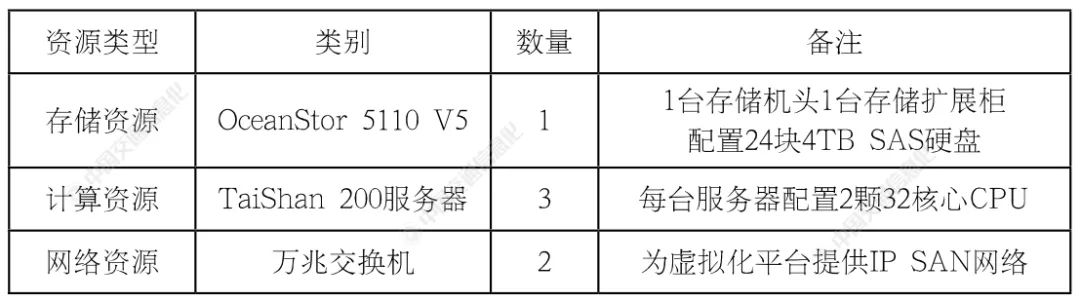
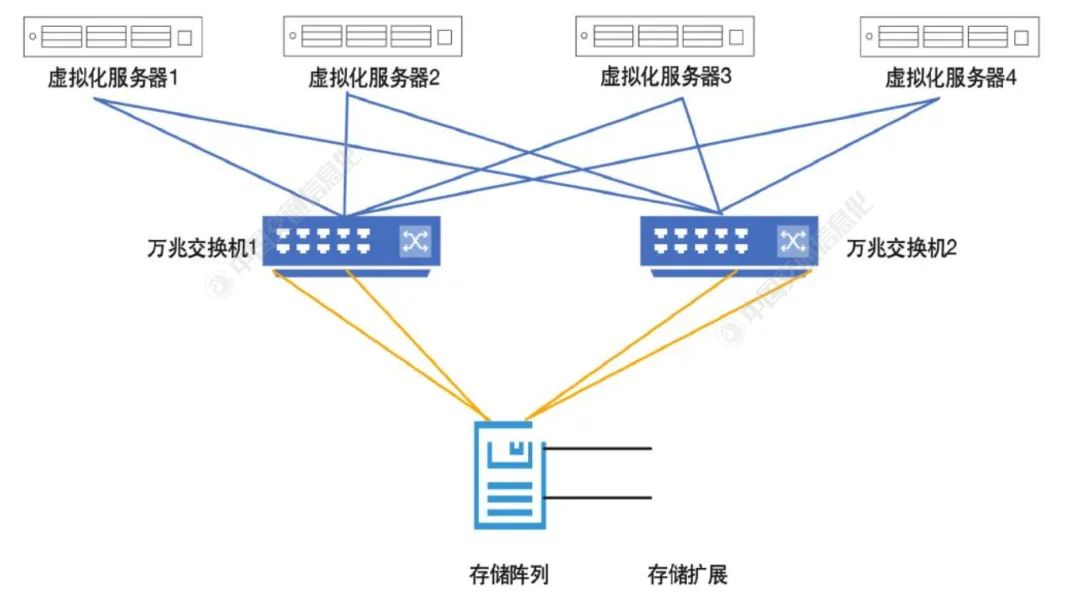
In this paper, server virtualization at toll stations consists of storage resource virtualization, computing resource virtualization, and network resource virtualization. The resource configuration for toll station server virtualization is shown in Table 1, and the system topology is illustrated in Figure 2. The server virtualization uses the Fusion Compute virtualization platform, which mainly manages virtualization resources, with the underlying layer being KVM (Kernel-Based Virtual Machines). Each physical server first achieves resource virtualization through KVM technology, and then the Fusion Compute management interface uniformly manages and schedules the virtualization resources. The toll station server virtualization platform consists of 3 computing nodes (3 servers), 1 shared storage, and 2 switches. The virtualization platform supports a total of 6 virtual machines, 4 production business virtual machines, and 2 management virtual machines for the virtualization platform.
Table 1 Virtualization Server Resource Configuration InformationApplication of Virtualization Technology in Highway Toll Systems
Application of Virtualization Technology in Highway Toll Systems
Figure 2 Server Virtualization System Topology
2.1.2 Performance Optimization
This paper uses Huawei TaiShan200 servers as an example, applying Kunpeng Boost Kit virtualization technology to optimize the station-level virtualization platform, enhancing broadband performance and CPU virtualization performance based on KVM virtualization scenarios, effectively addressing the concurrent pressure of all TCP peripheral messages from lanes accessing the toll station servers.
Broadband performance optimization technology: Configure BIOS settings, set memory refresh frequency to Auto, enable NUMA, set Stream Write Mode, enable CPU prefetching configuration, enable SRIOV, and enable SMMU operations.
CPU virtualization performance optimization technology: Use the virsh command to manage server CPU resources for KVM virtual machines. When running multiple station-level virtual machines on the TaiShan server virtualization cluster, due to the different types of transaction business virtual machines and management business virtual machines, they will occupy server resources to varying degrees. To prevent management business virtual machines and database virtual machines from interfering with storage-intensive transaction business virtual machines, it is necessary to completely isolate the I/O processing of transaction business virtual machines. Use vcpuinfo and emulatorpin commands to view and modify the state of virtual machines using physical logical CPUs, and by binding CPU resources, the issue of reduced lane transaction efficiency during the financial settlement and parameter list distribution periods at toll stations is resolved, effectively enhancing the stability of transaction business virtual machines.
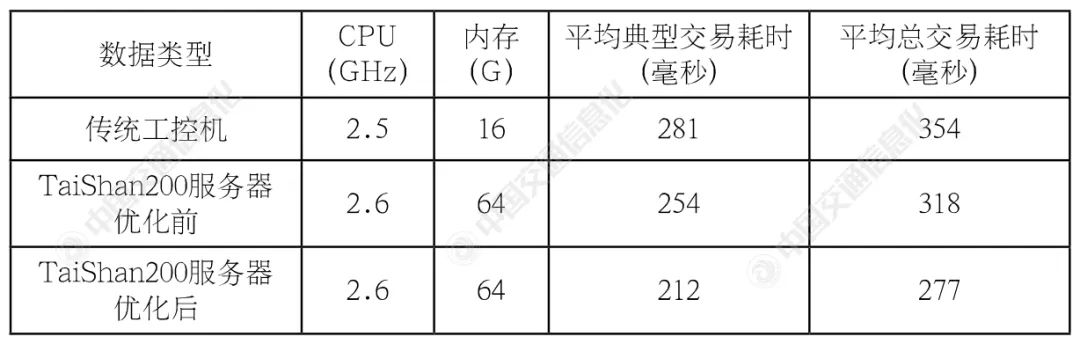
By extracting log data from the production environment of the toll station, we randomly selected 1,000 ETC transaction duration data points from ETC entry lanes under three conditions: before the optimization of traditional industrial control machines, after the optimization of TaiShan200 servers, and after the optimization of TaiShan200 servers. The results indicate that under the TaiShan200 server virtualization cluster environment, the ETC transaction duration using broadband performance optimization technology and CPU virtualization performance optimization technology improved by 13% compared to before optimization, and by 22% compared to traditional industrial control machines. The comparison of ETC transaction durations is shown in Table 2.
Table 2 ETC Transaction Duration TableApplication of Virtualization Technology in Highway Toll Systems
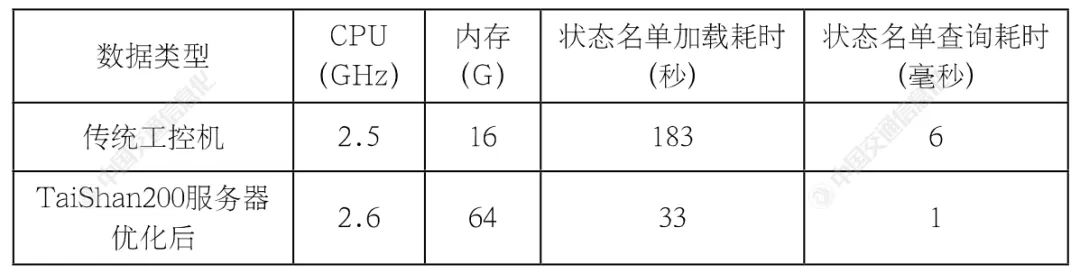
Taking the highway status list processing process as an example, as of April 2023, the number of highway status lists reached 53.23 million, and this data volume shows a linear growth trend with the increase of ETC users. To ensure the timely interception of blacklisted users and the timely release of whitelisted users in the overall status list, real-time loading of the status list must be guaranteed. In this paper, a sampling statistical approach is used to analyze the loading and query duration data of the status list at a certain provincial mainline toll station, with the data shown in Table 3. The sampled data in the table indicates that in the status list loading and judgment process, the virtualization station-level system’s average operational efficiency improved by 80% compared to industrial control machines. Server virtualization can achieve the sharing of CPU, memory, and storage resources of the station-level server, using server computing resources to replace lane industrial control machine computing resources, thereby solving the problem of excessively long loading times for the status list caused by insufficient computing resources of lane industrial control machines.
Table 3 Status List Analysis TableApplication of Virtualization Technology in Highway Toll Systems
2.2 Software Virtualization
2.2.1 Technical Route
The existing networked toll station-level software system is divided into two levels: the toll station and the lane, as shown in Figure 3. The toll station-level software system consists of the station-level management system and the station-level transmission system, with the server deployment located in the toll station machine room. The lane level is constituted by the lane system, with the lane-level software system deployed on the industrial control machine located in the toll booth of the fee island, where one industrial control machine deploys one lane system to achieve the passage function of that lane.
Application of Virtualization Technology in Highway Toll Systems
Figure 3 Existing Networked Toll Station Business Architecture Diagram
By restructuring lane transaction logic, the functions of the lane system are integrated into the station-level transaction system. This involves streamlining the lane transaction business process, upgrading the existing one-to-one model where one lane system controls one lane to a one-to-many model where a single station-level transaction system controls multiple lanes. By adopting virtualization design and deployment methods, the station-level transaction system only needs to be deployed at a single point to control the passage logic of all lanes at that station, achieving the virtualization of lane transactions from the application software level and realizing real-time aggregation and sharing of all lane transaction data, providing data support for judging ETC lane interference and duplicate charging.
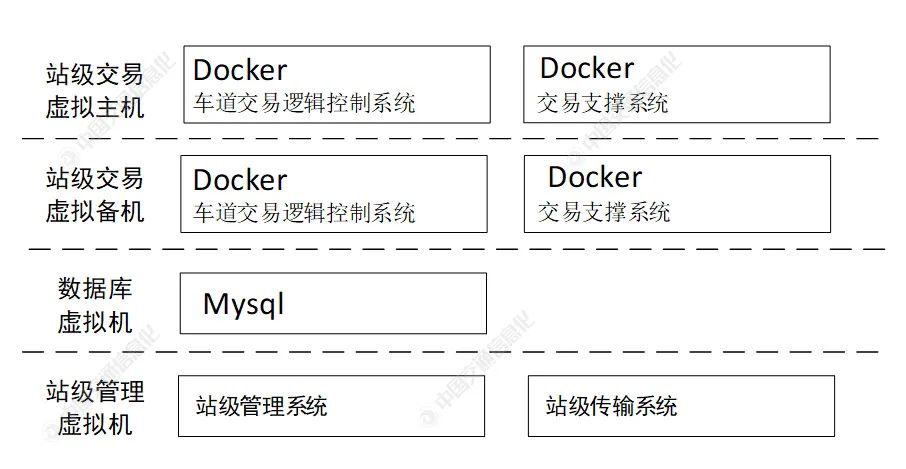
On the server virtualization platform, four new virtual machines are established to carry the networked toll station-level business, with the virtualization architecture of the station-level charging system illustrated in Figure 4. The four virtual machines are categorized based on business into station management virtual machines, database virtual machines, and station transaction virtual machines, with the station transaction virtual machines consisting of two virtual machines. The station management virtual machine carries the existing management business of the toll station, composed of the station-level management system and the station-level transmission; the database virtual machine is used to run the Mysql database; the station transaction virtual machine carries the lane transaction logic control system and transaction support system operations. Both the station management system and the station transaction system run in a containerized manner on virtual machines, utilizing the good isolation of virtualization to compensate for the shortcomings of operating system virtualization isolation [4].
Application of Virtualization Technology in Highway Toll SystemsFigure 4 Station-Level Charging System Virtualization Architecture Diagram
The station transaction virtual machines adopt a high-availability primary-backup operating mode, avoiding situations where a single transaction virtual machine failure would prevent vehicles from passing through the toll station. The Keepalived system is used to detect the status of primary and backup virtual machines, ensuring that in the event of a failure of the main transaction virtual machine, the backup virtual machine can still support the operation of all lanes at the toll station, maintaining normal passage order for vehicles at the toll station. The lane transaction logic control system and transaction support system both operate in a containerized manner, ensuring independent operation and rapid deployment of business.
2.2.2 Software Architecture Restructuring
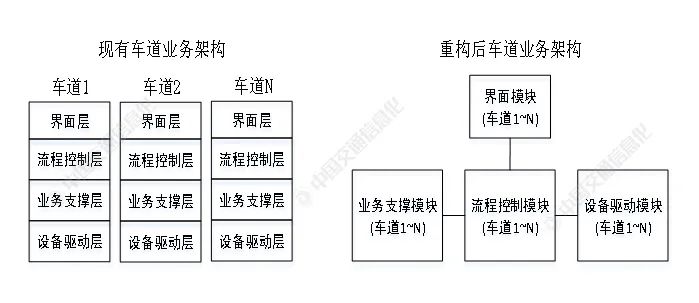
The existing lane software architecture is designed and developed in a layered manner, centered around individual lanes, consisting of interface layer, process control layer, business support layer, and device driver layer, with each layer working together to achieve the vehicle transaction function of a single lane.
The restructured virtualization station-level transaction system is function-centric, categorized by function business into modules, each of which can operate independently and supports response control for multiple lanes. The comparison of the lane business architecture is shown in Figure 5. The virtualization station-level transaction system architecture meets the requirement of “one software controlling multiple lanes.” The virtualization software architecture encapsulates individual lanes as objects, with lane objects possessing basic attributes and functions, utilizing inheritance and polymorphism to achieve multiple operational modes for ETC lanes, mixed lanes, and self-service lanes. A toll station can achieve overall control of multiple lanes based on preset lane configuration information.
Application of Virtualization Technology in Highway Toll Systems
Figure 5 Comparison of Lane Business Architecture
The operation mode of a single software realizes the control function of the “central brain.” When an ETC vehicle traveling in Lane A is charged by the roadside unit of Lane B, as the vehicle continues to the integrated barrier area of Lane A, the station-level transaction system determines that the vehicle has already completed the payment in Lane B based on transaction data and license plate recognition data, thus Lane A does not charge again, and the station-level transaction system directly controls the barrier of Lane A to lift and the barrier of Lane B to drop, fundamentally resolving the issues of duplicate transactions and ETC lane interference.
2.2.3 Port Classification Binding
During the ETC transaction concurrency testing process, it was found that the number of virtualized lane configurations is directly proportional to the average duration of typical ETC transactions. Since the DSRC (Dedicated Short Range Communication) technology used for ETC vehicle transactions has low latency characteristics, thread binding and port binding techniques are employed to address the concurrency waiting issues of ETC transactions in each lane. Firstly, each module opens a separate thread for communication response and business processing for each lane object, achieving business isolation between lanes; secondly, communication for each module is port-bound based on lane numbers, for example, if the existing communication port is 35601, the final communication port is determined by adding the corresponding value based on the lane number, for instance, the communication port for entry lane 1 is 35602, and for exit lane 1 it is 35702, enabling parallel listening of ports and avoiding congestion in the application software message queue that leads to increased ETC transaction duration.

3

Architecture Design

3.1 Overall Architecture
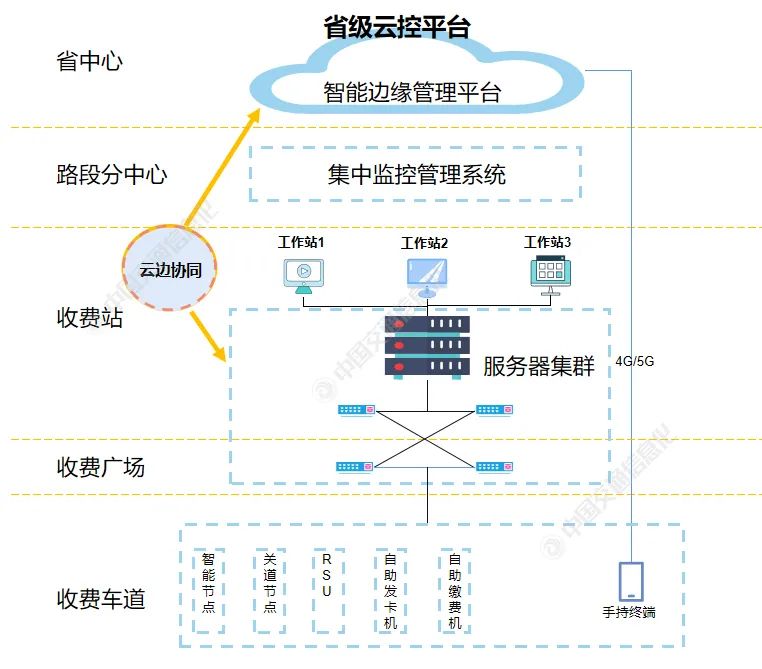
The virtualization toll system adopts a “cloud + edge + terminal” overall architecture model, as shown in Figure 6. The provincial center deploys an intelligent edge management platform to manage the access and management of station-level nodes and lane terminal nodes [5].Segment sub-centers set up centralized monitoring management systems to oversee ramp pre-transaction and self-service lane monitoring and management.The toll station server is clustered, forming an edge cloud, deploying station-level management systems and station-level transaction systems, and achieving cloud-edge collaboration through the edge management platform.The lane terminals connect to the local area network, enabling the station-level transaction system to control lane terminal devices.
Application of Virtualization Technology in Highway Toll Systems
Figure 6 Overall Architecture Diagram of the Virtualization Toll System
Based on the current state of networked toll operations, the overall architecture design of the virtualization toll system features standardized lane layouts, standardized device access, standardized handling of special situations, online tolling, and intelligent tolling, detailed as follows.
(1) Standardized Lane Layout: Lane layout design is carried out according to the overall plan for optimizing and upgrading the highway networked toll system by the Ministry of Transport.
(2) Standardized Device Access: The station-level transaction system centrally processes all lane devices within the toll station (including pre-transaction gantry devices) through standardized network protocols, achieving centralized control and monitoring of devices such as license plate recognition devices, fee display units, barrier machines, passage indicator lights, alarms, vehicle inspection devices, and ETC roadside units.
(3) Standardized Handling of Special Situations: Further improvement of special situation types and handling rules is achieved, enabling precise identification and recording of special situations, and enhancing the toll station’s capability to handle special situations through reporting, audio-video intercom, and remote assistance.
(4) Online Tolling Model: The application of online blacklists and online billing enables the networked tolling business to develop towards precision and online services, significantly enhancing the information service level of highways.
(5) Intelligent Tolling Business: The application of ramp free-flow pre-transaction, robotic tolling, cloud vehicle type identification, and remote assistance technology comprehensively enhances the intelligent level of the toll station.
3.2 Station-Level System Architecture
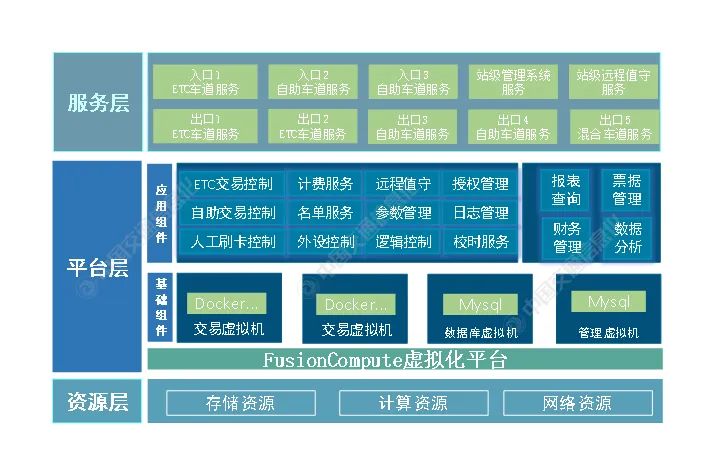
The virtualization station-level toll system architecture consists of a resource layer, platform layer, and service layer, as shown in Figure 7. The resource layer provides storage, computing, and network resources through server virtualization, allowing dynamic adjustment of server cluster resource allocation based on business operation conditions, achieving reasonable and efficient resource use; the platform layer consists of the virtualization platform, basic components, and application components, where the virtualization platform provides the fundamental server hardware resource scheduling function, the basic components provide services such as the Galaxy Kirin Advanced Server Operating System (Kunpeng version) V10, Redis memory database, Docker container components, and Mysql database; the application components consist of the business modules of the station-level transaction system and the station-level management system; the service layer provides services for the virtualization station-level toll system, supporting the operation of 3 entrance lanes, 5 exit lanes, the station-level management system, and the station-level remote monitoring system. The virtualization station-level toll system replaces traditional lane industrial control machines, achieving centralized management of server resources and application programs, information sharing, and data interoperability [6], solving the issues of “control islands” between lanes and forming an expandable transaction service and a unified control service.
Application of Virtualization Technology in Highway Toll Systems
Figure 7 Virtualization Station-Level Toll System Architecture Diagram
3.3 Virtualization Tolling Process
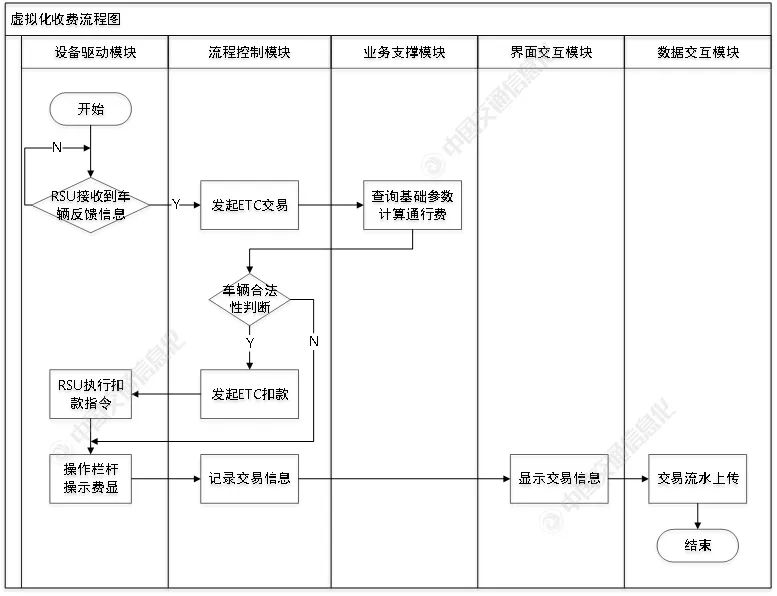
Taking the ETC vehicle transaction process as an example, the virtualization tolling process is illustrated in Figure 8.
Application of Virtualization Technology in Highway Toll Systems
Figure 8 Virtualization Tolling Process Diagram
Vehicles enter the lane, and the roadside unit receives the VST signal feedback from the onboard unit. The device driver module sends the vehicle data received by the roadside unit to the process control module; the process control module initiates the ETC transaction, calling the business support module for parameter queries, list queries, and fee rate queries, effectively assessing vehicle information, tag information, ETC card information, and balance; the device driver module receives the ETC deduction request and calls the roadside unit to execute the ETC deduction. After the deduction is completed, the barrier lifts to allow passage, and the fee display unit shows the vehicle’s passage prompt information; the process control module records the transaction flow of the vehicle, which is stored locally on the disk in file format; if it is a mixed lane, the interface interaction module displays the current vehicle’s transaction information; if it is a narrow island lane, the vehicle transaction information is sent to the backend remote processing system for transaction information display; the data interaction module uploads the locally stored transaction flow, images, and logs to the upper-level node, completing this virtualization tolling process.

4

Application Scenarios

4.1 Narrow Islands
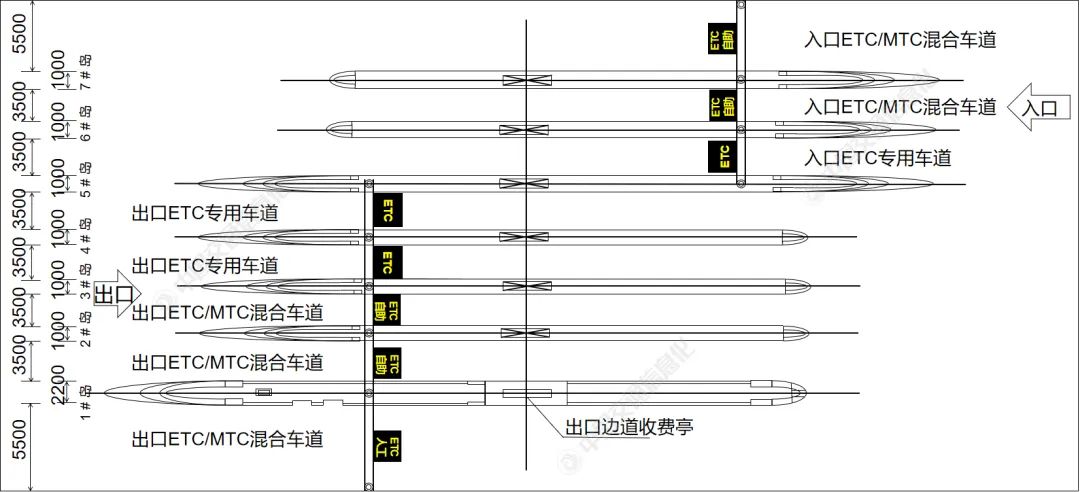
The station-level system, after adopting virtualization technology, provides technical support for the implementation of narrow islands and unmanned operations at toll stations. Taking a certain province’s virtualization toll station pilot project as an example, this toll station was originally designed with 3 entrance lanes and 4 exit lanes. After the narrow island modification pilot construction, except for the width of the exit side toll island remaining unchanged, the width of other toll islands was reduced from 2.2 meters to 1 meter, expanding the number of exit lanes from 4 to 5. A schematic diagram of the narrow island toll plaza layout is shown in Figure 9, where all lanes except the exit side lane are designed as narrow islands.
Application of Virtualization Technology in Highway Toll Systems
Figure 9 Schematic Diagram of Narrow Island Toll Plaza Layout
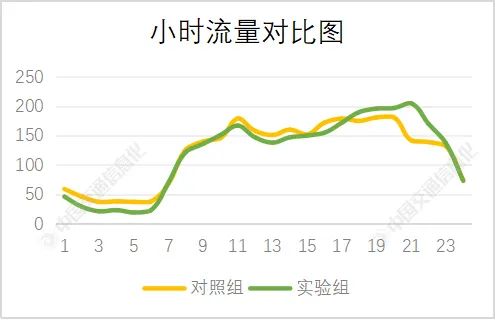
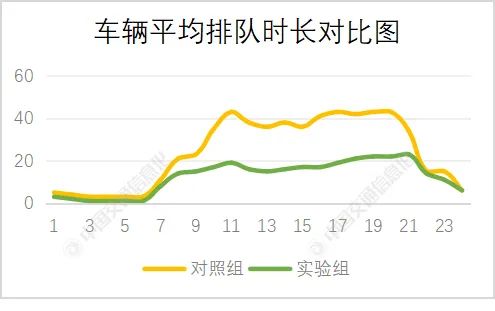
This paper selects traditional toll stations with adjacent geographic locations, similar traffic volumes, and 3 ETC lanes for comparative analysis. Among them, the traditional toll station with 2 exit ETC mixed lanes serves as the control group, while the virtualization toll station with 3 exit ETC mixed lanes serves as the experimental group. Traffic data from mixed exit lanes on the same working day is analyzed, with the results shown in Figures 10 and 11. The results indicate that, with the width of the toll plaza unchanged, compared to traditional toll island layouts, the use of virtualization and narrow island toll stations, while increasing one ETC mixed lane, reduced the average queuing time for vehicles in the ETC mixed lane during peak hours from about 40 seconds to 20 seconds, and the average congestion duration per vehicle decreased by approximately 50%.
Application of Virtualization Technology in Highway Toll Systems
Figure 10 Hourly Traffic Volume Comparison Chart
Application of Virtualization Technology in Highway Toll Systems
Figure 11 Average Vehicle Queuing Duration
4.2 New and Expanded Toll Stations
The application of station-level virtualization technology provides technical support for the construction of new and expanded toll stations. For new toll stations, virtualization technology meets the requirements of the Ministry of Transport’s guidelines for standardized construction of toll stations: standardization of equipment and facilities (including software), unification of user services, and refinement of operational management.
The software architecture of the toll station adopts a standardized architectural design based on toll stations, utilizing a unified operating environment, and enabling online deployment and configuration of software; supporting unmanned operation and unified user services for special situation remote processing; achieving refined management requirements for real-time updates of ETC status lists. For the renovation and expansion of existing toll stations, virtualization technology can be downgraded for use, deployed traditionally on existing industrial control machines to ensure the independent and stable operation of traditional tolling modes, while the standardized lane software utilizing virtualization technology incorporates elements of unmanned self-service tolling, ramp free-flow, and remote special situation processing, meeting the upgrade needs of expanded toll stations.

5

Conclusion

The application of virtualization technology in highway station-level toll systems provides a model for the digital and intelligent construction of highways. Server virtualization technology and software virtualization technology offer reference approaches to address the issues of insufficient computing power of lane industrial control machines, ETC lane interference, and duplicate charging problems; furthermore, they provide prerequisites for the design and construction of narrow islands. The cloud-edge-terminal architecture model adopted by virtualization technology can be applied not only in the planning and design of new toll stations but also in the renovation and upgrade of existing toll stations, enhancing the passage efficiency of toll stations. It is worth noting that since virtualization technology integrates existing lane transaction functionalities into the station-level system, it imposes higher requirements on network quality compared to traditional models. Additionally, due to the limitations of station-level server resources, this paper does not discuss the disaster recovery, backup, and rapid restoration mechanisms of the virtualization station-level system in detail; further research can be conducted on these topics in the future.
References
[1] Du Yuchuan, Liu Chenglong, Wu Difei, et al. Design of New Generation Intelligent Highway System Architecture [J]. Journal of China Highway, 2022(4):203-214.
[2] Liu Chenglong, Tao Sha, Zhao Cong, et al. Optimization Layout Methods for Non-Stop Toll Lanes on Highways [J]. Journal of China Highway, 2022(5):179-188.
[3] Cui Chaoyuan, Li Yonggang, Wu Yun, et al. Real-Time Monitoring Method for Virtual Machine Processes Based on Adaptive Mechanisms [J]. Journal of Computer Science, 2019(04):896-912.
[4] Wu Song, Wang Kun, Jin Hai. Current Status and Prospects of Operating System Virtualization Research [J]. Computer Research and Development, 2019(1):58-68.
[5] Zhang Hao, Sun Yuzhong, Xiao Li, et al. RainbowD: An Efficient Docker Image Distribution System in Heterogeneous Cloud Environments [J]. Journal of Computer Science, 2020(11):2067-2083.
[6] Sha Xingmian, Wu Ting, Zhuge Qingfeng, et al. An Efficient Shared Memory File System for Co-Located Virtual Machines [J]. Journal of Computer Science, 2019(04):800-819.
(Original article published in the 12th issue of “China Transportation Informatization” in 2023)
Editor | Sun Jing

END

Application of Virtualization Technology in Highway Toll Systems

Application of Virtualization Technology in Highway Toll Systems

Leave a Comment