In recent years, more and more enterprises have begun to focus on the development of new IT solutions, with “virtualization” being one of the key areas of concern in this process. Especially during the transition of enterprise IT infrastructure from traditional architectures to distributed architectures, adopting a self-controlled virtualization system can achieve a dual benefit. Currently, although many improved solutions related to virtualization have emerged in the market, most of them still only support general business applications such as virtual desktops and development testing, failing to truly address the pain points faced by enterprises. This article attempts to analyze the typical routes and evaluation points for adopting self-virtualization technology in production environments, hoping to provide useful references for domestic enterprises when selecting solutions.
Research on Infrastructure Update Strategy Centered on Virtualization
The core of virtualization application systems is the Hypervisor and storage. In terms of virtualization systems, VMware’s vSphere, as the most mature Hypervisor, occupies a significant position in today’s virtualization market. Therefore, when enterprises face potential “service interruption” risks, they must first consider what kind of technology and products can fill the gap left by vSphere. Additionally, the data closely associated with application workloads must maintain integrity and consistency when migrating applications from vSphere virtualization to other systems. Thus, it is necessary to consider whether it is also necessary to replace related storage products.
Besides the Hypervisor and storage, the virtualization application system in the production environment also involves a series of related functions and components such as networking, management, automation, backup, and recovery, but these are secondary factors. Therefore, the first step is to determine the methods and approaches for transforming the virtualization core and storage, aiming to smoothly migrate existing applications to the new virtualization system and storage, before considering alternative products for other components, completing the integration of all selected product components in the production environment in phases and steps.
The specific ideas for updating the virtualization core system and storage facilities can be summarized as follows:
Introducing Self-Virtualization Software While Considering Storage
In the deployment environment of virtualization applications, most enterprises have adopted centralized SAN storage in conjunction with computing virtualization products, connecting virtual machines and storage via standard interfaces such as iSCSI and NFS. Therefore, the storage transformation of virtualization applications will mainly focus on centralized SAN storage products. According to an IDC report from the first half of 2021, the top three in China’s enterprise-level external storage market are Huawei, H3C, and Inspur, all of which have fully self-developed storage products widely used in virtualization application systems. Based on this, it is recommended to choose more self-developed and mature products for the virtualization system Hypervisor; while the currently used domestic centralized SAN storage devices can be selectively retained to reduce the data migration workload during the technical transformation, with future upgrades and replacements of these storage devices.
It is worth noting that although domestic IT vendors currently possess the capability to independently develop mid-to-high-end storage, most of them were previously developed based on the x86 platform, which does not fully meet the requirements of new IT solutions. Hardware based on CPU platforms like Haiguang, Kunpeng, and Feiteng requires entirely new designs. In other words, transitioning from “domestic storage” to “new IT solutions storage” will still require a long time for product maturity and iteration. Moreover, due to the complexity of SAN storage systems, they often struggle to meet rapidly growing elastic demands, making the transformation of centralized SAN storage towards “distributed” and “software-defined” an inevitable trend. In this transformation, enterprises can also choose to first complete the transformation of storage, continue using existing Hypervisors (such as vSphere), and gradually achieve comprehensive updates and transformations.
Replacing with Hyper-Converged Infrastructure (HCI) Architecture
During the transformation of virtualization and storage, some enterprises choose to replace the “separation of computing and storage” approach with a simpler, more flexible, and agile hyper-converged (HCI) architecture. The recently released IDC rankings for 2021 show that leading domestic hyper-converged software providers include Huawei, H3C, Sangfor, Inspur, and SmartX. Among them, SmartX, as the only independent hyper-converged vendor, ranks first in the hyper-converged software market within the financial industry, receiving positive feedback from IDC as “favored in the financial sector”.
From the financial industry cases of vendors like SmartX, it can be seen that hyper-converged solutions have already been validated in production environments. Moreover, choosing self-developed hyper-converged products not only means achieving virtualization transformation but also completing the transition from traditional architecture to distributed architecture and software-defined approaches. Domestic hyper-converged solutions are generally compatible with self-developed servers, achieving decoupling of software and hardware and supporting rapid adaptation. Additionally, as server products continue to upgrade, hyper-converged software can also be rapidly iterated. Furthermore, distributed architecture can solve system redundancy issues through software and overall enhance resource pool performance, compensating for the current performance deficiencies of domestic CPUs. Additionally, the hyper-converged architecture, which includes both virtualization and storage as core components, can simultaneously achieve transformations of the virtualization layer and storage layer, simplifying the virtualization computing and storage hierarchy, providing better elasticity, lower risk, and easier implementation.
The above outlines two routes for updating and transforming virtualization and storage. However, evaluating the various related hardware and software used in the existing virtualization application system, which could be several to dozens, and formulating update strategies and methods presents significant challenges.
By stepping out of the “component-level” mindset, adopting private cloud or dedicated cloud approaches for overall transformation of the existing virtualization environment can also be summarized into two technical routes:
Transitioning to Overall Private Cloud Solutions
Currently, most overall private cloud solutions in China are developed based on OpenStack as the fundamental technology stack. OpenStack’s comprehensive cloud solution can manage IaaS layer resource pools (servers, storage, and networking) simultaneously, eliminating the need to separately consider the replacement roadmap for VMware from the perspectives of computing, storage, or networking, but rather rebuilding from the overall “private cloud” dimension. According to the IDC 2021 mid-year tracking report on the software-defined computing software market, Huawei, H3C, Inspur, EasyStack, and 九州云 rank among the top five in the “cloud system software” category that reflects the OpenStack technology route. From an open-source perspective, the advantage of the OpenStack solution is that it can quickly obtain the latest features from the community. However, on the other hand, private cloud solutions built on OpenStack and Ceph often face challenges due to their numerous modules, limited commercialization, and poor stability, resulting in most deployments being in development and testing environments, failing to achieve the expected effect of unifying user architectures. After the initial excitement, some rational enterprises have begun to be more cautious in selecting similar architectures.
Dedicated Cloud Based on Public Cloud Technology Stack
Dedicated cloud refers to a solution that uses public cloud as a basis to provide a full-stack resource pool for specific industries and special needs, catering to specific users. Dedicated cloud allows users to exclusively use racks, servers, and networks on the public cloud, obtaining exclusive usage rights and security through infrastructure isolation. However, the construction and operation of dedicated cloud are still handled by public cloud providers. Overall, dedicated cloud alleviates domestic enterprises’ concerns regarding the resource-sharing model of public clouds, such as security compliance and data privacy, while supporting enterprises to enjoy the technological benefits brought by public clouds in terms of large-scale deployment, rapid delivery, and centralized operation and maintenance. Currently, major domestic public cloud service providers can offer dedicated cloud services, typically targeting large state-owned enterprises, central enterprises, group companies, or financial institutions. Due to the significant management overhead of public cloud technology on which dedicated cloud relies, it often requires dozens of nodes (requirements for management nodes) to start, making it challenging for ordinary users to possess the capability to operate and maintain such large-scale cloud platforms.
The above two overall technical transformation routes not only require rebuilding the infrastructure layer but also necessitate application and data migration, and there is a high likelihood that application reconstruction will be needed.
At this stage, regardless of the solution or product used for the virtualization application transformation, it is difficult to maintain complete consistency with the original system in terms of functional characteristics and user experience. Therefore, the final decision will inevitably be made through careful evaluation, including abandoning certain non-core and unnecessary functions or achieving the same effect through modifications at the application or architectural level.
Key Evaluation Points for Production-Level Virtualization Solutions
Based on the aforementioned methods, different enterprises can conduct suitability analysis and selection according to specific circumstances. However, regardless of the industry or scale of transformation, it is essential to use “meeting production-level requirements” as the core evaluation criterion for the solution: firstly, the core requirement of the solution is “production-level”; if the selected transformation solution cannot meet the “production-level” standards in terms of performance, reliability, security, and support, the negative impact on business will outweigh the benefits; secondly, the feasible path forward is “trade-offs”, meaning that for components and functions related to the “production core” in the solution, the available alternative products and solutions must be evaluated with the strictest standards; while for non-“production core” related parts, it can be chosen to defer transformation or lower the solution standards. The evaluation points for production-level solutions are illustrated in Figure 1.
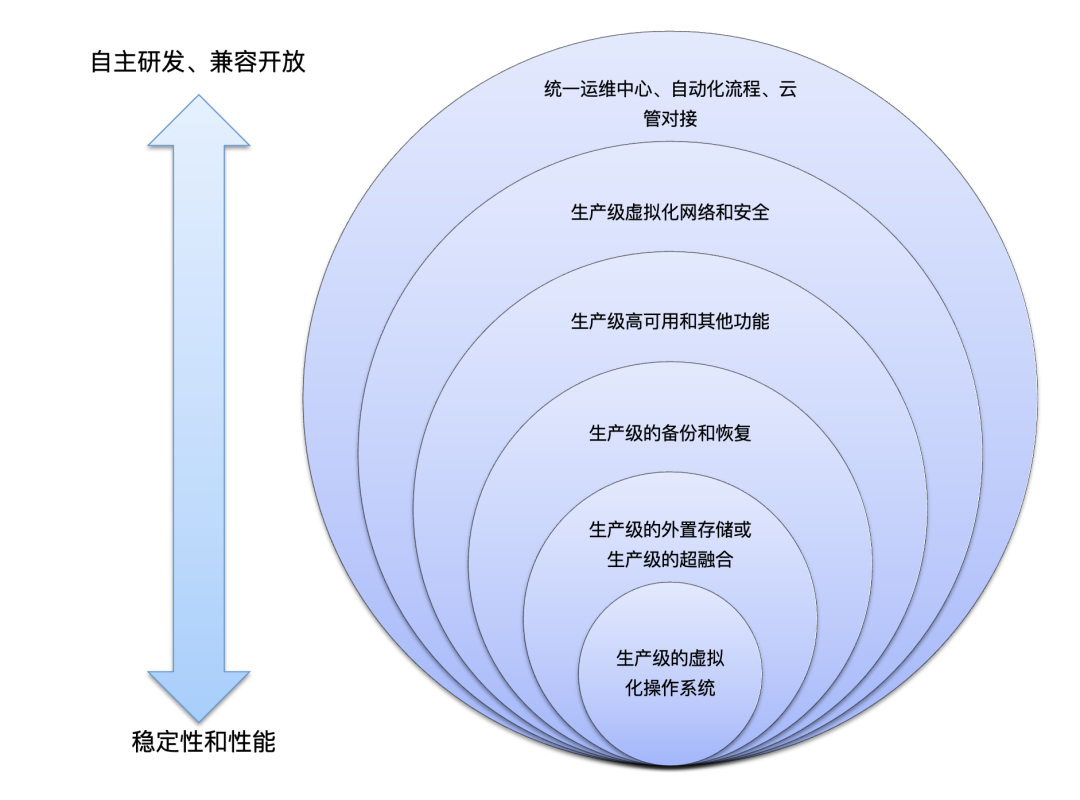
Figure 1 Key Evaluation Points for Production-Level Solutions
Production-Level Stability, Performance, and Actual Cases
The new solution must have actual deployment cases in production environments, as well as proven stability and performance indicators in real production. The major IT solutions or cloud operators’ products and systems mentioned above have been widely applied in China. Enterprise users need to select the most suitable reference from numerous solution cases based on their industry characteristics and enterprise application scale, thereby establishing accurate expectations for the replacement effects. Additionally, product evaluations should focus on business continuity and data reliability capabilities, as well as the actual production business carrying capacity (rather than the vendor’s “nominal” performance).
Openness and Compatibility
For example, VMware has formed an open ecosystem, where in many scenarios, users only use vSphere as the virtualization system, while other components come from other vendors in the VMware ecosystem, and many domestic hardware and software products are compatible and coexist with vSphere. In this context, enhancing the openness and compatibility of virtualization transformation under self-development and new IT solution environments helps facilitate the rapid transition of products and solutions originally compatible with vSphere to collaborate with domestic virtualization and cloud computing platforms for mutual benefits.
Local Product Adaptation, Self-Development Capability, and Local Service Capability
Considering the risk of “service interruption”, the new virtualization solution must possess a high level of self-control and be compatible with the domestic IT ecosystem, taking into account the compatibility between existing hardware and software, as well as the provider’s self-development strength, ensuring that the product and solution’s long-term roadmap can adapt to the continuous development of the ecosystem in the future. Additionally, whether the selected new solution provider has sufficient technical service capabilities and can assist end-users in migration and stable operation and maintenance is also an important consideration. Especially compared to commercial solutions with mature ecosystems, many domestic products and solutions can currently only be implemented and maintained by the original manufacturers, making the technical capability of the original service personnel a significant influencing factor.
In summary, this article analyzes typical virtualization implementation paths and products, proposing key evaluation points necessary for constructing production-level virtualization solutions, aiming to assist domestic enterprises in selecting the virtualization transformation solutions that best fit their characteristics.