Hello everyone, I am from the Purple Team Security Research. I recommend that you set the WeChat public account “Purple Team Security Research” as a star, otherwise you may not be able to see updates in a timely manner! This is because the public account can only push large images to frequently read and starred accounts. The operation method is: first click on the above “Purple Team Security Research“, then click the 【…】 in the upper right corner, and then click 【Set as Star】.

The healthcare industry is a “hard-hit area” for ransomware attacks—patient records are encrypted, CT machines are paralyzed, and operating room systems are down; every minute of interruption can endanger lives. Considering the characteristics of the healthcare industry, which include “no downtime, sensitive data, and limited budgets,” we provide practical best practices from three dimensions: cost (low/medium/high) and effectiveness (basic life-saving/core protection/comprehensive compliance):
1. Low Cost · Basic Life-Saving (Annual Investment < 100,000, mandatory for all hospitals)
Core Objective: Ensure “life-saving devices do not go down, core data can be restored,” blocking 80% of “indiscriminate attacks.”
1. Data Backup: Equip medical records and device systems with an “emergency kit” (cost ≈ 0, effect: prevents 60% of data loss risks)
Specific Actions:
For electronic medical records (EMR), laboratory information systems (LIS), and imaging systems (PACS), implement “three backups”: local server + external hard drive (remove daily and lock in a safe) + encrypted cloud storage (choose compliant cloud services for the healthcare industry, such as Alibaba Cloud Medical Cloud);
Conduct weekly “practical drills”: randomly select a device (e.g., outpatient billing system) and restore using backups to ensure normal operation within 30 minutes (to avoid the fatal issue of “backed up but unusable”).
Life-Saving Case: A community hospital recovered vaccination records using an offline hard drive after being attacked, ensuring no impact on the children’s vaccination schedule.
2. Minimal Protection for Devices and Systems: Disconnect key devices from the internet (cost ≈ 0, effect: prevents 40% of virus spread)
Specific Actions:
For embedded medical devices like CT machines and ventilators, directly unplug the external network cable and only use an internal network connection to the hospital system (ransomware primarily spreads through external networks);
Disable the “auto-play USB” feature on all devices and place warning stickers on USB ports stating “Unauthorized Use Penalty” (nurses inserting personal USB drives is a common infection route).
Key Logic: Medical devices “should be disconnected from the internet whenever possible”; after all, patient lives are more important than convenience.
3. Comprehensive Anti-Phishing Emergency Training: Plugging loopholes at the registration window (cost under 50,000, effect: reduces email attacks by 50%)
Specific Actions:
Provide scenario-based training for doctors, nurses, and billing staff:
Doctors: Do not click on attachments in emails labeled “Research Data Sharing” (often hiding ransomware);
Nurses: Do not trust pop-ups for “Device Upgrade Notifications” (clicking may lock infusion pumps);
Billing staff: Do not scan QR codes in SMS for “Medical Insurance Settlement Codes” (may be phishing links);
Conduct monthly “simulation drills”: send phishing links disguised as “New Medical Insurance Policy Documents” to department groups, with performance penalties for departments that click incorrectly.
2. Medium Cost · Core Protection (Annual Investment 100,000-500,000, priority for secondary hospitals)
Core Objective: Prevent ransomware from “entering the core area, encrypting key data”; even if infected, quickly limit losses.
1. Endpoint Protection + Whitelisting: Equip workstations with a “protective shield” (cost 100,000-200,000, effect: intercepts 70% of known viruses)
Specific Actions:
Install medical-specific EDR (such as Qihoo 360 Medical Endpoint Protection) on doctors’ workstations and pharmacy systems, automatically identifying malicious behaviors like “bulk encryption of PACS images” and “deleting EMR databases,” immediately freezing processes;
Set up a “software whitelist”: only allow essential software like HIS systems and Office to run; unfamiliar programs (like employee-installed “medical record template tools”) trigger alarms upon startup.
Practical Value: A top-tier hospital used EDR to intercept an attack on the pharmacy system, preventing “drug inventory data from being locked, causing medication dispensing interruptions.”
2. Network Segmentation: Separate “operating rooms” from “office areas” (cost 150,000-300,000, effect: limits virus spread)
Specific Actions:
Divide network areas based on “life priority”:
Red Zone (operating rooms, ICU equipment): physically isolated, only connected to doctors’ workstations, no external devices connected;
Yellow Zone (PACS/LIS systems): only accessible by the Red Zone and outpatient doctors;
Blue Zone (office computers, billing systems): can connect to the external network but prohibited from accessing the Red and Yellow Zones;
Require “dual authorization” for cross-zone access: for example, if the pharmacy needs to check ICU medical records, both the pharmacy director and ICU head nurse must input passwords simultaneously.
Analogy: Like a hospital’s “sterile operating room,” outsiders (viruses) cannot enter, ensuring safety.
3. Emergency Response Plan: Activate “manual backup plan” within 30 minutes (cost 50,000-100,000, effect: reduces business interruption losses)
Specific Actions:
Develop a “Ransomware Attack Emergency Manual” that clearly states:
Who will unplug the infected server’s network cable (IT manager);
Who will use paper medical records in an emergency (medical records department);
Who will contact manufacturers for emergency device unlocking (equipment department);
Conduct “practical drills” quarterly: suddenly cut off a department’s network to test if operations can be maintained using handwritten prescriptions and paper billing (at least for 4 hours).
Key Data: After drills, a hospital reduced the time to “resume patient reception after system interruption” from 2 hours to 20 minutes.
3. High Cost · Comprehensive Compliance (Annual Investment 500,000+, for top-tier hospitals/teaching hospitals)
Core Objective: Meet the requirements of the “Cybersecurity Law” and “Data Security Law” to respond to organized targeted attacks (such as ransomware targeting tumor data).
1. Security Operations Center (SOC): Monitor “anomalies” 24/7 (cost 500,000-1,000,000, effect: real-time detection of attacks)
Specific Actions:
Establish a medical-specific SOC, integrating logs from all devices (such as CT machine operation records, EMR login records), and set up “anomaly rules”:
Bulk downloading of medical record data at 3 AM;
Operating room equipment suddenly connecting to unfamiliar IPs;
Collaborate with public security and manufacturers’ threat intelligence; once a new ransomware targeting “COVID-19 vaccine data” or “tumor patient information” appears, immediately update protection rules.
2. Disaster Recovery Center: “If the hospital is bombed, data can still be recovered” (cost 1,000,000+, effect: zero data loss)
Specific Actions:
Establish a “remote disaster recovery center” (≥50 km from the main hospital), synchronizing core data in real-time, supporting “one-click switching”;
Build according to “RTO=1 hour (recovery time), RPO=5 minutes (data loss amount)” to meet the requirements of the “Health and Medical Data Security Guidelines.”
Compliance Value: Disaster recovery capability is a “must-check item” during evaluations of top-tier hospitals; non-compliance will affect ratings.
3. Purchase Cybersecurity Insurance: Provide the hospital with “ransomware coverage” (cost 100,000-300,000/year, effect: reduce economic losses)
Specific Actions:
Choose insurance that includes “ransomware response services”: after an attack, the insurance company sends experts to assist with negotiations and data recovery;
Pay attention to clauses: prioritize coverage for “business interruption losses” (e.g., outpatient service suspension compensation of 100,000 per day) rather than “ransom payment” (most insurances do not cover this and encourage attacks).
4. Priority List for Different Levels of Hospitals
| Hospital Type | Core Pain Points | Recommended Solutions (by priority) | Annual Cost |
|—————-|————————-|———————————————–|————–|
| Community Hospital | Limited budget, lack of IT staff | Offline backup → USB port control → Comprehensive phishing training | 30,000-80,000 |
| Secondary Hospital | Many devices, cannot afford downtime | Network segmentation → EDR endpoint protection → Emergency response drills | 200,000-400,000 |
| Top-tier Hospital | Sensitive data, need for compliance | Disaster recovery center → SOC monitoring → Cybersecurity insurance | 1,000,000+ |
Summary for Hospital Directors:
Ransomware prevention in the healthcare industry is not about “whether to spend money,” but about “spending a little to save lives”—a CT machine being down for 1 hour could delay 3 surgeries; a locked medical record could cause a patient to miss the best treatment period. Basic backups and network segmentation do not cost much but can ensure that “life-saving tasks are not delayed” when an attack occurs. This is not just a security issue, but also the bottom line of medical ethics.
Join the Knowledge Planet to continue reading
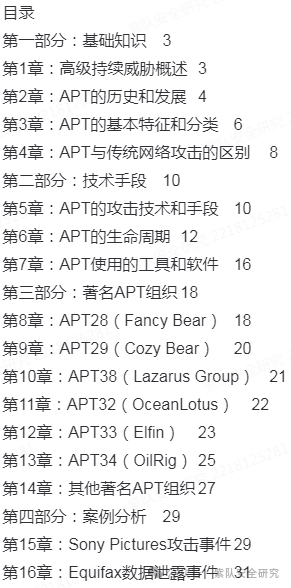
1. “Global Advanced Persistent Threats: The Invisible War in the Cyber World,” a total of 26 chapters, brings you a systematic understanding of APT, welcome interested friends to join the discussion.
2. “Deep Seek: A New Tool for APT Attack Simulation,” brings you new insights into APT attacks.

If you like the article, please give a thumbs up, share, and appreciate; your recognition is my motivation to keep moving forward.