On the technical road, you and I accompany each other Click the blue text above to follow 【Yimi Optical】
Automotive Lighting Optics | DisplayBacklight | Touch Integration | Technical Knowledge Sharing
Speos | Lighttools | Gtools | Metal Mesh|Design Practice
With the rapid development of touch screen technology towards larger sizes, flexibility, and lower costs, metal mesh technology has gradually become the mainstream solution to replace traditional ITO films due to its excellent conductivity and cost advantages.
In metal mesh technology, silver paste serves as the core filling material for conductive lines, and its conductivity quantification is crucial, with sheet resistance being a key parameter for measuring the conductivity of silver paste.
01 Basic Concepts of Metal Mesh Technology and Silver Paste Sheet Resistance
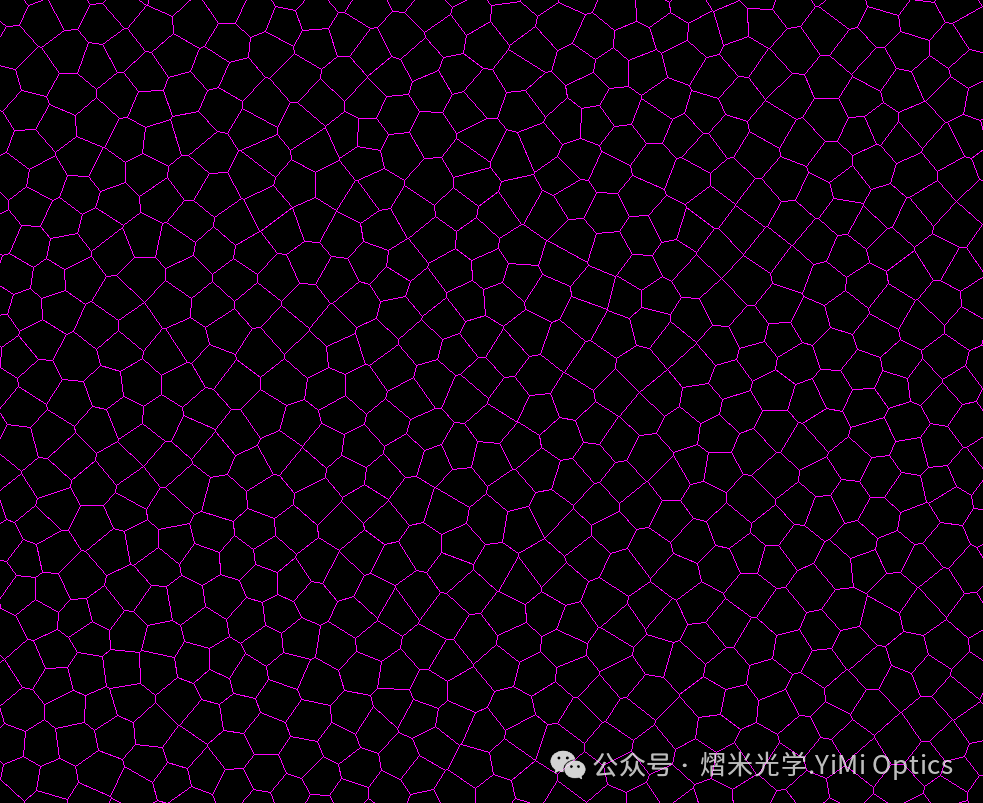
Metal mesh technology achieves touch sensing functionality by printing extremely fine metal mesh patterns on PET or glass substrates.
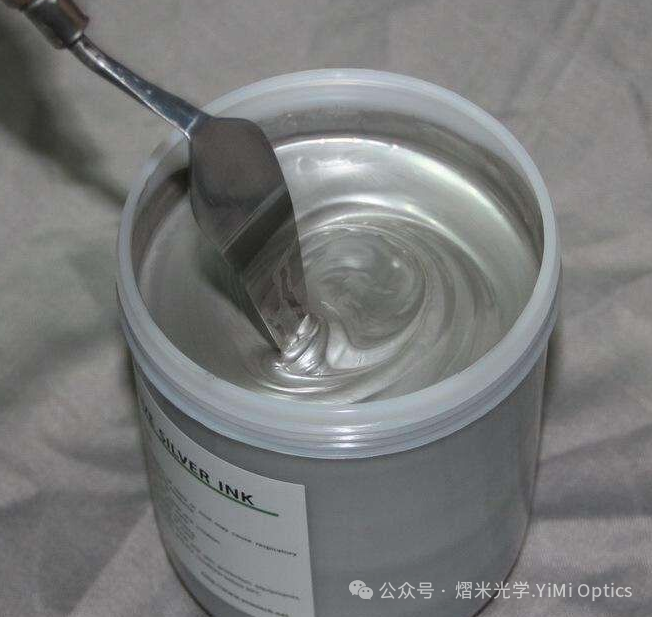
Silver paste, as a conductive filler, forms these fine mesh lines through printing processes. The conductivity of silver paste directly determines the touch screen’s response speed, signal quality, and power consumption performance.
Sheet resistance, defined as the “resistance value per unit thickness per unit area,” is measured in ohms per square per mil (Ω/□/mil), where 1 mil = 25.4um.
In engineering applications, it is usually simplified to Ω/□ (at a thickness of 25μm), which accurately characterizes the intrinsic conductivity of silver paste material at a specific thickness, independent of the geometric dimensions of the lines.
02 Calculation Methods and Principles of Silver Paste Sheet Resistance
The calculation of silver paste sheet resistance is based on the classic resistance formula, but considers the thin film characteristics. The specific calculation steps are as follows:
1. Basic Measurement First, use a precision ohmmeter to measure the resistance value R (in ohms) at both ends of the silver paste line, then accurately measure the physical dimensions of the line: length L (usually in millimeters or centimeters), width W (in millimeters), and thickness T (in mils) using a microscope or optical measuring instrument.
2. Calculation of the Number of Squares In the sheet resistance calculation, the key concept is the “number of squares.” Divide the line length L by the width W to obtain the number of squares n contained in the line: n = L / W
3. Calculation of Unit Thickness Sheet Resistance The actual sheet resistance value needs to be normalized to a standard unit thickness (25μm),
The complete calculation formula is: Sheet Resistance = (R / n) / (T / 25)
After simplification, it becomes: R ×W ×H÷25.4÷L
Where T is the actual measured thickness value, in mils.
It can be seen that: when the terminal resistance is constant, the greater the thickness, the larger the sheet resistance value, and the poorer the conductivity of the silver paste.
When the terminal resistance is constant, the greater the width, the larger the sheet resistance value, and the poorer the conductivity of the silver paste.
When the terminal resistance is constant, the longer the length, the smaller the sheet resistance value, and the better the conductivity of the silver paste.
03 Example of Actual Engineering Calculation
Assuming a silver paste line in a touch screen metal mesh, measured as follows:
Resistance value R = 30Ω
Line length L = 60mm
Line width W = 0.6mm
Line thickness T = 50μm (i.e., 2 mils)
The calculation process is as follows:
-
Number of squares n = L / W = 60 / 0.6 = 100 □
-
Total square resistance = R / n = 30Ω / 100□ = 0.3Ω/□
-
Thickness normalization factor = T / 25μm = 50 / 25 = 2
-
Final sheet resistance value = 0.3Ω/□ / 2 = 0.15Ω/□
This result indicates that the sheet resistance value of the silver paste material at a standard thickness of 25μm is 0.15Ω/□.
04 The Importance of Sheet Resistance in Metal Mesh Design
In the design of touch screen metal mesh, the sheet resistance of silver paste directly affects several key performance indicators:
1. Signal Transmission QualityA lower sheet resistance value means faster signal transmission speed and lower signal attenuation, which is particularly important for large touch screens. Typically, a silver paste sheet resistance value below 0.2Ω/□ is required to ensure real-time touch response.
2. Power Consumption and Heat ControlHigh sheet resistance can lead to power loss converted into heat, increasing power consumption and potentially causing localized temperature rise in the touch screen. Accurate sheet resistance calculations help optimize line design, balancing conductivity and thermal management.
3. Line Design OptimizationThrough sheet resistance values, engineers can accurately calculate the line resistance at specific widths and thicknesses, optimizing mesh pattern design to maximize light transmittance while ensuring conductivity.
4. Material Quality ControlSheet resistance provides a quantitative standard for batch consistency of silver paste materials, serving as an important basis for incoming material inspection and quality control.

Conclusion
The accurate calculation and control of silver paste sheet resistance play a crucial role in touch screen metal mesh technology.
As touch screens develop towards larger sizes and higher precision, a deeper understanding and precise control of sheet resistance parameters will become increasingly important.
Mastering scientific sheet resistance calculation methods helps enhance the performance consistency and market competitiveness of touch screen products, promoting the application of metal mesh technology in a wider range of fields.