“Structure similar to a bottlebrush”
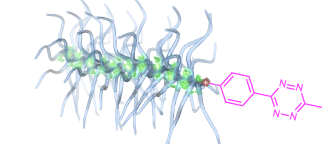
In recent years, antibody-drug conjugates (ADCs) have emerged as a novel targeted therapy strategy, achieving precise targeting of cancer cells by covalently linking monoclonal antibodies with small molecule drugs. They have demonstrated good efficacy and safety in the treatment of various cancers. However, traditional ADCs still face many limitations in terms of drug payload capacity (such as a drug-to-antibody ratio (DAR) typically only ranging from 2 to 8), types of drugs, and drug release mechanisms, which somewhat restrict their further clinical application.
Article Title
To overcome these limitations of traditional ADCs, a research team from the Massachusetts Institute of Technology published a groundbreaking research result in Nature Biotechnology, proposing a novel antibody-bottlebrush prodrug conjugate (Antibody-Bottlebrush Prodrug Conjugates, abbreviated as ABC) platform. This platform innovatively combines antibodies with bottlebrush-type prodrugs (Bottlebrush Prodrug, BPD), achieving an ultra-high drug-to-antibody ratio (DAR) that far exceeds traditional ADCs, significantly enhancing drug payload capacity and diversity while maintaining drug targeting and release mechanism flexibility.
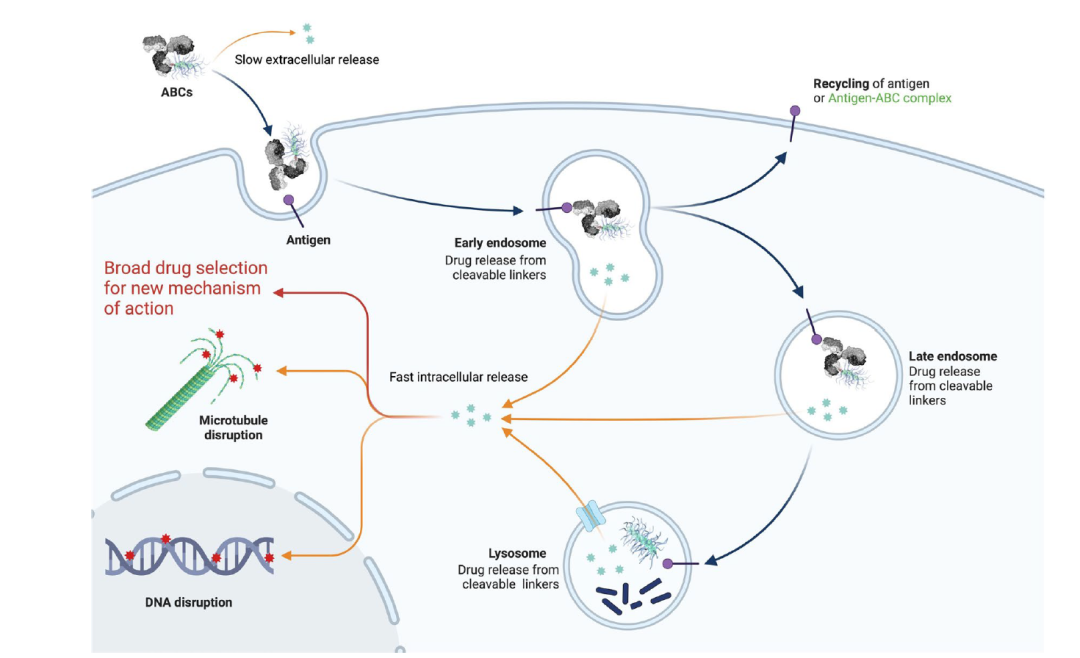
ABC Cell Uptake and Drug Release Mechanism
First, the antibody-drug conjugate (ABC) binds to the cell surface through antibody-antigen interactions (top left). Subsequently, the bound ABC enters the cell via receptor-mediated endocytosis. Inside the endosome or lysosome, the covalently linked drug payload is released and then diffuses to different regions of the cell (e.g., nucleus or cytoplasm) to exert its mechanism of action (MoA).
Basic Experimental Classroom
In this study, the research team proposed a new ABC platform that covalently links antibodies with bottlebrush-type prodrugs (Bottlebrush Prodrug, BPD), achieving an ultra-high DAR (up to 135) that far exceeds traditional ADCs. BPD has a size similar to IgG1 monoclonal antibodies and connects drugs to a compact polymer backbone through cleavable linkers and polyethylene glycol (PEG) branches. This design allows ABC to achieve a DAR up to 100 times that of traditional ADCs while maintaining drug diversity and release mechanism flexibility. So, how is ABC conjugated and obtained?
Experimental Procedure
1. Prepare ABC by incubating BP-Tz and Ab-TCO in PBS at room temperature for 24 hours in different ratios.
[BP-Tz is a key intermediate for ABC, prepared by introducing a triazole (Tz) group at the end of the bottlebrush polymer (BPD). The triazole group (Tz) is an aromatic cyclic group with a specific chemical structure, typically referring to 1,2,4,5-triazole.
Ab-TCO refers to chemically modified antibodies, whose surfaces have been introduced with trans-cyclooctene (TCO) groups. TCO is a specific chemical group used for bioorthogonal chemical reactions, capable of undergoing rapid and specific click chemistry reactions with triazole (Tz) groups. It is an efficient and biocompatible conjugation method.
Ab-TCO reacts with BP-Tz (bottlebrush polymer with triazole groups) through click chemistry to form covalent bonds, thereby linking the bottlebrush polymer with the antibody to form antibody-bottlebrush prodrug conjugates (ABC).]
Among them, antibody surface modification with TCO:
(1) Dissolve 100 micrograms of antibody (such as IgG, IgG1, IgG2a, trastuzumab, or MUC1) in 95 microliters of PBS.
(2) Add 5 microliters of saturated sodium bicarbonate solution.
(3) Under stirring, add the DMSO stock solution of TCO-PEG12-NHS or TCO-PEG8-NHS.
(4) The reaction is carried out at room temperature for 4 hours.
(5) Purify the functionalized antibody by ultrafiltration with a cutoff of 10 kDa.
2. Monitor the conjugation reaction using SDS-PAGE.
3. Purify ABC using fast protein liquid chromatography (FPLC) with cation exchange columns or size exclusion columns.
Results Analysis
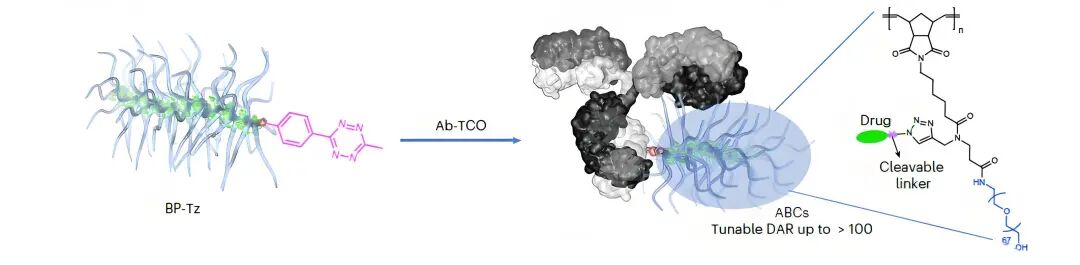
By terminating the end of BPD with an epoxy compound (enyne-PEG12-Tz), it can undergo a reverse electron demand Diels-Alder cycloaddition reaction with the TCO functional group on the mAb. This “click chemistry” reaction ensures efficient covalent linkage between BPD and mAb. Based on this synthesis method, strong guarantees are provided for subsequent experimental development.
Reagents Used in the Experiment
In step (2), sodium bicarbonate from Millipore Sigma, catalog number 144-55-8, was used.
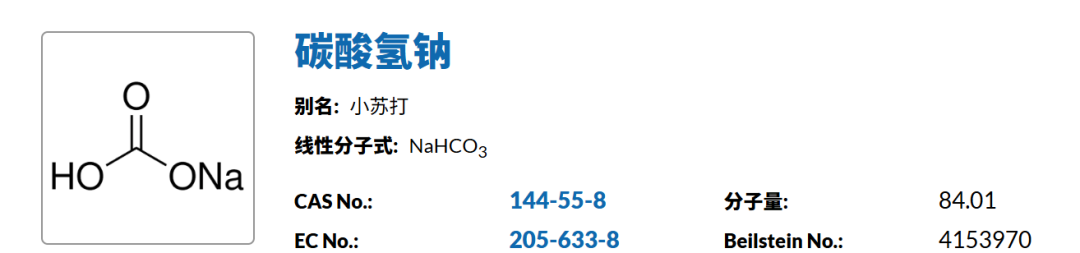 Product Link:
https://www.sigmaaldrich.cn/CN/zh/substance/sodiumbicarbonate8401144558
Main Research Methods and Results
01. Construction and In Vitro Evaluation of ABCFirst, the researchers covalently linked the bottlebrush-type prodrug (BPD) with monoclonal antibodies (mAb) through a “click chemistry” reaction to form antibody-bottlebrush prodrug conjugates (ABC), precisely controlling the drug-to-antibody ratio (DAR) and bottlebrush-to-antibody ratio (BAR) by adjusting the reaction ratios, achieving a DAR of up to 135. Among them,BPD acts like a “molecular brush,” flexibly carrying various types of drug molecules.
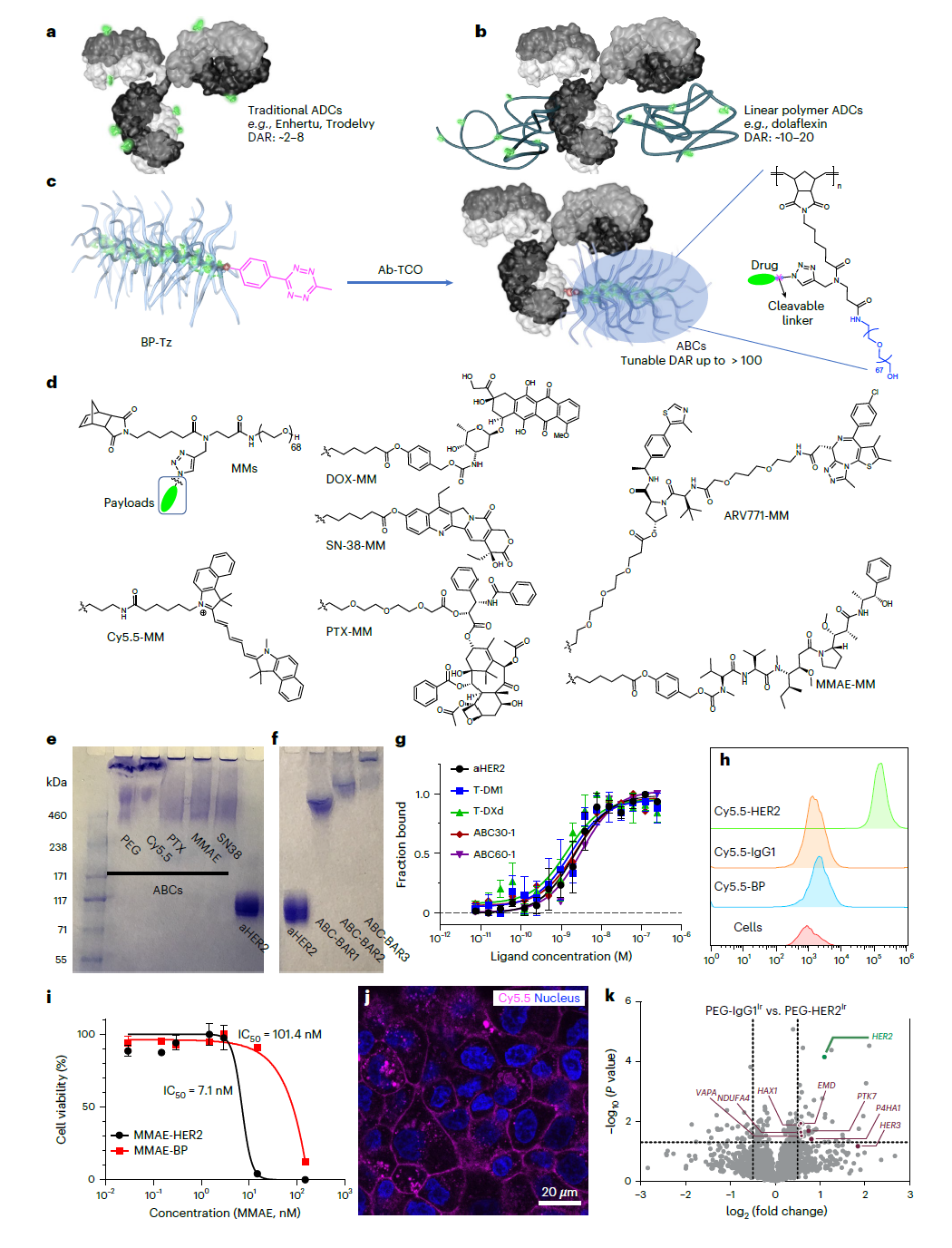
In vitro experiments showed that the binding affinity of ABC to HER2 was comparable to that of trastuzumab, and even at high DAR, the binding affinity was not significantly reduced. Additionally, HER2-targeted ABC showed over 100 times higher uptake in HER2-positive cells compared to non-targeted controls, and exhibited significantly higher toxicity in cytotoxicity assays than non-targeted controls, indicating good targeting and cellular uptake capabilities.
02. Pharmacokinetics and In Vivo Distribution of ABC
Subsequently, the researchers evaluated the pharmacokinetics and biodistribution characteristics of ABC.
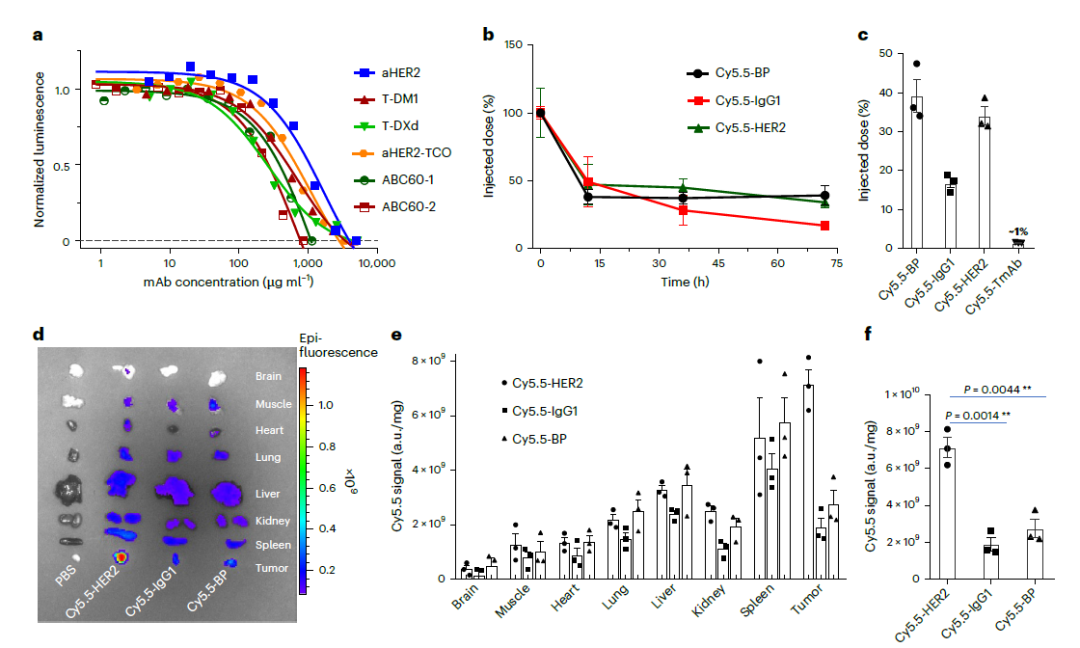
Experimental results indicated that the binding affinity of ABC to FcRn was comparable to that of trastuzumab, which helps extend its circulation time in the blood (top image a). In pharmacokinetic experiments, ABC had a half-life of up to three days in the blood (top image b), significantly better than traditional ADCs. Biodistribution experiments further showed that HER2-targeted ABC accumulated significantly more in tumor tissues than non-targeted controls, and over time, the drug concentration in tumors gradually increased, indicating good tumor targeting ability and drug enrichment effect (top image d).
03. Efficacy and Safety of HER2-ABC with Different Payloads in Mouse Models
In NCR nude mouse models carrying BT-474 tumors, researchers evaluated the anti-tumor effects and safety of ABC under different drug loads.
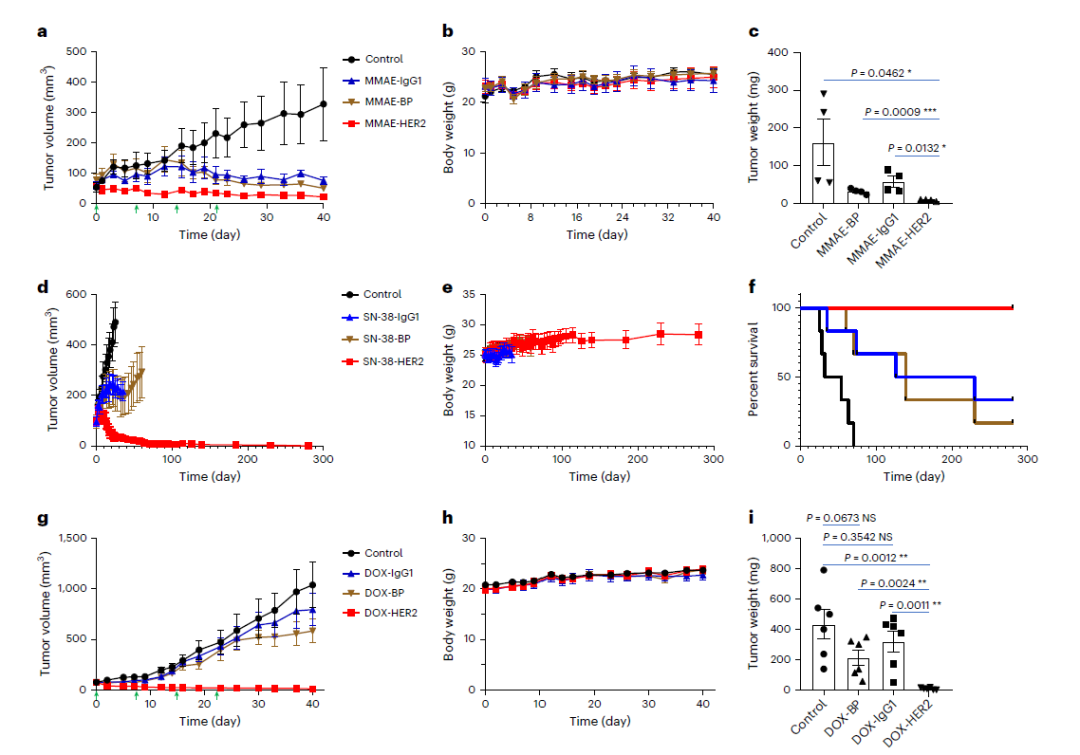
Experimental results showed that ABC with all loaded drugs exhibited significant anti-tumor effects, especially MMAE-HER2 and SN-38-HER2, which significantly reduced tumor volume within 40 days post-treatment, with some mice even reaching a tumor-free state. Additionally, ABC demonstrated good tolerability at the administered doses, with no significant weight loss in mice and no obvious toxic reactions observed in major organs, indicating good safety and therapeutic effects of ABC.
04. Comparison of Efficacy of HER2-ABC with Clinical ADCs
Researchers compared the anti-tumor effects of ABC with clinical ADCs (T-DM1 and T-DXd) in NCR nude mouse models carrying BT-474 (HER2 high expression) and HCC-70 (HER2 low expression) tumors.
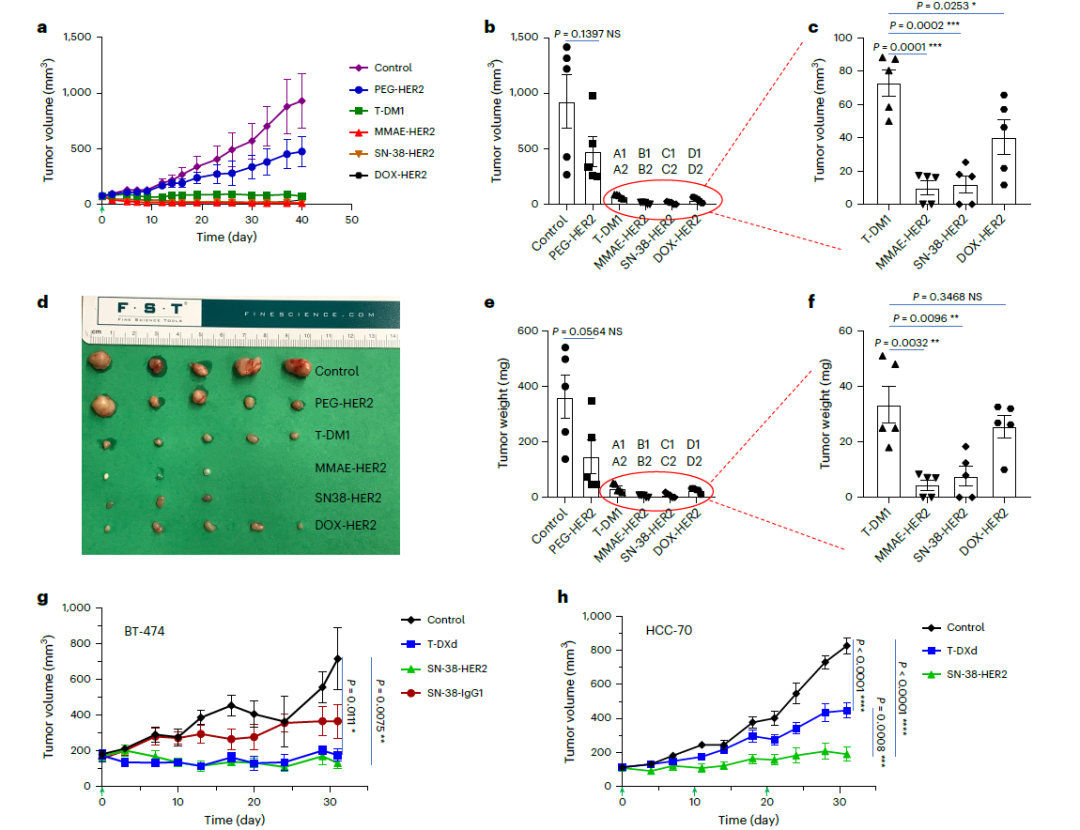
Experimental results indicated that in the BT-474 tumor model with high HER2 expression, ABC exhibited anti-tumor effects comparable to T-DM1 and T-DXd. In the HCC-70 tumor model with low HER2 expression, the efficacy of SN-38-HER2 was significantly superior to that of T-DXd, indicating that ABC has a greater advantage in low HER2 expression tumors, enabling more effective drug delivery and therapeutic action.
05. Efficacy and Safety of PROTAC-ABC
Researchers covalently linked the BET protein degrader ARV771 with HER2-targeting antibodies to form PROTAC-ABC and evaluated its anti-tumor effects and safety in NCR nude mouse models carrying BT-474 tumors.
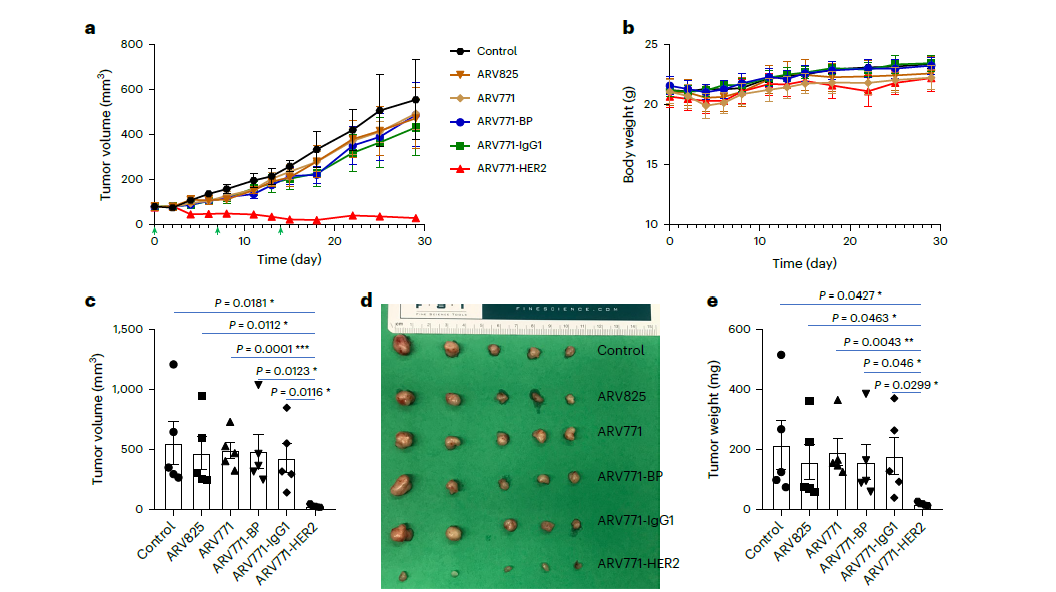
Experimental results showed that PROTAC-ABC exhibited significant anti-tumor activity in HER2-positive tumors, with tumor volume significantly reduced, and some mice reaching a tumor-free state. At the administered doses, PROTAC-ABC also demonstrated good tolerability, with no significant weight loss in mice and no obvious toxic reactions observed in major organs, indicating that the ABC platform can effectively deliver PROTAC-type drugs and exert therapeutic effects.
06. Expanded Applications of the ABC Platform on MUC1 Targets
Researchers synthesized MUC1-targeting ABC using anti-MUC1 antibodies and evaluated its anti-tumor effects, biodistribution, and safety in NCR nude mouse models carrying CAOV-3 (ovarian cancer) tumors.
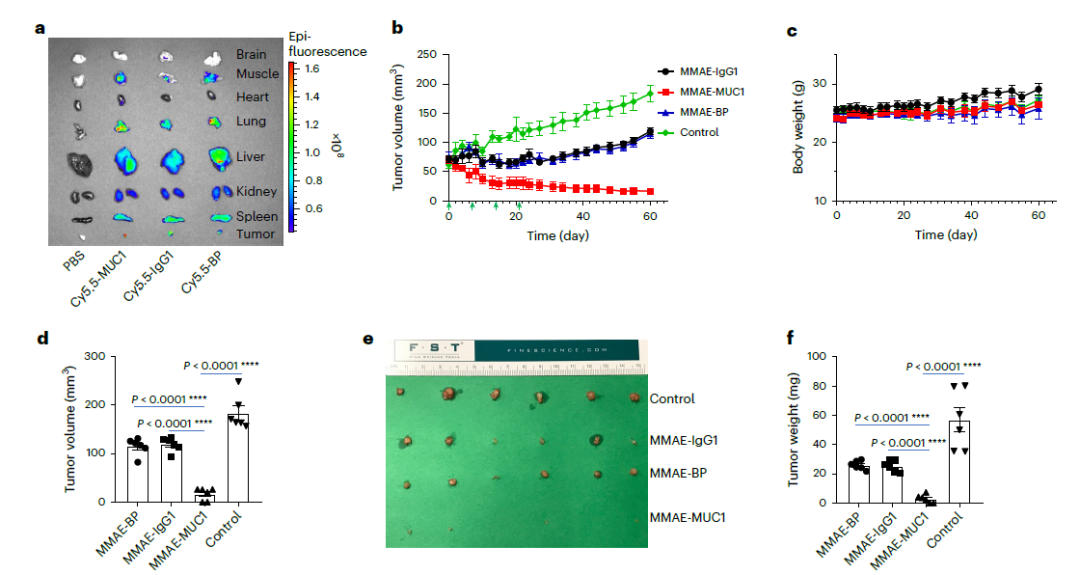
Experimental results showed that MUC1-targeting ABC accumulated significantly more in tumor tissues than non-targeted controls, and exhibited significant anti-tumor effects within 60 days post-treatment, with some mice reaching a tumor-free state. Additionally, MUC1-targeting ABC demonstrated good tolerability at the administered doses, with no significant weight loss in mice and no obvious toxic reactions observed in major organs, indicating that the ABC platform has good target expansion capabilities and therapeutic effects.
Conclusion
In summary, the following key conclusions were drawn:
-
Ultra-high DAR: ABC achieved a DAR of up to 135, far exceeding the 2-8 of traditional ADCs.
-
Drug Diversity: ABC can carry various drugs, including those not commonly used in traditional ADCs, such as doxorubicin (DOX) and paclitaxel (PTX).
-
In Vivo Efficacy: ABC exhibited significant tumor suppression effects in BT-474 (HER2 high expression) and HCC-70 (HER2 low expression) tumor models.
-
Comparison with Clinical ADCs: At the same antibody doses, ABC generally exhibited better overall efficacy than Kadcyla (T-DM1) and Enhertu (T-DXd), especially in low HER2 expression tumor models.
-
PROTAC-ABC: Researchers introduced the BET protein degrader ARV771 into the ABC system, constructing the world’s first PROTAC-ABC, which exhibited significant anti-tumor activity at doses much lower than free PROTAC.
-
Target Expansion: The modular design of ABC also possesses good target expansion capabilities, with researchers successfully constructing MUC1-ABC using anti-MUC1 antibodies, demonstrating excellent targeting and tumor suppression effects in ovarian cancer models.
The ABC platform, with its highly modular, customizable, and ultra-high drug loading capacity, successfully overcomes multiple limitations of traditional ADCs, revitalizing the potential of low-efficacy drugs and providing new solutions for the delivery of new mechanism drugs like PROTAC. ABC is expected to become an important support for the next generation of targeted cancer therapies, with significant clinical translation prospects.
https://www.nature.com/articles/s41587-025-02772-z?sessionid=1091988303
Source: Pharmaceutical Review 2025-09-14