Masashi Ueda
Embedded Processor & Controller Product Marketing Dept.
1
Abstract
So far, 16-bit MCUs have played a crucial role in industrial equipment, home appliances, and consumer electronics, handling system management and sensor control tasks while enabling low power consumption and miniaturization.
However, as embedded applications become increasingly complex and global demand accelerates, the limitations of 16-bit MCUs are becoming more pronounced. These constraints include limited memory capacity and scalability, reduced software development efficiency, and difficulties in deploying a unified platform across customer product lines.
According to market trend forecasts, the market share of 16-bit MCUs is expected to drop to 14% by 2025 and further decline to 8% by 2029. In contrast, the market share of 32-bit MCUs is projected to grow from 66% to 80% (Figure 1).
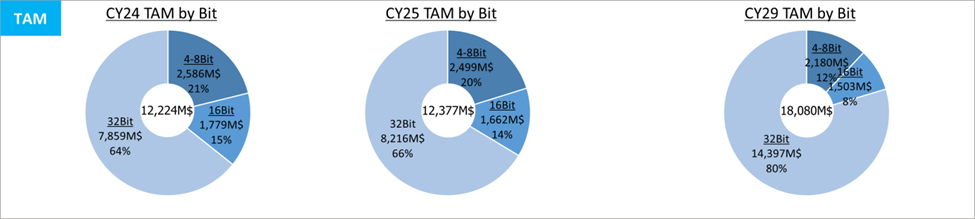
Figure 1. MCU TAM
(Gartner TAM, May 2023, Non-automotive MCUs)
However, this shift does not mean that the demand for 16-bit MCUs will disappear. Their advantages—optimized peripheral functions, low power consumption, compactness, and simplicity—remain indispensable. These demands are expected to be taken over by low-end 32-bit MCUs.
The RA series of 32-bit MCUs launched by Renesas Electronics, particularly the entry-level RA0 series, inherits Renesas’ long-standing competitive advantage in the 16-bit MCU market. This series provides the best migration path for existing 16-bit MCU users, enabling a smooth transition to 32-bit architecture while maintaining low power consumption, small size, and cost-effectiveness.
2
Problem Definition
According to the 2023 Embedded Survey Report, today’s embedded engineers face multiple pressures: balancing development cycles and costs while meeting performance requirements, ensuring debugging and testing quality, adding new features, and improving energy efficiency (Figure 2). To address these challenges, many developers are adopting development methods based on hardware and software reuse, achieving resource sharing across different product variants and regions (Figure 3).
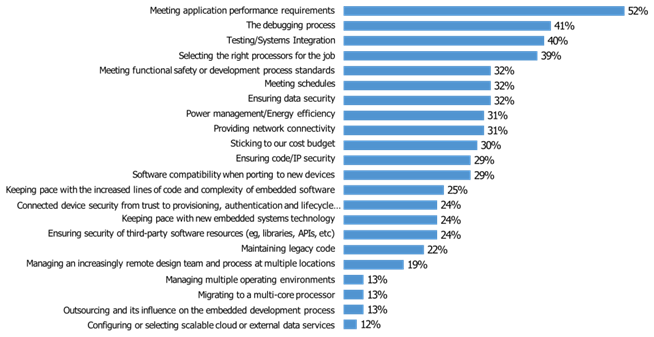
Figure 2. Core Challenges Faced by Embedded System Engineers
(2023 Embedded Survey Report)
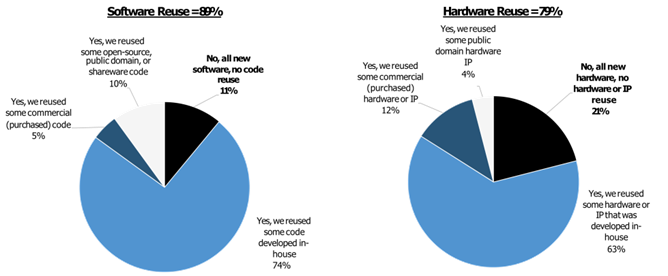
Figure 3. Hardware and Software Reuse in Embedded Engineering
(2023 Embedded Survey)
So far, 16-bit MCUs have played an important role in system control, power management, and sensor control in industrial equipment, data centers, and home appliances/consumer electronics, supporting the development of embedded systems. However, as application complexity increases and market globalization accelerates, the limitations of traditional 16-bit MCUs are becoming more pronounced.
1
Limited Scalability:
Despite their excellent performance in low power consumption and functional optimization, 16-bit MCUs struggle to meet increasingly complex control demands, security requirements, and other new features or performance enhancements. As the demand for cross-product line model expansion and development efficiency through a common platform grows, incompatibility of architectures and peripherals has become a major bottleneck. This makes it difficult to quickly adapt to new applications and conduct long-term series development.
2
Inefficient Software Development and Human Resource Utilization:
Maintaining different software development rules, tools, and environments for each product weakens development efficiency and compromises quality consistency.
In a global development framework, this leads to reduced reusability, increased training costs and maintenance burdens, and extended development cycles.
In today’s market environment, the demand for rapid customized development across different regions and application scenarios is becoming increasingly urgent, and such inefficiencies can directly lead to a decline in corporate competitiveness.
3
Ongoing Demand for Power Consumption Optimization:
In data centers and industrial equipment, even minor differences in power efficiency can significantly impact overall operating costs. Therefore, optimizing system-wide power consumption is more critical than ever.
However, traditional 16-bit MCUs distribute optimization across individual devices, making it difficult to efficiently implement flexible and advanced power management features. New design concepts are needed to achieve higher control precision and scalability while maintaining low power characteristics.
Thus, while the core advantages of 16-bit MCUs—low power consumption, simple design, and functional optimization—remain important, these features alone can no longer meet the demands of the next generation market.
The future requires a transition to new architectures that inherit these advantages while achieving stronger scalability, development efficiency, and low power consumption.
3
Solution Overview
To address the challenges described in Chapter 2, embedded system developers increasingly need the following capabilities:
1
Achieve scalability of performance and peripheral functions through a single universal architecture, thereby accelerating derivative product development throughout the product lifecycle.
Example: Universal CPU architecture, pin-compatible packaging, peripheral function scalability
2
Ensure consistency in development environments and software coding methods to enhance code reusability, training efficiency, and quality consistency, while accelerating parallel development across multiple sites.
Example: Unified HAL drivers + configurators, universal coding standards
3
For low-end MCUs, leverage existing 16-bit MCU assets (low power consumption, functional optimization, low cost) while minimizing the risks of migrating to 32-bit platforms.
Example: Memory-efficient HAL drivers, MCUs optimized for low power consumption
The specific implementation case of this approach is Renesas Electronics’ RA series
The RA series is a 32-bit MCU series based on the Arm® Cortex® core, including five series: RA0, RA2, RA4, RA6, and RA8. The RA0 series operates at a frequency of 32MHz, while the RA8 series can reach up to 1GHz. This product line covers a wide range of application scenarios, serving as a sub-MCU for compact battery-powered sensor systems and enabling high-performance embedded solutions for complex computations. The scalable product configurations from RA0 to RA8 support long-term product development for users (Figure 4).
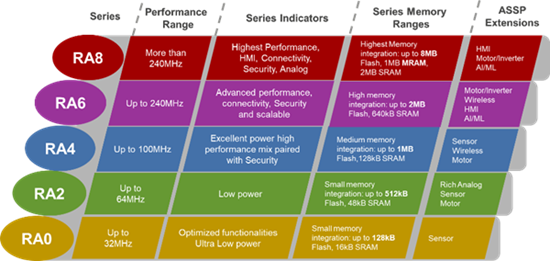
Figure 4. RA Series Product Portfolio
The flexible software package (FSP) used in the RA series provides a unified software architecture and configuration process (Figure 5). By implementing a consistent development approach and user experience across all series, this solution significantly enhances development efficiency. This consistency brings multiple advantages to geographically dispersed engineering teams: promoting standardized development processes, simplifying engineer training, enhancing future software maintainability and scalability, and ensuring higher and more uniform software quality.
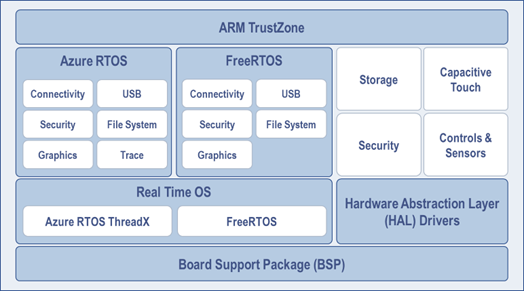
Figure 5. RA Series HAL Drivers Included in the Flexible Software Package (FSP)
The RA0 series supports function-optimized HAL drivers, which perform equivalently to 16-bit MCUs while maintaining low power characteristics (Figure 6) and minimal memory usage for all peripheral functions. This allows existing 16-bit MCU users to fully leverage their development experience, making it the best entry point for users considering migrating to 32-bit MCUs.
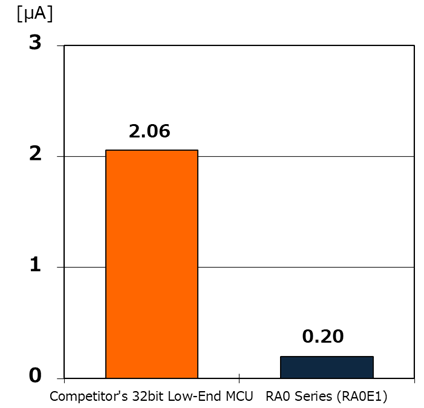
Figure 6. RA0 Series Standby Current (SRAM Retention)
4
Implementation Details
The FSP implements a consistent API design philosophy across the RA0 to RA8 series. The RA0 series enhances the usability and memory efficiency of HAL drivers through peripheral optimization while maintaining software readability and portability through an abstracted HAL/API layer (Figure 7). This enables users to achieve seamless software development and scalable model deployment with the RA series (Figure 8).
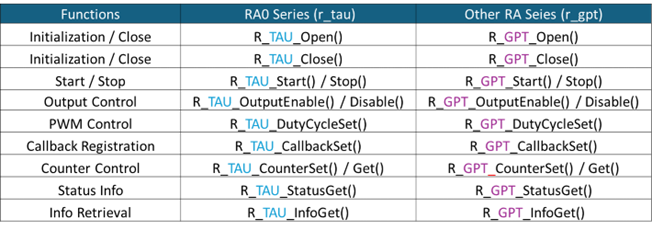
Figure 7. Function Classification and Naming Example in Timer Driver
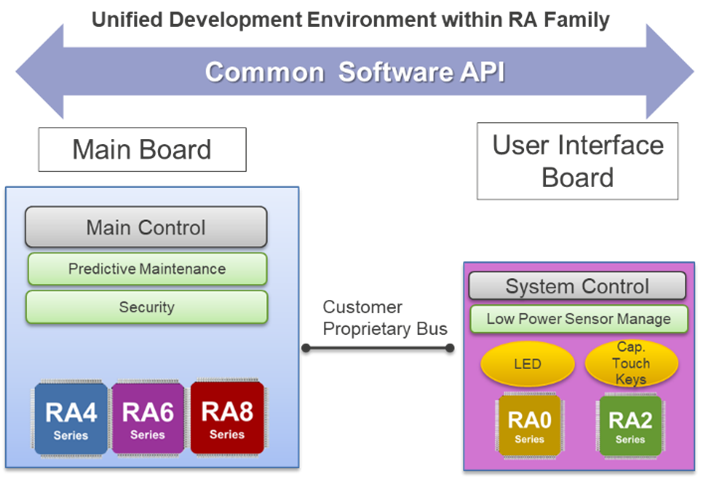
Figure 8. Scalability Example of RA Series
The RA0 series achieves power consumption levels comparable to 16-bit MCUs. By combining low power modes such as software standby and Snooze mode, it minimizes CPU wake-up time and reduces device power consumption to a minimum. This helps extend battery life for small devices and optimize thermal design for industrial equipment and data centers.
To specifically demonstrate the low power characteristics of the RA0 series, we illustrate its operation using a gas meter management system as an example. Figure 9 shows the system architecture of the ultrasonic gas meter, including sensors, MCUs, and communication modules, while Figure 10 presents the low power operating sequence achieved by the RA0 series. As shown in Figure 9, the RA0 series fully demonstrates its low power characteristics in battery-powered sensor applications such as ultrasonic gas meters. In this system, the ultrasonic flow sensor transmits 14 bytes of data to the MCU via UART every 2 seconds. The MCU remains in sleep mode and automatically wakes up upon detecting the start bit of the received data. After receiving the data, the CPU briefly performs active operations to send a response confirmation and stores the collected data in RAM. It then aggregates flow data every 10 minutes and transmits it to the cloud.
As shown in Figure 10, the RA0 series achieves a typical standby current of 0.2μA in software standby mode. Even in sleep mode (UART+DTC), the current consumption is only about 700µA; during active operations, the typical value is controlled at 2.7mA (at a 32MHz operating frequency). Averaging this working cycle, the average current consumption is below 20µA. With a 19Ah lithium battery, a battery life of over 10 years can be achieved. (Note: All current consumption values are based on the electrical characteristics reference values of the RA0E1 group and may vary under actual working conditions.)
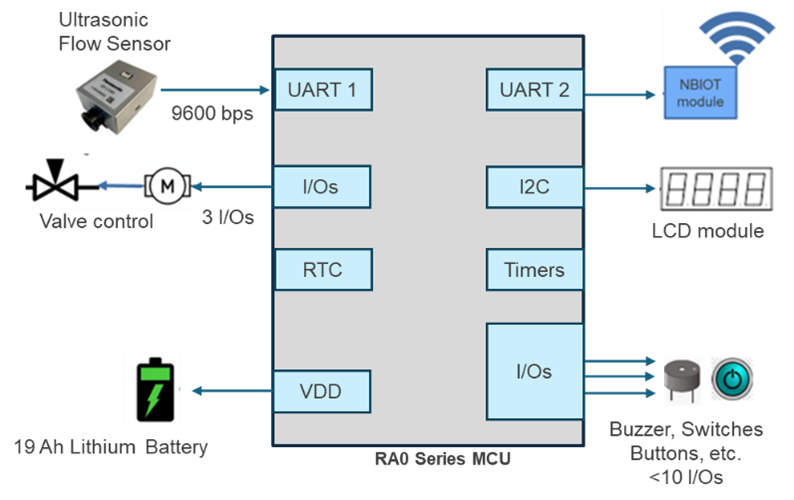
Figure 9. Gas Meter Management System
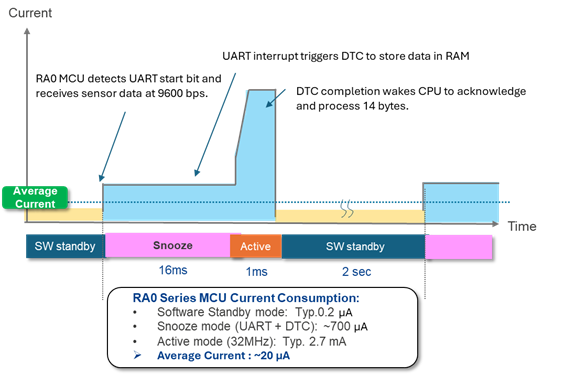
Figure 10. Low Power Sensor Data Collection Achieved by RA0 Series
5
Results/Benefits
-
The RA series achieves efficient and rapid functional expansion and global platform deployment through the upgrade path from RA0 to RA8 and the universal development environment provided by FSP.
-
As the low-end product in the RA series, the RA0 series enables a seamless migration to 32-bit MCUs while retaining the advantages of 16-bit MCUs. It achieves low power consumption in battery-powered applications, industrial equipment, and data centers, helping to reduce power consumption.
6
Conclusion/Future Outlook
The RA series provides an excellent solution for the next generation of 32-bit development. The RA0 series, in particular, is ideally suited as an entry point for 16-bit MCU users, allowing them to continue enjoying the existing advantages of “low power consumption, small size, and low cost” while benefiting from the performance, development efficiency, and scalability of 32-bit MCUs.
The RA series widely supports industrial equipment, data centers, and consumer market applications, marking a strategic first step in building the foundation for the future development of embedded systems.
END
Need Technical Support?
Renesas Engineering Community has a wealth of technical resources. If you have any questions while using Renesas products, you can scan the QR code below or copy the URL into your browser to access the Renesas Engineering Community for answers and online technical support.

https://community-ja.renesas.com/zh/forums-groups/
Renesas Electronics (TSE: 6723)
Technology makes life easier, committed to creating a safer, smarter, and sustainable future. As a global microcontroller supplier, Renesas Electronics integrates expertise in embedded processing, analog, power, and connectivity to provide complete semiconductor solutions. Successful product portfolios accelerate the time-to-market for automotive, industrial, infrastructure, and IoT applications, empowering billions of connected smart devices to improve people’s work and lifestyles. For more information, please visit renesas.com