Click the blue text to follow us
SUBSCRIBE to US
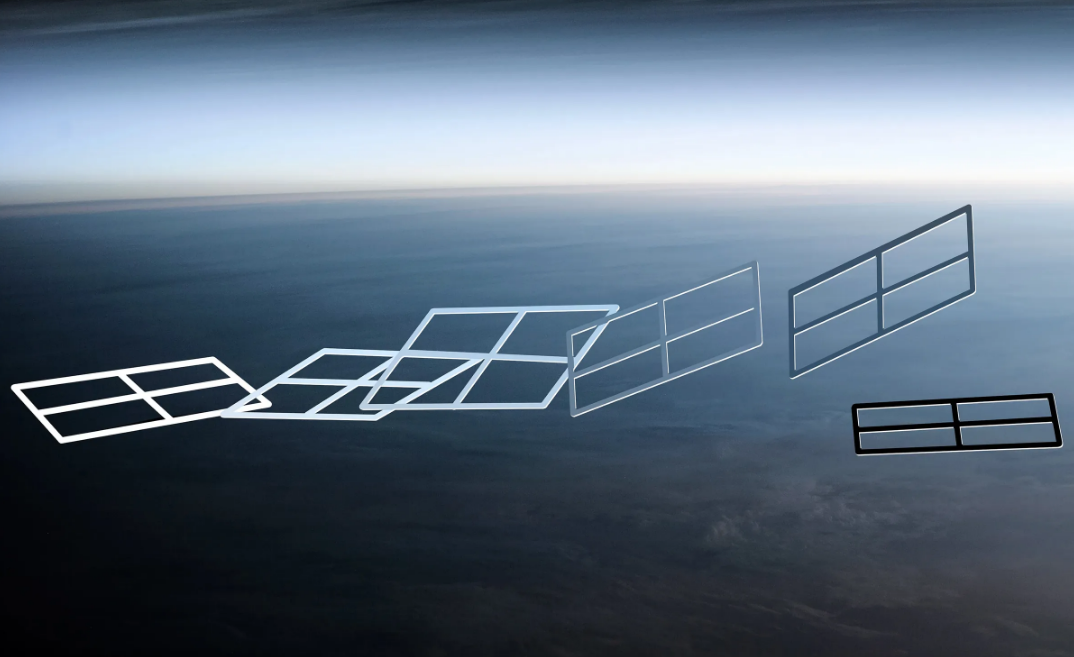 Source Images: Alex Gerst/NASA; Benjamin Schafer, Jong-hyoung Kim, et al.
The Earth’s atmosphere is vast, extending about 10,000 kilometers from the surface. Its immense scale has led scientists to divide it into five distinct layers. Among these, one specific layer has received little attention due to the difficulty of maintaining aircraft operation in that region.
Aircraft and balloons can reach the troposphere and stratosphere — the two layers closest to the ground; satellites can operate in the thermosphere and outer space, providing platforms for continuous observation. However, the mesosphere, located in between, is in a “no man’s land”: it is too close to the surface to form a stable orbit, while the air density is too thin for traditional aircraft or balloons to operate effectively in that region.
As a result, the data we have on the mesosphere is quite limited. However, this layer affects climate and weather forecasting, and scientists have previously had to make many assumptions about its state. Now, researchers from Harvard University and the University of Chicago have published a new study that may have found a way to deploy stable sensing platforms in the mesosphere — using a new flight mechanism called “photophoresis.”
The mesosphere itself is located at an altitude of 50 to 85 kilometers above the surface. Although it is not technically considered “space,” it is vastly different from the lower atmosphere we are more familiar with. The mesosphere is influenced by weather from both above and below — it responds to solar storms and frequently reacts to hurricane activity. As it plays the role of a “transitional layer,” its state also plays a crucial role in the dynamic changes of the adjacent layers.
However, due to the limitations of the two existing continuous monitoring systems — balloons and satellites — we have been unable to deploy stable monitoring equipment in the mesosphere. This situation has earned it the nickname “unknown layer” (ignorosphere): due to the lack of relevant data, scientists have essentially had to “ignore” the existence of this layer in their research.
Photophoresis Effect Powers New Atmospheric Sensors
On August 13, a new paper on long-term sensors for the mesosphere was published in the journal Nature (https://www.nature.com/articles/s41586-025-09281-8). Photophoresis refers to the energy generated when gas molecules collide with an object’s “heated surface,” which is greater than the energy produced when colliding with a “cooling surface” — this physical process. In this study, the side of the object facing the sun is the “heated surface,” while the side facing the Earth is the “cooling surface.” This photophoresis effect can only manifest in low-pressure environments, and the mesosphere perfectly meets this condition.
Indeed, the force generated by photophoresis is extremely weak, so researchers had to develop very small components to potentially harness this effect. They invited experts in nanofabrication to create centimeter-sized structures for proof of concept and tested them in a vacuum chamber simulating mesosphere pressure.
The performance of these prototypes met expectations: in an environment with pressure comparable to the mesosphere, only 55% of sunlight intensity was needed to achieve levitation. This marks the first successful demonstration of a functional flying prototype powered by photophoresis — the key to this breakthrough lies in the extremely lightweight nature of the structure itself.
Devices powered by this technology could not only be used to monitor the mesosphere but may also have applications in broader fields. Mars is undoubtedly a typical application scenario: its low-pressure, thin atmosphere is a significant characteristic of the planet, and many atmospheric layers at different altitudes remain largely unexplored. Other planets and moons may also become potential targets — as long as a celestial body has a sufficiently thin atmosphere that can support the levitation of flying devices, such devices can operate there.
However, there are still some advanced engineering challenges that need to be addressed. The nanofabrication technology previously used to create flying structures has not yet integrated any functional hardware, such as sensors or wireless communication devices. Structures that can only levitate but cannot transmit data have no practical value in scientific research. Therefore, to achieve the expected scientific impact of such devices, improvements in nanofabrication technology are needed to create effective payloads with functionality.
Nevertheless, researchers are confident in achieving this goal. They have established a startup company called “Rarefied Technologies,” which was also selected for the “Breakthrough Energy Fellows program” last year. With this support, along with ongoing research in the field of nanofabrication, we can expect to see centimeter-sized sensors spread across the “unknown layer” (ignorosphere) and even beyond in the near future — the arrival of that day may just be a matter of time.

WeChat ID|IEEE Electrical and Electronics Engineers Society
Sina Weibo|IEEE China
Bilibili | IEEE China
· IEEE Electrical and Electronics Engineers Society ·
Previous
Issues
Recommendations
How Agent-Based AI Exposes Your Most Sensitive Personal Data
Major Breakthroughs in Surgical Robotics on the Horizon
AI Disease Prevention: No Need to Sacrifice Privacy and Security
Quantum Network Analysis: The Future of Ultra-Secure Networks