
WRC 2025 (World Robot Conference) is being held in Beijing Yizhuang, with the official announcement revealing that the number of registrations has reached 1.3 million, gathering over 200 companies, more than 1500 exhibits, and over 100 new products launched. The participation of international organizations has reached a record high, with the theme directly addressing “making robots smarter and bodies more intelligent.” This is not just a simple exhibition but a collective charge of “humanoid + scenarios.”
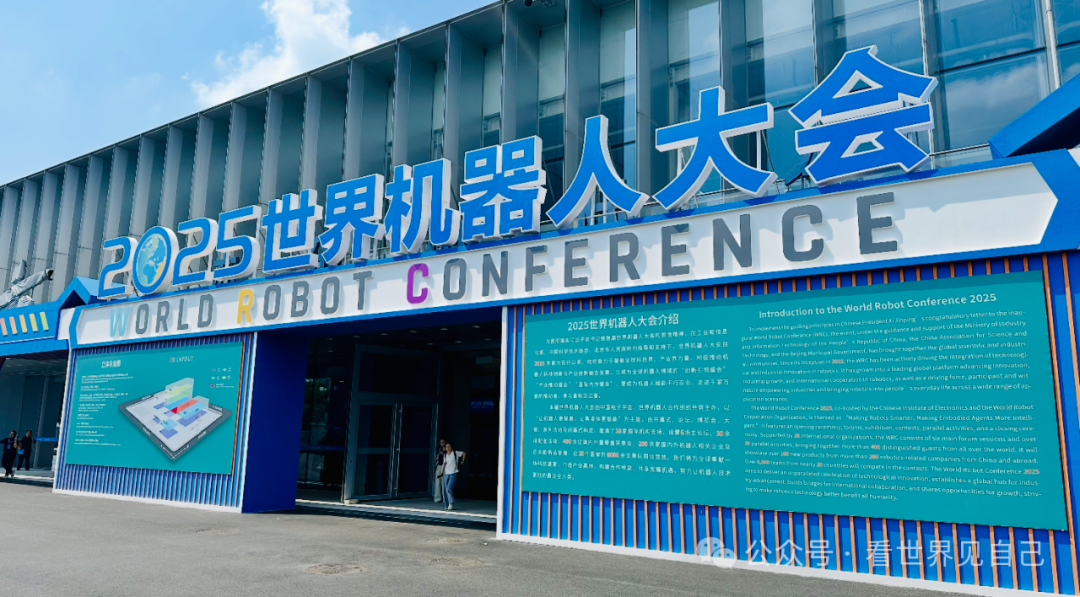 It is surprising to see that the venue is filled with “people” – robots + humans, where robotic arms and robotic dogs are no longer the main characters, and humanoid robots have taken center stage. Due to the summer vacation and free admission policy for children, nearly half of the attendees are children aged 3-10, making the conference feel like a summer technology training camp: children are enjoying the spectacle while adults are bringing their kids to “broaden their horizons.” The robot exhibition is in full swing: playing soccer, playing the piano, writing with a brush, playing chess, boxing, running… a variety of skills and arts are showcased in succession. First, let’s enjoy the excitement, then let’s calmly dissect the true capabilities of robots from “head” to “toe.”
“Brain”: From “Seeing” to “Doing”
 Early robots could be described as “brain-dead,” relying on rigid logic such as finite state machines and PID control, which would “collapse” with even slight changes in the environment. However, with the empowerment of deep learning for perception and the integration of large models and multimodal capabilities, robots are transitioning from “seeing and speaking” to “seeing, thinking, and doing.” Convolutional Neural Networks (CNNs) have endowed robots with powerful visual capabilities, while SLAM (Simultaneous Localization and Mapping), object detection, and grasp recognition have seen significant leaps in performance. VLA (Vision-Language-Action) has granted robots the ability for “zero-shot generalization,” and multimodal sensing (visual, tactile, auditory) has iteratively supported robots to resemble a continuously learning “embodied intelligent agent,” ultimately enabling them to work stably and efficiently in the real world.
- VLA (Vision-Language-Action) large model: It connects the intent space of language with the action space of the physical world, completing a closed loop from perception, reasoning, planning to execution within a unified multimodal model. This allows robots to adapt quickly to new tasks and environments based on a shared knowledge base without rewriting algorithms for each scenario, advancing robot strategy learning from “single-scene imitation” to “cross-task generalization.” The model itself possesses “zero-shot” capabilities: even if it has never encountered a specific task, it can generate reasonable actions through analogical reasoning (for example, inferring from “moving a red object” to “moving a blue object”), enabling robots to have the ability to “learn from one instance” like humans, rather than just memorizing.
- General humanoid foundational model: This upgrades humanoid robots from “being able to perform a set of pre-defined actions in specific scenarios” to “being able to autonomously learn, adapt across tasks, and continuously evolve in the real world.” The adaptation from the “ivory tower” to the real world involves transferring strategies trained in simulated environments to executable actions in the real world without losing effectiveness, allowing for highly flexible and precise control of the body, enabling long tasks and multi-skill switching (e.g., “go to the kitchen → take a cup → pour water → deliver to the table”). This is why we see various unexpected outcomes (like falling or being dazed). In this regard, NVIDIA has released Isaac GR00T N1 (open-source/customizable), emphasizing the dual-system interaction of “System-1 quick response + System-2 planning,” combined with the data and training toolchain of Omniverse/Isaac to form a “data flywheel.” The ultimate goal is to train the high complexity and general form of “humanoid” hardware to work across tasks and scenarios like humans, while continuously learning during execution as an embodied intelligent agent.
- Acceleration from simulation to reality: The core issue is to solve the speed of robot learning and growth, shortening the time and cost for robots to go from concept to practical use, while enhancing the reliability of strategies in the real world, allowing robots to “start working first, then learn smartly,” continuously learning and self-evolving in practice. Isaac Sim has become a de facto standard in the industry; at the same time, the new generation of physics engines/platforms (such as Genesis, Newton collaboration projects) continues to raise the bar in speed and fidelity, significantly shortening the iteration cycle from “teaching tools” to “working tools.”
- The contest of “brainpower”: The “ceiling” of robots is constrained by their “brainpower” and “power consumption,” leading to a “bipolar evolution”: one end pursues extreme computing power (supporting humanoid and multimodal large models, such as NVIDIA’s Thor series, achieving over 2000+ TOPS FP4), while the other end pursues low power consumption and long endurance (targeting lightweight and consumer-grade robots, such as Horizon’s Journey/XiLi/XuRi series). Most chip manufacturers have directly adapted chips designed for autonomous driving to robots. The future winning chips need to balance four dimensions: real-time performance, power consumption, ecological support, and safety, allowing robots to be both “smart in brain” and “enduring in body,” while continuously evolving under a unified software stack.
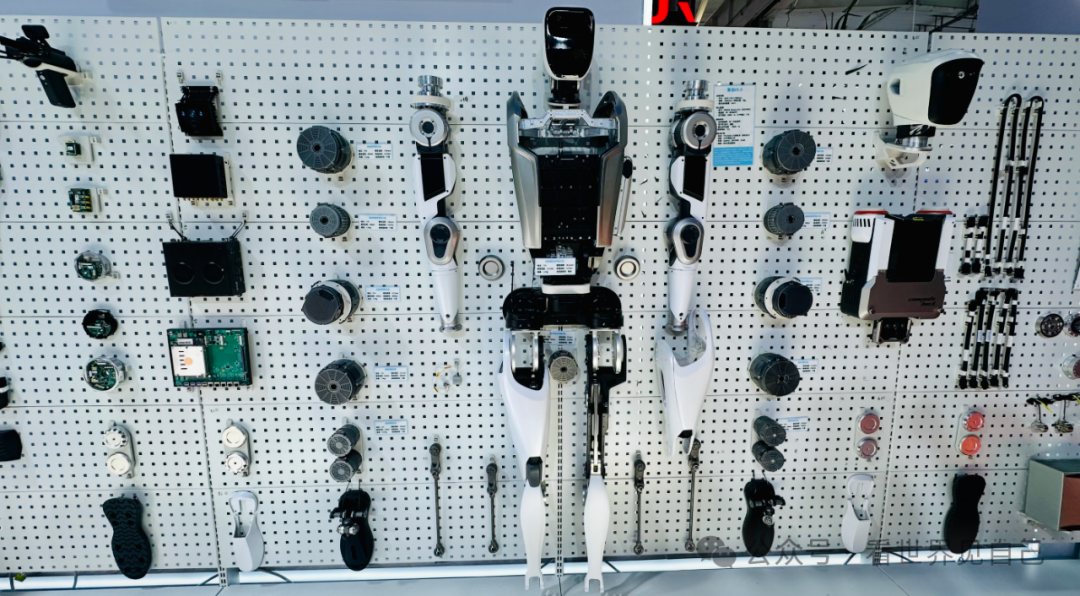 The evolution of the robot brain is a spiral process of “perception → understanding → action → planning → adaptation → safety,” with the ultimate goal of forming a generalizable, transferable, and sustainably evolving embodied intelligent agent.
“Body”: Sturdy yet Flexible
Whether humanoid, quadrupedal, or jointed collaborative robots, they possess a body that includes a skeletal system, muscular system, circulatory system, sensory system, and metabolic system. However, robots are the reality of reducers, actuators, and sensor stacks.
-
Skeleton and Structure (Skeletal System): Mainly made of aluminum alloy, carbon fiber, and titanium alloy materials, balancing lightweight and strength while withstanding dynamic impacts (running and jumping) and complex forces from irregular terrains, balancing lightweight and rigidity.
-
Joints and Actuators (Muscular System): Addressing reduction and transmission control, including harmonic reducers, RV reducers, planetary gears, ball screws, servo motors, frameless torque motors, hydraulic drives, and flexible drives, used to amplify torque, achieving sufficient strength, precision, and efficiency.
-
Energy and Power Supply (Circulatory System): Currently mainly using high energy density lithium batteries (NCM/NCA), with some exploring new battery chemical systems (high energy density solid-state, metal-air), achieving multi-channel voltage stabilization, energy recovery (regenerative braking), and rapid hot-swapping, facing the critical issue of balancing power peaks (burst power) and long endurance.
-
Sensing System (Sensory): Various types of sensors, including posture perception (IMU, encoders, joint position sensors, etc.), environmental perception (cameras, LiDAR, depth cameras, ultrasonic, millimeter-wave radar, etc.), force and tactile perception (joint torque sensors, six-axis force sensors, flexible skin sensor arrays, etc.), which are increasingly integrated and multimodal. Multimodal sensors are integrated into joints and end-effectors, reducing latency and size, with each joint being replaceable and upgradeable like “LEGO modules,” integrating multimodality while being able to respond in real-time.
-
Heat Dissipation and Self-Diagnosis (Metabolic System): Mainly achieved through air cooling, liquid cooling, and heat pipes to stabilize heat dissipation, while ensuring high-strength durability against dust and water, but how to achieve self-diagnosis to form metabolic warnings is a core issue.
Overall, the evolutionary path of the robot body is from rigid and precise industrial robotic arms → safe and flexible collaborative robots → high degrees of freedom and high integration humanoid/embodied platforms. To create a body that can work in the real world for extended periods, the transmission system is the “lifeline”. Harmonic/RV reducers are still dominated by Japanese companies, but domestic alternatives (like Green Harmonic) have significantly accelerated in supply cycles, lightweighting, and customization in the past two years. Motors and drives/controllers are evolving towards highly integrated “joint modules,” with leading motion control companies packaging “drive + encoding + control” to provide cost reduction and consistency for humanoid and collaborative robots. Sensing and end-effectors are transitioning from “camera + torque” to “multimodal + dexterous hands.” Without a robust “body,” even the smartest “brain” cannot function effectively; both hardware and software must be strong.
Application Scenarios: The Rise of Humanoids, Scenarios are King
The World Robot Conference is a vibrant scene with “a hundred flowers blooming, competing for beauty,” overwhelming the viewers. The types of robots can be categorized into several types: performance robots, companion robots, industrial manufacturing robots, auxiliary handling robots, medical robots, retail service robots, etc. However, upon calm reflection, it becomes evident that the entire process has undergone a transformation from “quantitative change to qualitative change,” with several intuitive phenomena:
-
High attendance, extremely broad audience: 1.3 million people registered, not including children, and the venue is packed, already starting to limit entry. From children to the elderly (almost 1/3 are children, as if robots are coexisting with them), there are enthusiastic discussions among people from various countries everywhere.
-
Increasing difficulty of performances: All performances on-site have real human partners, evolving from merely posing for photos to engaging in real combat.
-
Refined supply: Various components are becoming increasingly standardized and modularized, fully interchangeable at any time, with the most common being “hands,” showcasing a variety of types that are visually stunning.
-
Willingness to experiment: The market is filtering, and entrepreneurs are boldly trying new things, exploring various industries such as education, healthcare, logistics, industrial manufacturing, hospitality, cultural tourism, public services, energy inspection, emergency rescue, etc.
From the crowded venue, it is evident that most of the “spectators” are at the “performance booths” (watching boxing, dancing), while those walking their children are mostly at the “education booths” (playing chess, kicking soccer), and professionals are primarily discussing collaborations at the component booths.
Now, let’s look at the future effective landing scenarios for robots. We can analyze them from the perspectives of high task structuring, measurable ROI, significant value in replacing or enhancing human labor, and sustainable data loops, dividing them into short-term, mid-term, and long-term stages.
01
Short-term (1-3 years) high landing scenarios
Typical characteristics: controllable environment, rigid demand, short return cycle, relatively mature technology
1. Internal logistics/process collaboration in industrial and manufacturing sectors
Targeting industrial manufacturing plants, executing handling, loading/unloading, quality inspection, assembly assistance, collaborative assembly, material pulling, humanoids performing repetitive labor replacement in “human-machine mixed assembly” stations, seamlessly integrating with MES/ERP systems, such as Tesla and BYD introducing embodied/humanoid pilots on production lines, and domestic collaborative robot manufacturers achieving mass production applications in automotive and 3C sectors.
2. Automation in warehousing and distribution centers
Targeting logistics centers for sorting, stacking, warehousing, outbound logistics, and short-distance handling, such as JD.com and Amazon extensively using a combination of mobile and fixed robots to form flexible warehousing systems.
Targeting the “last 50 meters” of urban food and retail delivery (humanoid or small ground delivery), these can be seen in well-conditioned parks, and even in small cities, we have already seen unmanned delivery vehicles “zooming” around.
3. Energy and infrastructure inspection
Targeting power grids, petrochemicals, mining, wind power, and rail transit for automatic intelligent inspections, such as point inspections of high-voltage substations, refining units, pipeline corridors, and storage tanks, detecting abnormal acoustic/gas leaks, replacing human labor in hazardous environments to reduce accident risks, and providing risk prediction through thermal imaging and vibration trend analysis. For instance, the State Grid has already deployed a large number of inspection robots.
4. Urban public services
Targeting urban services for providing consultation, cleaning, security patrols, garbage collection, underground pipeline inspections, etc., robots are now commonly seen in citizen service centers, patrolling dogs in squares, and cleaning robots in shopping malls.
5. Retail and commercial services
Increasingly, unmanned stores, pop-up stores, and event stores are becoming automated smart cabinets, with various self-service coffee machines and beverage dispensers everywhere. This also addresses the “time-consuming store visits” challenge faced by large supermarket chains.
02
Mid-term (3-5 years) growth scenarios
Characteristics: semi-structured environments, high requirements for human-robot collaboration and safety, requiring more algorithm generalization capabilities
1. Education: Training partners
Tangible AI learning partners that assist in interactive teaching, targeting programming/STEM and subject tutoring for small-scale pilots, which can be directly To C or To B. For example, the highly popular booths on-site (playing Go, chess, military chess, etc.), training partners for sports (tennis, badminton, basketball, etc.), and special education (social training for groups with autism, language barriers, etc.) focus on providing high-frequency, patient, personalized interactive training, allowing human teachers to concentrate on inspiration and creative guidance by delegating repetitive, standardized teaching tasks to machines.
2. Healthcare and rehabilitation
Targeting internal logistics in hospitals (transporting medicines, specimens), surgical robots, rehabilitation training robots, addressing issues of tight medical resources, high precision requirements for surgeries, and long cycles of personalized rehabilitation training.
3. Elderly and special population care
Providing emotional companionship, mobile retrieval, fall monitoring, and health reminders for the elderly and special groups, addressing both loneliness and providing safety care services for the elderly.
4. High-standard farms
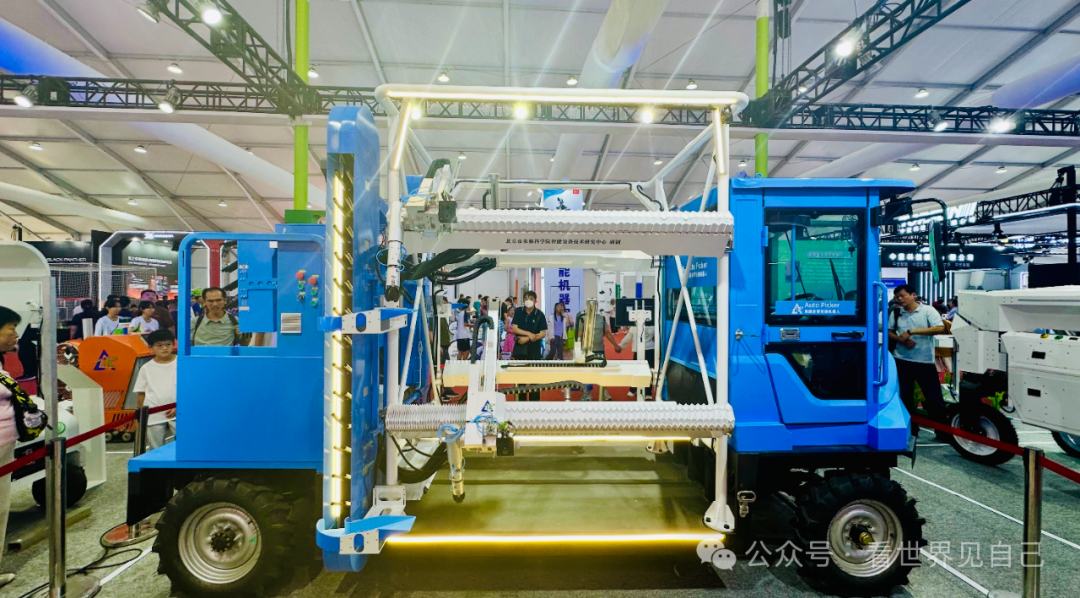
Targeting high-standard farming for providing spraying drones, inter-row weeding robots, greenhouse automation handling robots, and fruit and vegetable picking robots, focusing on assisting human labor in spraying, weeding, picking, and handling.
03
Long-term (5-10 years) strategic scenarios
Characteristics: open environments, high uncertainty, relying on large models and other next-generation technologies
1. Comprehensive household services
Would you want to buy a robot to take home now? The answer is likely no, as they are too simplistic and merely decorative. However, in the future, there is a huge personalized potential market for household services, and how to provide services, what services to offer, and how to ensure privacy and security will all require significant adjustments.
2. Emergency rescue and operations in extreme environments
Providing earthquake rescue, fire rescue, nuclear radiation environment operations, deep-sea/space exploration, etc., addressing high-risk tasks that require replacing humans and providing high-precision processing capabilities.
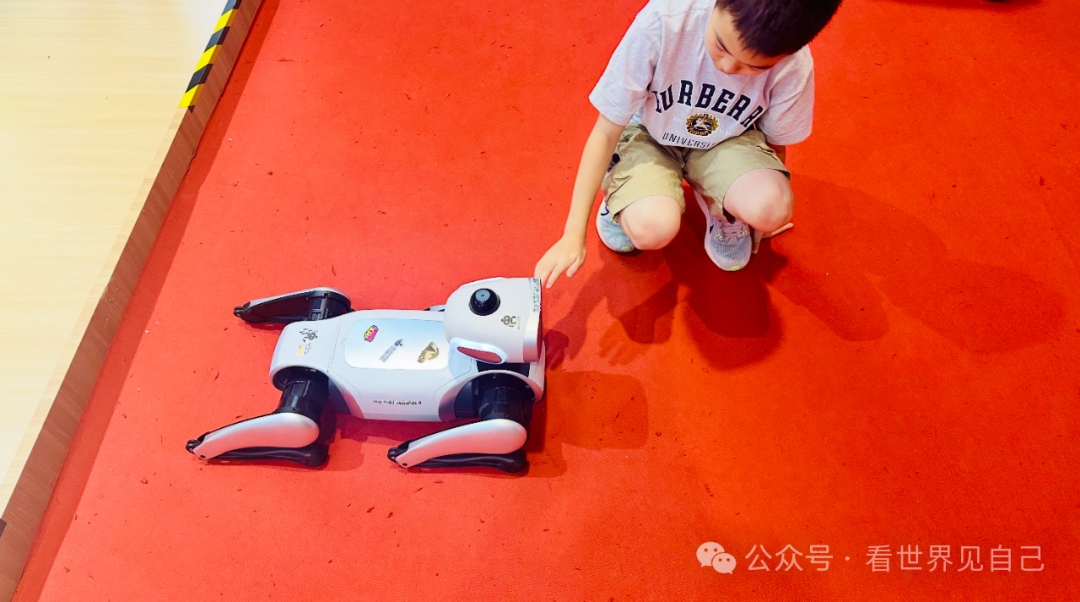
Robots have already generalized, no longer limited to a single form, and intelligence is accelerating its upgrade, not limited to a speaker or a screen, but taking on various forms such as plush toys, dogs, cats, and figurines, ultimately providing us with a stable, low-cost, and sustainable emotional interaction channel. For example, a robotic dog can be walked like a real dog and can provide deep interaction (telling stories to children, playing games, chatting with the elderly, reminding them to take medicine, etc.), offering daily conversation, life reminders, and interest sharing for single or solitary individuals, providing a continuous, predictable, and personalized emotional interaction that reduces loneliness, extends communication, and makes emotions visible and responsive.
In the next 3-5 years, the most stable growth for robots will still come from “high-frequency, semi-structured, quantifiable return” scenarios. The main line of humanoid/embodied robots is not about “being like humans,” but about their engineering capabilities of “being teachable, adaptable, and manageable”: computing power—models—simulation—sensing—execution—operation and maintenance closed loop.
Commercial Landing: First Win Trust, Then Discuss Models

Winning Trust

Whether robots can make money is not primarily about whether they “can do things,” but rather about whether “the client believes they can handle it.”
No one wants to be a guinea pig, paying for unpredictable results, whether it’s a hotel room robot, a restaurant delivery robot, or an assembly robot on a production line, the questions everyone has are “Can it handle it? Is it really faster than humans? How much cost can it save?” and a series of other inquiries.
Therefore, the first issue to resolve is “trust.”
Client trust is not won through appearance, flashy skills, or technical parameters, but through a delivery process that is testable, observable, signable, and guaranteed. They need to see that robots are already working, data is increasing, and problems are being addressed before they can truly believe that “this thing can handle it.”
Business Models
Once trust is earned, the next question is how to make money, how to price, whether to sell equipment or services, and how to serve different types of clients in various scenarios.
-
Sell Equipment (CapEx + Maintenance): Simple and efficient, easy to deliver, quick to collect payments, but not sustainable, with significant revenue fluctuations.
-
Sell Services (RaaS): Easy to pilot, strong repurchase, stable and sustainable cash flow, but requires high capital investment and operational capabilities.
-
Charge by Results (Outcome/Task Based): Deeply binds with clients, strong objectives, easy to achieve large orders, but how to ensure results involves high risks and costs, requiring strong operational and control capabilities.
-
Platform Collaboration (Skill & Content): Scalable, high gross margins, but slow to start, requiring high standardization.
Combining our previous analysis of landing scenarios, to achieve high returns, we suggest the following:
-
Warehousing/Manufacturing: Loading/unloading, sorting, quality inspection, line-side material pulling, short-distance delivery, screwing, etc.
-
Sell Services (RaaS) + Charge by Task (per item/pallet/workstation)
-
Energy/City Inspections: Substations, pipeline corridors, wind farms, urban cleaning
-
Charge by Results (per point/area) + Milestone Payments
-
Education/Tutoring:
-
Sell Equipment + Content Subscription + Skill Packages;
-
Security/Commercial Services:
-
Sell Services (RaaS) + Event-Based Billing (alarm volume, processing closure)
-
Agriculture: Spraying, weeding, fertilizing, handling
-
Charge per Acre/Time
-
Emotional Companionship: Electronic pets
-
Sell Equipment + Skill Packages;
Transforming “equipment” into a composite product of “usability + results,” and turning “projects” into standardized services on an assembly line, moving from one-time delivery to sustainable, scalable operations.
Robots are participating in a grand feast, while companies are seeking their path to survival.
Robots are transitioning from showcases to productivity, moving from “dirty, tiring, and dangerous” tasks to “home service companions,” with software, hardware, production lines, and ecosystems evolving in sync.
The future competition will not be about who can mimic humans best, but about who can quickly transplant, continuously evolve, and deploy at scale.
When robot operating systems are as stable as Android and their brains are as intelligent as cloud AI, that will be the true starting point of “robot socialization.”
