Recently, SDxCentral released the 2017 Network Virtualization Report, which contains a lot of valuable information. I have selected some highlights to share with everyone.
①
What features are most valued in network virtualization platforms?
SDxCentral surveyed end users and vendors
and provided data that shows significant differences between the two groups.
From the user’s perspective, scalability ranks first.
Followed by
openness/interoperability, ease of implementation, and performance.
Integration with cloud management platforms, rich L2/L3 features,
support for specific hypervisors, and rich L4/L7 features.
↓
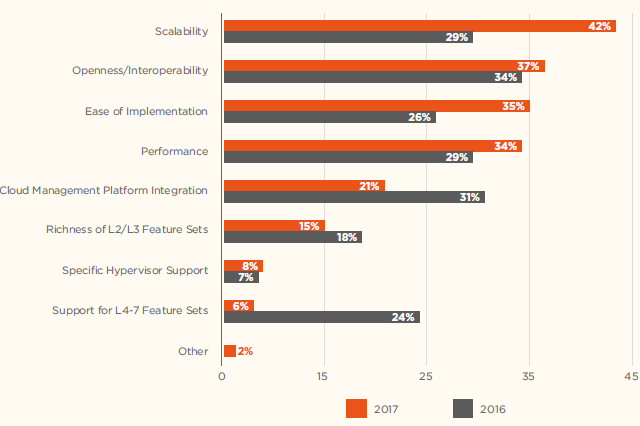
[User Perspective]
From the vendor’s perspective,
ease of implementation ranks first.
Meanwhile, the demand for interoperability has decreased significantly compared to last year.
Perhaps for vendors,
monopolizing the market is much more important than open interoperability.
Securing territory and making real profits is the hard truth.
↓
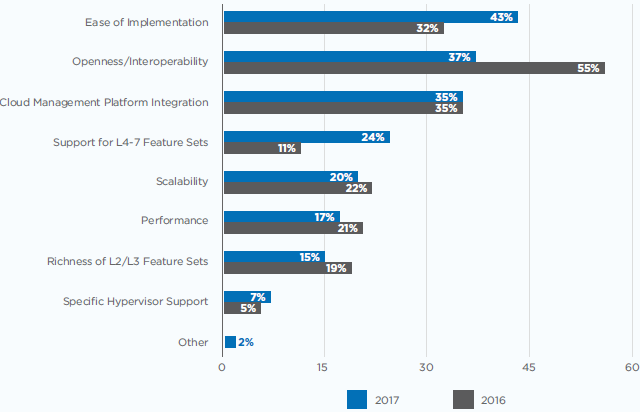
[Vendor Perspective]
②
18 Key Considerations for Network Virtualization Platforms
1. Hypervisor compatibility
2. Network model: capable of supporting more complex network environments, L2/L3, routing, gateways, L4-L7 chains, etc.
3. Compatibility with physical switch environments
4. Support for QoS capabilities
5. Support for high availability
6. Scalability: for example, a cloud environment with 10,000 physical machines
7. Cross-data center capabilities
8. Network services: such as DHCP, IPAM/DNS, etc.
9. Layer 3 routing capabilities: static routing and dynamic routing such as BGP, OSPF, ISIS, etc.
10. L4-L7 capabilities, NAT, service chaining
11. Visualization and analytics capabilities
12. Usability and manageability
13. Integration with orchestration platforms and support for VM mobility: for example, integration with OpenStack, vCloud, etc., and support for VM migration across services, racks, and data centers.
14. Support for containers
15. Automation and programmability: for example, support for RESTful interfaces
16. Company stability and longevity: in simple terms, whether the company is reliable and can sustain operations in the long run.
17. Openness and compatibility with other elements: this seems to specifically criticize ACI and NSX.
③
8 Key Considerations for SDN Controllers
1. Southbound protocol support: such as OVSDB, OpenFlow, BGP, Netconf, etc.
2. Completeness of API support: APIs are the most important measure of SDN programmability, which can be used for efficient integration with upper-layer BSS and OSS systems.
3. Monitoring and visualization: tapping and monitoring should be standard features of the controller.
4. Reliability and performance: how many switches can it support? Will performance degrade with more switches?
5. Availability and performance: the core performance metrics of an SDN controller are the number of flows per second and flow setup time.
6. Security and isolation: built-in isolation capabilities or micro-segmentation features, as well as firewall capabilities and dynamic ACLs are optional.
7. Community support for codebase: today, ODL, Open Contrail, APIC, and ONOS all have large contributor teams behind them.
8. Application and developer ecosystem: besides the developer community of the controller itself, the surrounding application ecosystem is also intuitively important.
④
What is the target market for network virtualization?
SDxCentral also surveyed end users and vendors.
From the user’s perspective,the order is as follows:
Private cloud, traditional data centers, wide area networks
Hybrid cloud, public cloud, campus networks
Among them, the demand in the WAN field is strong.
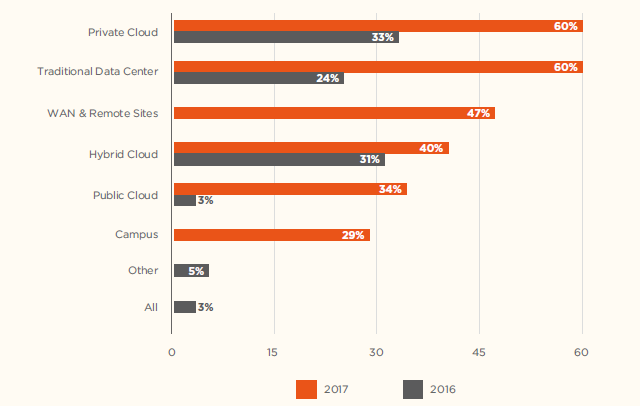
[User Perspective]
From the vendor’s perspective,the order is slightly different,
but everyone agrees that the demand for private clouds and traditional data centers is strong.
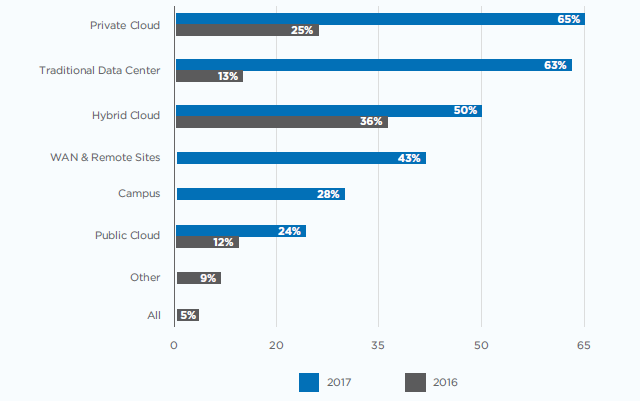
[Vendor Perspective]
⑤
SDN/NV Deployment Cycles and Scale
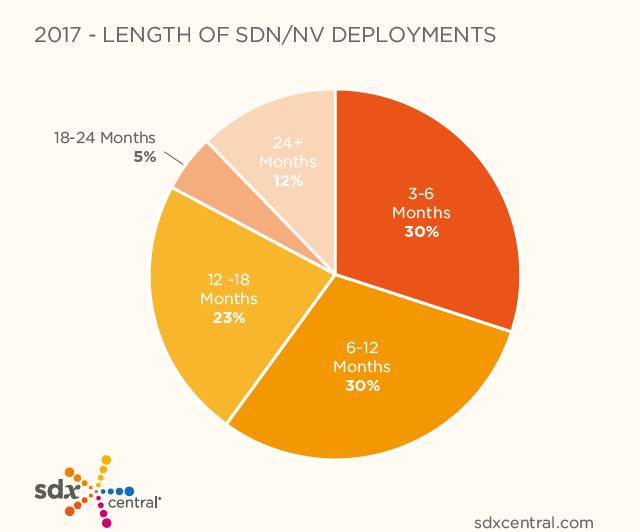
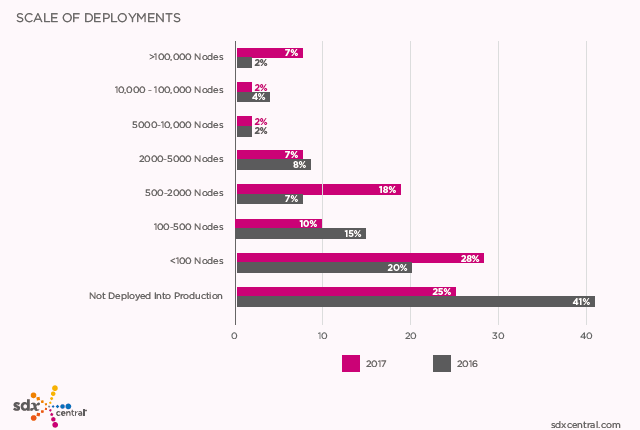
In 2017,
the growth of large-scale deployments (10,000 nodes+) was significant.
⑥
Key Highlights: Which SDN/NV Solutions Sold Well?
I believe the following two images will be of most interest to everyone.
First image: SDN/NV vendors chosen in 2017
↓
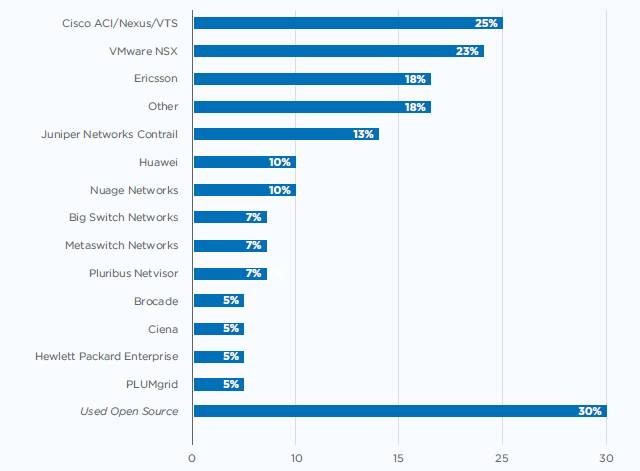
[2017 SDN/NV VENDORS CHOSEN]
There is a high selection rate for Cisco and VMware, but the most selected are open-source solutions.
Second image: Most valued SDN/NV vendors in 2017
↓
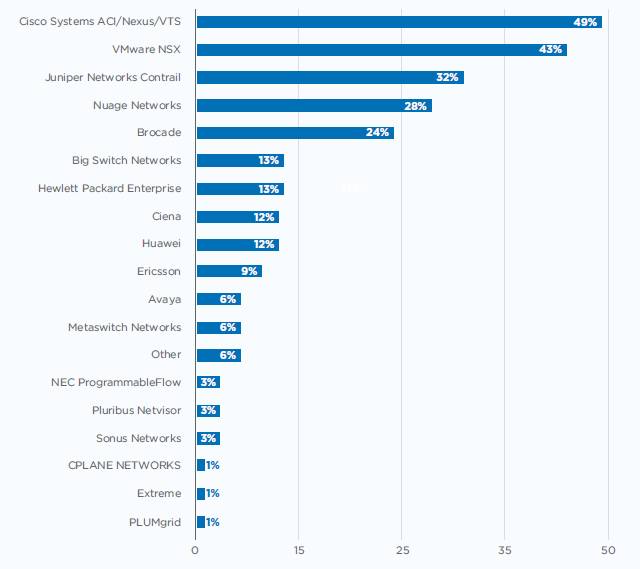
[2017 SDN/NV VENDORS CONSIDERED]
Note that the second image is about those considered (valued).
Cisco, VMware, and Juniper received the most attention.
⑦
Which open-source solutions are the most popular?
These two images also have a lot to offer.
First image: Most deployed SDN/NV open-source solutions in 2017
↓
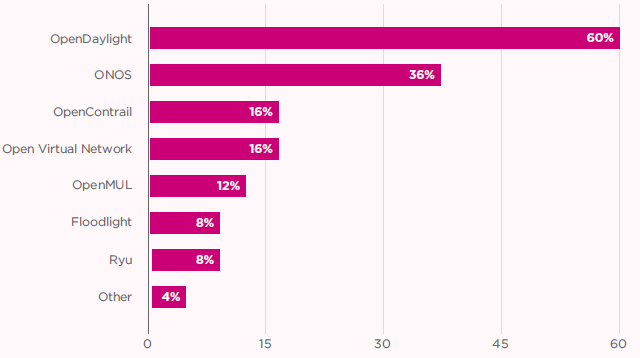
[2017 OPEN SOURCE SDN/NV SOLUTIONS DEPLOYED]
Second image: Most valued SDN/NV open-source solutions in 2017
↓
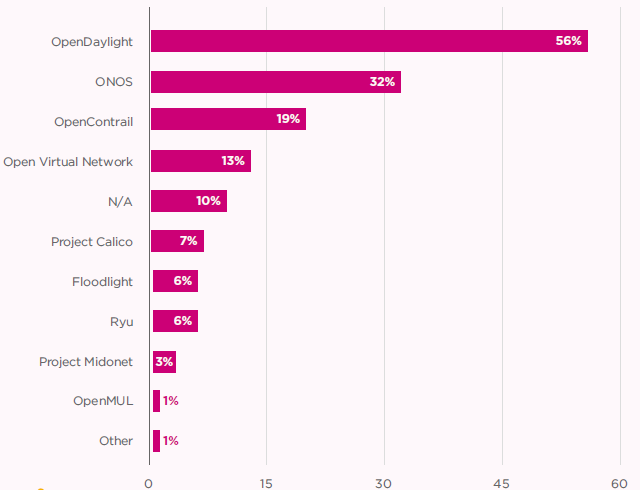
[2017 OPEN SOURCE SDN/NV SOLUTIONS CONSIDERED]
⑧
Future Trends in Network Virtualization
1. Unified cloud and network services in public clouds
Mainstream cloud service providers offer a wide range of network services based on NV/SDN.
AWS: VPC, Direct Connect, ELB, Route53, CloudFront
Azure: Virtual Network, ExpressRoute, VPN Gateway, Azure DNS, Load Balancer, Application Gateway, Azure CDN
Google: VPC, Load Balancing, DNS, CDN
2. Integrated public cloud and private virtual networks
3. VPC security and micro-segmentation
4. Multi-cloud service provider interconnectivity
5. Network virtualization under container architectures
Current open-source projects for container networking include:
Project Calico
Cilium
Romana
Weaveworks
⑨
Recommended Network Virtualization Products
This last section is probably a benefit for sponsors.
It has a bit of a movie credits feel.
Ericsson Cloud SDN
Lumina SDN Controller
Blue Planet SDN/NFV Orchestration Platform
Cisco APIC
HPE DCN
IP Infusion VirNOS
Linux Foundation Open vSwitch
Midokura Enterprise MidoNet
Nuage Networks VSP
Tempered Networks IDN Solution
VMware NSX
ZTE ZENIC vDC controller
Big Switch Networks Big Cloud Fabric
Brain4Net B4N Service Platform
CPLANE NETWORKS SDN Service Orchestration Platform
ECI LightCONTROL
Faucet SDN Controller
Huawei Agile Controller
Inocybe Open Networking Platform
Juniper Networks Contrail
Linux Foundation OpenDaylight
Linux Foundation ONOS
Linux Foundation Open Security Controller
NEC ProgrammableFlow Controller PF6800
SEL SDN Solutions
Click to read the original text and download the full report.
↙
Translated and organized by Xiao Hei Yang, the final interpretation of the report belongs to SDxCentral.