Comprehensive Guide to Linux Shutdown and Reboot Commands

Comprehensive Guide to Linux Shutdown and Reboot Commands

Click the blue text to follow us Overview In Linux systems, shutting down or rebooting a computer is not merely a matter of cutting off the power. To ensure data safety and system stability, Linux provides a series of commands to gracefully terminate all running processes, synchronize data to disk, and finally perform hardware shutdown … Read more

Modify /tmp Auto Cleanup Cycle in Linux

Modify /tmp Auto Cleanup Cycle in Linux

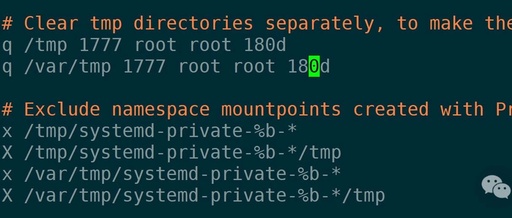
1. Problem Phenomenon 2. Problem Resolution In Linux systems using the systemd program, files in the <span>/tmp</span> directory are automatically cleaned up. By default, the system uses the <span>systemd-tmpfiles-clean</span> service to manage files in the <span>/tmp</span> directory and decides when to delete them based on their access time. The specific cleanup strategy depends on the … Read more

Remote Operation and Maintenance Deployment for Embedded Devices

Remote Operation and Maintenance Deployment for Embedded Devices

In on-site operation and maintenance, you may be troubled by the following issues: • Remote devices are scattered in weak network/cellular/private network environments, unable to open public IPs, and temporary debugging requires sending personnel on-site. • VPN/port forwarding configurations are complex and unstable, making it difficult to implement fine-grained permissions and operation logging. • Device … Read more

Installing Executable Programs as System Services in Linux – Auto Start on Boot

Installing Executable Programs as System Services in Linux - Auto Start on Boot

Prerequisites Provide start script, stop script,executableprogram Start Script Generateappstartscript touch app_start.shcat &gt; app_start.sh &lt;&lt; EOF chmod -R 777 /home/tuners/ginkgo7000web cd /home/tuners/ginkgo7000web/apache-tomcat/bin ./startup.shEOF Stop Script Generateappstopscript touch app_stop.shcat &gt; app_stop.sh &lt;&lt; EOF #!/bin/sh #Query process and kill the current tomcat program pid=\

Sharing Use Cases of Standard Huge Pages in Linux

Sharing Use Cases of Standard Huge Pages in Linux

Background Introduction An Oracle instance running on a cluster in RHEL is started using the systemd service (to facilitate cluster switching operations). During testing, it was found that standard huge pages were not being utilized. The specific situation is as follows: $ grep HugePages /proc/meminfo AnonHugePages: 0 kB ShmemHugePages: 0 kB FileHugePages: 0 kB HugePages_Total: … Read more

Managing the frps Service on Linux with systemd: Installation, Configuration, and Automation Guide

Managing the frps Service on Linux with systemd: Installation, Configuration, and Automation Guide

On Linux systems, using systemd allows for easy control of the frps server’s startup, shutdown, background configuration, and automatic startup on boot. Below are the specific operational steps: 1. Install systemd If systemd is not yet installed on your Linux server, you can use a package manager such as yum (for CentOS/RHEL) or apt (for … Read more

Efficient Management Tool for Linux Services: systemctl

Efficient Management Tool for Linux Services: systemctl

systemctl is a control tool for the system and service manager systemd, used to control the system and service manager of systemd. It is the primary tool for managing services in modern Linux distributions. In the Linux ecosystem, Systemd has been deployed in most standard Linux distributions, with only a few distributions yet to adopt … Read more

Modifying MAC Address on Embedded Linux Network Interface

Modifying MAC Address on Embedded Linux Network Interface

Hello everyone, I am the Intelligence Guy~ Modifying the MAC address is a common development requirement in network management and privacy protection. 1. Why Change the MAC Address? For example, when we replace a damaged network card, we need to restore the original MAC address to maintain IP allocation, firewall policies, and device authentication; there … Read more

Setting Up Custom Programs as Services for Automatic Startup in Linux

Setting Up Custom Programs as Services for Automatic Startup in Linux

There are many ways to set custom programs to start automatically on boot in Linux systems. The method described in this article is to set the program as a service for automatic startup.Create a new hello.service file in the /lib/systemd/system directory. touch /lib/systemd/system/hello.service vim /lib/systemd/system/hello.service [Unit] Description=Hello Service [Service] Type=simple ExecStart=/usr/bin/hello.sh SuccessExitStatus=2 [Install] WantedBy=multi-user.target Note … Read more

Essential Linux Service Management Every Sysadmin Should Know!

Essential Linux Service Management Every Sysadmin Should Know!

☞ The course by Liang Xu has completely exploded! ☜ Service management in Linux that every sysadmin must know! Introduction In <span>Linux</span>, whenever you install any package with services and daemons, the system will by default add the initialization and <span>systemd</span> scripts for these services, but they are not enabled at this point. We need … Read more