J Eur Ceram Soc: In Situ Light-Mediated Dielectric Constant Enhancement in Multifunctional BNT-Based Ceramics

J Eur Ceram Soc: In Situ Light-Mediated Dielectric Constant Enhancement in Multifunctional BNT-Based Ceramics

Title J Eur Ceram Soc: In Situ Light-Mediated Dielectric Constant Enhancement in Multifunctional BNT-Based Ceramics Research Background The non-contact modulation of dielectric properties is of significant importance in device applications. Light-controlled non-contact devices offer advantages such as fast response times and low energy consumption. Currently, the study of unconventional photo-induced dielectric effects in ferroelectric materials … Read more

Recent Breakthroughs in 3D Printing: Dual Advances in Structure and Performance

Recent Breakthroughs in 3D Printing: Dual Advances in Structure and Performance

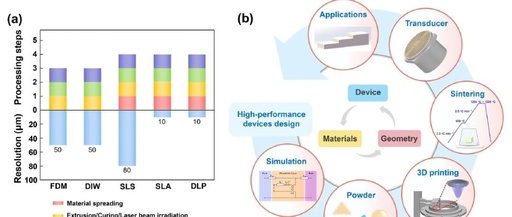
I. Research Background Piezoelectric devices are widely used in medical diagnostics, industrial testing, and intelligent systems. However, their core requirement—balancing complex structural formation with high-performance output—has long been constrained by traditional manufacturing technologies. Conventional material manufacturing (molding, casting) and subtractive manufacturing (laser cutting, milling) face issues such as insufficient precision, limited shapes, and long production … Read more

Analysis of 3D Printing Materials

Analysis of 3D Printing Materials

Copyright Statement This article is authorized by New Materials Online (WeChat ID: xincailiaozaixian) for reprinting. For other media wishing to reprint, please contact the editor of New Materials Online (WeChat ID: 13510323202). Introduction 3D Printing is a technology that manufactures three-dimensional products by layering materials according to designed 3D models using 3D printing equipment. This … Read more

Development Status of Micrometer-Level Microrobots

Development Status of Micrometer-Level Microrobots

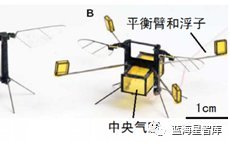
———- For More Information, Please Follow Us ———- Microrobots have advantages such as small size, light weight, high thrust-to-weight ratio, and high flexibility. They can be classified into two categories based on size: The first category includes robots in the nano to micro size range, generally driven by external forces, mainly used in biomedical fields. … Read more